
YouTube Growth Research Library
Research-backed breakdowns on YouTube strategy, competitor analysis, AI creator tools, and the repeatable patterns behind high-performing channels.

Updated for 2026 · Tool comparison · Creator strategy
Can You Trust a YouTube Channel Score? We Tested 5 Scoring Systems on 640 Channels
Can you trust a YouTube channel score? OverseerOS tested five scoring systems across 640 channels using the same public data. A scale-heavy model and breakout-heavy model shared zero channels in their top 25, showing how strongly metric selection and weighting can change which channels look “best.”
Inside this guide
- Competitor analysis tools
- Proven topic pattern research
- Title and thumbnail strategy
- Repeatable content planning systems
Latest research and strategy breakdowns
Practical guides for creators, teams, and tool buyers who want better decisions before they publish.

YouTube Channel Stats Checker: Which Public Metrics Actually Matter? We Analyzed 640 Channels
Which YouTube channel statistics actually matter? OverseerOS analyzed 640 channels and found that subscriber count and lifetime views provide useful scale context, while public video count was far less connected to current performance. Recent median views, outliers, and trajectory reveal much more about what a channel is doing now.

YouTube Subscriber Tracker: We Tracked 90 Channels to See What Public Counts Miss
A YouTube subscriber tracker can show whether a channel's audience count changed, but subscriber movement alone can miss important momentum. OverseerOS tracked 90 channels and found that 12 of 16 channels with flat subscriber counts were still gaining public views.

What Is a Good YouTube Channel Growth Rate? Data From 103 Channels
There is no universal “good” YouTube growth rate. OverseerOS analyzed 103 channels with repeated public observations and found a strong relationship between channel size and percentage growth. Smaller channels grew much faster in percentage terms, while larger channels often added more subscribers in absolute numbers.

Private YouTube Video Finder: Can You Find Private or Unlisted Videos?
Can a private YouTube video finder reveal hidden uploads from any channel? Usually not. This guide explains the real difference between private, unlisted, deleted, and public videos, what can sometimes be recovered from known video IDs or archives, and what legitimate public YouTube research can actually access.

Which YouTube Video Formats Work Across Different Niches? We Analyzed 1,741 Million-View Videos
Which YouTube video formats actually work beyond one niche? OverseerOS analyzed 1,741 million-view long-form videos across 289 channels and 10 niche groups. Explainers and tutorials showed the widest cross-niche footprint, while lists, experiments, comparisons, and documentary formats were far more dependent on market fit.

How to Tell If a YouTube Video Idea Is Already Saturated Before You Make It
Too many competitors does not automatically mean a YouTube idea is saturated. OverseerOS research across thousands of videos shows how to test fresh demand, independent winners, channel-size transferability, competition concentration, and whether your angle still has room to win.

The YouTube Channel Health Check: What Matters More Than Subscriber Count
Subscriber count tells you how large a YouTube channel became, not how healthy it is today. OverseerOS analyzed 628 channels and found enormous differences in recent reach, repeatability, and momentum across channels of similar size. Here is the channel health check that matters more than subscriber count.

Before You Clone a YouTube Channel, Check These 7 Signals
Not every successful YouTube channel is a good blueprint. OverseerOS research across multiple channel, topic, and breakout studies reveals seven signals to check before reverse-engineering a competitor, from repeated outliers and recent momentum to cross-channel validation and production fit.

The YouTube Outlier Trap: Why the Most Viral Video Is Often the Worst One to Copy
The biggest video on a YouTube channel can be the worst one to treat as normal. OverseerOS analyzed 625 channels and found the top observed long-form video was a median 37.6x above the channel's recent baseline. Here is how to separate one-off viral outliers from repeatable YouTube strategy.

Can You Trust a YouTube Title Score? What 9 Studies Reveal
Can a 90/100 YouTube title still flop? Yes. OverseerOS combined findings from nine independent title studies to test numbers, questions, curiosity, clickbait, title length, “How to,” “Why,” years, and pronouns. The results show why title scores should diagnose a package, not pretend to predict views.

Model the Pattern, Not the Thumbnail: How to Find YouTube Thumbnail Inspiration That Fits Your Niche
Viral does not automatically mean relevant. OverseerOS research across 67,787 million-view thumbnails reveals why mixed inspiration feeds can mislead creators and how to extract proven thumbnail patterns without copying the original design.

Is This YouTube Channel Actually Growing? 7 Signals to Check Before You Model It
A big subscriber count does not prove a YouTube channel is growing. OverseerOS tracked 109 channels over time to identify seven public signals that reveal current momentum, recent performance, repeatable winners, and whether a competitor is actually worth modeling.

What YouTube Creators Actually Want From Software in 2026
What do creators actually want from YouTube software? OverseerOS studied 27,555 public creator comments and found that demand is driven less by flashy AI features and more by broken workflows, missing capabilities, editing friction, and automation.

Can You Trust a YouTube Channel Analyzer? What Public Data Can and Can’t Tell You
A YouTube channel analyzer can reveal far more than subscriber count, but it cannot see a competitor’s private YouTube Studio. Here is what public channel data can actually tell you, backed by OverseerOS research across 620 channels.

How to Stay Consistent on YouTube: We Analyzed 491 Creator Comments
OverseerOS analyzed 491 consistency and channel-management comments across 316 videos and 38 creator-focused channels. The data suggests consistency is less about never missing an upload and more about building a production system whose workload, backlog, quality standards, and publishing cadence fit the creator's real capacity.

Why Is My YouTube Channel Not Growing? We Analyzed 935 Creator Comments
OverseerOS analyzed 935 analytics-and-growth comments across 425 videos and 40 creator-focused channels. Most creators described symptoms like low views, weak reach, or stalled subscribers rather than the underlying cause, revealing why growth problems should be diagnosed across demand, reach, clicks, retention, return behavior, and conversion.

Why Is YouTube Video Editing So Hard? We Analyzed 2,073 Creator Comments
OverseerOS analyzed 2,073 editing and production comments across 614 YouTube videos and 41 creator-focused channels. Editing was the largest creator challenge, and 82.4% of comments contained an implementation-oriented need around how to do the work, what tools to use, what was missing, or which option to choose.
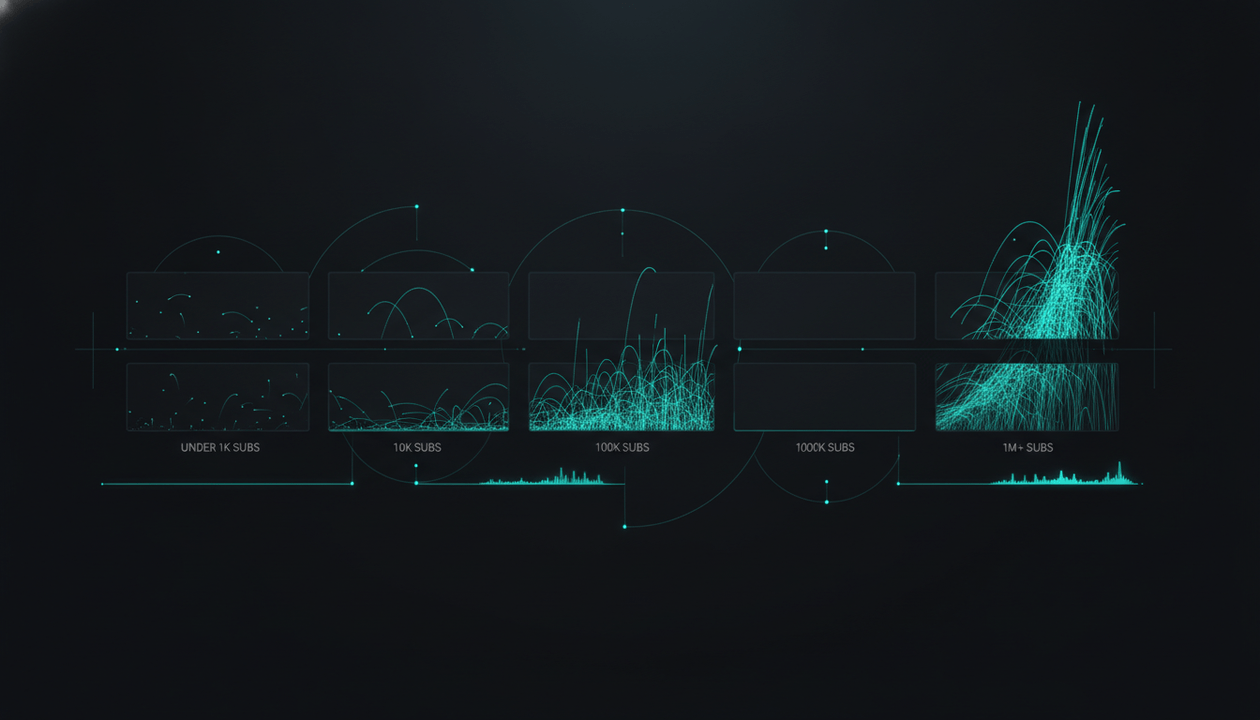
How Many Views Should a YouTube Video Get in 30 Days? We Tracked 1,051 Uploads
OverseerOS tracked 1,051 recent long-form YouTube uploads across 486 channels at approximately 30 days. Median monthly views ranged from 45 on sub-1K channels to 292,667 on 1M+ channels, showing why universal YouTube view targets are misleading.

Why Is YouTube Monetization So Hard? We Analyzed 1,514 Comments
OverseerOS analyzed 1,514 public YouTube monetization comments across 472 videos and 41 creator-focused channels. Nearly two-thirds contained a pain point or objection, showing that monetization problems are often about viability, eligibility, earnings, costs, and constraints rather than simply how to turn monetization on.
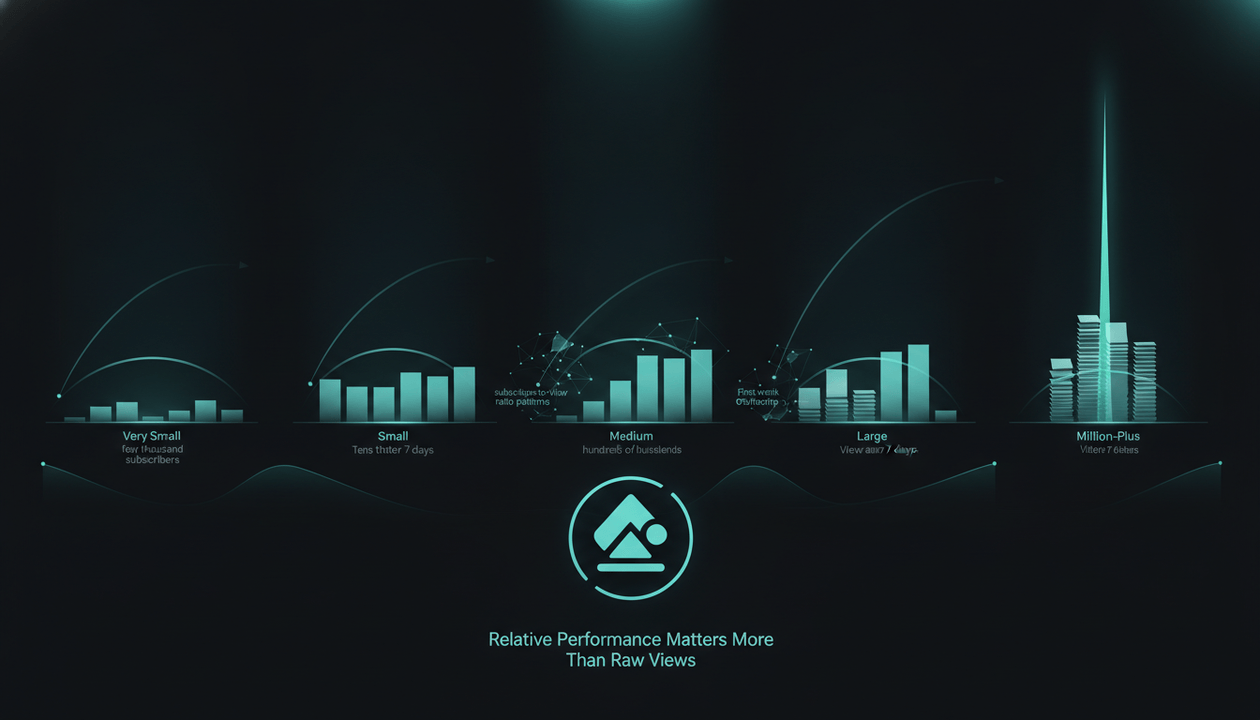
How Many Views Should a YouTube Video Get in 7 Days? We Tracked 436 Uploads
OverseerOS tracked 436 recent long-form YouTube uploads across 232 channels and measured views at about seven days. Median first-week views ranged from 40 on sub-1K channels to 254,270 on 1M+ channels, showing why universal YouTube view targets are misleading.

How Long Does a YouTube Slump Last? We Analyzed 1,610 Slumps
OverseerOS analyzed 8,401 mature long-form videos across 259 channels and identified 1,610 underperformance runs. The median YouTube slump lasted just one weak upload, while observed full-baseline recovery typically appeared within two uploads and about eight days.

Does One Bad YouTube Video Hurt Your Channel? We Analyzed 7,655 Upload Sequences
OverseerOS analyzed 7,655 consecutive long-form YouTube upload sequences across 247 channels. After a severe underperformer, 82.2% of next videos improved and the median performance rebounded from 0.32x to 0.79x, suggesting one bad video is often a valley rather than permanent channel damage.

What Do YouTube Creators Struggle With Most? We Analyzed 27,555 Comments
OverseerOS analyzed 27,555 public comments across 1,954 videos and 44 creator-focused channels. Editing and production was the largest creator challenge at 21.4%, while 90.3% of actionable needs were expressed implicitly rather than directly.
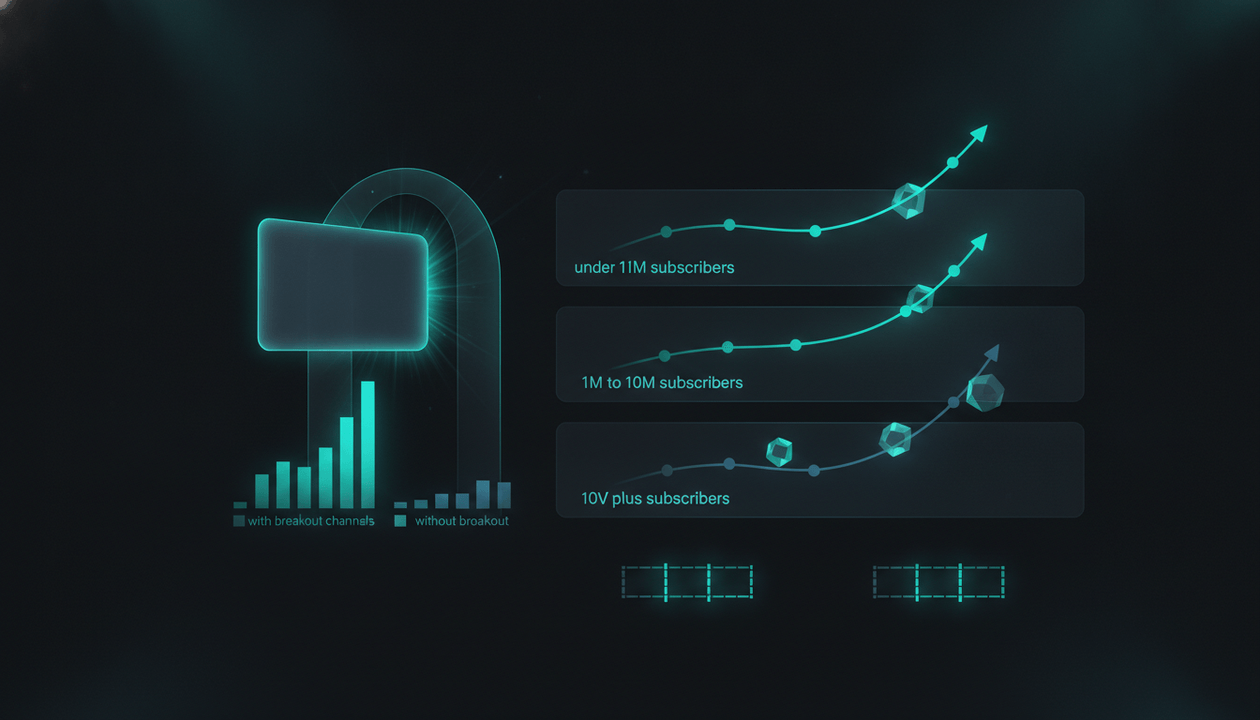
Do Million-View YouTube Videos Grow Subscribers? We Tracked 112 Channels
OverseerOS tracked 112 YouTube channels for at least 30 days. After controlling for starting channel size, channels that produced a new million-view long-form video showed higher median subscriber growth in every size band.

Can You Predict Future YouTube Views? We Tracked 730 Videos
OverseerOS tracked 730 long-form YouTube videos across 11 channels. Recent view velocity had a 0.982 median correlation with next-week momentum, while total views reached only 0.236.

How to Find YouTube Video Ideas From Comments: We Analyzed 27,555
OverseerOS analyzed 27,555 public YouTube comments across 1,954 videos and 44 channels. 35.1% contained actionable audience-demand signals, with how-to questions and pain points making up 60.6% of useful comments.

How to Analyze a Competitor YouTube Channel: We Studied 4,820 Videos
OverseerOS analyzed 4,820 long-form videos across 241 YouTube channels to find what separates a competitor worth reverse-engineering from a one-hit wonder. Channels with two or more previous 3x breakouts produced another 3x winner in the next 10 videos 77.1% of the time, compared with 50.0% for channels with no previous breakout.

Which YouTube Competitor Metric Should You Trust? We Analyzed 2,971 Videos
OverseerOS analyzed 2,971 long-form YouTube videos across 107 channels and 13 niches to compare four competitor-research metrics. No niche had the same #1 video under total views, views per day, views per subscriber and channel-relative outlier score, revealing why the metric you choose can completely change which competitor videos look worth studying.

How to Tell If a Viral YouTube Video Is a Topic Win or a Packaging Win
OverseerOS analyzed 1,345 million-view long-form YouTube videos to investigate whether competitor breakouts were supported by repeatable topic demand or were isolated outliers. Prior topic-confirmed videos became 3x+ breakouts 47.5% of the time versus 27.8% without prior confirmation.

Do Clickbait YouTube Titles Get More Views? We Analyzed 2,309 Videos
OverseerOS analyzed 2,309 mature English-language long-form YouTube videos across 62 channels. Clickbait-style titles had the same median channel-relative performance as ordinary titles, while matched comparisons showed only a small 1.06x lean.
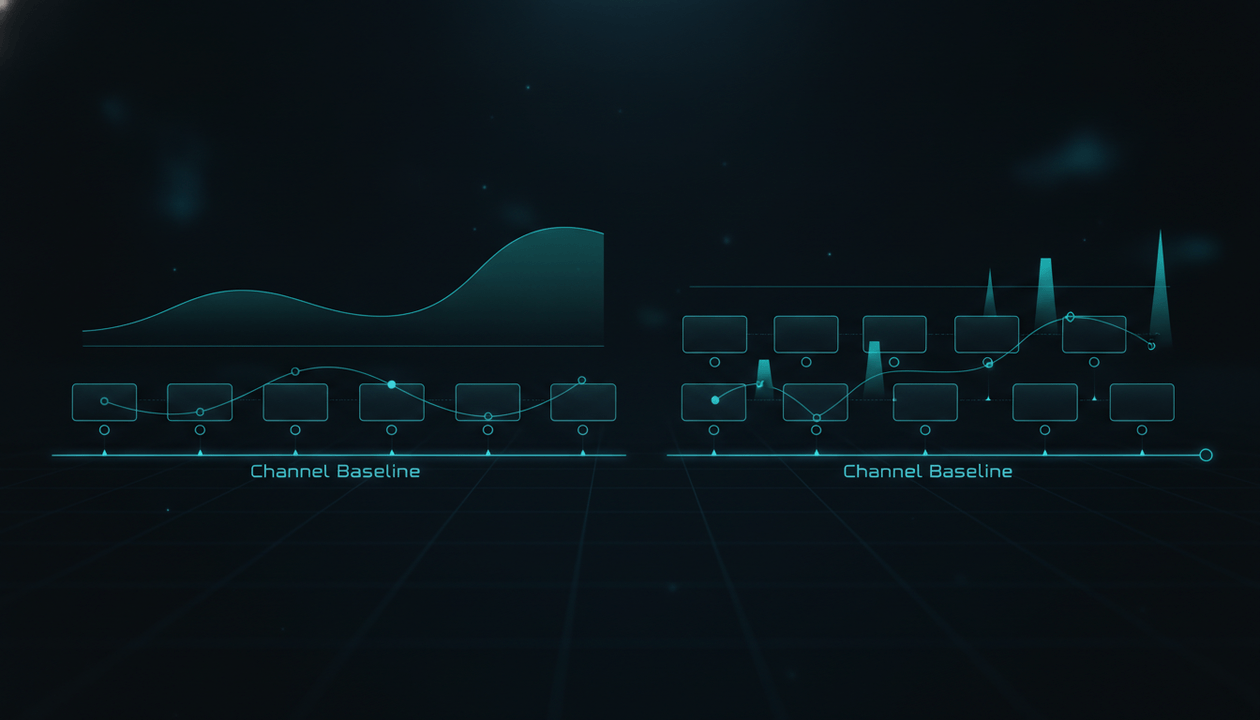
Does Consistency Matter on YouTube? We Analyzed 8,942 Videos
OverseerOS analyzed 8,942 mature long-form YouTube uploads across 270 channels. Videos published close to a channel's normal schedule did not outperform irregular uploads, suggesting consistency is more valuable for production than as a direct view-growth lever.

Does Uploading a New YouTube Video Hurt Old Videos? We Tracked 466 Videos
OverseerOS tracked 466 older long-form YouTube videos around 19 new-upload events across 12 channels. The median back catalog gained views 1.12x as fast after a new upload, with no evidence of systematic old-video suppression.

Can a YouTube Video Go Viral Months Later? We Tracked 367 Videos
OverseerOS tracked 367 long-form YouTube videos at least 90 days old. Nearly half accelerated during the observation period, but strong late breakouts were rare and usually came from videos already receiving meaningful views.

Do Old YouTube Videos Still Get Views? We Tracked 726 Videos
OverseerOS tracked 726 long-form YouTube videos more than one year old across 24 channels. The median old winner was still gaining about 480 views per day, and 44.8% gained at least 1,000 views per day.

YouTube View Velocity vs Total Views: We Tracked 1,220 Videos
OverseerOS tracked 1,220 long-form YouTube videos across 25 channels. Only 8.0% had the same #1 video by total views and recent velocity, while views per day aligned much more closely with current momentum.

Do Old Viral YouTube Topics Still Work? We Analyzed 2,866 Videos
OverseerOS analyzed 2,866 recent long-form videos across 180 channels using 888 million-view winners at least two years old. Returns to old winning topics reached a median 1.13x age-adjusted performance versus nearby same-channel controls.

Should You Study a Competitor’s Top Videos or Recent Videos? We Analyzed 20,980 Videos
OverseerOS analyzed 20,980 mature long-form videos across 349 active YouTube channels. The median channel had zero overlap between its historical top 10 and recent 10, revealing why top videos and recent videos answer different competitor-research questions.

Should You Only Study YouTube Competitors Your Size? We Analyzed 227 Topic Waves
OverseerOS analyzed 227 recurring million-view YouTube topic waves across 213 channels. 74.0% crossed subscriber-size tiers, and topics confirmed by three or more channels had a median 35.9x size spread.

Do Small YouTube Channels Find Winning Topics First? We Analyzed 51 Topic Waves
OverseerOS analyzed 51 recent cross-channel million-view topic waves. Smaller channels appeared first in only 33.3% of the primary sample, suggesting their strongest value may be proving that demand can transfer beyond established creators.

How Often Should You Update YouTube Competitor Research? We Analyzed 9,944 Videos
OverseerOS analyzed 9,944 long-form videos across 152 active YouTube channels. 44.7% materially changed within 3-6 months, 63.2% within 6-12 months, and 83.6% compared with 1-2-year-old data.

Can You Keep Repeating a YouTube Topic? We Analyzed 1,539 Videos
OverseerOS analyzed 1,539 mature repeat videos across 216 YouTube channels and 502 proven channel-topic combinations. Repeated topics reached a median 1.08x local baseline, with no clear performance cliff even after six or more repeats.

Do YouTube Series Get More Views? We Analyzed 520 Episodes
OverseerOS analyzed 520 matched numbered-series videos across 115 YouTube channels. The median episode reached 91.7% of comparable standalone views, while Episode 2 retained only 61.4% of Episode 1 views in matched pairs.

Is One Viral Competitor Enough to Validate a YouTube Topic? We Analyzed 3,937 Videos
OverseerOS analyzed 3,937 million-view videos across 884 channels and 42 niches. One viral competitor was weak confirmation, while topics with two and three independent winners were far more likely to produce another million-view result.

Should You Repeat a Viral YouTube Topic? We Analyzed 390 Breakouts
OverseerOS analyzed 390 million-view YouTube breakout events across 213 channels. Title-confirmed topic continuations reached a median 2.19x the channel's old baseline versus 1.03x for other follow-ups, and 37.8% became another 3x breakout.

How Long Do Winning YouTube Topics Last? We Analyzed 3,903 Million-View Videos
OverseerOS analyzed 3,903 million-view videos across 876 YouTube channels to measure how long winning topics keep reappearing. The median recurring topic produced independent million-view wins across 4.3 years, and 81.4% spanned more than two years.

How Many YouTube Competitors Should You Track? We Tested 17,000 Research Sets
OverseerOS analyzed 2,824 million-view videos across 638 channels and tested 17,000 competitor research sets. Five competitors found 31.3% of recurring niche signals, 10 found 56.4%, and 20 found 91.7%.

Which YouTube Competitors Should You Study? We Analyzed 3,625 Videos
OverseerOS analyzed 3,625 mature long-form videos across 94 YouTube channels. The strongest competitor research targets were not the biggest channels, but active channels repeatedly producing videos far above their own normal performance.

Do Comments Help YouTube Videos Get More Views? We Analyzed 3,521 Videos
Do comments help YouTube videos get more views? OverseerOS analyzed 3,521 mature long-form videos across 91 channels. Higher comment-to-view ratios did not predict stronger reach, while 5x breakouts often had lower comment density as distribution expanded.

Do Likes Help YouTube Videos Get More Views? We Analyzed 3,292 Videos
Do likes help YouTube videos get more views? OverseerOS analyzed 3,292 mature long-form videos across 89 channels. Higher like-to-view ratios did not predict stronger reach, while 5x breakouts often had lower like rates as distribution expanded.