
YouTube Growth Research Library
Research-backed breakdowns on YouTube strategy, competitor analysis, AI creator tools, and the repeatable patterns behind high-performing channels.
Older research and strategy breakdowns
Practical guides for creators, teams, and tool buyers who want better decisions before they publish.
What Is a Good Comment-to-View Ratio on YouTube? We Analyzed 3,521 Videos
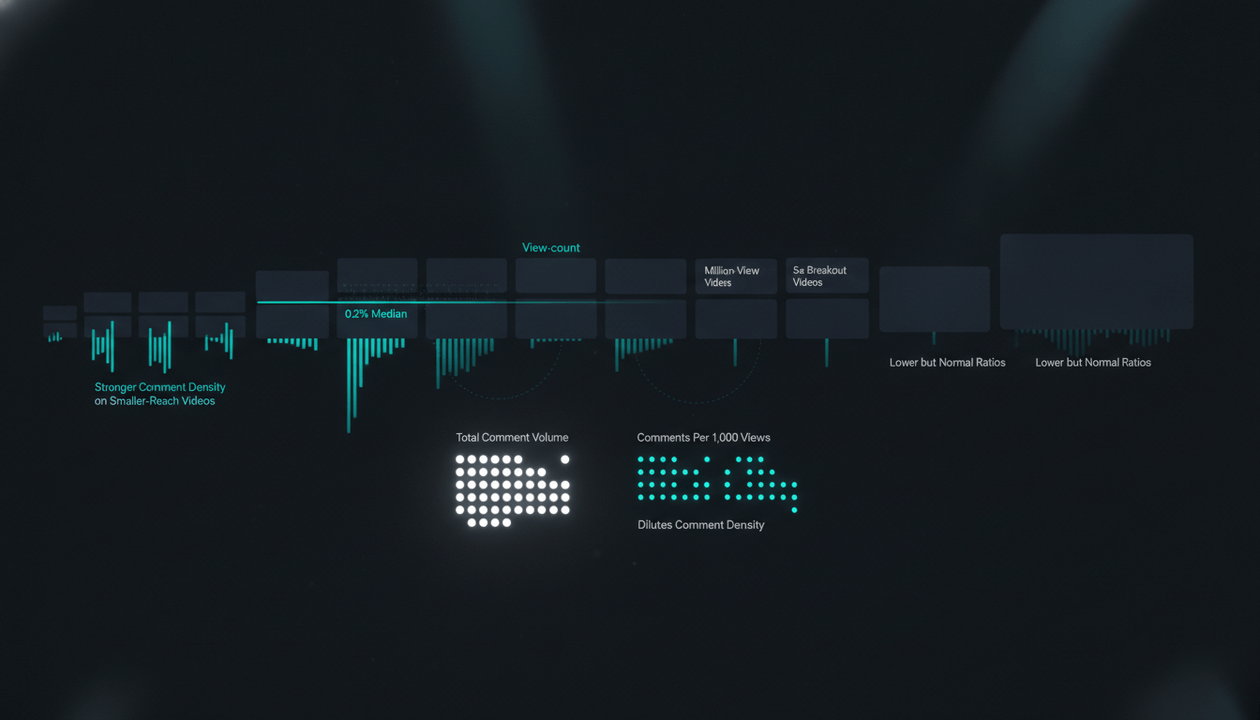
What is a good YouTube comment-to-view ratio? OverseerOS analyzed 3,521 mature long-form videos across 91 channels. Roughly 0.2%, or about 2 comments per 1,000 views, was typical, while million-view videos had much lower comment density.

What Is a Good Like-to-View Ratio on YouTube? We Analyzed 3,292 Videos
What is a good YouTube like-to-view ratio? OverseerOS analyzed 3,292 mature long-form videos across 89 channels. The median was 2.92%, while million-view videos averaged lower engagement density and 5x breakouts had a median like rate of just 2.41%.

What Percentage of Subscribers Watch a YouTube Video? We Tracked 87 Uploads
What percentage of subscribers watch a YouTube video? Public data cannot reveal the exact subscriber watch rate, but OverseerOS tracked 87 long-form uploads across 56 channels and found median first-day views equal to 13.6% of subscriber count, with huge differences by channel size.

How Many YouTube Videos Before You Go Viral? We Analyzed 2,572 Videos
How many YouTube videos do you need before going viral? OverseerOS analyzed 2,572 mature long-form videos across 57 channels. Among channels that produced a rolling 5x breakout, the median first breakout arrived between the 12th and 13th qualifying upload.

Should You Post YouTube Videos at the Same Time? We Analyzed 3,357 Videos
Should you upload YouTube videos at the same time every time? OverseerOS analyzed 3,357 mature long-form videos across 87 channels. Exact-time consistency showed almost no median performance advantage, while broader time-of-day windows showed only a modest association.

Do Curiosity Gap YouTube Titles Get More Views? We Analyzed 3,357 Videos
Do curiosity-gap YouTube titles actually perform better? OverseerOS analyzed 3,357 mature long-form videos across 87 channels. Curiosity-signaling titles had a weaker median but a slightly stronger breakout tail, while “this/these” framing underperformed and revelation-style titles performed better.

Do Negative Words in YouTube Titles Get More Views? We Analyzed 3,357 Videos
Do negative words in YouTube titles improve performance? OverseerOS analyzed 3,357 mature long-form videos across 87 channels. Negative-framed titles showed only a small median lift, but warnings and problem-focused titles appeared more often among strong outliers.

Do “Why” YouTube Titles Get More Views? We Analyzed 3,155 Videos
Do YouTube titles starting with “Why” perform better? OverseerOS analyzed 3,155 mature long-form videos across 83 channels. “Why” titles had a slightly weaker median but a somewhat higher 2x-outlier rate, revealing a more polarized performance pattern.

Should You Put the Year in a YouTube Title? We Analyzed 3,132 Videos
Should you add 2026 to a YouTube title? OverseerOS analyzed 3,132 mature long-form videos across 82 channels. Year-tagged titles showed no stable performance advantage after stricter channel, publication-year, and full-date controls.

Do “How To” YouTube Titles Get More Views? We Analyzed 1,794 Videos
Do “How To” YouTube titles actually perform better? OverseerOS analyzed 1,794 mature long-form videos across 49 channels. “How To” videos reached a 1.60x median channel-relative performance and were disproportionately represented among 2x and 5x outliers.

Why Do YouTube Views Stop After 24 Hours? We Tracked 181 Videos
Why do YouTube views seem to stop after 24 hours? OverseerOS tracked 181 uploads across 61 channels through their first 72 hours. Most videos kept gaining views, but their growth rate slowed sharply after day one, while a small minority accelerated later.

How Many Views Should a YouTube Video Get in 24 Hours? We Tracked 179 Uploads
How many views should a YouTube video get in its first 24 hours? OverseerOS tracked 179 uploads across 57 channels near the 24-hour mark. The results varied enormously, showing why your own comparable-video baseline matters more than a universal view target.

Why Are My YouTube Views So Inconsistent? We Analyzed 1,555 Videos
Why do YouTube views fluctuate so much between uploads? OverseerOS analyzed 1,555 mature long-form videos across 42 channels and found that the median channel’s middle 50% of videos spanned a 5.04x view range. Large swings between consecutive uploads were common.

Can a Small YouTube Channel Go Viral? We Analyzed 2,920 Videos
Can a small YouTube channel go viral? OverseerOS analyzed 2,920 mature long-form videos across 76 channels. Channels below 100K subscribers produced 5x and 10x relative breakouts more often than larger channels, even though their raw view counts were much smaller.

Does the 80/20 Rule Apply to YouTube? We Analyzed 2,920 Videos
Does the 80/20 rule really apply to YouTube? OverseerOS analyzed 2,920 mature long-form videos across 76 channels. The median top 20% generated 64% of views, while smaller channels showed dramatically stronger winner concentration.

Do YouTube Shorts Hurt Long-Form Views? We Analyzed 370 Videos
Do YouTube Shorts hurt long-form performance? OverseerOS analyzed 370 mature long-form videos across 37 channels before and after Shorts adoption. Raw views suggested a decline, but the effect disappeared after adjusting for video age.

Does Taking a Break Hurt Your YouTube Channel? We Analyzed 459 Comebacks
Does taking a break hurt your YouTube channel? OverseerOS analyzed 459 matched long-form comeback uploads across 284 channels. Shorter 30-to-89-day breaks showed no clear penalty, while returns after 90 days or more faced a modest first-video disadvantage.

How Many Videos Should You Analyze on a YouTube Channel? We Tested 12,400 Samples
How many videos are enough for a reliable YouTube channel analysis? OverseerOS tested 12,400 samples across 1,632 mature long-form videos from 31 channels. Five-video audits were highly unstable, 20 videos created the first defensible performance baseline, and 30 produced the strongest practical result.

How Often Do YouTube Videos Go Viral? Data From 2,726 Videos
How often does a YouTube video actually go viral? Our analysis of 2,726 mature long-form videos across 71 channels reveals real breakout rates, how frequently 5x and 10x outliers occur, and whether one viral hit helps the next upload.

What Is a Good Average View Count on YouTube? We Analyzed 2,580 Videos
What counts as a good view count on YouTube? Our analysis of 2,580 mature long-form videos reveals why averages can mislead creators, why median views provide a better benchmark, and what separates typical uploads from top-performing videos.

Do Pipes in YouTube Titles Hurt Views? We Analyzed 6,718 Million-View Videos
OverseerOS analyzed 6,718 million-view YouTube titles and 447 same-channel matched pairs to test whether the pipe symbol hurts performance. Pipe titles won 218 comparisons, while non-pipe titles won 228, revealing no measurable universal penalty.

Should YouTube Titles Say “I” or “You”? We Analyzed 6,718 Million-View Videos
OverseerOS analyzed 6,718 million-view YouTube titles and built 256 one-to-one matched comparisons to test whether “I/My” or “You/Your” framing gets more views. The raw data strongly favored “I,” but the apparent advantage disappeared after controlling for channel, format, and publication timing.

Do Colons in YouTube Titles Get More Views? We Analyzed 6,708 Million-View Videos
OverseerOS analyzed 6,708 million-view YouTube titles and built 649 one-to-one matched pairs to test whether colons increase views. Colon titles won 325 comparisons and titles without colons won 324, showing that colons organize information but are not a universal growth tactic.

Do Exclamation Marks in YouTube Titles Get More Views? We Analyzed 6,708 Million-View Videos
OverseerOS analyzed 6,708 million-view YouTube titles and built 744 one-to-one matched comparisons to test whether exclamation marks increase views. Exclamation titles won 367 comparisons, while titles without them won 376, revealing no reliable universal advantage.

Do Brackets in YouTube Titles Get More Views? We Analyzed 6,634 Million-View Videos
OverseerOS analyzed 6,634 million-view YouTube titles and built 894 one-to-one matched comparisons to test whether brackets and parentheses increase views. Bracketed titles won 453 comparisons and non-bracketed titles won 441, revealing no reliable universal advantage.

Do Emojis in YouTube Titles Get More Views? We Analyzed 6,634 Million-View Videos
OverseerOS analyzed 6,634 million-view YouTube titles and built 572 matched comparisons to test whether emojis increase views. The apparent short-video advantage disappeared after controlling for channel, format, and publication timing.

Should YouTube Titles Be Questions? We Analyzed 7,935 Million-View Videos
OverseerOS analyzed 7,935 million-view YouTube titles and built 891 one-to-one matched pairs to test whether questions outperform statements. Question titles won 445 comparisons and statement titles won 446, showing that punctuation is a channel-specific choice, not a universal growth lever.

How Similar Can a YouTube Video Be and Still Break Out? We Analyzed 1,332 Million-View Videos
OverseerOS analyzed 1,332 million-view YouTube videos to discover how often successful creators reuse topics, titles, and hooks. The data shows that proven subjects repeat frequently, but close wording overlap is rare.

Do Numbers in YouTube Titles Get More Views? We Analyzed 6,878 Million-View Videos
OverseerOS analyzed 6,878 million-view YouTube titles across 195 English-language channels to find out whether numbers actually help videos perform. Only 33.7% contained a digit, and within-channel comparisons showed only a small difference between number and no-number titles. The data reveals when numbers add real value and when they are just another title trick.

How Should You Capitalize YouTube Titles? We Analyzed 6,878 Million-View Videos
OverseerOS analyzed 6,878 million-view YouTube titles across 195 English-language channels to see how successful creators capitalize their titles. Title Case dominated the sample, but within-channel comparisons revealed that capitalization style alone was not a meaningful performance advantage.

YouTube Niche Bending Study: We Analyzed 3,445 Million-View Videos
Does YouTube niche bending actually work? OverseerOS analyzed 3,445 million-view long-form videos across 768 channels and 42 niches. The data shows how often winning subjects cross niche boundaries, which markets naturally overlap, and how creators can turn proven formats into original channel opportunities.

Is Your YouTube Niche Saturated? We Analyzed 7,983 Videos
OverseerOS analyzed 7,983 long-form YouTube videos across 289 channels to find out what niche saturation actually looks like. The data reveals which markets spread major wins across many creators, which are dominated by a few incumbents, and how to test your own niche before you start.

What Happens After a YouTube Video Goes Viral? We Analyzed 563 Breakouts
What happens after one YouTube video suddenly takes off? We analyzed 563 long-form breakout events across 152 channels and tracked the next three uploads. The viral spike usually collapsed fast, but follow-up videos often stayed above the channel's old baseline.

Should You Put Hashtags in YouTube Titles? We Analyzed 19,440 Million-View Videos
OverseerOS analyzed 19,440 million-view long-form YouTube videos across 1,140 channels. Only 0.34% of titles used a semantic word hashtag, and 99.66% did not.
How Many Views Is Viral on YouTube? We Analyzed 2,826 Videos
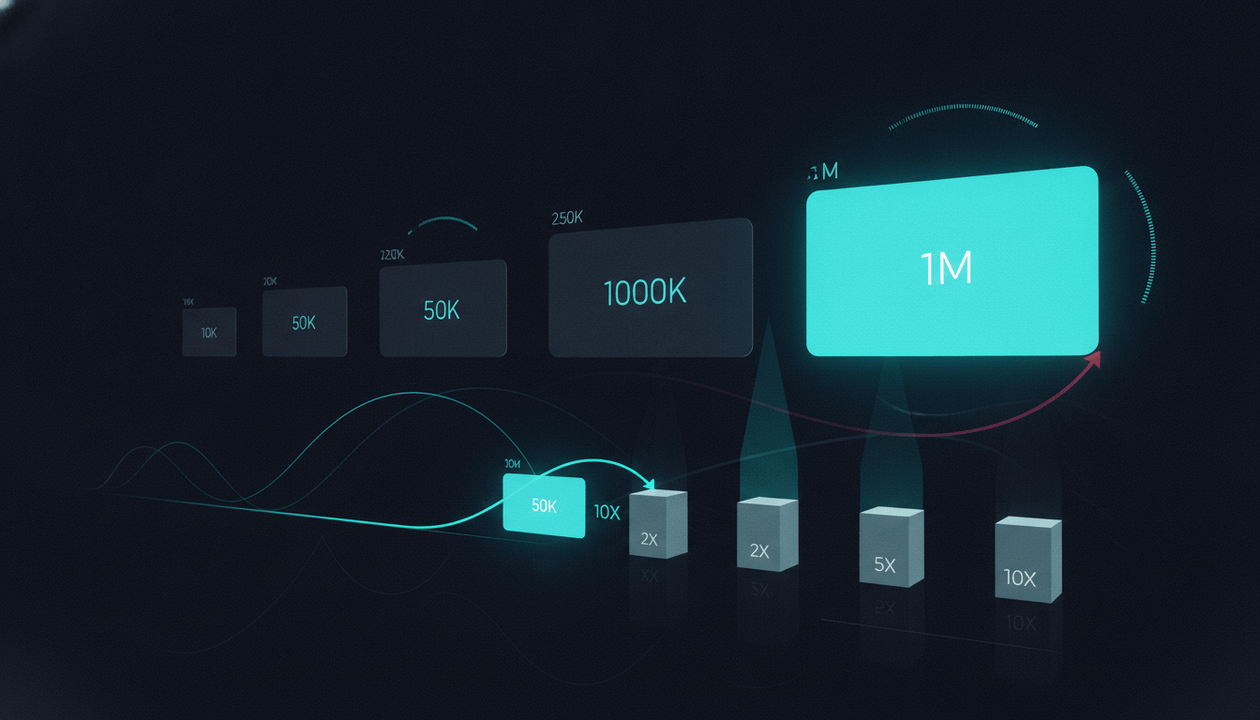
OverseerOS analyzed 2,826 recent YouTube videos across 83 channels. The median relative breakout had 41,494 views, while 70.8% had fewer than 100,000 and only 3.6% had reached 1 million.

How Many Videos Does It Take to Grow on YouTube? We Analyzed 168 Breakout Channels
OverseerOS analyzed 168 breakout YouTube channels. Long-form-first channels had a median of 37 public videos, while 42.1% had 30 or fewer and 59.6% had 50 or fewer.

How Often Should You Post on YouTube? We Analyzed 168 Breakout Channels
OverseerOS analyzed 168 breakout YouTube channels. Long-form-first channels uploaded a median of 7 times per month, while Shorts-first channels published 23 times per month.

How Long Does It Take a YouTube Video to Go Viral? We Analyzed 2,826 Videos
OverseerOS analyzed 2,826 YouTube videos across 83 channels. The median breakout observation was 72.8 hours after upload, while 71.5% of breakout snapshots appeared within the first seven days.

Should You Put Keywords in YouTube Titles? We Analyzed 3,073 Million-View Videos
OverseerOS analyzed 3,073 million-view YouTube videos across 821 channels. Only 0.9% of titles contained the full extracted topic phrase, while 44.6% used a specific topic entity.

Should You Stick to One Niche on YouTube? We Analyzed 1,620 Million-View Videos
OverseerOS analyzed 1,620 million-view videos across 163 channels. In the median channel, the most repeated exact topic entity appeared in only 20% of winners, while 97.5% used a unique extracted topic query for every qualifying video.
How Long Should a YouTube Video Be? We Analyzed 1,257 Videos
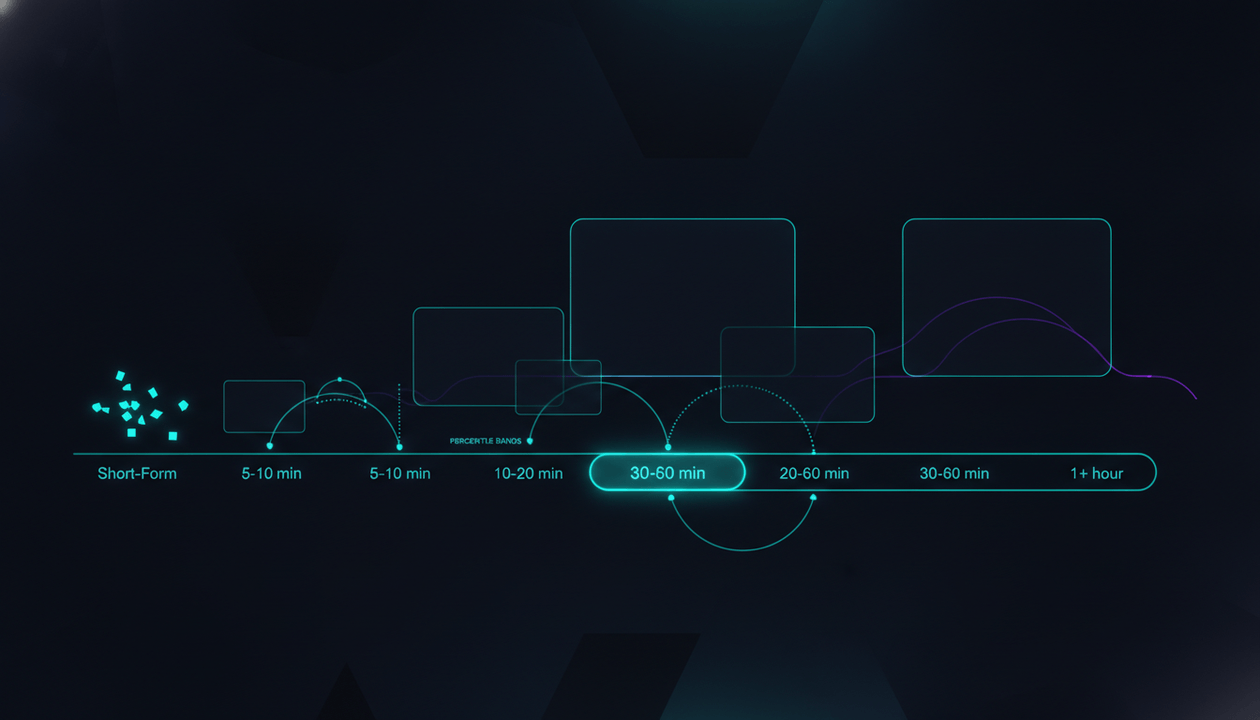
OverseerOS analyzed 1,257 recent long-form YouTube videos across 245 channels. Videos between 30 and 60 minutes had the highest adjusted reach, while 8 to 12 minutes had the highest visible engagement.

Should Your YouTube Hook Repeat the Title? We Analyzed 3,066 Million-View Videos
OverseerOS analyzed 3,066 hooks from million-view YouTube videos across 816 channels. Only 0.37% repeated the full title, while 77.6% shared no meaningful content words with it.

Best YouTube Niches in 2026: We Analyzed 1,379 Videos
OverseerOS analyzed 1,379 recent videos across 174 channels and 13 niches. Storytime, gaming, history, and animation showed some of the strongest size-and-format-adjusted reach.

What Is a Good YouTube Engagement Rate? We Analyzed 2,251 Videos
OverseerOS analyzed 2,251 recent YouTube videos across 309 channels. Median engagement was 3.48% for long-form and 2.71% for short-form, while roughly 5% was top-quartile performance in both formats.

Do Viral YouTube Titles Need to Be Original? We Analyzed 2,442 Videos
OverseerOS analyzed 2,442 YouTube videos to test whether viral titles need original wording. Breakout titles were not more novel and often reused proven language without copying full titles.

What Is a Good YouTube VPH? We Analyzed 2,826 Videos
What is a good YouTube VPH? OverseerOS analyzed 2,826 competitor videos across 83 channels and found that nearly half of breakout videos were below 500 views per hour.

What Fast-Growing YouTube Channels Actually Look Like: We Studied 167 Breakouts
OverseerOS analyzed 167 breakout YouTube channels and 1,538 recent breakout videos. Most had fewer than 100,000 subscribers, multiple recent winners, and far smaller channel libraries than most creators expect.

What Is a Good YouTube Views-to-Subscriber Ratio? Data From 2,043 Videos
What is a good YouTube views-to-subscriber ratio? OverseerOS analyzed 2,043 recent videos across 273 channels and found that the answer changes dramatically with channel size, format, and video age.

Does Posting More Often on YouTube Help? We Analyzed 2,565 Upload Gaps
We analyzed 2,565 consecutive YouTube upload gaps across 59 breakout-producing channels. Breakout rates barely changed whether creators waited one day, one week, or more than two weeks.

Best Day to Post on YouTube? We Analyzed 2,624 Uploads
We analyzed 2,624 YouTube uploads across 59 breakout-producing channels. Saturday had the strongest early breakout rate at 15.7%, but the overall timing effect was small.