Most people searching for an AI YouTube video generator are looking for the wrong thing.
They think the hard part is generating the final video.
It is not.
The hard part is choosing a video idea people actually want to click, turning that idea into a strong title, building a thumbnail that creates curiosity, writing a script that holds attention, generating a voiceover that fits the channel, and only then moving into editing or video generation.
A weak idea with a fast AI edit is still a weak video.
A generic script with stock footage is still generic.
A faceless video with no real hook is still invisible.
That is why the best AI YouTube video workflow does not start with the render button.
It starts before the edit.
This guide compares the best AI YouTube video generator tools in 2026, what each one is actually good for, and how to build a smarter workflow from proven idea to script, voiceover, thumbnail, and final edit.
Key Takeaways
- The best AI YouTube video generator is not always the tool that creates the fastest final video. It is the workflow that helps you create videos people actually want to click and watch.
- Final video generation tools like InVideo, VEED, Runway, Luma, Pika, Synthesia, HeyGen, StoryShort, and MagicLight can help produce visuals, edits, avatars, clips, or complete videos depending on the use case.
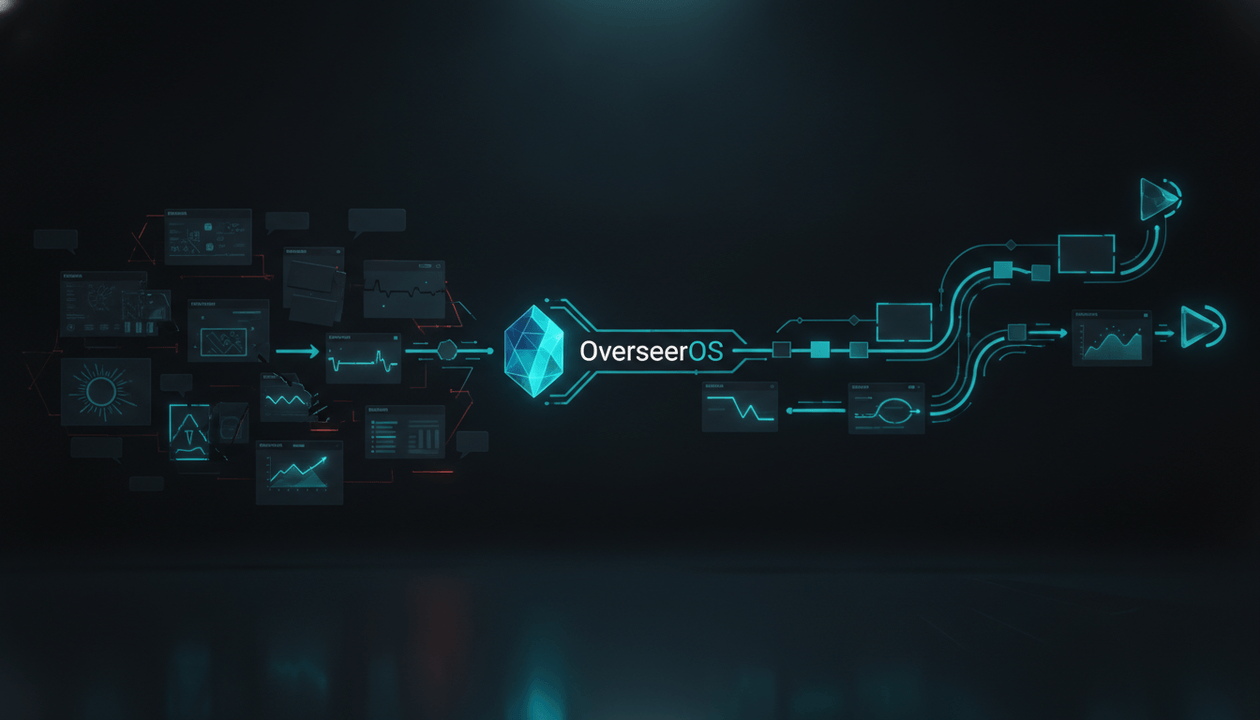
- OverseerOS is not currently a final video editing or video generation tool. It is the YouTube pre-production engine before editing: channel analysis, channel blueprints, smart content planning, competitor tracking, winning topics, titles, scripts, thumbnails, and ElevenLabs-powered voiceovers.
- A serious YouTube workflow should start with topic proof, title, thumbnail, script, and voiceover before final editing or AI video generation.
- InVideo says it can turn ideas into videos and supports text-to-video workflows with voiceovers and more. Source: InVideo
- VEED positions itself as an AI video creation platform for generating and editing in one workflow, with tools for AI video, avatars, dubbing, subtitles, and voice generation. Source: VEED
- Runway and Luma are better for cinematic AI video generation and visual assets than full YouTube content strategy. Source: Runway, Source: Luma
- YouTube requires creators to disclose realistic altered or synthetic content when viewers could mistake it for a real person, place, scene, or event. Source: YouTube Help
- AI video can speed up production, but originality, viewer value, and strong packaging still decide whether the video has a chance.
Quick Verdict: Best AI YouTube Video Generator Tools in 2026
| Tool | Best For | Main Strength | Main Weakness |
|---|---|---|---|
| OverseerOS | YouTube pre-production before final editing | Channel blueprints, winning topics, titles, scripts, thumbnails, ElevenLabs-powered voiceovers, and planning | Does not currently generate or edit final videos |
| InVideo AI | Prompt-to-video YouTube creation | Turns ideas or text into videos with visuals, voiceovers, and editing workflow | Output can feel generic if the idea and script are weak |
| VEED | Browser-based AI video creation and editing | AI video, avatars, subtitles, dubbing, voice tools, and editing in one platform | Better as an editing/generation platform than a YouTube strategy engine |
| CapCut | Short-form video editing and quick AI-assisted creation | Fast editing, captions, mobile workflows, Shorts and TikTok-style production | Less strategic for long-form YouTube planning |
| Runway | Cinematic AI video generation | High-quality generative video models and creative visual control | Not a full YouTube production planner |
| Luma | AI video generation and cinematic visual creation | Dream Machine and mobile AI video workflows | Strong for visuals, not YouTube strategy |
| Pika | Creative short AI video effects and image animation | Fast creative video generation and expressive animation features | Better for clips and visuals than full YouTube workflow |
| Synthesia | AI avatar videos for business and education | Text-to-video with AI avatars and voices in many languages | More business/training focused than creator-native YouTube packaging |
| HeyGen | AI avatar and explainer videos | Text, image, and audio-to-video workflows with avatars, narration, captions, and visuals | Strong for avatar/explainer content, less for faceless channel strategy |
| StoryShort | Faceless Shorts and social videos | Script, visuals, voiceover, and captions for TikTok, Shorts, and Reels | More short-form focused |
| MagicLight | Long-form AI story/video generation | Turns ideas, scripts, or stories into longer AI videos | Quality control and originality still matter |
| OpusClip | Repurposing long videos into Shorts | Finds clips from long videos and turns them into short-form content | Not for creating original long-form videos from scratch |
| YouTube Studio | Native performance feedback and testing | Analytics, Inspiration, and title/thumbnail testing for eligible creators | Not a competitor-driven production workflow |
What Is an AI YouTube Video Generator?
An AI YouTube video generator is a tool that helps create video content using artificial intelligence.
Depending on the tool, that can mean:
- Turning a text prompt into a video
- Turning a script into scenes
- Adding AI voiceover
- Generating visuals
- Creating avatar videos
- Adding captions
- Editing clips
- Repurposing long videos into Shorts
- Generating B-roll-style visual assets
- Creating social videos from templates
- Automating parts of the production workflow
But the phrase is messy because different tools solve different jobs.
A tool like Runway is strong for generating cinematic AI visuals.
A tool like Synthesia is strong for avatar videos.
A tool like OpusClip is strong for turning long videos into short clips.
A tool like InVideo is closer to prompt-to-video creation.
A tool like OverseerOS prepares the YouTube video before final editing by helping creators find proven topics, write scripts, generate thumbnails, and create ElevenLabs-powered voiceovers.
Those are not the same category.
That is why choosing the right tool starts with knowing which part of your workflow is broken.
Why Most AI YouTube Video Generators Fail Creators
Most AI video generators make video creation faster.
That does not automatically make the video better.
The most common failure looks like this:
- The creator types a vague prompt.
- The tool generates a generic script.
- It adds stock footage or AI visuals.
- It adds an AI voice.
- It exports a video.
- The creator uploads it.
- Nobody watches.
The tool did its job.
The strategy failed.
Because YouTube does not reward “a video exists.”
YouTube rewards videos that get clicked, watched, and satisfy viewers.
A video generator can help with production, but it cannot magically fix:
- Weak topic selection
- Boring titles
- Unclear thumbnails
- Generic scripts
- Bad hooks
- Low originality
- Poor pacing
- Reused content risk
- No audience understanding
- No competitor research
- No content gap
The biggest mistake is thinking:
If I can generate videos faster, I can grow faster.
The better thought is:
If I can generate the right videos faster, I can grow faster.
That one word matters.
What a Serious AI YouTube Video Workflow Should Include
A real AI YouTube video workflow needs more than video generation.
It should include the full chain.
| Stage | What It Does | Why It Matters |
|---|---|---|
| Channel research | Studies what works in the niche | Prevents random ideas |
| Competitor tracking | Finds what competitors are publishing | Shows market movement |
| Outlier discovery | Identifies videos beating baseline | Reveals unusual demand |
| Topic planning | Turns research into a pipeline | Keeps output focused |
| Title generation | Creates the click promise | Helps earn impressions into views |
| Thumbnail creation | Creates the visual question | Drives curiosity before the click |
| Script writing | Fulfills the title and thumbnail promise | Protects retention |
| Voiceover generation | Turns script into narration | Speeds up production |
| Final editing or generation | Builds the actual video | Creates the publishable asset |
| Performance review | Measures what worked | Improves the next upload |
Most AI video generator articles focus only on the final editing or generation stage.
That is too late.
The best videos are won before the edit starts.
Best YouTube Pre-Production Engine Before Final Video Generation: OverseerOS
OverseerOS is not currently a final video generator.
It does not currently generate or edit finished YouTube videos.
That matters, and it should be clear.
OverseerOS is strongest before the editing stage.
It is the YouTube pre-production layer that helps creators build the assets that make a video worth producing:
- Channel analysis
- Channel blueprint cloning
- Smart content planning
- Competitor tracking
- Winning topic discovery
- Title generation
- Script writing
- Thumbnail generation
- ElevenLabs-powered voiceovers
- Production-ready planning
This is a powerful position because the final video is only as good as the strategy behind it.
A creator can use a final video generator after OverseerOS, but OverseerOS helps answer the more important question first:
What should this video actually be?
What OverseerOS Does Right Now
OverseerOS currently helps creators:
- Analyze YouTube channels
- Clone channels into strategic blueprints
- Understand tone DNA, pacing, hooks, title formulas, and content patterns
- Build smart content planners
- Add competitors to planners
- Find winning topics from competitor channels
- Plan topics
- Generate titles
- Write scripts
- Generate thumbnails
- Generate ElevenLabs-powered voiceovers for scripts
This makes it a strong fit for creators who want a serious YouTube workflow before final editing.
For example, instead of starting with:
Make me a video about AI tools.
A stronger OverseerOS workflow looks like:
- Analyze channels already winning in the niche.
- Find breakout topics from competitors.
- Add winning topics to the planner.
- Generate titles from proven patterns.
- Create a thumbnail direction.
- Write the script.
- Generate an ElevenLabs-powered voiceover.
- Move the production-ready assets into editing or an external video generation tool.
That is a much better chain.
Where OverseerOS Fits in an AI Video Stack
Think of OverseerOS as the layer before final video creation.
| Workflow Stage | OverseerOS Role |
|---|---|
| Research | Finds proven channel and competitor patterns |
| Strategy | Turns patterns into topics and content plans |
| Packaging | Generates titles and thumbnails |
| Script | Writes scripts from planned topics |
| Voiceover | Generates ElevenLabs-powered voiceovers |
| Editing | Not currently the final editing/generation tool |
| Production handoff | Prepares assets for editing or external generation |
This is the honest positioning.
OverseerOS does not replace InVideo, Runway, VEED, CapCut, or another final editing tool today.
It makes the work you send into those tools stronger.
Auto Edit Direction
OverseerOS now offers an Auto Edit workflow where topics with scripts and voiceovers can move into an AI-powered studio for Shorts and long-form video production.
That feature is now live.
So today, the correct way to understand OverseerOS is:
OverseerOS helps creators build the topic, title, thumbnail, script, and voiceover before final editing or generation.
That is still extremely valuable.
Because most AI video tools can generate a video.
Far fewer tools can help you decide what video deserves to exist.
Who Should Use OverseerOS?
Use OverseerOS if you want to:
- Reverse-engineer successful YouTube channels
- Find proven topics before creating
- Build content from competitor patterns
- Plan videos inside a smart content planner
- Generate titles and scripts
- Create thumbnails from proven patterns
- Generate ElevenLabs-powered voiceovers
- Build production-ready assets before editing
- Avoid creating random AI videos with no strategy
For the full strategy workflow, start with OverseerOS to reverse-engineer high-performing YouTube channels. If you want the planning layer, read the AI YouTube content planner tools guide.
Best Prompt-to-Video Tool for YouTube: InVideo AI
InVideo AI is one of the most direct tools for creators who want to turn prompts or text into videos.
Its official site says creators can turn ideas into videos and create ads, explainers, stories, and other video types. It also has text-to-video pages that describe generating videos with cinematic effects, animations, human characters, and voiceovers from prompts. Source: InVideo, Source: InVideo Text to Video
This makes InVideo useful for creators who want a fast path from idea to edited video.
Who Should Use InVideo AI?
Use InVideo AI if you want:
- Prompt-to-video creation
- Script-to-video workflows
- AI voiceovers
- Stock-style video assembly
- Social videos
- Explainers
- Fast production from text
- A tool closer to finished video generation
Where InVideo Is Weaker
InVideo can help create videos quickly.
But speed can become a trap.
If you start with a weak prompt, you may get a generic video.
Creators still need to solve:
- Topic validation
- Audience demand
- Title and thumbnail strategy
- Script originality
- Retention structure
- Monetization safety
- Niche positioning
That is why a strong workflow is:
Use OverseerOS for proven topics, titles, scripts, thumbnails, and voiceovers. Then use a final video generation or editing tool like InVideo if it fits your production style.
Best Browser-Based AI Video Creation Platform: VEED
VEED is a strong option for creators who want AI video creation and editing in a browser.
VEED positions itself as an AI video creation platform where users can generate and edit in one workflow, with tools for AI video, talking heads, dubbing, subtitles, AI avatars, text-to-speech, and video editing. Source: VEED
That makes it useful for creators who want a broader editing environment instead of a pure generative model.
Who Should Use VEED?
Use VEED if you want:
- Browser-based video editing
- AI video generation tools
- AI avatars
- Subtitles and captions
- Dubbing
- AI voice tools
- Text-to-speech video
- Simple social video creation
- Editing and generation in one place
Where VEED Is Weaker
VEED is useful for producing and editing videos.
But it is not mainly a YouTube competitor research or content strategy tool.
It does not replace the need to know:
- Which topic has demand
- Which title will create curiosity
- Which thumbnail pattern fits the niche
- Which competitor videos are breaking out
- Which script structure will hold attention
Use VEED for creation and editing.
Use OverseerOS for the strategy and pre-production layer before the edit.
Best AI Video Tool for Cinematic Visuals: Runway
Runway is one of the strongest AI video platforms for creators who want cinematic visuals, generated scenes, and high-end creative control.
Runway describes Gen-4 as using visual references and instructions to create new images and videos with consistent styles, subjects, and locations. Source: Runway Gen-4
Runway also describes Gen-4.5 as a video generation model with strong visual fidelity, creative control, and cinematic outputs. Source: Runway Gen-4.5
This makes Runway useful for creators who need AI-generated visuals rather than full YouTube planning.
Who Should Use Runway?
Use Runway if you want:
- Cinematic AI video clips
- Visual consistency
- Stylized video generation
- Image-to-video workflows
- Creative B-roll
- Experimental visuals
- High-end AI-generated scenes
Where Runway Is Weaker
Runway is not a YouTube content planner.
It will not automatically give you:
- Winning topics
- Competitor analysis
- Title formulas
- Thumbnail concepts
- Long-form script structure
- Voiceover workflow
- Production planning
Runway is a visual engine.
Not a YouTube growth strategy engine.
The best use is to pair it with a pre-production workflow.
Best AI Video Generator for Creative Visual Exploration: Luma
Luma’s Dream Machine is another strong option for AI video generation.
Luma’s AI video generator page says creators can create, preview, and export videos directly from mobile using Dream Machine. Source: Luma
This makes Luma useful for fast visual exploration, cinematic clips, and AI-generated scenes.
Who Should Use Luma?
Use Luma if you want:
- AI-generated video clips
- Mobile AI video creation
- Visual experimentation
- Cinematic B-roll ideas
- Image-to-video or prompt-based visual creation
- Fast preview and export workflows
Where Luma Is Weaker
Luma helps create visuals.
But YouTube success needs more than visuals.
Creators still need:
- Strong topics
- Strong hooks
- Strong titles
- Strong thumbnails
- Scripts
- Voiceover
- Editing rhythm
- Audience understanding
Use Luma when the visual asset is the bottleneck.
Use OverseerOS when the idea, packaging, and script are the bottleneck.
Best Creative Short AI Video Tool: Pika
Pika is useful for creative short AI video effects, image animation, and expressive video generation.
Pika’s homepage highlights Pikaformance, which can create hyper-real expressions synced to sound and make images sing, speak, rap, bark, and more. Source: Pika
That makes Pika interesting for short creative clips, social content, and visual experiments.
Who Should Use Pika?
Use Pika if you want:
- Creative short AI clips
- Image animation
- Sound-synced expressions
- Experimental social videos
- Meme-style AI content
- Stylized visual assets
Where Pika Is Weaker
Pika is not built as a full YouTube content system.
It can help generate creative visuals, but it will not decide:
- What your video should be about
- Which competitor pattern to model
- What title to use
- What thumbnail should promise
- How to structure a long-form script
Pika is useful inside a broader workflow.
It is not the whole workflow.
Best AI Avatar Video Tool for Business YouTube: Synthesia
Synthesia is one of the strongest AI avatar video platforms.
Its homepage says users can create AI-generated videos from text with AI avatars and voiceovers in 160+ languages. Source: Synthesia
Synthesia also says users can choose from 240+ realistic AI avatars, create their own from a photo, or prompt customizable avatars. Source: Synthesia Avatars
This makes Synthesia strong for business videos, training, explainers, education, and corporate content.
Who Should Use Synthesia?
Use Synthesia if you want:
- AI avatar videos
- Training videos
- Business explainers
- Multilingual content
- Avatar presenters
- Internal education content
- Professional talking-head style videos
Where Synthesia Is Weaker
Synthesia is not the first tool I would choose for most faceless YouTube channels focused on entertainment, storytelling, commentary, or viral packaging.
It is strong for avatar-led communication.
But many YouTube formats need:
- Strong topic research
- Emotional packaging
- Competitive positioning
- Thumbnail strategy
- Retention writing
- Visual pacing beyond an avatar
Use Synthesia if avatar presentation fits your format.
Use a YouTube strategy workflow first if growth is the goal.
Best AI Avatar and Explainer Video Tool: HeyGen
HeyGen is strong for avatar videos, explainers, video translation, and AI-generated presenter-style content.
HeyGen’s homepage says users can create AI videos from text, images, stock images, or audio, and generate videos with narration, captions, visuals, animations, templates, and avatars. Source: HeyGen
That makes HeyGen useful for creators, marketers, educators, and businesses that want presenter-style videos without recording.
Who Should Use HeyGen?
Use HeyGen if you want:
- AI avatar videos
- Explainer videos
- Text-to-video with templates
- Video translation
- Branded social videos
- Presenter-style content
- Narration and captions
Where HeyGen Is Weaker
HeyGen helps create polished avatar-style videos.
But like Synthesia, it does not replace YouTube strategy.
If your channel depends on outlier topics, thumbnails, faceless storytelling, documentary pacing, or competitor-driven ideas, you still need a pre-production system.
Best AI Faceless Shorts Generator: StoryShort
StoryShort is built for faceless short-form videos.
Its homepage says it can create faceless AI videos for TikTok, YouTube Shorts, and Instagram Reels on autopilot, with AI script writing, visuals, voiceover, and captions. Source: StoryShort
That makes it a strong option if your focus is short-form volume.
Who Should Use StoryShort?
Use StoryShort if you want:
- Faceless Shorts
- TikTok-style videos
- Reels
- AI script, visuals, voiceover, and captions
- Short-form automation
- Fast daily posting workflows
Where StoryShort Is Weaker
Short-form automation can become generic fast.
To avoid that, our breakdown of the best AI tools for YouTube Shorts focuses on finding stronger Shorts ideas and hooks before you automate production.
If every video follows the same style and does not add real value, the content can feel repetitive.
For serious YouTube growth, creators still need:
- Better topic selection
- Better hooks
- Stronger original angles
- Series thinking
- Audience understanding
- Performance review
Use StoryShort for short-form creation.
Use a strategy workflow to decide what deserves to be created.
Best Long-Form AI Video Generator: MagicLight
MagicLight is positioned around longer AI video generation.
Its homepage says it can create complete AI videos up to 50 minutes long and turn ideas, scripts, or stories into finished videos. Source: MagicLight
Its Google Play listing describes it as an all-in-one AI video generator, text-to-video maker, and editor that turns stories or scripts into videos with consistent characters. Source: MagicLight Google Play
That makes it interesting for creators exploring long-form AI video generation.
Who Should Use MagicLight?
Use MagicLight if you want:
- Longer AI-generated videos
- Story-to-video workflows
- Script-to-video generation
- Animated or story-based content
- Long-form AI experiments
- Consistent character-style videos
Where MagicLight Is Weaker
Longer AI-generated videos need serious quality control.
The longer the video, the more important the script, pacing, voiceover, visual variety, and originality become.
A 30-minute AI video with weak structure is not better because it is long.
It is just longer.
Use MagicLight carefully.
Make sure the topic, script, and viewer promise are strong before generating long videos.
Best AI Tool for Repurposing Long Videos Into Shorts: OpusClip
OpusClip is not a full AI YouTube video generator from scratch.
It is a repurposing tool.
Its homepage says it turns long videos into short clips and can publish them to social platforms in one click. It supports sources such as YouTube, Google Drive, Vimeo, Zoom, Twitch, Facebook, LinkedIn, and more on Pro plans. Source: OpusClip
That makes OpusClip useful if you already have long-form content and want Shorts.
Who Should Use OpusClip?
Use OpusClip if you want:
- Long video to short clips
- Podcast repurposing
- YouTube Shorts from existing videos
- Auto clipping
- Captions
- Faster social distribution
- Repurposing from webinars, podcasts, interviews, or long-form videos
Where OpusClip Is Weaker
OpusClip does not solve original video creation.
It helps after you already have content.
It will not help much if you have no:
- Original idea
- Long-form video
- Script
- Voiceover
- Thumbnail
- Topic strategy
Use OpusClip to multiply content.
Not to replace content strategy.
Best Native Tool for Feedback and Testing: YouTube Studio
YouTube Studio is not an AI video generator, but it should still be part of the workflow.
It gives creators the first-party performance feedback they need after publishing.
YouTube Analytics helps creators understand channel and video performance through metrics and reports. Source: YouTube Analytics Help
YouTube’s Inspiration tab can help creators brainstorm ideas, titles, thumbnails, and outlines with AI assistance. Source: YouTube Inspiration Tab
YouTube also supports title and thumbnail testing for eligible videos, letting creators test titles, thumbnails, or combinations inside YouTube Studio. Source: YouTube A/B Testing
Who Should Use YouTube Studio?
Every creator.
Use it to understand:
- CTR
- Impressions
- Watch time
- Retention
- Traffic sources
- Audience behavior
- Returning viewers
- New viewers
- Revenue if monetized
- Title and thumbnail performance
- Topic performance
Final video tools help you produce.
YouTube Studio tells you whether the market cared.
AI YouTube Video Generator Tools Compared by Use Case
| Use Case | Best Tool |
|---|---|
| Best pre-production workflow before editing | OverseerOS |
| Best prompt-to-video tool | InVideo AI |
| Best browser editing and AI video creation platform | VEED |
| Best short-form editing workflow | CapCut |
| Best cinematic AI video generation | Runway |
| Best AI visual exploration | Luma |
| Best creative short AI effects | Pika |
| Best AI avatar business videos | Synthesia |
| Best AI avatar explainers | HeyGen |
| Best faceless Shorts generator | StoryShort |
| Best long-form AI video generator | MagicLight |
| Best long-to-short repurposing | OpusClip |
| Best first-party analytics and testing | YouTube Studio |
| Best title, script, thumbnail, and voiceover prep | OverseerOS |
| Best ElevenLabs-powered voiceover workflow inside YouTube planning | OverseerOS |
The Best AI YouTube Video Workflow
Here is the workflow I would use if I wanted to create AI-assisted YouTube videos without producing generic content.
Step 1: Start With a Proven Topic
Do not start with:
Make me a video about productivity.
Start with evidence.
Ask:
- What topics are working in my niche?
- Which competitor videos are breaking out?
- Which videos beat the channel baseline?
- Which titles and thumbnails repeat?
- Which content gaps exist?
- Which topics are recent enough to matter?
This is where YouTube outlier finder tools and competitor research matter.
A strong AI video starts with a strong reason to exist.
Step 2: Build the Title Before the Video
Most creators generate the video too early.
Before editing, write the title.
The title tells you what the video promises.
Weak:
AI Tools for YouTube
Better:
I Tested 10 AI YouTube Tools. Only 2 Were Worth Using.
The second title gives the whole video a structure.
Now the video has a mission:
- Test tools
- Reject weak ones
- Reveal winners
- Save the viewer time
That is much stronger.
Step 3: Build the Thumbnail Direction
The thumbnail should make the title more clickable.
For the title:
I Tested 10 AI YouTube Tools. Only 2 Were Worth Using.
A strong thumbnail direction could be:
Ten abstract tool cards on screen. Eight crossed out. Two glowing. Short text: “8 FAILED.”
Now the viewer has a question:
Which two survived?
That is packaging.
For thumbnail workflows, use an AI YouTube thumbnail generator built around proven YouTube patterns.
Step 4: Write the Script Around the Promise
The script should fulfill the title and thumbnail.
Bad intro:
In today’s video, we are going to talk about AI tools for YouTubers.
Better intro:
I tested 10 AI tools that promise to help YouTubers grow faster. Most were generic, overpriced, or completely useless. But two actually changed how I would build a channel from scratch.
The second intro continues the click.
That is the difference between a script and a retention script.
For script tools, read the best AI YouTube script generators guide.
Step 5: Generate the Voiceover
Once the script is strong, generate the voiceover.
Inside OverseerOS, users can generate ElevenLabs-powered voiceovers for their scripts without leaving the workflow.
On lower plans such as Creator, users can bring their own ElevenLabs API key. On Pro and Elite, OverseerOS offers server-based ElevenLabs voiceover generation, so users do not need to bring their own key.
This keeps the workflow focused:
topic → title → thumbnail → script → voiceover
For a deeper comparison, read the AI voiceover generators for YouTube guide.
Step 6: Move Into Final Editing or Video Generation
Now use the right tool for the final video.
Depending on the format:
- Use InVideo for prompt-to-video or script-to-video workflows.
- Use VEED for browser-based editing and AI video tools.
- Use CapCut for short-form editing.
- Use Runway or Luma for cinematic AI visuals.
- Use Synthesia or HeyGen for avatar videos.
- Use StoryShort for faceless Shorts.
- Use MagicLight for long-form AI story videos.
- Use OpusClip to repurpose long videos into Shorts.
This is where video generation belongs.
After the strategy is clear.
Step 7: Publish and Review the Data
After uploading, do not just move to the next video.
Review:
- Did the title get clicks?
- Did the thumbnail create enough curiosity?
- Did viewers stay through the intro?
- Where did retention drop?
- Did the topic beat your channel baseline?
- Did comments show interest?
- Should this become a series?
A serious AI video workflow improves over time.
It does not just generate more videos.
Why Title and Thumbnail Must Come Before the Final Video
A lot of AI video tools start with the video.
That is backwards.
On YouTube, the title and thumbnail create the first promise.
If that promise is weak, the video may never get watched.
YouTube’s own guidance says thumbnails and titles are usually the first things viewers see, and they help viewers decide whether to watch. Source: YouTube Help
That means the packaging is not decoration.
It is strategy.
A strong AI YouTube workflow should ask:
- What is the viewer clicking for?
- What question does the title create?
- What visual question does the thumbnail create?
- Does the script answer that question?
- Does the first 30 seconds confirm the promise?
- Does the video deliver what the packaging sold?
Most generic AI video generators do not force this thinking.
That is why many generated videos feel empty.
AI Video and YouTube Monetization: What Creators Need to Know
AI-generated video is not automatically banned from YouTube.
But low-effort, repetitive, misleading, or reused content can create problems.
YouTube’s channel monetization policies say reused content is reviewed and that reused content can be allowed when viewers can tell there is a meaningful difference between the original video and your video. Source: YouTube Monetization Policies
YouTube also requires creators to disclose meaningfully altered or synthetically generated realistic content when viewers could mistake it for a real person, place, scene, or event. Source: YouTube Help
So do not think:
AI video = automatically safe.
Also do not think:
AI video = automatically banned.
The real issue is value.
Safer AI YouTube Video Checklist
Before publishing AI-assisted video, check:
- The script is original.
- The video adds real value.
- The content is not just reused material.
- The visuals support the script.
- The title and thumbnail are not misleading.
- Realistic altered or synthetic content is disclosed when required.
- No person’s likeness, face, or voice is used without permission.
- The video has enough transformation, commentary, or original structure.
- The content is not mass-produced spam.
- The viewer would still find it useful or entertaining if they knew AI helped create it.
AI is a production tool.
Not an excuse to upload low-effort content.
Common Mistakes With AI YouTube Video Generators
Mistake 1: Starting With a Generic Prompt
Bad prompt:
Make a YouTube video about AI tools.
Better workflow:
Find competitor outliers about AI tools, identify the title and thumbnail patterns, create a specific angle, write the script, then generate the video.
Generic input creates generic output.
Mistake 2: Creating the Video Before the Title
If you do not know the title, you do not know the promise.
If you do not know the promise, the video will wander.
Write the title first.
Then the thumbnail direction.
Then the script.
Then the video.
Mistake 3: Ignoring the Thumbnail
AI-generated videos still need human-level packaging.
A decent video with a bad thumbnail will struggle.
The viewer decides before seeing the edit.
Mistake 4: Using AI Voice Without Fixing the Script
AI voice can make production faster.
It cannot fix boring writing.
If the script sounds like a blog post, the voiceover will sound robotic even with a good voice.
Mistake 5: Generating Long Videos Without Structure
Long-form AI video is risky if the script is weak.
A 20-minute video needs:
- Clear sections
- Strong pacing
- Pattern interrupts
- Visual variety
- Curiosity loops
- Payoffs
- A reason to keep watching
Length does not create value.
Structure does.
Mistake 6: Confusing Volume With Growth
Uploading more bad videos does not make the channel stronger.
It can train the audience to ignore you.
Use AI to increase quality and speed.
Not just volume.
Mistake 7: Not Reviewing Performance
AI video workflows must improve.
After every upload, review:
- CTR
- Retention
- Comments
- Viewer satisfaction
- Baseline performance
- Thumbnail performance
- Topic performance
If you do not learn from the upload, you are just producing noise faster.
Practical AI YouTube Video Production Template
Use this before generating or editing a video.
| Field | What To Add |
|---|---|
| Topic | The core video idea |
| Source proof | Competitor outlier, trend, audience pain, or content gap |
| Target viewer | Who this video is for |
| Viewer pain | What they want solved |
| Title | The click promise |
| Thumbnail direction | The visual question |
| Hook | First 15 to 30 seconds |
| Script structure | Section-by-section plan |
| Voiceover | Voice style and generation status |
| Visual style | Stock footage, AI visuals, avatar, B-roll, screen recording, animation |
| Editing tool | InVideo, VEED, CapCut, Runway, Luma, etc. |
| AI disclosure needed? | Yes or no based on realism |
| CTA | Subscribe, product signup, blog visit, lead magnet, etc. |
| Review metric | CTR, retention, views vs baseline, comments |
This turns AI video production from random generation into a repeatable workflow.
Best Stack for AI YouTube Video Creation
Here is the cleanest stack.
Strategy and Pre-Production
Use:
- OverseerOS
- YouTube Studio
- Competitor research
Goal:
Find proven topics, titles, thumbnails, scripts, and voiceovers before editing.
Voiceover
Use:
- OverseerOS for ElevenLabs-powered voiceovers inside the workflow
- ElevenLabs directly if you want a standalone voice platform
Goal:
Create narration that fits the script and channel.
Final Video Creation
Use:
- InVideo for prompt-to-video
- VEED for browser editing and AI tools
- CapCut for Shorts
- Runway or Luma for cinematic AI visuals
- Synthesia or HeyGen for avatar videos
- StoryShort for faceless Shorts
- MagicLight for longer AI-generated stories
Goal:
Turn production-ready assets into final video.
Repurposing
Use:
- OpusClip
- CapCut
- VEED
Goal:
Turn long-form videos into Shorts, Reels, and clips.
Performance Review
Use:
- YouTube Studio
- Your own tracking sheet
- OverseerOS planning workflow
Goal:
Learn what worked and plan the next video smarter.
Final Verdict: What Is the Best AI YouTube Video Generator?
The best AI YouTube video generator depends on what you mean by “video generator.”
If you want prompt-to-video creation, InVideo is one of the strongest options.
If you want browser-based AI editing, VEED is strong.
If you want cinematic AI visuals, use Runway or Luma.
If you want creative short effects, use Pika.
If you want avatar videos, use Synthesia or HeyGen.
If you want faceless Shorts, use StoryShort.
If you want longer AI-generated story videos, look at MagicLight.
If you want to repurpose long videos into Shorts, use OpusClip.
But if you want to create better YouTube videos before the edit starts, OverseerOS is the strongest pre-production workflow.
It does not currently generate final videos.
That is not the claim.
The claim is stronger and more honest:
OverseerOS helps creators build the assets that make the final video worth producing.
It helps with channel analysis, blueprints, competitor tracking, winning topics, titles, scripts, thumbnails, and ElevenLabs-powered voiceovers.
That is the part most AI video generators skip.
A video generator can make a video.
OverseerOS helps you decide what video should exist.
Start by using OverseerOS to reverse-engineer high-performing YouTube channels, build the topic, title, thumbnail, script, and voiceover, then move into the final editing or video generation tool that fits your format.
FAQ
What is the best AI YouTube video generator?
The best AI YouTube video generator depends on your workflow. InVideo is strong for prompt-to-video creation, VEED is strong for browser-based AI video creation and editing, Runway and Luma are strong for cinematic AI visuals, and StoryShort is strong for faceless Shorts. OverseerOS is best for the pre-production workflow before final editing: topics, titles, scripts, thumbnails, and ElevenLabs-powered voiceovers.
Can OverseerOS generate final YouTube videos?
No. OverseerOS does not currently generate or edit final YouTube videos. It helps with the pre-production workflow: channel analysis, channel blueprints, content planning, competitor tracking, winning topics, titles, scripts, thumbnails, and ElevenLabs-powered voiceovers.
What does OverseerOS do for AI YouTube video creation?
OverseerOS helps creators prepare production-ready YouTube assets before editing. It can help analyze channels, build blueprints, find winning topics, generate titles, write scripts, create thumbnails, and generate ElevenLabs-powered voiceovers. The final video still needs to be edited or generated using another tool.
Is OverseerOS an AI video generator?
Not currently. OverseerOS is better described as a YouTube pre-production engine or strategy workflow. It prepares the topic, title, thumbnail, script, and voiceover before final video editing or generation.
What is the difference between an AI video generator and a YouTube pre-production tool?
An AI video generator helps create the final video asset. A YouTube pre-production tool helps decide what the video should be, how it should be titled, what thumbnail direction it needs, how the script should be written, and what voiceover should be used. Both can work together.
What is the best AI video generator for faceless YouTube channels?
For faceless Shorts, StoryShort is a strong option. For prompt-to-video, InVideo can work. For strategy, scripts, thumbnails, and voiceovers before editing, OverseerOS is a strong fit. The best stack depends on whether you need strategy, editing, visuals, or short-form automation.
What is the best AI video generator for long-form YouTube?
MagicLight is positioned around longer AI-generated videos, while InVideo can be useful for prompt-to-video workflows. But long-form YouTube needs strong structure, pacing, scripts, and retention planning. Use a pre-production workflow before generating long videos.
Can AI-generated YouTube videos be monetized?
AI-generated videos are not automatically banned from monetization, but they must follow YouTube’s policies. Low-effort, repetitive, reused, or misleading content can be a problem. Creators should add original value and disclose realistic altered or synthetic content when required. Source: YouTube Monetization Policies, Source: YouTube Help
Do I need to disclose AI-generated videos on YouTube?
YouTube requires disclosure when content is meaningfully altered or synthetically generated and seems realistic enough that viewers could mistake it for a real person, place, scene, or event. Clearly unrealistic, animated, or production-assistance uses may not require the same disclosure. Always check YouTube’s current upload guidance. Source: YouTube Help
Is InVideo good for YouTube automation?
InVideo can be useful for prompt-to-video and script-to-video workflows, especially when creators want to generate videos with visuals, voiceovers, and editing support. It works best when the creator already has a strong idea, title, script, and production direction.
Is VEED good for YouTube videos?
Yes. VEED is useful for browser-based AI video creation and editing, subtitles, dubbing, AI avatars, voice tools, and social video workflows. It is better as a creation and editing platform than a full YouTube strategy system.
Is Runway good for YouTube videos?
Runway is strong for generating cinematic AI visuals and creative video clips. It can be useful for B-roll, visual concepts, and stylized scenes. It is not a full YouTube planning, scripting, or thumbnail strategy tool.
Is Luma good for YouTube videos?
Luma can be useful for AI-generated video clips, cinematic visual exploration, and mobile video generation. It is best used as a visual asset tool inside a broader YouTube workflow.
Is OpusClip an AI YouTube video generator?
OpusClip is more of an AI clipping and repurposing tool than a full original video generator. It turns long videos into short clips and can help creators create Shorts from existing content.
What should I do before using an AI YouTube video generator?
Before generating the video, choose a proven topic, write a strong title, create a thumbnail direction, write a script that fulfills the promise, generate or record voiceover, and decide what editing style fits the content. The final video should come after the strategy is clear.
Why do AI-generated YouTube videos fail?
Most fail because the idea is weak, the title is boring, the thumbnail is unclear, the script is generic, the voiceover is flat, or the video adds no original value. AI can speed up production, but it cannot replace strategy, taste, and audience understanding.