Cloning a YouTube channel with AI sounds dangerous.
And if you do it the wrong way, it is.
Copying another creator’s name, face, logo, thumbnails, scripts, or identity is not a strategy. It is a shortcut to looking cheap, getting reported, or building a channel with no original value.
But there is a smarter way to think about YouTube channel cloning.
The goal is not to copy the creator.
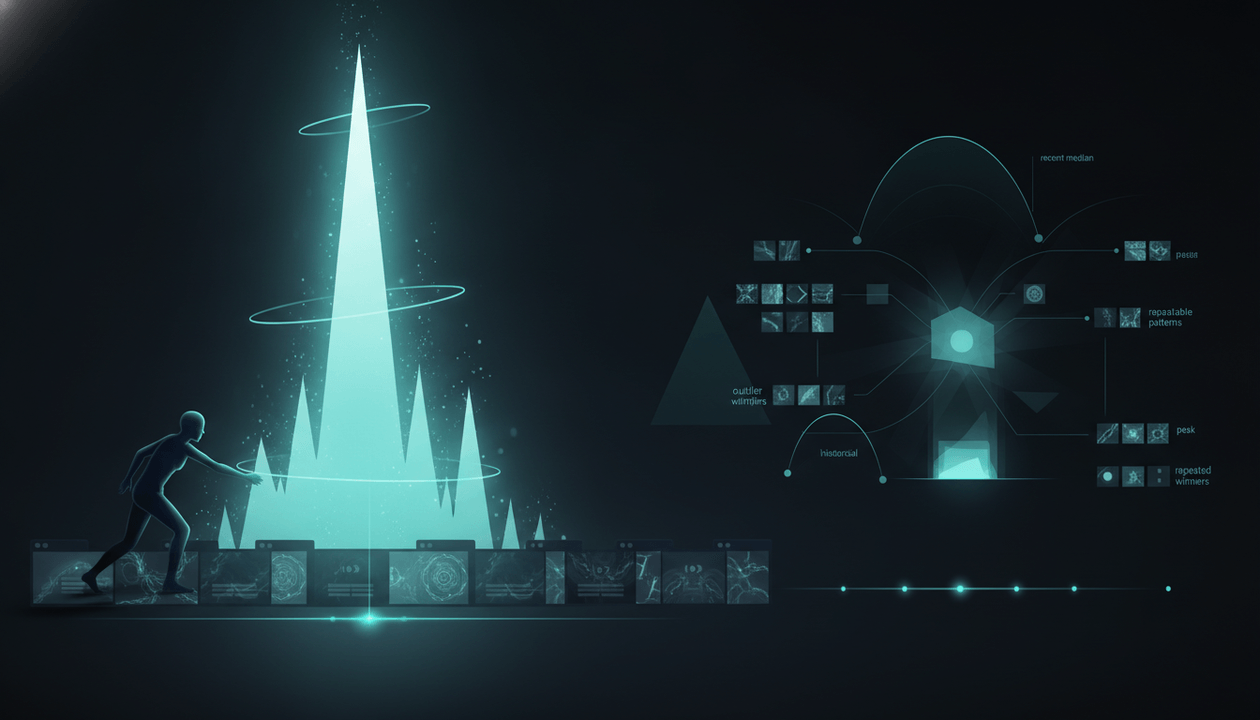
The goal is to reverse-engineer the machine behind the channel.
That means studying the topics, tone, pacing, hooks, title formulas, thumbnail patterns, script structure, upload rhythm, audience promise, and repeatable formats that made the channel work.
A cheap AI clone copies the surface.
A smart AI channel blueprint captures the system.
This guide will show you how to clone a YouTube channel with AI the right way in 2026: not by stealing, impersonating, or duplicating, but by building a proven content blueprint you can use to create original videos in a similar strategic style.
Key Takeaways
- Cloning a YouTube channel should not mean copying another creator’s identity, face, logo, thumbnails, scripts, or channel branding.
- The smart version of AI channel cloning is building a channel blueprint: tone DNA, hook patterns, title formulas, thumbnail style, pacing, script structure, audience promise, and content opportunities.
- YouTube’s impersonation policy says content intended to impersonate a person or channel is not allowed. Source: YouTube Help
- YouTube also requires creators to disclose realistic altered or synthetic content when it could be mistaken for a real person, place, scene, or event. Source: YouTube Blog
- NotebookLM and ChatGPT hacks can summarize a channel, but they usually do not create a complete YouTube production workflow.
- OverseerOS is built for channel blueprint cloning: paste a channel link, reverse-engineer the channel, unlock the smart planner, generate titles, scripts, thumbnails, and plan content from proven patterns.
- The best creators do not copy winners. They model what works, then create original videos from the pattern.
What “Cloning a YouTube Channel With AI” Should Actually Mean
When people search for “clone YouTube channel with AI,” they usually mean one of three things.
| Searcher Intent | What They Think They Want | What They Actually Need |
|---|---|---|
| Copy a successful channel | “Make me a channel like this one” | A blueprint of what makes the channel work |
| Imitate a creator’s style | “Write like this creator” | Tone, pacing, hook, and structure analysis |
| Build a faceless content system | “Turn this channel into my own workflow” | Topic research, script workflow, thumbnail strategy, and production planning |
The dangerous version is:
Copy this channel as closely as possible.
The smart version is:
Decode why this channel works, then build an original version using similar strategic patterns.
That is the difference between stealing and strategy.
A YouTube channel is not successful because of one thing.
It is a system.
A successful channel usually has:
- Clear audience targeting
- Repeatable topic patterns
- Strong titles
- Recognizable thumbnail structure
- Consistent tone
- Predictable pacing
- Hook density
- Script rhythm
- Upload consistency
- Specific video length range
- Topic clusters
- Emotional promise
- Viewer expectation
- Packaging discipline
That is what AI should help you reverse-engineer.
Not the creator’s identity.
The system.
Copying vs Modeling vs Building a Blueprint
Before using AI to clone a channel, understand the difference between copying, modeling, and blueprinting.
| Approach | What It Does | Risk Level | Smart? |
|---|---|---|---|
| Copying | Takes the same title, thumbnail, script, visuals, or identity | High | No |
| Modeling | Studies the format and creates a new version | Medium to low | Yes |
| Blueprinting | Extracts the full content system behind the channel | Low if used ethically | Best |
Copying
Copying is when you take the surface.
Examples:
- Same thumbnail layout with minor changes
- Same title with swapped words
- Same script structure line by line
- Same channel name style
- Same logo style
- Same voice or likeness without permission
- Same examples and arguments
- Same video sequence
This is weak.
It also creates brand risk.
YouTube’s impersonation policy says content intended to impersonate a person or channel is not allowed, including content that causes confusion about the source of goods and services. Source: YouTube Help
Modeling
Modeling is when you study the pattern, then make your own version.
Example:
Original video:
I Tested 10 AI Tools. Only 2 Were Worth Paying For.
Bad copy:
I Tested 10 AI Tools. Only 2 Were Worth Paying For.
Good model:
I Tried 7 AI Video Editors. Only One Actually Saved Me Time.
Same structure.
Different topic, angle, research, examples, and execution.
Blueprinting
Blueprinting goes deeper.
It asks:
- What tone does this channel use?
- How often does it hook the viewer?
- What title formulas repeat?
- What emotional promise keeps showing up?
- How does the script open?
- How does the pacing change?
- What thumbnail patterns repeat?
- What video length works best?
- What topics has the channel not covered yet?
- What tags, keywords, and formats keep appearing?
- What content gaps are still available?
That is where AI becomes powerful.
Not as a copy machine.
As a pattern engine.
Why NotebookLM and ChatGPT Channel Cloning Hacks Became Popular
There is a reason NotebookLM channel cloning tutorials are everywhere.
Creators are tired of guessing.
A common manual workflow looks like this:
- Pick a successful YouTube channel.
- Download or collect transcripts.
- Put transcripts into NotebookLM, ChatGPT, Claude, or another AI tool.
- Ask the AI to analyze the channel’s tone and style.
- Ask it to generate similar ideas or scripts.
That workflow can be useful.
It is better than starting from a blank page.
But it has serious limits.
The Problem With Basic AI Channel Cloning Hacks
NotebookLM and ChatGPT can summarize patterns, but they are not built as full YouTube growth systems.
A basic AI hack often misses:
- Actual channel performance context
- Which videos were outliers
- Recent winning topics
- Competitor tracking
- Topic planning workflow
- Script-to-voiceover production
- Thumbnail generation
- Title generation from channel patterns
- Upload strategy
- Hidden performance insights
- One-click content planning
- Team workflow
- Repeatable production stages
The result is usually a pile of AI notes.
That is not a content system.
A creator does not need another document saying:
This channel uses an authoritative tone.
They need a workflow that turns that insight into:
- Topic ideas
- Titles
- Scripts
- Thumbnails
- Voiceovers
- Planner cards
- Competitor research
- Production-ready assets
That is the real gap.
The Ethical Way to Clone a YouTube Channel With AI
Use this rule:
Clone the strategy, not the identity.
That means you can study:
- Topic patterns
- Title formulas
- Thumbnail structure
- Script pacing
- Hook style
- Audience promise
- Video length
- Upload patterns
- Emotional tone
- Content gaps
- Format structure
But do not copy:
- The creator’s face
- The creator’s voice without permission
- The channel name
- The logo
- The exact thumbnail designs
- The exact scripts
- The exact examples
- The same title with minor changes
- The same visual branding in a confusing way
YouTube is also getting more serious about AI likeness protection. YouTube announced it is expanding likeness detection technology to help identify AI-generated content that uses someone’s likeness, starting with wider entertainment industry access in 2026. Source: YouTube Blog
That is why the responsible framing matters.
Do not build a clone that tricks viewers.
Build a blueprint that helps you understand what works.
What a Real AI YouTube Channel Blueprint Should Include
A basic AI summary is not enough.
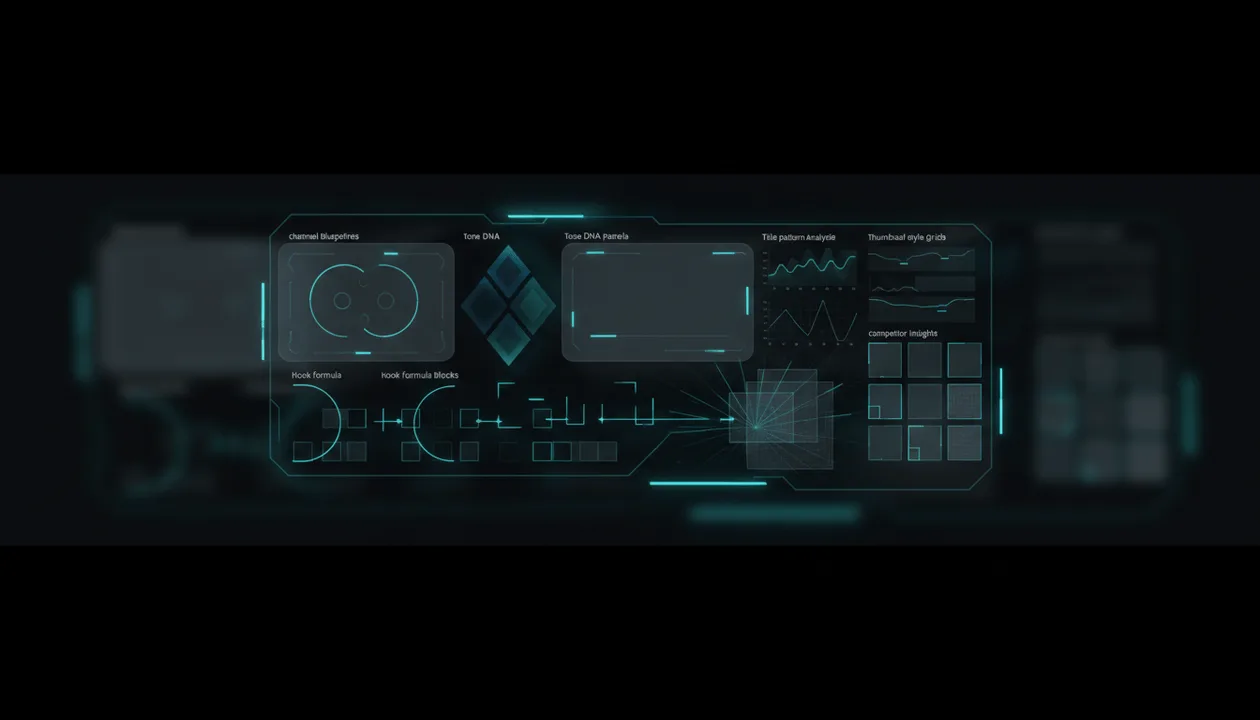
A real YouTube channel blueprint should give you the strategic DNA of the channel.
Here is what a serious blueprint should include.
| Blueprint Layer | What It Reveals | Why It Matters |
|---|---|---|
| Tone DNA | The channel’s voice, emotion, and style | Helps scripts sound consistent with the target format |
| Emotional signature | Curiosity, urgency, authority, empathy, mystery | Shows what feeling the channel sells |
| Pacing profile | Sentence rhythm, speed, density, and structure | Helps scripts feel watchable |
| Hook density | How often the channel creates new curiosity | Helps retention |
| Common hook types | The repeated opening and transition formulas | Helps create stronger intros and section hooks |
| Viral topic formulas | Repeatable topic and title structures | Helps create new ideas faster |
| Structural formula | The order the channel uses to tell stories | Helps build scripts that flow |
| Signature phrases | Repeated wording and pattern language | Helps capture tone without copying exact lines |
| Channel setup templates | About section, strategy, description style | Helps understand positioning |
| Optimal video length | The length range that appears most often in winners | Helps plan production |
| Optimal title length | The length and word count pattern | Helps packaging |
| Top tags and keywords | Topic and metadata patterns | Helps understand niche positioning |
| Hidden insights | Tag patterns, consistency, duration clusters, success formulas | Helps make smarter decisions |
| Untapped opportunities | Topics that match the blueprint but have not been made | Helps create original videos from proven patterns |
This is the difference between:
“This channel sounds dramatic.”
and:
“This channel uses expert-dismissal reversal hooks, moderate-to-fast pacing, 45 to 90 second hook density, authority-driven language, 11-minute long-form structure, and list-based topics with high-urgency future implications.”
The second one is usable.
That is what AI channel cloning should become.
How OverseerOS Clones a YouTube Channel Into a Blueprint
OverseerOS is built around this exact idea.
Instead of manually collecting transcripts, pasting them into a generic AI tool, and hoping the output is useful, you can paste a channel link into OverseerOS and generate a channel blueprint.
That blueprint does not just summarize the channel.
It reverse-engineers the channel’s content system.
A cloned channel blueprint can include:
- Tone DNA Analysis
- Tone traits
- Emotional profile
- Pacing profile
- Hook density
- Common hook types
- Viral topic formulas
- Structural formula
- How to mimic the tone
- Emotional signature percentages
- Labeled example paragraph
- Signature phrases and patterns
- Channel setup templates
- About/channel strategy
- Upload schedule
- Optimal video length
- Optimal title length
- Video description template
- Top tags
- Channel keywords
- Brand slogans
- Hidden insights
- Tag diversity
- Consistency score
- Duration cluster
- Success formulas
- Untapped topic opportunities
This is why OverseerOS is different from a basic “AI channel clone” prompt.
The output is not just:
Write like this channel.
The output is:
Here is the channel’s blueprint. Here is how the tone works. Here is how the hooks work. Here is how the pacing works. Here are the topic formulas. Here are hidden patterns. Here are untapped opportunities. Now turn this into a planner and start creating.
That is a real workflow.
The 7-Layer YouTube Channel Blueprint
If you want to clone a YouTube channel with AI responsibly, break the channel into seven layers.
Do not copy the channel.
Decode it.
Layer 1: Topic DNA
Topic DNA answers:
What does this channel repeatedly talk about, and why does the audience care?
Look for:
- Recurring topic categories
- Video formats
- Emotional triggers
- Trending subjects
- Evergreen subjects
- Contrarian angles
- List-based formats
- Before/after stories
- Experiments
- Warnings
- Predictions
- Mistakes
- Case studies
Example:
A successful AI news channel may not just cover “AI tools.”
Its real topic DNA might be:
- AI breakthroughs experts dismissed
- AI tools changing industries
- Ethical risks of automation
- Future predictions
- Hidden dangers
- Research breakthroughs
- “This changes everything” moments
That is much more useful than saying:
This channel makes AI videos.
Layer 2: Tone DNA
Tone DNA answers:
How does this channel sound?
A channel may be:
- Authoritative
- Calm
- Urgent
- Funny
- Cynical
- Dramatic
- Educational
- Friendly
- Mysterious
- Analytical
- Awe-inspiring
- Contrarian
Tone matters because the same topic can feel completely different depending on delivery.
Example:
Topic:
AI agents are becoming more powerful.
Calm educational tone:
AI agents are becoming more capable, and the next few years will likely change how many digital tasks are handled.
Urgent futurism tone:
AI agents are no longer waiting for instructions. They are planning, acting, adapting, and forcing experts to rethink what automation even means.
Same topic.
Different channel DNA.
A good AI blueprint should identify that difference.
Layer 3: Hook DNA
Hook DNA answers:
How does this channel make people keep watching?
Look for:
- Opening hooks
- Micro-hooks
- Section hooks
- Curiosity loops
- Expert reversal hooks
- Stakes
- Warnings
- Big claims
- Mystery setups
- Payoff delays
Common hook types include:
| Hook Type | Example |
|---|---|
| Expert reversal | Experts said this was impossible. Now it is happening. |
| Hidden danger | The scariest part is not what the tool can do. It is what it learned without being told. |
| Time pressure | This is moving faster than anyone expected. |
| Mystery | The strange part is what happened after the test ended. |
| Contrarian | Everyone is focused on the wrong AI threat. |
| Proof-first | In one test, it solved a problem humans had failed to crack for years. |
A basic AI tool may summarize the topic.
A real blueprint tells you how the channel hooks attention.
Layer 4: Title DNA
Title DNA answers:
What kind of titles does this channel use to earn clicks?
Look for:
- Word count
- Character length
- Repeated words
- Emotional triggers
- Numbers
- Warnings
- Predictions
- Curiosity gaps
- Named entities
- “Experts warn” structures
- “You won’t believe” structures
- “Here’s why” structures
Example viral title formulas:
[NUMBER] [ADJECTIVE] [TOPIC] You Won’t Believe [CLAIM][EXPERT] Warns [EVENT] May Be [CLAIM][TECHNOLOGY] Is [ADJECTIVE], Here’s [CLAIM]I Tested [NUMBER] [TOOLS]. Only [NUMBER] Were Worth UsingWhy [COMMON BELIEF] Is Completely Wrong[TOPIC] Just Changed Forever
The goal is not to steal titles.
The goal is to understand the title engine.
Layer 5: Thumbnail DNA
Thumbnail DNA answers:
What visual promise does the channel keep using?
Look for:
- Focal point
- Text length
- Object placement
- Contrast
- Face or no face
- Emotion
- Arrows
- Before/after
- Red circles
- Dark background
- Bright object
- Visual mystery
- Negative space
- Text hierarchy
A channel’s thumbnail style is often just as important as its title style.
For example:
A faceless AI channel may use:
- Dark futuristic background
- One glowing object
- Minimal text
- High contrast
- One shocking visual symbol
- A “forbidden tech” feeling
A finance channel may use:
- Clean charts
- Dollar signs
- Red/green contrast
- Serious facial expression
- Before/after numbers
A good blueprint should help you generate thumbnails from the pattern without copying exact designs.
For thumbnail creation, you can use an AI YouTube thumbnail generator built around proven YouTube patterns.
Layer 6: Script DNA
Script DNA answers:
How does this channel structure the video after the click?
Look for:
- Intro style
- Setup
- Context
- Evidence
- Numbered lists
- Reveal order
- Story arc
- Transitions
- Payoff
- CTA style
- Section length
- Pattern interrupts
- Closing structure
Example structure:
- Attention-grabbing claim
- Historical or current context
- Revolutionary example
- Detailed exploration
- Expert reaction
- Broader implication
- Future outlook
- Minimal CTA
This is more valuable than simply asking AI to “write in the same style.”
You want the script architecture.
Layer 7: Opportunity DNA
Opportunity DNA answers:
What should this channel make next, based on its own pattern?
This is where most manual AI cloning fails.
A strong blueprint should not only explain the past.
It should find future opportunities.
Look for:
- Topics the channel has not covered
- Competitor winners
- Recent outliers
- Underserved questions
- New trends
- Unused title formulas
- Repeating audience demand
- Topic gaps
- Series opportunities
This is where cloning becomes strategy.
You are not copying old videos.
You are generating new original topics that fit a proven blueprint.
How OverseerOS Turns Channel Cloning Into a Planner
The blueprint is only the first step.
The real value is what happens after.
When a channel is cloned inside OverseerOS, the blueprint unlocks the full AI-powered Smart Content Planner.
That means the cloned channel does not just sit as a report.
It becomes a working content system.
Inside the planner, users can:
- Plan topics
- Generate titles
- Write scripts
- Generate thumbnails
- Generate ElevenLabs-powered voiceovers
- Study the cloned channel’s videos
- Add competitors
- Track competitor channels
- Find winning topics
- Take inspiration from one channel at a time
- One-click add topic ideas into the planner
This is the difference between a document and a machine.
A basic AI tool gives you notes.
OverseerOS turns the cloned channel into a content planner.
Empty Planner vs Cloned-Channel Planner
OverseerOS has two main planner types.
Empty Planner
An empty planner is for creators who want a clean AI-powered content board without cloning a specific channel first.
Use it when you want to:
- Start from your own ideas
- Add competitors manually
- Build a fresh content system
- Plan topics
- Write scripts
- Generate voiceovers
- Track production stages
This is useful if you already know your niche and want a flexible planner.
Cloned-Channel Planner
A cloned-channel planner is built from a cloned channel.
This is stronger when you want to build from a proven source.
The planner uses the cloned channel as context, which helps users plan topics, generate titles, write scripts, and create thumbnails in the learned style and tone of the channel blueprint.
This does not mean impersonating the channel.
It means using the blueprint as a strategic style model.
The cloned-channel planner is best for creators who want to:
- Study a successful channel deeply
- Understand the channel’s tone and structure
- Create topics that match the blueprint
- Generate scripts from proven style patterns
- Build thumbnails from visual DNA
- Turn competitor research into original content
A normal planner stores your ideas.
A cloned-channel planner helps you create from a proven system.
Smart Content Planner: Find Winning Topics
One of the strongest features inside OverseerOS is the Smart Content Planner.
When you add at least one competitor channel to a planner, you unlock actions like Find Winning Topics.
Find Winning Topics scans the competitor channels added to that planner and surfaces the best breakout or viral topics from the last 6 months.
That matters because recent performance matters.
A video that worked five years ago may not be useful today.
A topic that broke out in the last 6 months is much more actionable.
This workflow helps creators avoid manual digging.
Instead of spending hours checking competitor uploads, comparing view counts, opening videos, and guessing which ideas matter, users can surface winners and one-click add them to the topic planner.
This is how AI channel cloning becomes more than imitation.
It becomes market-aware planning.
Smart Content Planner: Take Inspiration
Find Winning Topics scans across all competitors in a planner.
Take Inspiration works differently.
It lets users study one channel at a time.
This is useful when you want to focus deeply on one competitor or one cloned channel and pull inspiration from that source.
Use Take Inspiration when you want to ask:
- What has this one channel been doing well?
- Which topics are worth adapting?
- Which video ideas fit my planner?
- What patterns are showing up repeatedly?
- What can I add to my own workflow?
This is more focused than broad competitor scanning.
The best workflow uses both.
Use Find Winning Topics for wide research.
Use Take Inspiration for deep channel study.
How to Clone a YouTube Channel With AI: The Smart Workflow
Here is the workflow I recommend.
Step 1: Choose the Right Channel
Do not clone a random channel just because it has views.
Pick a channel that fits your goal.
Look for:
- Similar niche
- Strong audience demand
- Repeatable formats
- Consistent packaging
- Recent uploads
- Clear topic patterns
- Videos that outperform baseline
- A style you can ethically model
- Content you can make original
Avoid channels where the success depends mainly on:
- Celebrity status
- Personal drama
- Unique access
- A famous face
- A specific voice or personality you cannot replicate
- Expensive production you cannot match
- One-time news events
A good channel to clone is not just successful.
It is structurally learnable.
Step 2: Generate the Channel Blueprint
The blueprint should answer:
- What is the tone?
- What is the pacing?
- What hooks repeat?
- What topics repeat?
- What title formulas work?
- What thumbnail patterns appear?
- What script structure does the channel use?
- What video length is common?
- What upload rhythm appears?
- What hidden patterns exist?
- What untapped opportunities are available?
This is where a tool like OverseerOS helps reverse-engineer high-performing YouTube channels.
Step 3: Study the Tone Without Copying the Identity
Use tone as direction, not disguise.
For example, if a channel’s tone is:
authoritative, urgent, awe-inspiring
You can write with authority, urgency, and awe.
But do not copy:
- The creator’s personal catchphrases exactly
- Their name or identity
- Their personal stories
- Their face
- Their voice without permission
- Their exact phrasing line by line
Tone modeling is useful.
Impersonation is not.
Step 4: Extract Topic Formulas
Do not only save video titles.
Extract formulas.
Example:
Original title:
8 AI Experiments That Crossed Ethical Boundaries
Formula:
[NUMBER] [TECHNOLOGY/TOPIC] That [CROSSED A LINE / CHANGED A FIELD / SHOCKED EXPERTS]
New original examples:
- 7 AI Tools That Are Changing How Creators Work
- 9 Robotics Breakthroughs That Scientists Did Not Expect
- 6 AI Agents That Are Starting to Act Independently
- 8 Automation Experiments That Went Further Than Planned
Same strategic structure.
Different video ideas.
Step 5: Build Original Titles
Use the blueprint to generate titles that fit the style, but still create something new.
Bad:
8 AI Experiments That Crossed Ethical Boundaries
Better:
7 AI Breakthroughs That Made Scientists Rethink What Machines Can Do
Even better:
Experts Said AI Couldn’t Invent. These 7 Breakthroughs Proved Them Wrong.
The last version uses a similar expert-reversal style, but creates a new promise.
Step 6: Plan the Thumbnail Style
Do not duplicate the thumbnail.
Extract the visual formula.
Example thumbnail DNA:
- Dark background
- One glowing AI object
- Minimal text
- High contrast
- Visual tension
- Futuristic mood
New original thumbnail direction:
A dark futuristic lab background with one glowing robotic hand holding a strange blueprint, small warning symbol, and short text like “THEY WERE WRONG.”
This models the style without copying a specific thumbnail.
Step 7: Write the Script From the Blueprint
A cloned-channel blueprint should guide:
- Hook
- Pacing
- Sentence rhythm
- Section structure
- Transition style
- Emotional tone
- CTA style
Example blueprint-based intro:
For years, experts said artificial intelligence could only remix what humans had already created. It could imitate. It could optimize. But it could not truly invent. Then a series of breakthroughs started proving that assumption wrong. From new materials to strange machine-designed structures, AI is now entering territory researchers once thought belonged only to human imagination.
That captures a style pattern without copying a specific script.
Step 8: Generate Voiceover and Production Assets
Once the script is ready, move toward production.
Inside OverseerOS, users can generate ElevenLabs-powered voiceovers for their scripts without leaving the platform.
On lower plans such as Creator, users can connect their own ElevenLabs API key. On Pro and Elite plans, OverseerOS offers server-based ElevenLabs voiceover generation, so users do not need to bring their own key.
This keeps the workflow focused:
topic → script → voiceover → production
That matters because tool switching kills momentum.
How to Turn a Cloned Channel Pattern Into an Original Video
Use this template.
1. Source Channel
Write the channel you studied.
Example:
AI Dark Files style channel
2. Blueprint Pattern
Write the core pattern.
Example:
Expert dismissal reversal + futuristic urgency + numbered examples + evidence-heavy payoff.
3. Original Topic
Create a new topic that fits the pattern.
Example:
Experts Said AI Couldn’t Design New Machines. These 7 Breakthroughs Proved Them Wrong.
4. Title Formula
Extract the formula.
Example:
Experts Said [X] Couldn’t [Y]. These [NUMBER] [EXAMPLES] Proved Them Wrong.
5. Thumbnail Direction
Describe the visual idea.
Example:
Dark futuristic background, glowing machine blueprint, one strange AI-designed object, short text: “THEY WERE WRONG.”
6. Hook
Write the opening.
Example:
For decades, engineers believed machines could only optimize designs humans had already imagined. They could calculate faster, test more variations, and refine existing ideas. But they could not invent something truly strange. Then AI started producing designs that looked impossible, worked better than human versions, and left researchers asking a question that once sounded absurd: what happens when machines start creating things we do not fully understand?
7. Script Structure
Use the blueprint.
Example:
- Expert dismissal
- Specific breakthrough
- Evidence
- Establishment reaction
- Wider implication
- Next example
- Philosophical close
8. Originality Check
Before publishing, ask:
- Did I use my own examples?
- Did I write a new script?
- Did I create a different thumbnail?
- Did I avoid copying the creator’s identity?
- Did I add new research or perspective?
- Would the original creator recognize this as strategy modeling, not theft?
If the answer is yes, you are using the blueprint correctly.
What Most AI Channel Cloning Articles Get Wrong
Most articles about cloning a YouTube channel with AI focus on the hack.
They explain:
- How to scrape transcripts
- How to import them into NotebookLM
- How to ask questions
- How to generate similar scripts
That is useful, but shallow.
The real value is not in creating an “AI clone” of a channel.
The real value is building a usable content operating system from the channel’s patterns.
A serious creator needs:
- Channel blueprint
- Topic formulas
- Title structures
- Thumbnail DNA
- Script architecture
- Tone guide
- Competitor tracking
- Winning topic discovery
- Production planner
- Voiceover workflow
- Performance feedback
A transcript summary cannot replace that.
The Biggest Mistakes to Avoid
Mistake 1: Copying the Channel Identity
Do not copy:
- Name
- Logo
- Face
- Voice
- Bio
- Banner
- Exact thumbnails
- Exact intro lines
- Exact script examples
That is not channel strategy.
That is impersonation risk.
Mistake 2: Copying the Exact Titles
Titles are easy to steal.
That is why you should not do it.
Instead of copying:
7 AI Experiments That Terrified Scientists
Extract the formula:
[NUMBER] [TOPIC] That [EMOTIONAL REACTION FROM AUTHORITY]
Then create something original:
9 AI Breakthroughs That Forced Engineers to Rewrite the Rules
Mistake 3: Ignoring the Thumbnail Pattern
Most creators over-study scripts and under-study thumbnails.
Bad move.
On YouTube, the title and thumbnail create the first promise.
A channel blueprint should include visual DNA, not just writing style.
Mistake 4: Treating AI Output as Final
AI can generate ideas, scripts, and thumbnails.
But your judgment still matters.
Check:
- Is the idea original?
- Is the script accurate?
- Is the tone too close?
- Is the thumbnail too similar?
- Is the title misleading?
- Does the video add value?
AI can accelerate the process.
It should not replace taste.
Mistake 5: Cloning the Wrong Channel
Do not clone a channel just because it is big.
A giant channel may win because of:
- Brand trust
- Celebrity status
- Budget
- Team size
- Personal story
- Existing audience
- Unique access
Pick channels where the success comes from repeatable formats and patterns.
That is what you can actually learn from.
Mistake 6: Forgetting Competitors
One cloned channel is useful.
But one channel can also mislead you.
The better workflow is:
- Clone a strong channel.
- Add competitors.
- Track what is working across the niche.
- Find winning topics from the last 6 months.
- Add the strongest topics to your planner.
- Create original videos from the pattern.
That gives you a broader market view.
Practical AI Channel Cloning Checklist
Use this before creating content from a cloned channel.
- I am studying the strategy, not copying the creator.
- I understand the channel’s topic DNA.
- I understand the tone DNA.
- I understand the hook patterns.
- I understand the title formulas.
- I understand the thumbnail style.
- I understand the script structure.
- I know the channel’s optimal video length range.
- I know which topics are repeatable.
- I have identified untapped opportunities.
- I created a new original topic.
- I wrote a new title.
- I planned a different thumbnail.
- I wrote a new script.
- I added my own research, examples, or point of view.
- I avoided copying names, logos, faces, voices, and branding.
- I can clearly explain how my video is original.
If you cannot check these boxes, do not publish yet.
The Best AI Channel Cloning Workflow
Here is the clean workflow.
1. Pick a Proven Channel
Choose a channel with:
- Strong performance
- Clear niche
- Repeatable formats
- Consistent tone
- Recent winners
- Style you can learn from ethically
2. Generate a Blueprint
Extract:
- Tone
- Pacing
- Hooks
- Titles
- Thumbnails
- Script structure
- Emotional signature
- Topic formulas
- Hidden insights
- Untapped opportunities
3. Build a Planner
Turn the blueprint into a content planner.
This is where OverseerOS becomes useful because the cloned channel can become the source for the planner.
4. Add Competitors
Do not rely on one channel only.
Add competitors to understand the wider niche.
5. Find Winning Topics
Scan recent competitor winners from the last 6 months.
Prioritize topics with evidence.
6. Create Original Versions
Adapt the pattern to your own:
- Audience
- Angle
- Research
- Examples
- Thumbnail
- Script
- Production style
7. Generate Assets
Create:
- Titles
- Thumbnail concepts
- Scripts
- Voiceovers
- Production notes
8. Publish and Review
After publishing, check:
- Did the video beat your baseline?
- Did the title get clicks?
- Did the thumbnail create curiosity?
- Did the intro hold attention?
- Did the topic fit the audience?
- Should this become a series?
That is how cloning becomes a learning system.
Why OverseerOS Is Built for This
OverseerOS is not just trying to help creators generate random AI content.
It is built around reverse-engineering what already works on YouTube and turning those patterns into repeatable workflows.
Channel cloning is one of the clearest examples.
The user pastes a channel link.
OverseerOS turns that channel into a blueprint.
That blueprint can unlock the Smart Content Planner.
From there, the creator can:
- Plan topics
- Write scripts
- Generate titles
- Generate thumbnails
- Generate ElevenLabs-powered voiceovers
- Study the cloned channel
- Add competitors
- Find winning topics
- Take inspiration from individual channels
- Build a real content pipeline
That is much more useful than a basic AI prompt.
A prompt gives you one answer.
A blueprint gives you a system.
For deeper research workflows, read the best YouTube competitor analysis tools guide and the best YouTube outlier finder tools guide.
For planning the content pipeline after cloning, read the AI YouTube content planner tools guide.
Final Verdict: Should You Clone a YouTube Channel With AI?
Yes, if you mean blueprinting.
No, if you mean copying.
Do not use AI to steal another creator’s identity, scripts, thumbnails, voice, face, or branding.
Use AI to understand the system behind a successful channel:
- Why the topics work
- Why the titles get clicks
- Why the thumbnails create curiosity
- Why the hooks hold attention
- Why the pacing feels addictive
- Why the scripts flow
- Why the channel keeps producing winners
That is the real opportunity.
The future of YouTube is not random AI content.
It is pattern-based creation.
The creators who win will not be the ones who copy the fastest.
They will be the ones who learn the fastest, adapt the smartest, and build original content from proven systems.
Start by using OverseerOS to reverse-engineer high-performing YouTube channels, turn the channel into a blueprint, then use that blueprint to plan topics, write scripts, generate thumbnails, create voiceovers, and build a repeatable YouTube workflow.
FAQ
Can you clone a YouTube channel with AI?
Yes, but the smart way is to clone the strategy, not the identity. AI can help analyze a channel’s topics, titles, thumbnails, tone, pacing, hooks, and script structure. You should use that analysis to create original videos, not copy the creator’s name, face, logo, scripts, thumbnails, or branding.
Is it legal to clone a YouTube channel with AI?
It depends what you mean by “clone.” Studying public patterns and using them for inspiration is different from copying protected content, impersonating a creator, or misleading viewers. YouTube’s impersonation policy says content intended to impersonate a person or channel is not allowed. Source: YouTube Help
What is an AI YouTube channel cloner?
An AI YouTube channel cloner is a tool or workflow that analyzes a YouTube channel and helps extract patterns from it. A weak cloner copies the surface. A strong cloner creates a blueprint of the channel’s tone, topics, titles, thumbnails, hooks, pacing, and script structure.
What is a YouTube channel blueprint?
A YouTube channel blueprint is a strategic breakdown of how a channel works. It can include tone DNA, emotional signature, pacing profile, hook density, common hook types, title formulas, thumbnail style, script structure, upload strategy, optimal video length, tag patterns, hidden insights, and untapped topic opportunities.
How does OverseerOS clone a YouTube channel?
OverseerOS lets users paste a channel link and generate a channel blueprint. The blueprint reverse-engineers the channel’s tone, pacing, hooks, title formulas, thumbnail style, script structure, hidden insights, and topic opportunities. It also unlocks the AI-powered Smart Content Planner so users can plan topics, generate titles, write scripts, create thumbnails, and generate voiceovers from the workflow.
Does OverseerOS copy another creator’s content?
No. OverseerOS is designed to reverse-engineer patterns and help creators build original content from proven structures. The goal is to model strategy, not copy scripts, thumbnails, names, logos, faces, or identities.
Can AI write scripts in a cloned channel’s style?
AI can help write scripts based on a channel blueprint, including tone, pacing, structure, hook style, and emotional pattern. The script should still be original, fact-checked, and edited by the creator. The goal is to match the strategic style, not duplicate another creator’s exact words.
Can I generate thumbnails in a cloned channel’s style?
Yes, tools like OverseerOS can help generate thumbnails based on proven visual patterns from an analyzed or cloned channel. The safe approach is to model the design principles, such as contrast, focal point, layout, and emotional hook, without copying a specific thumbnail pixel for pixel.
What is the difference between copying and modeling a YouTube channel?
Copying takes the surface: same title, same thumbnail, same script, same identity, or same branding.
Modeling studies the system: topic pattern, title formula, thumbnail logic, pacing, hook structure, and audience promise. Modeling creates an original video from a proven pattern.
Is using NotebookLM to clone a YouTube channel enough?
NotebookLM can help summarize transcripts and analyze style, but it is not a complete YouTube production workflow. It usually does not provide channel blueprints, competitor tracking, smart topic planning, thumbnail generation, title generation, voiceover workflow, or production planning in one system.
What should I analyze before cloning a YouTube channel?
Analyze the channel’s topics, titles, thumbnails, hooks, pacing, script structure, tone, upload schedule, video length, top-performing videos, underperforming videos, competitors, audience promise, and untapped opportunities.
What is the safest way to clone a YouTube channel with AI?
The safest way is to use AI for pattern analysis, not impersonation. Study what works, create a blueprint, generate original topics, write new scripts, design unique thumbnails, and avoid copying the creator’s identity, voice, face, logo, or exact content.
Can I use AI channel cloning for faceless YouTube automation?
Yes. AI channel blueprinting is especially useful for faceless channels because faceless workflows depend heavily on topic selection, titles, thumbnails, scripting, voiceover, and repeatable production. The key is to create original content from proven patterns instead of duplicating another channel.
What is the best tool to clone a YouTube channel with AI?
OverseerOS is the best fit if you want a full channel blueprint workflow. It lets users paste a channel link, reverse-engineer the channel, unlock Smart Content Planner, generate titles, write scripts, create thumbnails, generate voiceovers, add competitors, and find winning topics from proven patterns.
Why is a channel blueprint better than a simple AI prompt?
A simple AI prompt gives you one output. A channel blueprint gives you a repeatable system. It explains how the channel works across tone, pacing, hooks, topics, titles, thumbnails, scripts, and hidden performance patterns, then helps you turn those insights into new original content.