“Clone this YouTube channel.”
“Clone this video.”
“Rewrite this script.”
Those requests sound similar, but they describe three completely different jobs.
A YouTube channel cloner studies an entire channel and extracts the strategy behind its success.
A YouTube video cloner uses one reference video to guide the creation of a new video.
A YouTube script rewriter takes existing written or spoken material and rebuilds it into a stronger original script.
The difference is scope:
- A channel cloner works at the strategy level.
- A video cloner works at the production level.
- A script rewriter works at the writing level.
Choose the wrong tool and you may get an output that looks useful but solves the wrong problem.
A rewritten transcript will not give you a channel strategy. A channel blueprint will not produce a finished Short. A video cloner will not automatically tell you whether the source channel has a sustainable business model.
This guide explains what each tool does, when to use it, what it should produce, and how to combine all three without copying another creator.
Key Takeaways
- A YouTube channel cloner reverse-engineers an entire channel’s repeatable strategy, including its audience promise, content pillars, tone, hooks, titles, pacing and topic formulas.
- A YouTube video cloner uses one reference video as the starting point for a new production workflow, usually involving a transcript, original script, voiceover, visual direction and editing.
- A YouTube script rewriter improves material that already exists, such as a rough draft, transcript, article or older script.
- Channel cloning answers “What content system should I build?”
- Video cloning answers “How can I create an original version inspired by this reference?”
- Script rewriting answers “How can I make this material more original, watchable and production-ready?”
- None of these tools should duplicate another creator’s finished work.
- YouTube requires monetized content to be original and authentic. Minimal changes to someone else’s content may still create reused-content or repetitive-content problems.
- The strongest workflow is often: clone the channel blueprint, select a proven video pattern, rewrite the idea into an original script, then produce a new video.
YouTube Channel Cloner vs Video Cloner vs Script Rewriter
| Tool | Main Unit of Analysis | Main Question | Best Output | Best For |
|---|---|---|---|---|
| YouTube channel cloner | Entire channel | What repeatable strategy makes this channel work? | Channel blueprint | Launching, repositioning and building a content system |
| YouTube video cloner | One reference video | How can I create an original video inspired by this production pattern? | New video project | Turning references into Shorts or complete video workflows |
| YouTube script rewriter | Existing text or transcript | How can this material become a stronger original script? | Revised script | Fixing hooks, pacing, structure, tone and clarity |
The fastest way to understand the distinction is:
Clone the channel when you need a strategy. Clone the video pattern when you need a production reference. Rewrite the script when the words need to change.
What Is a YouTube Channel Cloner?
A YouTube channel cloner is a research and strategy tool.
It analyzes the public signals around an entire channel and turns those signals into a structured model of how the channel operates.
The goal is not to download the channel, reproduce its catalog or impersonate the creator.
The goal is to understand the system underneath the visible content.
A serious channel blueprint may include:
- Target audience
- Core channel promise
- Content pillars
- Repeated topic categories
- Viral topic formulas
- Tone and emotional profile
- Hook patterns
- Pacing
- Structural formulas
- Title patterns
- Thumbnail principles
- Typical video length
- Upload cadence
- Keyword themes
- Common tags
- Recurring formats
- Untapped topic opportunities
- Production requirements
- Monetization possibilities
A weak YouTube channel cloner says:
This is a technology channel that publishes AI videos.
A useful channel cloner says:
This channel targets non-technical professionals who fear falling behind in AI. Its strongest videos package practical software developments as urgent career threats, open with a future-facing consequence, and use simple demonstrations to turn abstract technology into a personal decision.
The second output gives you something you can build from.
The Main Question a Channel Cloner Answers
A channel cloner should help you answer:
What repeatable strategic system is producing this channel’s results?
That includes more than identifying the niche.
Two channels can cover the same subject and still operate on entirely different systems.
Consider two AI channels.
Channel A
- Publishes daily news
- Uses urgent titles
- Depends on speed
- Covers product launches
- Requires constant research
- Monetizes through software sponsors
Channel B
- Publishes weekly documentaries
- Uses curiosity-driven stories
- Focuses on companies and people
- Requires deeper scripting and editing
- Builds evergreen traffic
- Monetizes through higher-value sponsorships
Both are “AI channels.”
They are not the same business, format or production system.
A channel cloner should reveal that difference.
When You Should Use a YouTube Channel Cloner
Use a channel cloner when you need to:
- Launch a new channel
- Enter a new niche
- Reposition an underperforming channel
- Build a faceless YouTube operation
- Create a competitor blueprint
- Understand why a channel repeatedly succeeds
- Develop a consistent voice
- Plan a repeatable content system
- Train writers or editors
- Manage several YouTube channels
- Find untapped ideas within a proven format
What a Channel Cloner Should Not Do
A responsible YouTube channel cloner should not:
- Copy exact scripts
- Reproduce titles word for word
- Duplicate thumbnails
- Impersonate the creator
- Reuse copyrighted footage
- Promise identical performance
- Claim access to private YouTube analytics
- Present estimated patterns as guaranteed causes
Public performance data can reveal useful signals.
It cannot reveal every reason a channel succeeded.
The creator may also benefit from:
- Existing audience loyalty
- External traffic
- Industry relationships
- High production budgets
- Strong personal credibility
- Private retention data
- Paid promotion
- Timing advantages
A channel blueprint is a strategic model, not a perfect reconstruction of reality.
What Is a YouTube Video Cloner?
A YouTube video cloner works from one reference video rather than an entire channel.
The name can be misleading.
A responsible AI video cloner should not download someone else’s video, make minor changes and republish it.
It should use the reference to guide the creation of a new video.
That process may involve:
- Reading the available transcript
- Identifying the core idea
- Extracting the hook
- Studying the pacing
- Understanding the scene rhythm
- Creating an original script
- Generating or uploading a new voiceover
- Defining a new visual direction
- Building new scenes
- Adding captions, music and motion
- Exporting a distinct final video
The reference provides structure.
The final production should provide originality.
The Main Question a Video Cloner Answers
A YouTube video cloner should help you answer:
How can I use this strong reference as a starting point for a new production without recreating the finished artifact?
This makes video cloning particularly useful when a creator knows what style or rhythm they want but struggles to describe it from a blank prompt.
For example, a creator may find a Short with:
- A five-second curiosity hook
- Rapid narration
- A new visual every three seconds
- Dark cinematic images
- Kinetic captions
- A reveal near the midpoint
- A final twist
A weak cloning workflow attempts to reproduce those exact assets.
A better workflow extracts the production principles:
- Immediate unanswered question
- High scene density
- Escalating evidence
- Visual contrast
- Delayed payoff
- Final recontextualization
Those principles can be applied to a completely different topic.
Example: Video Cloning Without Copying
Reference concept:
A Short explaining how one abandoned building became worth millions.
Weak clone:
The same building, same facts, same sequence, slightly different words.
Original adaptation:
A Short explaining how an unused internet domain quietly became a multimillion-dollar asset.
The new video can preserve the deeper pattern:
- Apparently worthless object
- Hidden reason for its value
- Escalating offers
- Surprising final valuation
But it uses:
- A different subject
- New research
- A new script
- Different visuals
- Different examples
- A distinct conclusion
That is reference-based creation.
When You Should Use a YouTube Video Cloner
Use a video cloner when:
- You found one strong reference video
- You want to create an original Short from a public reference
- You need help turning a transcript into a production workflow
- You want to model pacing or scene rhythm
- You need a reference for visual style
- You want a new voiceover and generated visuals
- You are creating faceless content
- You need to move quickly from research to editing
- You struggle to describe a style through prompts alone
What a Video Cloner Cannot Replace
A video cloner does not replace:
- Niche research
- Channel positioning
- Factual verification
- Original judgment
- Copyright awareness
- Human review
- A sustainable content strategy
- Quality control
One successful video is not an entire channel blueprint.
It gives you a reference, not a business model.
What Is a YouTube Script Rewriter?
A YouTube script rewriter works with existing material.
That material could be:
- A rough draft
- An old script
- A YouTube transcript
- An article
- Research notes
- A podcast transcript
- A weak AI-generated draft
- A client-provided script
- A partial outline
A basic rewriting tool changes words.
A strong YouTube script rewriter changes the viewing experience.
It should be able to improve:
- The opening hook
- The central promise
- Pacing
- Clarity
- Structure
- Transitions
- Curiosity
- Emotional movement
- Pattern interruptions
- Examples
- Spoken delivery
- Tone consistency
- Production readiness
- Originality
The Main Question a Script Rewriter Answers
A script rewriter helps answer:
How can I turn this existing material into a stronger original YouTube script?
The important word is rebuild.
Paraphrasing is not enough.
Consider this transcript:
Artificial intelligence is changing the workplace. Many jobs may be affected in the future. In this video, we will look at five jobs that could change because of AI.
A surface-level rewrite might produce:
AI is transforming the world of work. Many careers could be impacted. Today, we will explore five jobs that may be changed by artificial intelligence.
That is nearly the same script.
A stronger rewrite could begin:
The first jobs AI replaces may not be the ones everyone expects. Some high-paid roles are already being broken into tasks that software can perform in seconds, and one profession on this list may disappear before most workers realize it is vulnerable.
The subject remains similar.
The script now has:
- A stronger tension
- More specific stakes
- Better curiosity
- A clearer reason to continue
- More natural spoken delivery
Script Rewriter vs Script Generator
These tools also solve different problems.
| Tool | Starting Point | Best Used When |
|---|---|---|
| AI script generator | Topic, outline, prompt or blueprint | You need a new script from the beginning |
| AI script rewriter | Existing draft, transcript or source | You already have material but it is weak, generic or poorly structured |
Use a script generator when the page is empty.
Use a script rewriter when the page is not empty but the writing is not ready.
When You Should Use a YouTube Script Rewriter
Use a script rewriter when:
- Your hook is weak
- The draft sounds generic
- The pacing slows in the middle
- The script reads like an article
- A transcript needs a new creative angle
- The writing does not match the channel’s tone
- Your examples are vague
- The script repeats itself
- The transitions feel mechanical
- The final section loses momentum
- You want a stronger version without restarting
- You need to adapt source material responsibly
Which Tool Do You Actually Need?
Use this decision table.
| Your Problem | Best Tool |
|---|---|
| I want to build a channel like a successful creator without copying them | YouTube channel cloner |
| I found one video with a strong format and want to create an original version | YouTube video cloner |
| I have a weak draft that needs better hooks and pacing | YouTube script rewriter |
| I want to understand a competitor’s complete strategy | YouTube channel cloner |
| I want to turn a public video reference into a new Short | YouTube video cloner |
| I have a transcript but need an original script | YouTube script rewriter |
| I do not know what topics the new channel should cover | YouTube channel cloner |
| I know the topic but need scenes, voiceover and editing | YouTube video cloner |
| I know the topic and visuals but the narration is weak | YouTube script rewriter |
| I want to train a content team around one proven model | YouTube channel cloner |
| I want to produce a fast reference-based faceless video | YouTube video cloner |
| I want to improve an older script for a new audience | YouTube script rewriter |
The Three-Question Test
Ask yourself:
- Am I studying an entire channel?
- Am I building from one video reference?
- Am I improving existing words?
If the answer is an entire channel, use a channel cloner.
If the answer is one reference video, use a video cloner.
If the answer is existing words, use a script rewriter.
The Biggest Difference: Strategy vs Production vs Language
The tools become easier to understand when separated into three layers.
Layer 1: Strategy
This defines:
- Audience
- Channel promise
- Content pillars
- Repeatable formats
- Emotional positioning
- Topic selection
- Packaging patterns
- Production model
A YouTube channel cloner operates here.
Layer 2: Production
This defines:
- Reference video
- Script
- Voiceover
- Scenes
- Visual style
- Captions
- Music
- Motion
- Editing
A YouTube video cloner operates here.
Layer 3: Language
This defines:
- Hook
- Sentences
- Transitions
- Pacing
- Examples
- Tone
- Clarity
- Narration
A YouTube script rewriter operates here.
A strong content system connects all three.
A weak system tries to solve everything with one AI prompt.
The Best Workflow: Channel Blueprint to Original Video
The most powerful use case is not choosing one tool.
It is using each tool at the correct stage.
Step 1: Clone the Channel Blueprint
Start with a successful public channel.
Extract:
- Audience promise
- Content pillars
- Repeated topics
- Hook patterns
- Tone
- Pacing
- Title structures
- Thumbnail principles
- Video formats
- Untapped opportunities
Your goal is to understand what repeatedly works.
Do not choose one viral upload and assume it represents the full channel.
Step 2: Select a Proven Video Pattern
Study several strong videos from the channel.
Look for a repeatable pattern such as:
- A hidden truth reveal
- A failure autopsy
- A 30-day experiment
- A before-and-after transformation
- A ranked comparison
- An escalating mystery
- A contrarian explanation
- A timeline reconstruction
- A high-stakes challenge
Choose the pattern, not the exact artifact.
Step 3: Create an Original Topic
Change at least one major strategic dimension:
- Subject
- Audience
- Use case
- Evidence
- Time period
- Industry
- Stakes
- Perspective
- Outcome
Reference:
Why Nokia Lost the Smartphone War
Original topic:
How Zoom Nearly Lost the Market It Created
Both may use a business-collapse narrative.
The research, company, events, script and conclusions remain distinct.
Step 4: Rewrite the Material Into a New Script
Build the new script around:
- Original research
- A new thesis
- Different examples
- Stronger transitions
- A fresh hook
- Your channel’s tone
- A distinct narrative sequence
Do not place the original transcript into a paraphraser and call the result original.
The structure should serve your new argument.
Step 5: Build a New Video Project
Use the reference to inform:
- Pacing
- Scene density
- Visual energy
- Caption rhythm
- Music intensity
- Reveal timing
Then produce:
- New voiceover
- New visuals
- New captions
- New motion
- New examples
- New ending
Step 6: Run an Originality Review
Before publishing, ask:
- Is the central thesis different?
- Is the research original?
- Is the script materially different?
- Are the visuals new?
- Is the voiceover new?
- Does the video contribute new commentary or value?
- Would a viewer clearly recognize this as our production?
- Does the final video stand on its own without the reference?
If the answer to several questions is no, the transformation is not strong enough.
How OverseerOS Handles the Three Workflows
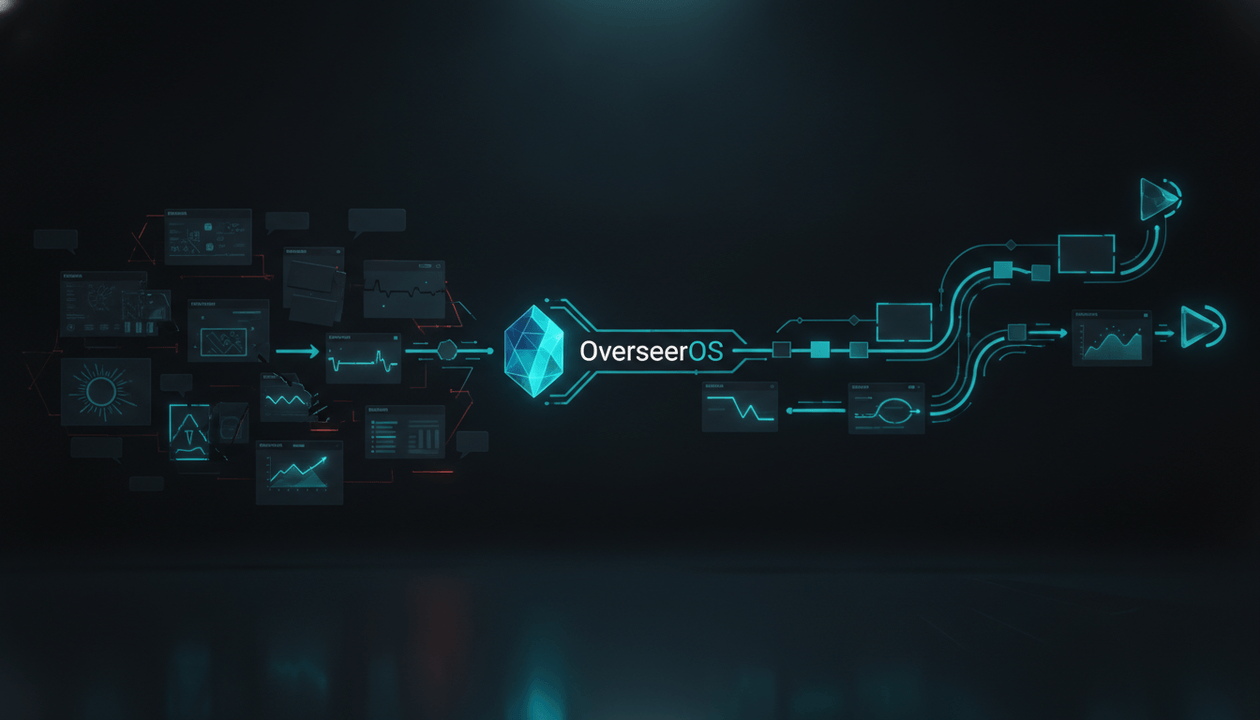
OverseerOS separates channel strategy, reference-based production and script improvement into dedicated workflows.
That matters because each job requires different inputs and outputs.
OverseerOS Channel Blueprint Cloner: Clone the Strategy
OverseerOS Channel Blueprint Cloner starts with a public YouTube channel URL.
It analyzes public channel signals and available transcripts to identify repeatable strategy patterns such as:
- Tone DNA
- Primary emotion
- Pacing
- Hook patterns
- Signature phrases
- Viral topic formulas
- Structural formulas
- Keywords
- Tags
- Upload patterns
- Untapped topic opportunities
The result is a structured blueprint that can guide:
- Topic planning
- Scriptwriting
- Titles
- Thumbnails
- Channel positioning
- Content calendars
- Team briefs
The purpose is not to reproduce another creator’s catalog.
It is to understand the strategic logic behind a channel and adapt those principles into original work.
OverseerOS Channel Blueprint Cloner is best for creators who want:
- A repeatable channel system
- Stronger competitor research
- A clear creative direction
- Evidence-backed topics
- Consistent tone
- A foundation for several future videos
OverseerOS YouTube Video Cloner: Build From a Reference
OverseerOS YouTube Video Cloner is a reference-based workflow inside OverseerOS Auto Edit.
The workflow begins with a public YouTube URL.
OverseerOS can then:
- Retrieve the available transcript
- Let the creator review or edit it
- Generate an original Shorts script
- Let the creator compare and shape the script
- Generate or upload a voiceover
- Carry the reference URL into OverseerOS Auto Edit
- Use the reference for optional Video Style DNA
- Build a new scene-based video project
OverseerOS YouTube Video Cloner is not designed to download and republish the source video.
The reference helps guide:
- Script direction
- Pacing
- Production rhythm
- Optional visual style analysis
The final project is built around the creator’s selected script, voiceover, generated visuals and editing decisions.
This makes it different from a clip generator.
A clipping tool extracts sections from existing footage.
OverseerOS YouTube Video Cloner creates a new production project.
OverseerOS Script ReSpark: Rewrite the Words
OverseerOS AI YouTube Script Rewriter, also called OverseerOS Script ReSpark, works from material that already exists.
It can help creators reshape:
- YouTube transcripts
- Rough scripts
- Article content
- Pasted drafts
- Older scripts
The workflow is designed to improve:
- Hooks
- Pacing
- Clarity
- Structure
- Tone
- Transitions
- Spoken delivery
- Production readiness
OverseerOS Script ReSpark can also work with a saved OverseerOS Creator DNA tone when the goal is to make the rewritten script feel consistent with a specific channel voice.
A completed script can be connected to the wider OverseerOS planning workflow rather than remaining trapped inside a standalone text box.
Which OverseerOS Workflow Should You Use?
| Goal | OverseerOS Workflow |
|---|---|
| Reverse-engineer an entire successful channel | OverseerOS Channel Blueprint Cloner |
| Create an original Short from a reference URL | OverseerOS YouTube Video Cloner |
| Improve a transcript or weak draft | OverseerOS Script ReSpark |
| Match a proven channel tone | OverseerOS Channel Blueprint Cloner plus OverseerOS Creator DNA |
| Turn strategy into a production-ready video | OverseerOS Channel Blueprint Cloner plus OverseerOS YouTube Video Cloner |
| Turn source material into a stronger script | OverseerOS Script ReSpark |
| Build several videos from one channel model | OverseerOS Channel Blueprint Cloner |
| Build one video from one reference | OverseerOS YouTube Video Cloner |
Channel Cloning vs Copying
Channel cloning becomes dangerous when the word “clone” is interpreted literally.
There is a major difference between modeling a strategy and duplicating creative work.
| Responsible Modeling | Copying |
|---|---|
| Study repeated topic categories | Reproduce the same topic catalog |
| Identify title principles | Copy titles with minor word changes |
| Analyze thumbnail psychology | Duplicate thumbnail compositions |
| Learn the pacing pattern | Recreate the same sequence |
| Study the creator’s tone | Impersonate the creator |
| Extract a format | Duplicate finished videos |
| Find untapped opportunities | Repackage already-covered videos |
| Create a distinct channel promise | Mimic the original brand |
The safest rule is:
Reuse principles. Replace creative execution.
You can study:
- Curiosity
- Contrast
- Stakes
- Narrative escalation
- Information density
- Packaging logic
- Format consistency
You should create your own:
- Research
- Thesis
- Examples
- Script
- Visuals
- Voiceover
- Branding
- Perspective
- Conclusion
Video Cloning vs Reused Content
Reference-based creation must also be separated from reused content.
YouTube’s monetization policies emphasize that monetized videos should be original and authentic. Reusing online material without significant commentary, substantive modification or added educational or entertainment value may create monetization problems.
Permission and monetization eligibility are also separate questions.
A creator might have permission to use a clip but still produce a channel that YouTube considers insufficiently original for monetization.
The practical standard is not:
Did I change a few things?
It is:
Does the finished video provide clear, meaningful and original value?
Safer Reference-Based Production
A stronger workflow includes:
- A new script
- New narration
- Original research
- New examples
- New visuals
- A distinct argument
- Substantive commentary
- Different sequencing
- A unique conclusion
- Clear creator involvement
A weaker workflow includes:
- The same footage
- The same facts
- The same order
- Slightly rewritten narration
- Minimal commentary
- Template-based mass production
- Little variation between uploads
AI does not remove the need for originality.
It increases the need for judgment.
Script Rewriting vs Paraphrasing
Script rewriting is often misunderstood because many tools are paraphrasers disguised as creative systems.
Paraphrasing Changes the Surface
Original:
The company lost market share because it failed to respond quickly to changing customer preferences.
Paraphrase:
The business saw its market share decline because it did not adapt fast enough to evolving consumer demands.
The wording changed.
The thought did not.
Rewriting Rebuilds the Experience
Rewritten for YouTube:
By the time the company realized its customers had moved on, the market had already chosen a replacement. The collapse did not begin with one catastrophic mistake. It began with three warnings the leadership team dismissed.
The new version introduces:
- Tension
- Sequence
- Consequence
- Curiosity
- Spoken rhythm
- A reason to continue
That is the level a YouTube script rewriter should aim for.
Five Examples Across Different Niches
AI and Technology
Channel-cloning insight
The strongest videos frame software developments as immediate consequences for ordinary workers.
Video reference pattern
A creator tests one AI agent for seven days.
Original script angle
I Let an AI Agent Handle Every Customer Complaint for One Week
Finance
Channel-cloning insight
The channel uses anonymous financial case studies built around contradictions.
Video reference pattern
A high earner is secretly broke.
Original script angle
She Earned $14,000 a Month but Could Not Survive One Emergency
Psychology
Channel-cloning insight
The channel packages social behavior around recognizable emotional moments.
Video reference pattern
The instant someone loses control of a conversation.
Original script angle
The Moment a Narcissist Realizes You Will Not Defend Yourself
Business Documentaries
Channel-cloning insight
Videos begin with the company at its peak, then reveal the overlooked decision that caused its decline.
Video reference pattern
A market leader ignores a small competitor.
Original script angle
The Tiny Feature That Turned a Startup Into Adobe’s Biggest Threat
Self-Improvement
Channel-cloning insight
The channel replaces motivation with measurable personal experiments.
Video reference pattern
A creator removes one habit for 30 days.
Original script angle
I Stopped Consuming Advice for 30 Days and Finally Finished Something
Each example moves through the same system:
- Extract the channel-level pattern
- Select a video-level format
- Create a different topic and thesis
- Rewrite the script around original evidence
- Produce a distinct video
Common Mistakes
Mistake 1: Using a Script Rewriter When You Need a Strategy
A script rewriter can improve one script.
It cannot define:
- Your audience
- Content pillars
- Channel positioning
- Upload system
- Packaging strategy
- Monetization model
Use a channel cloner first when the strategic foundation is missing.
Mistake 2: Using a Channel Blueprint as a Finished Script
A blueprint describes patterns.
It is not ready to record.
The blueprint should guide the script, not replace it.
Mistake 3: Treating One Viral Video as the Whole Channel Formula
A viral video may be:
- An anomaly
- News-driven
- Controversial
- Externally promoted
- Poorly repeatable
- Unrelated to the channel’s long-term strengths
Study repeated patterns across several videos.
Mistake 4: Asking AI to “Make It Unique”
Uniqueness is not a prompt instruction.
It requires deliberate changes to:
- Thesis
- Research
- Structure
- Examples
- Narration
- Visuals
- Audience
- Perspective
- Conclusion
Mistake 5: Copying the Packaging Too Closely
Changing one word in a title or swapping one face in a thumbnail is not strategic modeling.
Extract the psychological mechanism.
For example:
Reference title:
This New AI Changes Everything
Underlying mechanism:
- New development
- Large consequence
- Information gap
- Urgency
Original title:
The AI Upgrade That Just Made Entry-Level Coding Optional
The mechanism is similar.
The claim and subject are specific to the new video.
Mistake 6: Ignoring Whether the Format Fits Your Resources
A cloned blueprint may require:
- Daily uploads
- Expensive animation
- Expert interviews
- Fast news response
- Advanced editing
- Original filming
- Legal review
Do not adopt a system you cannot execute consistently.
Mistake 7: Automating the Entire Judgment Layer
AI can help with:
- Analysis
- Pattern extraction
- Drafting
- Rewriting
- Visual generation
- Editing
It should not blindly decide:
- Whether a claim is true
- Whether a reference is ethically usable
- Whether the output is original enough
- Whether the final video serves the audience
- Whether the channel strategy fits your business
The creator remains responsible for the final work.
The Channel-to-Video Originality Checklist
Channel Strategy
- We understand the reference channel’s audience promise.
- We identified several repeated patterns, not one isolated hit.
- Our channel has a distinct audience, position or perspective.
- Our content pillars can support at least 50 credible ideas.
- The production model fits our actual resources.
Topic
- The new topic is not a minor variation of the reference.
- We have original research or examples.
- The video makes a distinct argument.
- The audience receives new value.
- The subject fits our channel promise.
Script
- The hook is written for our specific idea.
- The script is not a sentence-level paraphrase.
- The structure serves our thesis.
- The examples and evidence are different.
- The narration sounds natural when spoken.
- The ending contributes an original conclusion.
Production
- The voiceover is new.
- The visuals are original or properly licensed.
- The editing is not a shot-for-shot recreation.
- The captions and motion reflect our brand.
- The final video stands alone without the reference.
- A viewer could clearly recognize our creative contribution.
Final Verdict
A YouTube channel cloner, video cloner and script rewriter are not interchangeable tools.
They solve three different problems.
Use a YouTube channel cloner when you need to understand the repeatable system behind an entire channel.
Use a YouTube video cloner when you have one strong reference and want to turn its deeper production principles into an original video.
Use a YouTube script rewriter when you already have material but need a better hook, stronger pacing, clearer structure and a more original script.
The most effective workflow connects all three:
- Reverse-engineer the channel strategy.
- Identify a proven video pattern.
- Develop an original topic.
- Rewrite the material into a distinct script.
- Produce a new video with original voice, visuals and value.
The smartest creators do not begin from a blank page.
They study what already worked.
But they do not stop at imitation.
They use evidence to create something the audience has not seen before.
Use OverseerOS Channel Blueprint Cloner to reverse-engineer a winning channel strategy, turn a strong reference into a new production with OverseerOS YouTube Video Cloner, or improve existing material with OverseerOS Script ReSpark.
FAQ
What is the difference between a YouTube channel cloner and a video cloner?
A YouTube channel cloner analyzes an entire channel and extracts its repeatable strategy, including audience, topics, tone, hooks, titles and formats. A YouTube video cloner starts with one reference video and helps create a new production based on its script or production patterns.
What is the difference between a video cloner and a script rewriter?
A video cloner covers more of the production workflow, potentially including transcript retrieval, scripting, voiceover, visual direction, scenes, captions and editing. A script rewriter focuses specifically on improving the written or spoken material.
Is a YouTube channel cloner the same as copying a channel?
No. Responsible channel cloning means reverse-engineering public strategy patterns and adapting them into an original channel. Copying means duplicating exact videos, scripts, titles, thumbnails, branding or creative assets.
Can a YouTube video cloner copy any video?
A responsible video cloner should use the video as a reference rather than reproduce the finished work. The creator still needs original scripting, visuals, narration, commentary and meaningful creative changes.
Can I rewrite a YouTube transcript and upload it?
Simply paraphrasing a transcript may not create enough originality. A stronger workflow changes the thesis, research, structure, examples, narration, visuals and conclusion so the finished video provides distinct value.
What should I use to start a faceless YouTube channel?
Begin with a YouTube channel cloner to build the strategy. Use a video cloner when you have a strong reference for a specific production. Use a script rewriter to turn research, transcripts or rough drafts into original narration.
Is a YouTube channel cloner useful for agencies?
Yes. Agencies can use channel blueprints to build competitor research, define client positioning, train writers, create content pillars and standardize production briefs across several accounts.
Does a channel cloner access private YouTube analytics?
OverseerOS Channel Blueprint Cloner analyzes public YouTube signals and available transcripts. It does not access a source channel’s private YouTube Studio analytics, watch-time data or private audience information.
What does OverseerOS Channel Blueprint Cloner analyze?
OverseerOS Channel Blueprint Cloner can analyze public channel metadata, titles, descriptions, views, durations, tags, upload cadence and available transcripts to extract tone, hooks, pacing, topic formulas, structural patterns, keywords and untapped opportunities.
How does OverseerOS YouTube Video Cloner work?
OverseerOS YouTube Video Cloner starts with a public YouTube URL, retrieves the available transcript, lets the creator edit or rewrite it, supports generated or uploaded voiceover and carries the reference into OverseerOS Auto Edit for optional Video Style DNA and scene-based production.
What is OverseerOS Script ReSpark?
OverseerOS Script ReSpark is the script-rewriting workflow inside OverseerOS. It helps creators turn rough drafts, YouTube transcripts, article content or pasted material into stronger original scripts with improved hooks, pacing, clarity, tone and structure.
Which tool should I use first?
Use a channel cloner first when the strategy is unclear. Use a video cloner first when you already have a specific reference and topic. Use a script rewriter first when the material exists but the writing needs improvement.
Does using AI guarantee that rewritten content is original?
No. AI output still requires human review. Creators should verify facts, assess similarity, add original commentary, replace copied examples and ensure the finished work provides clear independent value.
Can I monetize AI-assisted YouTube videos?
AI-assisted content may be monetizable when it follows YouTube’s policies and provides original, authentic value. Repetitive, mass-produced or minimally transformed content may not qualify, regardless of which tools were used.
Is channel or video cloning ethical?
It can be ethical when the purpose is research, pattern recognition and original creation. It becomes problematic when a creator duplicates another person’s scripts, visual assets, identity, branding or finished videos.