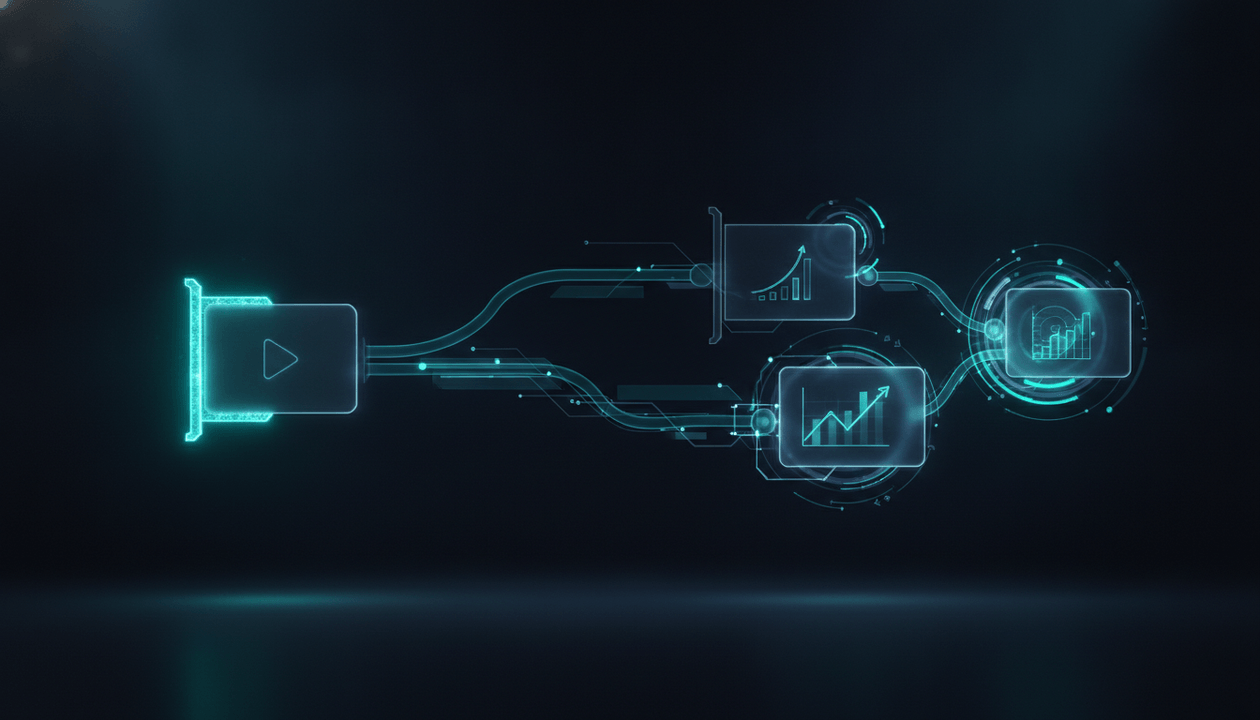
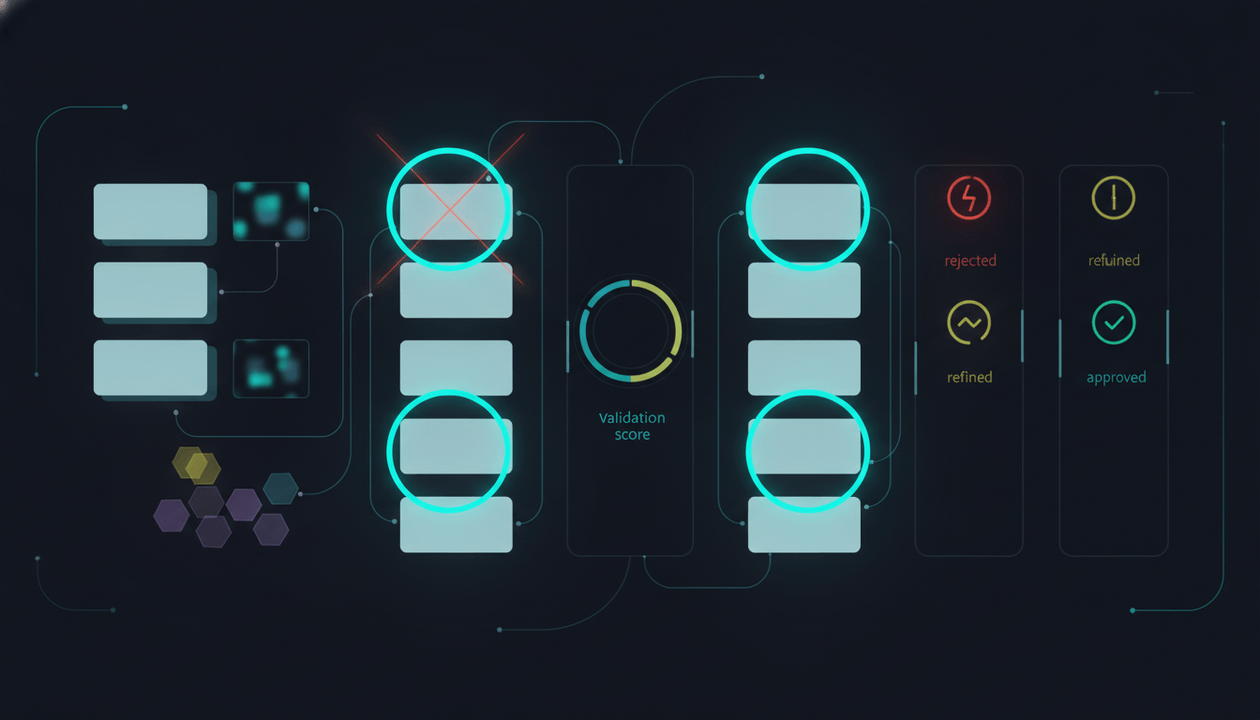
Most creators do not have an idea problem.
They have a validation problem.
They collect video ideas from comments, competitors, trends, AI tools, keyword tools, random inspiration, founder opinions, team meetings, and “this could be good” moments. Then they turn too many of those ideas into scripts, thumbnails, edits, and uploads before proving the idea deserved production in the first place.
That is how channels waste months.
A YouTube topic validation system fixes this.
It helps you decide which ideas are worth making, which ideas need a sharper angle, which ideas should become Shorts, which ideas should become blog posts, which ideas should be saved for later, and which ideas should be killed before they waste production time.
The goal is simple:
Validate the idea before you brief, script, design, edit, and publish it.
This guide gives you a complete YouTube topic validation system for creators, faceless channels, YouTube agencies, SaaS teams, documentary channels, educational channels, product-led channels, and creator-led businesses.
Not a generic list of “video ideas.”
A real decision system for choosing what deserves to become a YouTube video.
Key Takeaways
- YouTube topic validation is the process of testing whether a video idea has enough audience demand, click potential, retention potential, differentiation, business value, and production fit before you make it.
- A strong topic is not only “interesting.” It has a clear viewer, clear pain, clear promise, clear title angle, clear thumbnail concept, clear retention path, and clear reason to exist now.
- The best validation systems look at competitor evidence, search intent, suggested-video potential, audience comments, title and thumbnail fit, channel positioning, monetization path, and production effort.
- YouTube’s Reach analytics can show how viewers discover videos through traffic sources like YouTube Search, Suggested Videos, Browse features, playlists, Shorts, external sources, cards, and end screens. Source: YouTube Help
- YouTube’s impressions and watch time reports can help creators understand how thumbnail impressions turned into views and watch time. Source: YouTube Help
- YouTube’s audience retention report helps creators understand where viewers stay, rewatch, skip, or leave, which is critical for learning which topics and structures actually hold attention. Source: YouTube Help
- OverseerOS helps creators validate topics by analyzing channels, reverse-engineering competitor patterns, discovering breakout channels, studying viral videos, planning content, improving scripts, creating stronger titles and thumbnails, and turning validated ideas into distribution assets.
What Is YouTube Topic Validation?
YouTube topic validation is the process of deciding whether a video idea is worth producing before production starts.
It answers:
- Is there real viewer demand?
- Who is the video for?
- Why would they click?
- What promise does the title make?
- What would the thumbnail show?
- Can the first 30 seconds pay off the click?
- Has something similar already worked?
- Is the space too crowded?
- What makes our version different?
- Is the idea aligned with our channel positioning?
- Does it support the business goal?
- Can the video hold attention?
- Can it become Shorts or distribution assets?
- Is the production effort worth the upside?
- Should we make it now, later, smaller, or not at all?
A weak validation process asks:
Do I like this idea?
A strong validation process asks:
Is this idea proven enough, differentiated enough, clickable enough, useful enough, and strategically valuable enough to deserve production?
That is the difference between creative guessing and operator-level content planning.
Why Most YouTube Ideas Should Not Be Made
Most ideas are not bad.
They are incomplete.
They may have a topic but no angle.
They may have an angle but no thumbnail.
They may have a thumbnail but no retention path.
They may have views potential but no business value.
They may have search demand but no differentiation.
They may sound smart but not create a clear reason to click.
They may fit the creator’s interests but not the viewer’s pain.
That is why creators should not treat every idea as a video.
An idea can become:
- a long-form video
- a Short
- a community post
- a LinkedIn post
- an X post
- a Reddit discussion
- a newsletter section
- a blog article
- a lead magnet
- a product tutorial
- a sales enablement clip
- a future video
- a discarded note
The mistake is turning every idea into a full production.
A topic validation system decides the correct asset.
Not just the correct title.
The Cost of Skipping Topic Validation
When creators skip validation, they usually discover the problem too late.
After:
- the script is written
- the voiceover is recorded
- the edit is done
- the thumbnail is designed
- the title is forced
- the video is published
- the analytics are disappointing
Then the team asks:
Why did this underperform?
Often, the answer was visible before production.
Examples:
| Missed Validation Signal | Result |
|---|---|
| No clear viewer pain | Weak click motivation |
| No thumbnail concept | Packaging feels generic |
| No competitor evidence | Idea may not have proven demand |
| Too crowded | Video looks like a copycat |
| Too broad | Audience does not know it is for them |
| Too niche | Not enough demand |
| Weak retention path | Viewers drop after the hook |
| No business fit | Views do not support the channel goal |
| No differentiation | Better channels already own the promise |
| High effort, low upside | Production resources wasted |
Validation protects time.
For serious creators, time is the most expensive cost.
Not tools.
Not thumbnails.
Not editing.
Time.
The Core Rule: A Topic Is Not Validated Until It Has a Click, Hold, and Outcome
A YouTube topic needs three things:
- Click potential
- Hold potential
- Outcome potential
If one is missing, the idea is weak.
| Validation Layer | Question | Failure Mode |
|---|---|---|
| Click | Would the right viewer click this? | Good idea nobody opens |
| Hold | Can the video keep attention after the click? | Strong packaging, weak retention |
| Outcome | Does it support the channel or business goal? | Views without strategic value |
Example:
Topic:
YouTube Analytics
Weak.
Validated angle:
Why Your YouTube Videos Get Impressions But No Clicks
Click:
- clear pain
- specific problem
- strong thumbnail potential
Hold:
- can show CTR, title, thumbnail, mismatch, examples, fixes
Outcome:
- connects to thumbnail analysis, title strategy, channel improvement, product workflow
That is a real video.
The YouTube Topic Validation Framework
Use this framework before briefing any serious video.
| Layer | Validation Question | Output |
|---|---|---|
| Audience | Who is this for? | Target viewer |
| Pain | What problem or desire triggers interest? | Viewer motivation |
| Demand | Has this topic or adjacent topic already worked? | Evidence |
| Packaging | Can we create a strong title and thumbnail? | Click promise |
| Retention | Can the video hold attention? | Structure potential |
| Differentiation | Why would our version be different? | Unique angle |
| Channel Fit | Does it match our positioning and pillars? | Strategic alignment |
| Monetization | Does it support revenue, product, sponsors, leads, or authority? | Business value |
| Production Fit | Can we make it well with current resources? | Execution score |
| Timing | Why now? | Urgency or relevance |
| Distribution | Can it become Shorts or other assets? | Repurposing plan |
| Decision | Make, refine, test smaller, save, or kill | Action |
This is not meant to slow you down.
It is meant to stop expensive guessing.
Step 1: Define the Viewer Before the Topic
Never validate a topic without defining the viewer.
A topic can be good for one viewer and useless for another.
Example:
Topic:
AI video tools
For a beginner creator:
Best AI Video Tools for Starting a Faceless YouTube Channel
For an agency:
AI Video Tools That Help Agencies Produce More Client Content Without Losing Quality
For a SaaS marketer:
How SaaS Teams Can Use AI Video Tools for Product Education
For a sponsor-safe creator:
AI Video Tools That Do Not Make Your Channel Look Cheap to Brands
Same topic.
Different viewer.
Different video.
Use this table.
| Field | Answer |
|---|---|
| Primary viewer | [Who is the video for?] |
| Experience level | Beginner / intermediate / advanced / operator / buyer |
| Current situation | [What is happening in their world?] |
| Pain or desire | [Why they care] |
| Existing belief | [What they already think] |
| Wrong belief | [What they misunderstand] |
| Desired outcome | [What they want after watching] |
| Business value | [Why this viewer matters to the channel] |
If you cannot define the viewer, the topic is not ready.
Step 2: Identify the Viewer Pain
The best YouTube ideas usually start with one of these:
- pain
- curiosity
- fear
- opportunity
- comparison
- proof
- identity
- urgency
- contradiction
- mistake
- transformation
For strategic creator content, pain is usually the strongest starting point.
Weak idea:
YouTube content planning
Stronger pain:
Creators keep filling calendars with ideas that were never validated.
Even stronger:
Your content calendar is full, but half the ideas should never become videos.
Use the pain ladder.
| Layer | Example |
|---|---|
| Surface pain | “I do not know what to post.” |
| Deeper pain | “I cannot tell which ideas are worth producing.” |
| Business pain | “I waste time making videos that do not support growth or revenue.” |
| Emotional pain | “I feel busy but not strategic.” |
| Better future | “I know which ideas deserve production before my team starts.” |
The deeper the pain, the stronger the topic.
Step 3: Check Competitor Evidence
A topic does not need a competitor to have already made the exact same video.
But you should look for evidence that the market cares.
Competitor evidence can include:
- similar videos that outperformed a channel’s baseline
- repeated topics across multiple channels
- old videos still getting search traffic
- breakout videos from smaller channels
- high comment activity
- repeated viewer questions
- strong suggested-video clusters
- popular adjacent formats
- current trend momentum
- high-intent search terms
Do not only check big channels.
A small channel getting unusually high views can be more useful than a giant channel getting normal views.
Use this table.
| Evidence Type | What It Means |
|---|---|
| Many channels covered it and performed well | Proven demand, but possibly crowded |
| One small channel broke out with it | Emerging opportunity |
| Old videos still rank | Evergreen search potential |
| Comments ask for more | Audience demand |
| Similar topic works in adjacent niche | Format adaptation opportunity |
| Big channels avoid it | Could be gap or could be weak demand |
| Many videos exist but are outdated | Refresh opportunity |
| Videos get views but weak comments | Possible broad curiosity, low buyer intent |
| Videos get fewer views but high-quality comments | Strong niche/business potential |
The goal is not to copy.
The goal is to reduce uncertainty.
Step 4: Check Search Intent
Some topics are search-driven.
These are often best for:
- tutorials
- templates
- comparisons
- “how to” questions
- tool reviews
- troubleshooting
- definitions
- checklists
- workflows
- product education
Examples:
- YouTube video brief template
- YouTube competitor analysis
- how to write YouTube hooks
- YouTube sponsor pitch email
- best AI tools for YouTube scripts
- how to turn long videos into Shorts
- YouTube content calendar template
- YouTube title generator
- YouTube thumbnail brief template
Search-driven topics usually need clarity.
The title should often include the actual term the viewer would search.
Bad search title:
This Is Why Your Team Is Lost
Better search title:
YouTube Video Brief Template: Align Your Title, Thumbnail, Script, and Edit
Search topics should answer the query fast, then go deeper.
Use this search validation table.
| Question | Answer |
|---|---|
| Would someone search this exact problem? | Yes / No |
| Is the keyword specific or broad? | Specific / broad |
| Is the searcher a buyer, creator, beginner, or operator? | [Intent] |
| Are current results weak, outdated, or generic? | [Gap] |
| Can our video become the best answer? | Yes / No |
| Does the topic support a product, template, lead magnet, or next video? | [CTA] |
Search intent is not only SEO.
It is viewer intent.
Step 5: Check Suggested and Browse Potential
Some topics are not search-first.
They are discovery-first.
These topics often work through curiosity, story, identity, tension, or visual promise.
Examples:
- I Audited 10 YouTube Channels and Found the Same Mistake
- This Tiny Channel Is Growing Faster Than Channels 10x Its Size
- Your YouTube Strategy Is Probably Built Backwards
- The AI YouTube Channels That Will Survive the Slop Era
- I Tested 5 Thumbnail Styles on the Same Idea
- Why Most Faceless Channels Look Cheap
- The Creator Economy Is Splitting Into Two Classes
These topics may not have obvious search volume.
But they can work if the title and thumbnail create a strong enough reason to click.
Use this validation table.
| Question | Why It Matters |
|---|---|
| Is there a strong curiosity gap? | Browse needs instant interest |
| Can the thumbnail show the idea visually? | Suggested/browse depends heavily on packaging |
| Does the topic connect to a known viewer desire? | Prevents random curiosity |
| Can it fit next to competitor videos? | Suggested traffic depends on session context |
| Does it have emotional tension? | Helps the click |
| Can the first 30 seconds pay off the promise? | Protects retention |
| Is the idea repeatable as a format? | Creates channel architecture |
Discovery-first topics are powerful.
But they are risky if the packaging is weak.
Step 6: Create the Title Before Approving the Topic
A topic is not validated until it can become a clickable title.
If you cannot write a strong title, the topic may not be ready.
Example:
Raw topic:
YouTube planning
Weak title:
How to Plan YouTube Videos
Better:
Stop Planning YouTube Videos Before You Validate the Topic
Even better:
Your YouTube Content Calendar Is Full of Ideas You Should Kill
The stronger title reveals the real angle.
Use these title tests.
| Test | Question |
|---|---|
| Specificity | Does the title clearly say who or what it is about? |
| Pain | Does it point to a real problem? |
| Curiosity | Does it create a reason to know more? |
| Promise | Does it imply a useful payoff? |
| Freshness | Does it feel different from generic niche content? |
| Accuracy | Can the video honestly deliver it? |
| Thumbnail fit | Can the title pair with a clear visual? |
| Audience fit | Would the right viewer feel called out? |
Generate 5 to 10 title options before approving a topic.
If every title sounds generic, the topic is generic.
Step 7: Create the Thumbnail Concept Before Approving the Topic
A topic also needs a thumbnail.
If the idea cannot be visualized, it may still work for search, but it may struggle in suggested and browse.
Ask:
- What is the visual contrast?
- What is the emotion?
- What object represents the problem?
- What is the before/after?
- What is the tension?
- What should the viewer understand in one second?
- Can this work on mobile?
- Does it avoid clutter?
- Does it match the title?
- Does it create a question?
Example:
Topic:
YouTube topic validation
Weak thumbnail:
Laptop with YouTube logo.
Strong thumbnail:
A board of 20 video ideas, with most stamped “KILL” and 3 highlighted as “MAKE.”
Another concept:
Creator holding a full content calendar while half the cards are cracked, showing “views?” “no buyer” “weak hook” “no thumbnail.”
Another concept:
Split screen: random idea pile vs clean validation scorecard.
Thumbnail validation matters because many ideas sound smart in text but have no visual click.
A strong YouTube topic usually has a strong visual metaphor.
Step 8: Check Retention Potential
Some topics can get clicks but cannot hold attention.
That creates a problem.
High CTR with weak retention can signal that the packaging overpromised or the structure failed.
YouTube’s audience retention report shows moments where viewers stay, rewatch, skip, or leave, including intros, top moments, spikes, and dips. Source: YouTube Help
You should think about retention before publishing.
Ask:
- Can this topic support a strong first 30 seconds?
- Is there a natural structure?
- Are there examples?
- Are there stakes?
- Are there reveals?
- Is there a transformation?
- Can the viewer see progress?
- Are there moments that can create spikes?
- Are there boring sections we can cut?
- Does the payoff come soon enough?
Use this table.
| Retention Signal | Good Topic | Weak Topic |
|---|---|---|
| Strong hook | Clear pain or curiosity | Slow setup needed |
| Structure | Natural progression | Random thoughts |
| Examples | Easy to show | Mostly abstract |
| Stakes | Viewer cares about outcome | Low consequence |
| Pacing | Sections can move quickly | Needs long explanation |
| Payoff | Viewer gets tool/framework/result | Vague conclusion |
| Visual moments | Clear examples/screens/maps | Talking head only with no tension |
| Rewatch moments | Checklist, framework, before/after | No useful anchors |
A topic with strong click potential but weak retention needs a better format.
Maybe it should become a Short, not a long-form video.
Maybe it needs a teardown.
Maybe it needs a case study.
Maybe it should be combined with another idea.
Step 9: Check Differentiation
A topic can have demand and still be a bad idea if your version has no reason to exist.
Ask:
Why would someone watch our version instead of the 20 versions already available?
Differentiation can come from:
- better proof
- better examples
- better structure
- stronger opinion
- more current information
- better visual explanation
- narrower audience
- deeper expertise
- faster execution
- better production quality
- stronger storytelling
- more honest tradeoffs
- unique data
- product workflow
- practical templates
- contrarian angle
- market-specific focus
Example:
Generic topic:
How to grow on YouTube
Differentiated:
How to Build a YouTube Channel Around Buyer Intent, Not Vanity Views
Generic topic:
Best AI tools for YouTube
Differentiated:
Best AI YouTube Tools for Creators Who Care About Sponsor-Safe Quality
Generic topic:
YouTube content calendar
Differentiated:
YouTube Content Calendar System: Validate Topics Before You Schedule Them
Use this differentiation table.
| Question | Answer |
|---|---|
| What is the generic version of this topic? | [Generic version] |
| What is our sharper angle? | [Angle] |
| What proof can we add? | [Evidence] |
| What audience can we make it specific to? | [Viewer] |
| What format makes it stronger? | [Format] |
| What would competitors likely miss? | [Gap] |
| What will viewers remember? | [Takeaway] |
If the only difference is your logo, the topic is not differentiated.
Step 10: Check Channel Fit
A topic can be good and still wrong for your channel.
This is one of the hardest decisions.
Creators often make off-strategy videos because they think:
This could get views.
Maybe.
But the better question is:
Would this attract the audience we want more of?
Use this table.
| Question | Why It Matters |
|---|---|
| Does this fit our channel positioning? | Protects channel memory |
| Does this fit one of our content pillars? | Keeps strategy coherent |
| Would subscribers expect this? | Prevents audience confusion |
| Would the right new viewer understand our channel? | Improves conversion to subscriber |
| Does this support our business model? | Avoids vanity growth |
| Does this create a logical next video? | Builds binge paths |
| Does this strengthen authority? | Helps long-term positioning |
Example:
A creator growth SaaS might be tempted to make:
The Craziest AI News This Week
Could it get views?
Maybe.
Does it fit?
Only if the angle connects to creator workflows, YouTube strategy, AI production quality, or content operations.
Better version:
What This AI Video Update Means for Faceless YouTube Creators
Now it fits the channel.
Step 11: Check Business Value
Not every video needs to sell.
But every serious channel should understand the business role of each topic.
Business value can include:
- subscribers
- product trials
- demo calls
- sponsor inventory
- affiliate clicks
- email signups
- community growth
- customer education
- sales enablement
- onboarding
- retention
- authority
- backlinks
- social distribution
- partner opportunities
Use this table.
| Topic Type | Business Value |
|---|---|
| Beginner guide | Discovery, subscribers, email capture |
| Advanced workflow | Product trials, trust, authority |
| Comparison | Buyer intent, demos, affiliate revenue |
| Template | Search traffic, lead magnet, product bridge |
| Teardown | Authority, agency leads, sales enablement |
| Case study | Trust, proof, conversion |
| Sponsor guide | Brand-safe traffic, sponsor leads |
| Product tutorial | Activation, retention, trials |
| Trend analysis | Discovery, thought leadership |
| Back-catalog audit | Revenue optimization, sponsor inventory |
A video with low views but high business value can be worth making.
A video with high views but wrong audience can be a distraction.
The validation system should make that clear before production.
Step 12: Check Production Fit
Some ideas are good but not feasible right now.
A topic may require:
- data you do not have
- expert research
- expensive editing
- custom visuals
- interviews
- product footage
- legal review
- sponsor approval
- high-quality voiceover
- original experiments
- long production time
- advanced storytelling
That does not mean you should kill it.
It may mean:
- save for later
- make a smaller version
- produce as a Short
- turn into a blog post
- use a simpler format
- gather data first
- split into a series
- validate with community post
- validate with X or LinkedIn first
Use this production score.
| Production Fit | Meaning | Decision |
|---|---|---|
| Easy | Can make well now | Produce |
| Medium | Needs planning but doable | Brief carefully |
| Hard | High effort, high risk | Validate harder |
| Too hard now | Good idea, wrong timing | Save or simplify |
| Not worth it | High effort, low upside | Kill |
A high-effort topic should need higher validation.
Do not spend 30 hours making a video that has no clear title, thumbnail, or audience.
Step 13: Choose the Correct Asset Type
Validation should decide whether the idea becomes a full YouTube video.
Sometimes it should not.
Use this decision table.
| Idea Signal | Best Asset |
|---|---|
| Strong search intent + deep value | Long-form YouTube video |
| Strong visual hook + simple lesson | Short |
| Strong opinion + timely trend | X or LinkedIn post |
| Practical checklist | Blog post or lead magnet |
| Community question | Community post or Reddit discussion |
| Complex system | Long-form video + blog article |
| Product workflow | Tutorial video |
| Buyer objection | Sales enablement video |
| Small insight | Short or social post |
| Weak demand | Save or kill |
| Needs more evidence | Research note first |
This prevents overproduction.
A small insight does not need a 12-minute video.
A deep system should not be squeezed into a 30-second Short.
The medium should match the idea.
The YouTube Topic Validation Scorecard
Score every serious topic from 0 to 50.
| Category | Score 0 | Score 1 | Score 2 | Score 3 | Score 4 | Score 5 |
|---|---|---|---|---|---|---|
| Viewer clarity | Vague | Broad | Somewhat clear | Clear | Specific | High-value and specific |
| Pain/desire strength | None | Weak | Mild | Clear | Strong | Urgent |
| Demand evidence | None | Weak | Some | Good | Strong | Proven and current |
| Search potential | None | Low | Some | Good | Strong | High-intent |
| Suggested/browse potential | Weak | Low | Some | Good | Strong | Very clickable |
| Title potential | Weak | Basic | Some | Good | Strong | Excellent |
| Thumbnail potential | Weak | Generic | Some | Clear | Strong | Instant visual tension |
| Retention potential | Weak | Basic | Some | Good | Strong | Natural progression and payoff |
| Differentiation | Copycat | Slight | Some | Clear | Strong | Hard to copy |
| Channel fit | Off-strategy | Weak | Some | Good | Strong | Perfect pillar fit |
Add optional business scoring.
| Business Category | Score 0 | Score 1 | Score 2 | Score 3 | Score 4 | Score 5 |
|---|---|---|---|---|---|---|
| Product fit | None | Weak | Some | Good | Strong | Direct |
| Sponsor/affiliate fit | None | Weak | Some | Good | Strong | Premium |
| Distribution potential | None | Weak | Some | Good | Strong | Many assets |
| Production fit | Not feasible | Hard | Medium-hard | Doable | Easy | Easy and high-quality |
| Timing | No reason now | Weak | Some | Relevant | Current | Urgent |
Core score:
| Score | Decision |
|---|---|
| 0 to 15 | Kill |
| 16 to 24 | Save for later |
| 25 to 32 | Needs sharper angle |
| 33 to 40 | Good topic |
| 41 to 50 | Priority topic |
With business scoring added:
| Total Score | Decision |
|---|---|
| 0 to 25 | Kill |
| 26 to 39 | Save or test smaller |
| 40 to 54 | Refine |
| 55 to 65 | Produce |
| 66 to 75 | Priority production |
Do not use scoring as a prison.
Use it as a decision aid.
A founder or creator can still override the score.
But the score forces the conversation to become specific.
The Topic Validation Template
Use this before creating a video brief.
| Field | Answer |
|---|---|
| Raw idea | [Idea] |
| Proposed title | [Title] |
| Content pillar | [Pillar] |
| Target viewer | [Viewer] |
| Viewer pain/desire | [Pain or desire] |
| Why now? | [Timing] |
| Search intent | [Search terms or query] |
| Suggested/browse angle | [Curiosity or emotional click] |
| Competitor evidence | [Videos, channels, patterns] |
| Comment evidence | [Questions or repeated demand] |
| Differentiation | [Why our version is different] |
| Thumbnail concept | [Visual idea] |
| Hook idea | [First 30 seconds] |
| Retention path | [Structure and payoff] |
| Business value | [Trial, sponsor, affiliate, authority, email, retention] |
| Production effort | Low / medium / high |
| Distribution potential | Shorts, X, Reddit, LinkedIn, newsletter, blog |
| Risks | [Crowded, outdated, weak proof, low demand] |
| Score | [Number] |
| Decision | Make / refine / test smaller / save / kill |
| Next step | [Brief, research, title rewrite, thumbnail concept, community test] |
This template should come before the video brief.
Validation decides whether the idea deserves a brief.
The brief decides how to make it.
Example: Weak Topic vs Validated Topic
Weak Topic
| Field | Answer |
|---|---|
| Raw idea | YouTube analytics |
| Viewer | Creators |
| Title | How to Understand YouTube Analytics |
| Thumbnail | YouTube analytics screenshot |
| CTA | Subscribe |
| Decision | Too broad |
The problem:
- unclear viewer
- generic title
- weak pain
- weak visual
- no differentiation
- no business path
Validated Topic
| Field | Answer |
|---|---|
| Raw idea | YouTube analytics |
| Target viewer | Intermediate creators getting impressions but weak views |
| Viewer pain | Their videos are being shown, but people are not clicking or staying |
| Proposed title | Why Your YouTube Videos Get Impressions But No Clicks |
| Thumbnail concept | Impressions high, views low dashboard with “NO CLICK” visual |
| Demand evidence | Common creator pain, YouTube Reach metrics support diagnosis |
| Differentiation | Focus on topic-title-thumbnail mismatch, not generic analytics tour |
| Retention path | Diagnose impressions, CTR, title promise, thumbnail clarity, hook match |
| CTA | Analyze title and thumbnail patterns with OverseerOS |
| Decision | Produce |
Same broad topic.
Completely different video.
Example: Topic Validation for a SaaS Channel
Raw idea:
Product demo
Weak version:
OverseerOS Demo
Validated version:
| Field | Answer |
|---|---|
| Target viewer | Creator, agency, or SaaS content lead trying to plan YouTube topics |
| Viewer pain | They do not know which topics are worth producing |
| Proposed title | How to Validate YouTube Topics Before You Waste Time Producing Them |
| Thumbnail concept | Content calendar with most ideas rejected and a few highlighted |
| Competitor evidence | Many channels teach ideas, fewer teach validation systems |
| Search intent | YouTube topic ideas, YouTube content planning, YouTube strategy |
| Browse angle | “Most of your ideas should be killed” |
| Product bridge | Show how OverseerOS helps analyze channels, patterns, titles, and thumbnails before production |
| CTA | Try a channel analysis or content planning workflow |
| Business value | Product education, trials, authority |
| Decision | Produce as product-led tutorial |
This is how SaaS YouTube avoids boring product demos.
Example: Topic Validation for a Faceless Channel
Raw idea:
AI YouTube automation
Weak version:
AI YouTube Automation Explained
Validated version:
| Field | Answer |
|---|---|
| Target viewer | Creators interested in faceless channels but skeptical of hype |
| Viewer pain | They do not know what is real and what is low-quality AI slop |
| Proposed title | The AI YouTube Channels That Will Survive After the Slop Era |
| Thumbnail concept | Trash pile of AI videos vs one polished channel rising above |
| Competitor evidence | AI YouTube topics get attention, but many are hype-driven |
| Differentiation | Focus on quality, retention, sponsor safety, and systems |
| Retention path | Explain slop problem, survival traits, examples, workflow, future |
| Business value | Attract serious creators and tool users |
| Decision | Produce as documentary/analysis video |
This is how a broad hype topic becomes a differentiated channel asset.
Example: Topic Validation for an Agency
Raw idea:
Client onboarding
Validated version:
| Field | Answer |
|---|---|
| Target viewer | YouTube agency owners and strategists |
| Viewer pain | New clients create chaos because access, goals, approvals, and strategy are unclear |
| Proposed title | YouTube Agency Client Onboarding System: From Signed Client to Production-Ready Strategy |
| Thumbnail concept | Client chaos turning into clean onboarding workflow |
| Competitor evidence | General agency onboarding exists, YouTube-specific systems are underserved |
| Differentiation | Focus on channel audit, competitor research, briefs, approvals, and first 30-day sprint |
| Business value | Attract agencies, serious teams, high-value users |
| Decision | Produce as deep template article/video |
This is validation.
Not just idea collection.
The 5 Decision Outcomes
Every topic should end with one of five decisions.
1. Produce
Use when:
- strong viewer
- strong pain
- strong demand
- strong title
- strong thumbnail
- strong retention path
- strong channel fit
Next step:
Create a full YouTube video brief.
2. Refine
Use when:
- topic has potential
- angle is too broad
- title is weak
- thumbnail is unclear
- differentiation is missing
Next step:
Rewrite title, narrow viewer, sharpen promise, find better format.
3. Test Smaller
Use when:
- idea is interesting but unproven
- production effort is high
- audience demand is uncertain
- it may work as a Short or social post first
Next step:
Test as Short, X post, LinkedIn post, Reddit discussion, poll, or community post.
4. Save for Later
Use when:
- idea is good but timing is wrong
- needs more proof
- production resources are not ready
- it belongs to a future pillar
- another topic is higher priority
Next step:
Add to backlog with reason.
5. Kill
Use when:
- weak viewer
- weak demand
- weak title
- weak thumbnail
- weak channel fit
- low business value
- high effort
- no differentiation
Next step:
Delete or archive.
Killing ideas is a skill.
The best creators kill more ideas than they make.
The 30-Minute YouTube Topic Validation Sprint
Use this before every video brief.
Minutes 0-5: Define the Viewer
Answer:
- Who is this for?
- What is their experience level?
- What pain or desire triggers interest?
- Why would they care now?
Minutes 5-10: Check Demand
Answer:
- Has this topic worked before?
- Which competitors covered adjacent angles?
- Are there breakout examples?
- What comments or questions show demand?
Minutes 10-15: Build Packaging
Answer:
- What are 5 title options?
- What is the thumbnail concept?
- What is the click trigger?
- What is the visual contrast?
Minutes 15-20: Check Retention
Answer:
- What is the hook?
- What are the main beats?
- What examples are needed?
- What is the payoff?
Minutes 20-25: Check Strategy
Answer:
- Which content pillar does it support?
- What business goal does it support?
- What CTA fits?
- Can it become distribution assets?
Minutes 25-30: Score and Decide
Answer:
- What is the score?
- Produce, refine, test smaller, save, or kill?
- What is the next step?
This sprint prevents random production.
The Weekly Topic Validation Workflow
Use this for teams.
Day 1: Collect Ideas
Sources:
- competitor videos
- audience comments
- YouTube search terms
- sales calls
- support tickets
- creator questions
- product updates
- trend signals
- community discussions
- old video performance
- sponsor opportunities
- content pillars
Day 2: Cluster Ideas
Group by:
- pillar
- viewer
- pain
- funnel stage
- format
- business goal
Day 3: Validate Demand
Check:
- competitor evidence
- search intent
- comment demand
- trend timing
- old channel data
- product relevance
Day 4: Package Ideas
Create:
- title options
- thumbnail concepts
- hook ideas
- format choices
Day 5: Score Ideas
Score:
- viewer clarity
- pain
- demand
- click potential
- retention potential
- differentiation
- business value
- production fit
Day 6: Choose Production Queue
Decide:
- produce now
- refine
- test smaller
- save
- kill
Day 7: Create Video Briefs
Only create briefs for ideas that passed validation.
This keeps production clean.
How to Validate Topics With Existing Channel Data
If you already have a channel, use your own data.
Look at:
- top videos by last 90 days
- videos with high impressions but low CTR
- videos with low impressions but high CTR
- videos with strong retention
- videos with strong comment quality
- videos that gained subscribers
- videos that drove product clicks
- videos that performed well in search
- videos that performed well in suggested
- videos that created Shorts
- videos that sponsors liked
- videos that attracted the wrong audience
Use this table.
| Signal | What It Suggests |
|---|---|
| High impressions, low CTR | Topic may have demand, packaging needs work |
| Low impressions, high CTR | Packaging works, topic may need better distribution or stronger ecosystem |
| High CTR, weak retention | Title/thumbnail may overpromise or hook fails |
| Low CTR, strong retention | Strong content, weak packaging |
| High search traffic | Good evergreen topic cluster |
| High suggested traffic | Strong session fit or packaging relationship |
| Strong comments from target viewers | High strategic value |
| High views, weak business value | Possible vanity topic |
| Low views, strong CTA clicks | Valuable buyer-intent topic |
| Strong Shorts from long-form | Repurposing-friendly topic |
Topic validation gets better when you learn from your own archive.
How to Validate Topics Without Channel Data
New channel?
Use market evidence.
Look at:
- competitor outliers
- small channels with breakout videos
- repeated questions in comments
- Reddit discussions
- Quora-style questions
- Google search suggestions
- YouTube search suggestions
- tool comparison demand
- outdated videos ranking
- current trend spikes
- audience pain in communities
- product review comments
- forum complaints
- social media discussions
- sponsor categories in the niche
New channels should be even stricter.
Without your own data, you need stronger market evidence and clearer differentiation.
Do not start with random broad topics.
Start with validated pain.
The Topic Validation Board
Create a simple board with these columns.
| Column | Meaning |
|---|---|
| Idea Inbox | Raw ideas |
| Needs Validation | Ideas worth checking |
| Needs Angle | Demand exists, but angle is weak |
| Needs Packaging | Angle exists, title/thumbnail weak |
| Test Smaller | Try as Short/social/community first |
| Approved for Brief | Ready for video brief |
| In Production | Being made |
| Published | Live |
| Learnings | Performance notes |
| Killed | Rejected ideas with reason |
The “Killed” column is important.
It prevents the same weak ideas from returning every month.
Add rejection reasons:
- too broad
- no thumbnail
- wrong audience
- weak pain
- too crowded
- low business value
- high effort
- no proof
- off-position
- timing wrong
A serious channel should have many killed ideas.
That is a sign of strategy.
How OverseerOS Helps Validate YouTube Topics
Topic validation is hard when you start from a blank page.
You need to know what is working, which channels are growing, what titles and thumbnails are triggering clicks, which formats repeat, what competitors are missing, and how your own channel is responding.
That is where OverseerOS fits.
OverseerOS is built for YouTube intelligence. It helps creators reverse-engineer successful channels, analyze viral videos, discover breakout opportunities, plan content, improve scripts, create stronger titles and thumbnails, and turn validated videos into distribution assets.
For topic validation, that means you can move from:
I think this might work.
To:
This idea has evidence, a viewer, a title angle, a thumbnail concept, a retention path, and a reason to exist.
| Topic Validation Job | How OverseerOS Helps |
|---|---|
| Analyze what works in a niche | Use OverseerOS Channel Analyzer to study growth patterns, content strategy, upload frequency, engagement signals, and what makes a channel perform |
| Reverse-engineer competitor channels | Use OverseerOS Channel Blueprint Cloner to turn a channel URL into a strategy blueprint with tone DNA, hook patterns, pacing, viral topic formulas, tags, keywords, hidden insights, and untapped topic opportunities |
| Find breakout topic evidence | Use OverseerOS Viral Channel Finder to discover fast-growing channels and breakout videos in any niche |
| Study individual winning videos | Use OverseerOS Viral X-Ray to analyze titles, thumbnails, hooks, structure, and audience engagement patterns |
| Turn validation into a content plan | Use OverseerOS Channel Content Planner to create data-backed topics, briefs, and content ideas based on channel strategy |
| Strengthen the title | Use OverseerOS Viral Title Generator to create title ideas based on proven patterns and your channel tone |
| Validate thumbnail direction | Use OverseerOS Thumbnail Analyzer and OverseerOS Thumbnail Cloner to study visual psychology, composition, text placement, colors, and proven thumbnail structures |
| Improve the script after approval | Use OverseerOS Script Studio and OverseerOS Script ReSpark to strengthen hooks, pacing, emotional delivery, clarity, and retention structure |
| Track what your own audience responds to | Use OverseerOS Channel Pulse to monitor your own traffic sources, retention, and per-video stats |
| Turn validated videos into more assets | Use OverseerOS Distribution Studio to turn one piece of content into native posts for X, Reddit, Facebook, and more |
| Produce faceless videos from validated scripts | Use OverseerOS Auto Edit Studio to turn finished scripts and voiceovers into structured faceless YouTube video workflows with scene-by-scene structure, AI visuals, captions, background music, motion, FX, and export controls |
The key idea:
OverseerOS should not just help you make more content. It should help you make fewer bad bets.
Start with OverseerOS Channel Blueprint Cloner for YouTube channel reverse engineering, use OverseerOS Viral Channel Finder to discover breakout channels in any niche, then turn approved ideas into a YouTube Video Brief Template, YouTube Content Pillar Map, and YouTube Competitor Positioning Map.
Common YouTube Topic Validation Mistakes
Mistake 1: Validating Only With Search Volume
Search demand is useful.
But not every strong YouTube topic is search-driven.
Some of the best videos work because of suggested traffic, browse curiosity, story tension, visual contrast, or format strength.
Validate both search and discovery potential.
Mistake 2: Copying Competitor Topics Without Differentiation
If a competitor topic worked, that proves demand.
It does not prove your version deserves to exist.
You still need a sharper angle, better proof, better format, better packaging, or more specific audience.
Mistake 3: Confusing Trend With Strategy
Trends can create timing.
But a trend is not automatically a good topic.
Ask:
- Does it fit the channel?
- Does it attract the right viewer?
- Can we add unique perspective?
- Does it support a pillar?
- Will it matter after the trend fades?
If not, skip it.
Mistake 4: Approving Ideas Without Thumbnail Concepts
A topic with no thumbnail concept is not fully validated.
You do not need the final thumbnail.
But you need a visual promise.
If the idea cannot be shown clearly, it may need a different format.
Mistake 5: Ignoring Retention Until After Publishing
Retention starts in validation.
If the topic cannot support structure, examples, stakes, and payoff, it may get clicks but lose viewers.
Think about the hold before production.
Mistake 6: Letting the Highest-Status Person Choose the Ideas
In teams, founders, clients, managers, or creators often push ideas because they personally like them.
That can be useful.
But the idea should still pass validation.
A strong opinion should become a hypothesis.
Not an automatic production order.
Mistake 7: Never Killing Ideas
A backlog full of weak ideas creates noise.
Kill ideas with reasons.
This makes future planning faster.
Mistake 8: Making Every Validated Idea Immediately
Even good ideas need priority.
If 20 ideas pass validation, produce the ones with the best mix of demand, differentiation, business value, timing, and production fit.
Validation is not the same as prioritization.
The Topic Validation Checklist
Use this before approving any video.
Viewer
- The target viewer is specific.
- The viewer’s experience level is clear.
- The viewer pain or desire is strong.
- The topic attracts the audience we want more of.
- The topic matches the channel positioning.
Demand
- Similar or adjacent topics have evidence.
- Competitor outliers were checked.
- Search intent was checked.
- Suggested/browse potential was checked.
- Comments or community demand were reviewed.
- The topic is not purely based on internal opinion.
Packaging
- At least 5 title options exist.
- One title has a clear promise.
- Thumbnail concept is clear.
- Click trigger is obvious.
- Title and thumbnail can work together.
- Packaging is truthful.
Retention
- First 30 seconds can be strong.
- Video has a natural structure.
- Examples or proof are available.
- The payoff is clear.
- Potential boring sections are identified.
- The idea can hold attention beyond the click.
Strategy
- Topic fits a content pillar.
- Topic has differentiation.
- Topic supports a business or channel goal.
- CTA path is clear.
- Distribution potential is clear.
- Production effort is worth the upside.
Decision
- Topic score is recorded.
- Decision is make, refine, test smaller, save, or kill.
- Next step is assigned.
- Weak ideas are archived with reason.
Final Verdict
Most creators do not need more video ideas.
They need a better way to judge the ideas they already have.
A YouTube topic validation system stops you from turning every interesting thought into a full production. It forces each idea to prove itself before it consumes time, editing, voiceover, thumbnails, scripts, and team energy.
A valid topic has:
- a specific viewer
- a strong pain or desire
- evidence of demand
- a clear title angle
- a strong thumbnail concept
- retention potential
- differentiation
- channel fit
- business value
- realistic production scope
- a clear next step
That is how you stop publishing from a pile of guesses.
The strongest YouTube channels are not built by making every idea.
They are built by choosing better bets.
If you want to validate YouTube topics from proven patterns instead of guessing, use OverseerOS to analyze channels, reverse-engineer competitors, study viral videos, find breakout topics, create stronger titles and thumbnails, plan content, improve scripts, and turn validated videos into distribution assets.
A video idea is cheap.
A validated topic is an asset.
FAQ
What is YouTube topic validation?
YouTube topic validation is the process of checking whether a video idea is worth producing before production starts. It looks at viewer demand, pain, title potential, thumbnail potential, retention potential, differentiation, channel fit, business value, production effort, and distribution potential.
Why is topic validation important for YouTube creators?
Topic validation helps creators avoid wasting time on videos that were never likely to perform. It improves content planning, title strategy, thumbnail direction, retention planning, channel positioning, and production efficiency.
How do I validate a YouTube video idea?
Validate a YouTube video idea by defining the target viewer, identifying the viewer pain, checking competitor evidence, reviewing search and suggested-video potential, creating title options, building a thumbnail concept, checking retention potential, scoring business value, and deciding whether to make, refine, test, save, or kill the idea.
What makes a YouTube topic worth producing?
A YouTube topic is worth producing when it has a clear target viewer, strong demand, a clickable title, a strong thumbnail concept, enough depth to hold attention, a differentiated angle, strategic channel fit, and a clear next step for the viewer.
Should I validate YouTube topics with search volume?
Search volume can help, but it should not be the only validation method. Many strong YouTube topics work through Suggested Videos, Browse features, Shorts, comments, trend timing, visual curiosity, or competitor outliers rather than traditional search demand.
How do I know if a YouTube topic is too broad?
A topic is too broad if it does not call out a specific viewer, pain, outcome, or format. “YouTube analytics” is broad. “Why your YouTube videos get impressions but no clicks” is sharper because it defines a specific problem.
How do I know if a YouTube topic is too niche?
A topic may be too niche if there is little evidence of demand, no clear audience, weak business value, limited distribution potential, and not enough depth to create a strong video. Some niche topics can still be valuable if they attract high-intent buyers or serious operators.
What should I do with ideas that fail validation?
Ideas that fail validation should be refined, tested smaller, saved for later, or killed. Not every idea needs to become a long-form video. Some ideas work better as Shorts, social posts, community posts, newsletters, or internal research notes.
How does OverseerOS help with YouTube topic validation?
OverseerOS helps creators validate YouTube topics by analyzing channels, reverse-engineering competitor strategies, discovering breakout channels, studying viral videos, generating data-backed content ideas, improving titles and thumbnails, strengthening scripts, tracking performance, and turning validated videos into distribution assets through tools like OverseerOS Channel Analyzer, OverseerOS Channel Blueprint Cloner, OverseerOS Viral Channel Finder, OverseerOS Viral X-Ray, OverseerOS Channel Content Planner, OverseerOS Viral Title Generator, OverseerOS Thumbnail Analyzer, OverseerOS Thumbnail Cloner, OverseerOS Script Studio, OverseerOS Script ReSpark, OverseerOS Channel Pulse, OverseerOS Distribution Studio, and OverseerOS Auto Edit Studio.
What is the biggest mistake creators make with YouTube topic validation?
The biggest mistake is treating a topic idea as ready for production before proving it has a clear viewer, click angle, thumbnail concept, retention path, differentiation, and channel fit. A raw idea is not a validated topic.