
Most SaaS teams measure YouTube the wrong way.
They look for the cleanest last-click conversion.
Then they undercount the channel that created the trust.
A viewer watches your video on Monday.
Searches your brand on Wednesday.
Reads a comparison page on Friday.
Starts a trial the next week.
Buys after a demo call two weeks later.
The spreadsheet says “organic search” or “direct.”
But YouTube did the hard part.
It created the first serious belief.
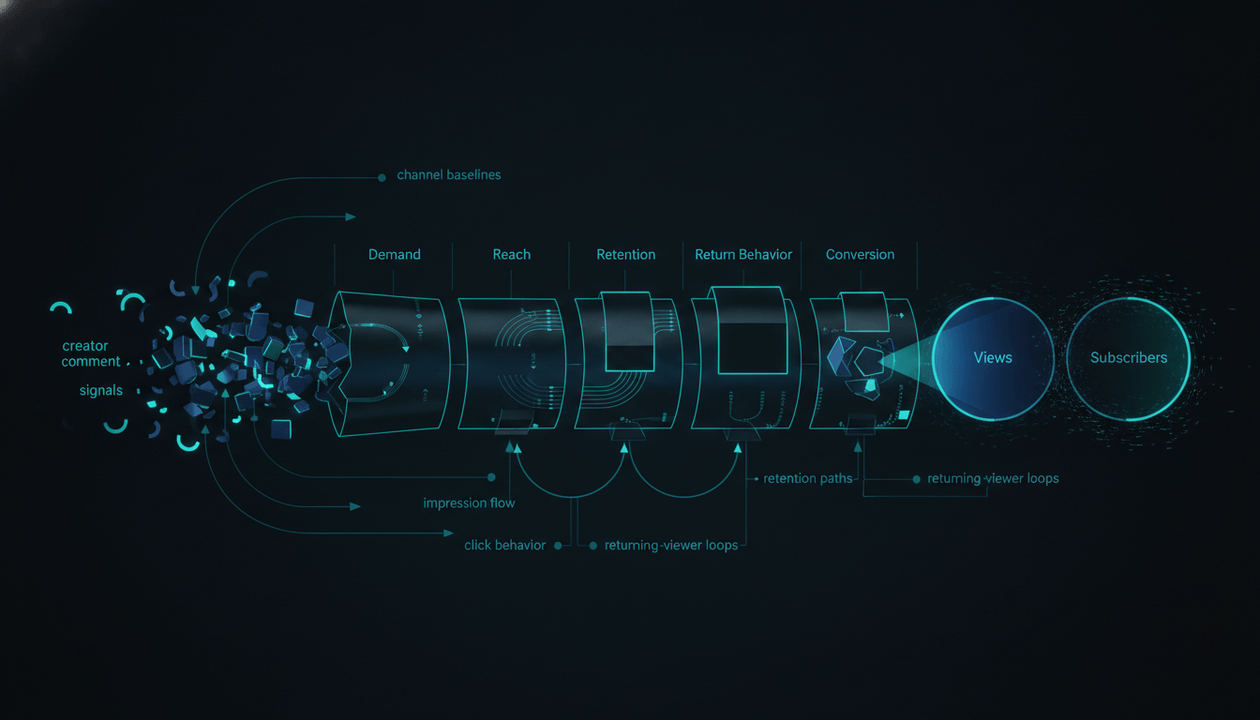
That is why YouTube-to-SaaS attribution is not just about tracking links. It is about understanding how YouTube creates demand, educates buyers, warms up accounts, increases branded search, improves trial quality, and helps convert skeptical users who were never going to buy from a cold landing page.
This guide gives you a practical YouTube-to-SaaS attribution system for founders, SaaS marketers, creator-led companies, affiliates, YouTube operators, and B2B teams.
The goal is simple:
Stop treating YouTube like a vanity channel and start measuring it like a revenue engine.
Key Takeaways
- YouTube often creates demand before it captures demand, which means last-click attribution usually undervalues it.
- SaaS teams should track YouTube across the full journey: view, click, search, visit, trial, activation, demo, pipeline, paid conversion, expansion, and retention.
- The best YouTube attribution system combines UTMs, dedicated landing pages, promo codes, self-reported attribution, CRM fields, branded search lift, assisted conversions, and content-level analysis.
- Not every YouTube video should be judged by direct trial starts. Some videos create awareness, some educate buyers, some compare solutions, and some close high-intent users.
- SaaS creators should measure revenue per video, trial quality, activation rate, assisted pipeline, sponsor value, and customer intent, not just views.
- OverseerOS helps creators and SaaS teams reverse-engineer proven YouTube patterns, find high-intent topics, analyze competitors, plan stronger content, and create videos that can convert beyond the first click.
- The smartest SaaS teams do not ask, “Did YouTube get the last click?” They ask, “Did YouTube create or accelerate the customer journey?”
What Is YouTube-to-SaaS Attribution?
YouTube-to-SaaS attribution is the process of measuring how YouTube content contributes to SaaS business outcomes.
That includes:
- Website visits
- Free trials
- Demo bookings
- Email signups
- Waitlist joins
- Product-led signups
- Paid subscriptions
- Expansion revenue
- Affiliate conversions
- Sales pipeline
- Branded search growth
- Direct traffic growth
- Product awareness
- Sales enablement
- Customer education
The mistake is thinking attribution only means:
How many people clicked the link in the description and bought?
That is one signal.
But it is not the whole journey.
YouTube is often a trust-building platform. Viewers may not click immediately because they are watching on TV, mobile, or in research mode. They may search the brand later. They may watch five videos before signing up. They may send the video to a team member. They may discover the product through a creator, then convert through search, retargeting, a comparison page, or a sales call.
If you only measure the final click, you miss the real influence.
Why YouTube Attribution Is Hard for SaaS
YouTube is powerful because it creates attention and trust.
It is hard to measure because attention and trust do not always convert immediately.
Here is what usually happens.
| Viewer Behavior | What Analytics May Show | What Really Happened |
|---|---|---|
| Viewer watches a product tutorial, then searches the brand later | Organic search | YouTube created demand |
| Viewer sees a sponsor integration on TV, then types the URL manually | Direct traffic | YouTube influenced the visit |
| Viewer watches 3 comparison videos, then books a demo from a blog page | Blog or SEO | YouTube educated the buyer |
| Viewer clicks a link but signs up 12 days later from another device | Unclear or different source | YouTube may have started the journey |
| Viewer shares the video with their team | No direct conversion | YouTube influenced internal buying |
| Viewer watches without clicking, then recognizes the brand later in ads | Paid search or retargeting | YouTube warmed the audience |
This is why SaaS teams that only use last-click attribution usually undervalue YouTube.
The channel is doing invisible work.
It is creating memory, trust, category understanding, and brand search.
Why YouTube Is Different From Paid Search
Paid search captures demand.
YouTube can create demand.
That difference matters.
A paid search user often knows what they want. They search “best AI video editing software” or “YouTube competitor analysis tool.” They are already in the market.
A YouTube viewer may not know they need your product yet.
A strong video can make them realize:
- Their current workflow is broken
- Their competitors are moving faster
- Their content strategy is too random
- Their editing process is too slow
- Their title and thumbnail decisions are weak
- Their channel is not a business asset yet
- Their team needs a better operating system
That is demand creation.
Then later, when they search for a tool, the brand they trust is already in their head.
That is why YouTube attribution needs a wider lens.
The 5 Types of YouTube Videos in a SaaS Funnel
Not every video has the same job.
If you judge every YouTube video by immediate trial starts, you will make bad content decisions.
A SaaS YouTube strategy should separate videos by funnel role.
| Video Type | Main Job | Attribution Signal |
|---|---|---|
| Awareness video | Introduce the problem or category | Views, retention, branded search lift, direct traffic |
| Education video | Teach the viewer how to think | Returning viewers, email signups, assisted conversions |
| Comparison video | Help users evaluate options | Trial starts, demo bookings, affiliate clicks |
| Product workflow video | Show how the product solves a real problem | Activation rate, feature usage, sales assists |
| Proof video | Build trust with case studies, data, or breakdowns | Demo quality, pipeline influence, sales close support |
A video like:
How the YouTube Algorithm Works in 2026
may not directly convert as well as:
Best YouTube Competitor Analysis Tools for Faceless Channels
But the first video can create audience trust, and the second can capture high-intent demand.
You need both.
The mistake is expecting every video to behave like a bottom-funnel landing page.
The YouTube-to-SaaS Attribution Stack
A proper attribution system uses multiple signals.
No single tool gives you the whole truth.
Use this stack:
| Attribution Layer | What It Measures | Best For |
|---|---|---|
| UTM links | Clicks from video descriptions, pinned comments, community posts | Direct response tracking |
| Dedicated landing pages | Visits and conversions from specific videos or creators | Campaign-level tracking |
| Promo codes | Conversions when clicks are lost or cross-device | Sponsors, affiliates, podcasts, TV viewing |
| Self-reported attribution | What users say influenced them | Dark social and memory-based demand |
| CRM source fields | Pipeline and sales attribution | B2B demos and sales-assisted SaaS |
| Product analytics | Activation and retention by source | Trial quality |
| Branded search tracking | Demand created after videos | Awareness and trust impact |
| Assisted conversion reports | Multi-touch influence | Longer buyer journeys |
| Content-level revenue model | Revenue contribution by video or topic cluster | Strategic planning |
| Cohort analysis | Quality of users from YouTube | SaaS growth decisions |
The goal is not perfect attribution.
Perfect attribution does not exist.
The goal is directional truth strong enough to make better decisions.
Layer 1: Use UTM Links Correctly
UTM links are the easiest place to start.
UTM parameters help analytics tools identify campaign traffic using values like source, medium, campaign, term, and content. Google’s Campaign URL Builder exists specifically to help marketers create tagged campaign URLs. Source: Google Campaign URL Builder
For YouTube, you should tag links in:
- Video description
- Pinned comment
- Community posts
- Channel banner links
- Shorts descriptions, where relevant
- Sponsor integrations
- Affiliate links
- Creator partnership links
Recommended UTM Structure for SaaS YouTube
Use a consistent naming system.
| Parameter | Recommended Use | Example |
|---|---|---|
| utm_source | Platform or creator | YouTube |
| utm_medium | Content type | organic_video |
| utm_campaign | Campaign or topic cluster | competitor_research_series |
| utm_content | Specific video or placement | video_slug_description |
| utm_term | Optional keyword or audience | faceless_creators |
Example format:
?utm_source=youtube&utm_medium=organic_video&utm_campaign=competitor_research_series&utm_content=video_slug_description
For sponsor or creator campaigns:
?utm_source=creator_name&utm_medium=sponsored_youtube&utm_campaign=q3_creator_partnership&utm_content=dedicated_video
The naming matters.
If one person uses youtube, another uses YouTube, another uses yt, and another uses creator, your reporting becomes a mess.
UTM Naming Rules
- Use lowercase.
- Use underscores instead of spaces.
- Keep names short but clear.
- Separate organic YouTube from paid YouTube.
- Separate creator sponsorships from owned channel videos.
- Use the same campaign name across YouTube, email, blog, and retargeting when they belong to the same campaign.
- Use
utm_contentto identify the exact video or placement. - Save every UTM in a shared sheet or campaign tracker.
UTMs are basic.
But most teams still use them badly.
Layer 2: Build Dedicated YouTube Landing Pages
A dedicated landing page gives YouTube viewers a cleaner conversion path.
Instead of sending everyone to the homepage, send them to a page built around the video promise.
Example:
Video title:
I Reverse-Engineered 50 Faceless YouTube Channels
Weak CTA:
Try our tool. Link below.
Better CTA:
Use the same competitor research workflow inside OverseerOS. I linked the channel analysis page below.
The landing page should match the video context.
YouTube Landing Page Checklist
- The headline matches the video promise.
- The page explains the use case the viewer just watched.
- The CTA is specific, not generic.
- The page includes relevant proof.
- The page removes unnecessary navigation friction.
- The page has the same language as the video.
- The UTM campaign is preserved.
- The trial or demo form captures source data.
- The thank-you page asks self-reported attribution.
- The page can be reused for similar videos in the same topic cluster.
A homepage is built for everyone.
A YouTube landing page is built for the viewer who just watched one specific promise.
That difference can change conversion quality.
Layer 3: Use Promo Codes When Clicks Are Lost
Not every viewer clicks.
Some watch on TV.
Some watch on mobile and sign up later on desktop.
Some hear the product mentioned while multitasking.
Some search the brand instead of clicking the link.
Promo codes help connect those conversions back to YouTube.
Use promo codes for:
- Sponsored videos
- Affiliate campaigns
- Creator partnerships
- Podcasts with YouTube distribution
- Livestreams
- Community-driven launches
- Video series with a recurring offer
Example:
Use code CREATOR30 for your first month.
But do not rely only on codes.
Promo codes undercount viewers who forget the code, use a different discount, click retargeting later, or convert through sales.
Use codes as one signal, not the whole system.
Layer 4: Ask Self-Reported Attribution
Self-reported attribution is one of the most underrated SaaS tracking methods.
Ask users:
How did you first hear about us?
Or better:
What convinced you to try us?
Give answer options like:
- YouTube video
- YouTube creator sponsorship
- Google search
- X/Twitter
- Friend or community
- Podcast
- Newsletter
- AI tool directory
- Blog post
- Other
Then include an optional text box:
Which video, creator, or search?
This catches attribution that analytics misses.
A user may not click a YouTube link, but they may still tell you:
I watched your video about faceless YouTube workflows.
That is valuable.
Better Self-Reported Attribution Questions
Weak:
Where did you come from?
Better:
What first made you aware of OverseerOS?
Weak:
How did you hear about us?
Better:
What convinced you to sign up today?
Weak:
Source?
Better:
Was there a video, creator, post, or recommendation that influenced you?
The wording matters because the customer journey has multiple steps.
One thing may create awareness.
Another may trigger signup.
Another may close the deal.
Layer 5: Track Branded Search Lift
YouTube often increases branded search.
That means people watch a video, then search the product name later.
This can show up as:
- More Google searches for your brand
- More YouTube searches for your brand
- More direct traffic
- More homepage visits
- More pricing page visits
- More comparison searches
- More “brand + alternative” searches
Use Google Search Console, Google Trends, Google Analytics, and your own internal search/source data to look for changes after videos.
You are not trying to prove perfect causation.
You are looking for correlation strong enough to guide decisions.
Branded Search Signals to Watch
| Signal | What It May Mean |
|---|---|
| Brand name searches rise after video launch | YouTube created awareness |
| Brand + pricing searches rise | Viewers moved into buying mode |
| Brand + alternative searches rise | Viewers are comparing tools |
| Brand + review searches rise | Viewers want trust proof |
| Direct homepage traffic rises | Viewers remembered and typed the brand |
| Pricing page visits rise | Demand is getting more serious |
This is especially important for SaaS companies because buyers often research before they convert.
If YouTube makes them search your name, that is not a weak result.
That is demand creation.
Layer 6: Measure Trial Quality, Not Just Trial Volume
A bad YouTube campaign can generate signups that never activate.
A strong YouTube campaign generates users who understand the problem and are more likely to succeed.
So measure quality.
Track:
- Trial-to-activation rate
- Activation milestone completion
- Feature usage
- Time to first value
- Trial-to-paid conversion
- Average revenue per account
- Retention
- Expansion
- Support burden
- Demo show rate
- Sales close rate
- Churn by source
Trial Quality Table
| Source | Trial Starts | Activation Rate | Trial-to-Paid | Revenue | Notes |
|---|---|---|---|---|---|
| YouTube organic | 300 | 42% | 11% | $ | Strong education fit |
| YouTube sponsor | 180 | 31% | 7% | $ | Good awareness, weaker intent |
| Google search | 220 | 48% | 13% | $ | Higher direct intent |
| Blog SEO | 160 | 39% | 9% | $ | Strong assisted journey |
| Direct | 260 | 45% | 12% | $ | May include dark YouTube influence |
Do not only ask:
How many trials did YouTube generate?
Ask:
Did YouTube generate better-informed users?
A viewer who has watched a 14-minute workflow video may arrive with higher context than someone who clicked a cold ad.
That can improve activation.
Layer 7: Build a Content-Level Revenue Model
If YouTube is part of your SaaS growth strategy, each video should have a business role.
You need to understand which topics produce which outcomes.
For each video, track:
- Views
- Clicks
- Landing page visits
- Email signups
- Trial starts
- Demo bookings
- Trial activation
- Paid conversions
- Assisted conversions
- Branded search lift
- Revenue influenced
- Sponsor interest
- Sales usage
- Support usage
- Retention impact
Content-Level Attribution Table
| Video | Funnel Role | Primary CTA | Direct Trials | Assisted Conversions | Revenue Signal | Decision |
|---|---|---|---|---|---|---|
| Best YouTube Competitor Analysis Tools | Bottom-funnel | Trial | High | Medium | Strong | Make more comparison content |
| How to Find Viral Video Ideas | Mid-funnel | Free workflow | Medium | High | Strong assisted | Build series |
| I Studied 100 Faceless Channels | Top/mid-funnel | Newsletter or trial | Low | Medium | Strong audience trust | Repurpose and retarget |
| OverseerOS Auto Edit Walkthrough | Product-led | Trial | Medium | High activation | Strong | Use in onboarding and sales |
| YouTube Channel Valuation Guide | Authority | Lead magnet or demo | Low | High deal value | Strong partnership signal | Build business asset cluster |
This is where SaaS teams mature.
They stop asking:
Did this video go viral?
They start asking:
What job did this video do in the revenue system?
The YouTube Attribution Model That Actually Works
Use a blended model.
Do not worship one attribution view.
1. Direct Attribution
This includes:
- UTM clicks
- Dedicated landing pages
- Promo codes
- Referral links
- First-touch source
- Last-touch source
Useful for bottom-funnel measurement.
But incomplete.
2. Assisted Attribution
This includes:
- Multi-touch paths
- Returning visitors
- Video-influenced signups
- CRM notes
- Sales call mentions
- Self-reported attribution
- Branded search lift
- Retargeting audiences
Useful for longer SaaS journeys.
3. Strategic Attribution
This includes:
- Category authority
- Sponsor interest
- Backlinks
- partnership opportunities
- Sales enablement
- Founder authority
- Customer education
- Product trust
- Content library value
Useful for understanding YouTube as a business asset.
The best SaaS teams use all three.
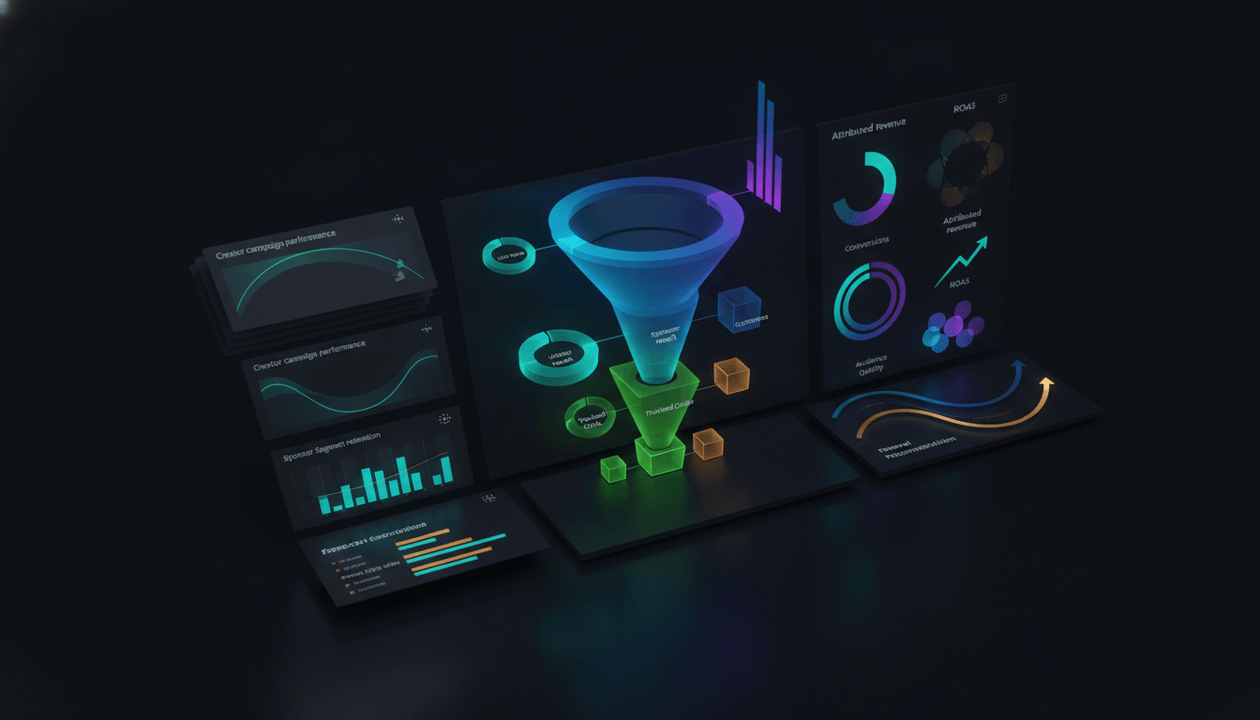
The SaaS YouTube Attribution Dashboard
Build a dashboard with four sections.
Section 1: YouTube Content Performance
| Metric | Why It Matters |
|---|---|
| Views | Reach |
| Watch time | Depth of attention |
| Average view duration | Content quality |
| Returning viewers | Audience trust |
| CTR | Packaging strength |
| Traffic sources | Distribution pattern |
| Top videos | Content-market fit |
YouTube’s own analytics documentation explains that YouTube Studio gives creators reports for channel and video performance, and Advanced Mode allows deeper reporting and comparison. Source: YouTube Help
Section 2: Website and Trial Performance
| Metric | Why It Matters |
|---|---|
| Sessions from YouTube UTMs | Direct traffic |
| Landing page conversion rate | Offer fit |
| Trial starts | Acquisition |
| Demo bookings | Sales intent |
| Email signups | Nurture potential |
| Pricing page visits | Buying intent |
| Feature page visits | Use-case intent |
Section 3: Product Quality
| Metric | Why It Matters |
|---|---|
| Activation rate | User quality |
| Time to first value | Onboarding strength |
| Feature adoption | Product fit |
| Trial-to-paid conversion | Revenue impact |
| Retention | Long-term value |
| Expansion | Customer quality |
Section 4: Influence Signals
| Metric | Why It Matters |
|---|---|
| Self-reported YouTube mentions | Dark attribution |
| Branded search lift | Demand creation |
| Direct traffic changes | Memory and trust |
| Sales call mentions | Pipeline influence |
| Sponsor inquiries | Partnership value |
| Backlinks | Authority impact |
| Community mentions | Word of mouth |
This dashboard tells you a much better story than “YouTube got 41 last-click signups.”
YouTube CTAs for SaaS: What to Use and When
Your CTA should match the viewer’s intent.
Do not ask every viewer to start a trial immediately.
Sometimes the right CTA is a template, checklist, webinar, waitlist, comparison page, or workflow.
| Video Intent | Best CTA | Why |
|---|---|---|
| Awareness | Download checklist, watch next video, join newsletter | Low friction |
| Education | Get template, try workflow, read guide | Matches learning mode |
| Comparison | Start trial, view pricing, book demo | High buying intent |
| Product walkthrough | Start trial, use feature, book onboarding | Strong product fit |
| Case study | Book demo, see customer story, talk to sales | Proof-based intent |
| Founder opinion | Subscribe, join list, try product | Trust building |
Example:
Weak CTA:
Link in description.
Better CTA:
If you want to find the same kind of breakout topics for your channel, I linked the OverseerOS Viral Channel Finder workflow below.
Weak CTA:
Try our SaaS.
Better CTA:
Start with your top three competitors, paste them into OverseerOS Competitor Tracking, and use the breakout videos to build your next content plan.
Specific CTAs convert better because they reduce the mental jump.
The viewer knows what to do next.
The YouTube Content Map for SaaS Revenue
A strong SaaS YouTube strategy should cover the full journey.
Awareness Topics
These help the viewer understand the problem.
Examples:
- Why most YouTube channels stop growing
- Why AI content workflows break at scale
- Why faceless channels fail after the first viral hit
- Why creators need competitor research before writing scripts
Education Topics
These teach the viewer how to solve the problem.
Examples:
- How to find viral video ideas before they peak
- How to reverse-engineer a YouTube channel
- How to write titles from proven patterns
- How to build a faceless YouTube workflow
Comparison Topics
These help the viewer choose a solution.
Examples:
- Best YouTube competitor analysis tools
- Best AI YouTube thumbnail generators
- Best faceless YouTube automation tools
- OverseerOS vs manual competitor research
Product Workflow Topics
These show how to get value from your product.
Examples:
- How to use OverseerOS Channel Blueprint Cloning
- How to find breakout channels with OverseerOS Viral Channel Finder
- How to plan 30 videos with OverseerOS Smart Content Planner
- How to turn a script into a faceless video with OverseerOS Auto Edit
Proof Topics
These build credibility.
Examples:
- We analyzed 100 viral faceless channels. Here is what they had in common.
- The content system behind channels that grow faster than their niche
- How one YouTube workflow turns competitor research into publish-ready ideas
- Why proven patterns beat random AI content
The best SaaS YouTube strategies do not rely on one video type.
They build a content portfolio.
How OverseerOS Helps Create YouTube Content That Converts
OverseerOS is built around a simple idea:
The smartest creators do not start from a blank page. They start from patterns that already worked.
That matters for SaaS attribution because random content is hard to convert.
If the topic has no demand, the video may get no views.
If the title is weak, the right viewer may never click.
If the thumbnail is unclear, the video may never get a fair chance.
If the script does not match buyer intent, viewers may watch but never act.
If the CTA is generic, the viewer may never understand why the product is relevant.
OverseerOS helps creators and SaaS teams build a stronger pre-conversion system.
Inside OverseerOS, creators can use:
- OverseerOS Channel Blueprint Cloning to reverse-engineer high-performing channels and understand their content pillars, tone, hooks, titles, tags, pacing, and repeatable strategy signals.
- OverseerOS Viral Channel Finder to discover breakout channels using public YouTube momentum signals.
- OverseerOS Competitor Tracking to monitor rival channels and identify videos gaining traction.
- OverseerOS Smart Content Planner to turn proven topics into a structured content workflow.
- OverseerOS Viral X-Ray to analyze individual high-performing videos and study title, thumbnail, hook, and structure patterns.
- OverseerOS AI YouTube Thumbnail Generator to create stronger visual packaging from scratch, model winning styles, and improve click clarity.
- OverseerOS Auto Edit to help creators move scripts and voiceovers into structured faceless video production workflows.
The product bridge is not:
Use OverseerOS because AI is cool.
The real bridge is:
Use OverseerOS to find the content patterns most likely to attract the right viewer before you waste time producing the wrong video.
That is how YouTube content becomes easier to attribute.
Better topic selection creates better traffic.
Better packaging creates better clicks.
Better scripts create better trust.
Better CTAs create cleaner conversion paths.
Better workflows create more repeatable outcomes.
You can build a pattern-led YouTube growth system with OverseerOS and turn YouTube from a guessing game into a measurable content engine.
The YouTube-to-SaaS Attribution Workflow
Use this workflow before publishing a video.
Step 1: Assign the Video’s Funnel Role
Choose one:
- Awareness
- Education
- Comparison
- Product workflow
- Proof
- Sales enablement
Do not skip this.
The funnel role decides the CTA and the measurement standard.
Step 2: Define the Viewer Intent
Ask:
- What problem does the viewer have?
- How aware are they of the solution?
- Are they researching, comparing, or ready to act?
- What would be a natural next step?
- What page should they visit after the video?
Step 3: Build the CTA Before the Script Is Finished
Do not add the CTA at the end as an afterthought.
Build the video around the next action.
Example:
If the CTA is to try OverseerOS Viral Channel Finder, the video should naturally explain why finding breakout channels matters.
If the CTA is to use OverseerOS Auto Edit, the video should show why script-to-video workflow bottlenecks hurt production speed.
Step 4: Create the Tracking Link
Set up:
- UTM link
- Landing page
- Promo code, if relevant
- CRM campaign
- Self-reported attribution option
- Dashboard label
Step 5: Publish With Clean Link Placement
Use:
- First description link
- Pinned comment
- Verbal CTA
- End screen, if relevant
- Community follow-up
- Email follow-up, if you have a list
Step 6: Measure the Right Window
Do not only check the first 24 hours.
Track:
- First 48 hours
- First 7 days
- First 30 days
- First 90 days
- Lifetime for evergreen videos
YouTube content can keep producing value long after the launch window.
Step 7: Compare by Topic Cluster
Do not judge one video alone.
Compare clusters:
- Competitor research videos
- Thumbnail videos
- Scriptwriting videos
- Faceless workflow videos
- AI tool videos
- Product walkthroughs
- Case studies
- Comparison videos
The cluster tells you which market has the best revenue signal.
Attribution Examples for SaaS YouTube
Example 1: Owned SaaS Channel
Video:
How to Find Viral YouTube Ideas Before Your Competitors
CTA:
Try the workflow inside OverseerOS Smart Content Planner.
Tracking:
- UTM description link
- Landing page for content planning
- Self-reported attribution field
- Product event: first topic added to planner
- Trial-to-paid cohort
What to measure:
- Trial starts
- Planner activation
- Topic creation rate
- Trial-to-paid conversion
- Branded search lift
- Follow-up video views
Example 2: Creator Sponsorship
Video:
I Tested 5 AI Tools for Faceless YouTube Channels
CTA:
Use the creator’s link to try OverseerOS.
Tracking:
- Creator-specific UTM
- Creator-specific promo code
- Dedicated landing page
- Signup form attribution
- Paid conversion cohort
- Refund/churn check
What to measure:
- Clicks
- Trials
- Activation
- Paid conversions
- Customer quality
- Revenue per creator
- Sponsor segment retention, if shared
Example 3: Bottom-Funnel Comparison Content
Video:
Best YouTube Competitor Analysis Tools
CTA:
Compare your channel workflow inside OverseerOS.
Tracking:
- UTM campaign for comparison video
- Landing page matching the comparison use case
- Pricing page visits
- Trial starts
- Demo bookings
- Sales notes
What to measure:
- High-intent traffic
- Trial-to-paid rate
- Demo close rate
- Revenue per view
- Assisted conversions
Example 4: Authority Content
Video:
Why YouTube Channels Should Be Valued Like Media Assets
CTA:
Read the valuation guide or try OverseerOS to build a stronger channel system.
Tracking:
- Blog visits
- Brand search lift
- Newsletter signups
- Sponsor inquiries
- Backlinks
- Partner conversations
What to measure:
- Authority signals
- Pipeline mentions
- Strategic deals
- Content-assisted revenue
- Referral traffic
Not every valuable video produces immediate trials.
Some produce deals.
Some produce backlinks.
Some produce authority.
Some produce better sales conversations.
Measure accordingly.
The SaaS YouTube Attribution Template
Use this before each video.
| Field | Answer |
|---|---|
| Video title | |
| Funnel role | Awareness / Education / Comparison / Product / Proof |
| Target viewer | |
| Viewer problem | |
| Buying stage | |
| Primary CTA | |
| Secondary CTA | |
| Landing page | |
| UTM campaign | |
| UTM content | |
| Promo code | |
| CRM campaign | |
| Product activation event | |
| Self-reported attribution option | |
| Main success metric | |
| Secondary success metric | |
| 30-day review date | |
| 90-day review date |
This one table will already put you ahead of most SaaS YouTube teams.
Common YouTube-to-SaaS Attribution Mistakes
Mistake 1: Judging YouTube Only by Last Click
Last click is useful.
It is not complete.
YouTube often influences the journey before the final conversion.
Mistake 2: Sending Every Video to the Homepage
The homepage is usually too broad.
A dedicated landing page tied to the video promise will often create a cleaner conversion path.
Mistake 3: Using Generic CTAs
“Try it below” is weak.
Tell viewers exactly what to do and why it connects to the video.
Mistake 4: Ignoring Trial Quality
A video that brings fewer but better users can be more valuable than a video that drives lots of weak signups.
Track activation and paid conversion.
Mistake 5: Not Separating Video Types
An awareness video and a comparison video should not be judged by the same metric.
Assign a funnel role before publishing.
Mistake 6: Not Asking Users How They Found You
Self-reported attribution catches influence that UTMs miss.
Add it to signup, onboarding, or demo forms.
Mistake 7: Forgetting Sales-Assisted Influence
For B2B SaaS, YouTube may help before the demo, during the demo, and after the demo.
Ask sales:
- Did the lead mention YouTube?
- Which video did they watch?
- Did they understand the category before the call?
- Did they come in warmer than other leads?
Mistake 8: Measuring Views Instead of Revenue Signals
Views matter.
But a SaaS YouTube system should eventually measure:
- Trial quality
- Activation
- Conversion
- Pipeline
- Revenue
- Retention
- Sponsor interest
- Authority
YouTube Attribution for Sponsored Placements
If you are buying sponsored placements on creator channels, use the same logic.
Do not only ask creators for views.
Ask for fit.
Before the deal, review:
- Audience fit
- Channel trust
- Recent average views
- Sponsor history
- Content category
- Video format
- Integration style
- Brand safety
- Comments
- Audience geography
- Similar product performance, if available
- Whether the creator can explain the product naturally
During the deal, track:
- Creator-specific UTM
- Creator-specific landing page
- Promo code
- Signup self-report option
- Trial activation
- Paid conversion
- Refunds
- Churn
- Sales mentions
After the deal, evaluate:
| Metric | Why It Matters |
|---|---|
| Views | Reach |
| Clicks | Immediate response |
| Trials | Acquisition |
| Activations | User quality |
| Paid conversions | Revenue |
| CAC | Efficiency |
| Retention | Fit |
| Comments | Sentiment |
| Brand search | Awareness lift |
| Future direct traffic | Memory effect |
YouTube requires creators to disclose paid promotions when videos include paid product placements, endorsements, sponsorships, or similar relationships, and creators can select the paid promotion box in video details. Source: YouTube Help
For SaaS brands, disclosure is not the enemy.
Disclosure protects trust.
A creator who can explain your product honestly will usually outperform a creator who hides the relationship or forces a fake recommendation.
The Attribution Metrics That Actually Matter
Here is the hierarchy.
Level 1: Vanity Metrics
Useful, but not enough.
- Views
- Likes
- Comments
- Subscribers
- Impressions
- CTR
Level 2: Intent Metrics
Better.
- Description clicks
- Pinned comment clicks
- Landing page visits
- Pricing page visits
- Template downloads
- Email signups
- Demo page visits
Level 3: Conversion Metrics
Stronger.
- Trial starts
- Demo bookings
- Sales calls
- Checkout starts
- Paid conversions
- Affiliate sales
Level 4: Quality Metrics
Most SaaS teams forget these.
- Activation rate
- Feature adoption
- Time to first value
- Trial-to-paid rate
- Sales close rate
- Churn
- Expansion
- Support burden
Level 5: Strategic Metrics
This is where YouTube becomes a business asset.
- Branded search growth
- Backlinks
- Sponsor inquiries
- Partnership opportunities
- Sales enablement usage
- Founder authority
- Category leadership
- Recruiting value
- Investor or buyer interest
A serious SaaS YouTube strategy measures all five levels.
The 30-Day YouTube Attribution Upgrade Plan
You can improve your attribution system in 30 days.
Days 1 to 7: Clean the Tracking Basics
- Create a UTM naming system.
- Add UTMs to YouTube links.
- Set up dedicated landing pages for key videos.
- Add self-reported attribution to signup or onboarding.
- Create campaign labels in your CRM or customer database.
- Make sure paid and organic YouTube traffic are separated.
Days 8 to 14: Connect Product Quality
- Define activation events.
- Track trial-to-paid conversion by source.
- Compare YouTube users to other sources.
- Track feature usage by source.
- Check churn by acquisition source.
- Identify which videos bring the best users.
Days 15 to 21: Map Content to Funnel Roles
- Label every video by funnel role.
- Separate awareness, education, comparison, product, and proof videos.
- Match each role to the right CTA.
- Build topic clusters around revenue signals.
- Stop judging every video by the same metric.
Days 22 to 30: Build the Attribution Review
- Create a monthly YouTube revenue review.
- Review direct conversions.
- Review assisted conversions.
- Review branded search and direct traffic.
- Review self-reported attribution.
- Review sales notes.
- Decide what to make more of next month.
This is how YouTube becomes a measurable growth system.
Not perfect.
Measurable enough to scale.
Final Verdict
YouTube-to-SaaS attribution is not about proving every conversion with perfect certainty.
It is about seeing the real role YouTube plays in the customer journey.
Some videos create awareness.
Some educate the market.
Some compare solutions.
Some drive trials.
Some help sales close.
Some create sponsor interest.
Some earn backlinks.
Some build authority that compounds for years.
If you only measure the last click, you will underinvest in content that creates belief.
If you only measure views, you will overinvest in content that never converts.
The answer is a blended attribution system:
- UTMs
- Landing pages
- Promo codes
- Self-reported attribution
- CRM fields
- Product activation data
- Branded search lift
- Assisted conversions
- Content-level revenue analysis
Then pair that measurement with better content strategy.
Find the topics your market already cares about. Reverse-engineer the channels already winning attention. Build original videos from proven patterns. Match every video to a funnel role. Give viewers a natural next step. Measure the whole journey.
That is how YouTube stops being “content marketing.”
It becomes a SaaS growth engine.
And if you want to build that engine from proven YouTube patterns instead of random content guesses, start with OverseerOS.
FAQ
What is YouTube-to-SaaS attribution?
YouTube-to-SaaS attribution is the process of measuring how YouTube videos contribute to SaaS outcomes like website visits, free trials, demo bookings, paid subscriptions, pipeline, activation, retention, branded search, and customer education.
Why does YouTube attribution usually undercount conversions?
YouTube attribution usually undercounts conversions because many viewers do not click immediately. They may watch on TV or mobile, search the brand later, visit from another device, return through organic search, or convert after multiple touchpoints.
What is the best way to track YouTube conversions for SaaS?
The best method is a blended system using UTM links, dedicated landing pages, promo codes, self-reported attribution, CRM source fields, product analytics, branded search tracking, and assisted conversion reports.
Should every SaaS YouTube video drive trials?
No. Some videos are designed to create awareness, educate the market, support sales, build authority, or warm up future buyers. Bottom-funnel comparison and product workflow videos should be judged more directly by trials and demos.
What UTM parameters should I use for YouTube videos?
A simple structure is utm_source=youtube, utm_medium=organic_video, utm_campaign=topic_cluster, and utm_content=video_slug_or_placement. For sponsorships, use the creator name as the source and separate sponsored campaigns from owned organic videos.
How do I measure YouTube’s impact if viewers search my brand later?
Track branded search lift, direct traffic changes, self-reported attribution, returning visitors, CRM notes, and changes in pricing page visits after major videos or creator campaigns. This will not prove perfect causation, but it shows demand creation patterns.
What metrics matter most for SaaS YouTube attribution?
The most useful metrics are trial starts, demo bookings, activation rate, trial-to-paid conversion, feature usage, revenue, retention, branded search lift, self-reported attribution, and assisted pipeline. Views matter, but they are not enough.
How can OverseerOS help with YouTube-to-SaaS attribution?
OverseerOS helps creators and SaaS teams make better YouTube videos before attribution begins. OverseerOS Channel Blueprint Cloning, OverseerOS Viral Channel Finder, OverseerOS Competitor Tracking, OverseerOS Smart Content Planner, OverseerOS Viral X-Ray, OverseerOS AI YouTube Thumbnail Generator, and OverseerOS Auto Edit help teams find proven patterns, plan stronger content, improve packaging, and create videos that attract better-fit viewers.
Is YouTube better for awareness or conversion?
YouTube can do both, but the video type matters. Broad educational videos are better for awareness and trust. Comparison videos, product workflows, tutorials, and case studies are usually stronger for trials, demos, and conversions.
How often should SaaS teams review YouTube attribution?
Review early performance after 7 days, conversion performance after 30 days, and evergreen or assisted performance after 90 days. For strategic content, also review long-term branded search, sales mentions, backlinks, and pipeline influence.