Most creators searching for YouTube script-to-video AI are not looking for another AI toy.
They want a faster way to turn a script into a real video.
Not a random demo clip.
Not a generic slideshow.
Not a pile of disconnected AI images.
A real YouTube video.
That difference matters.
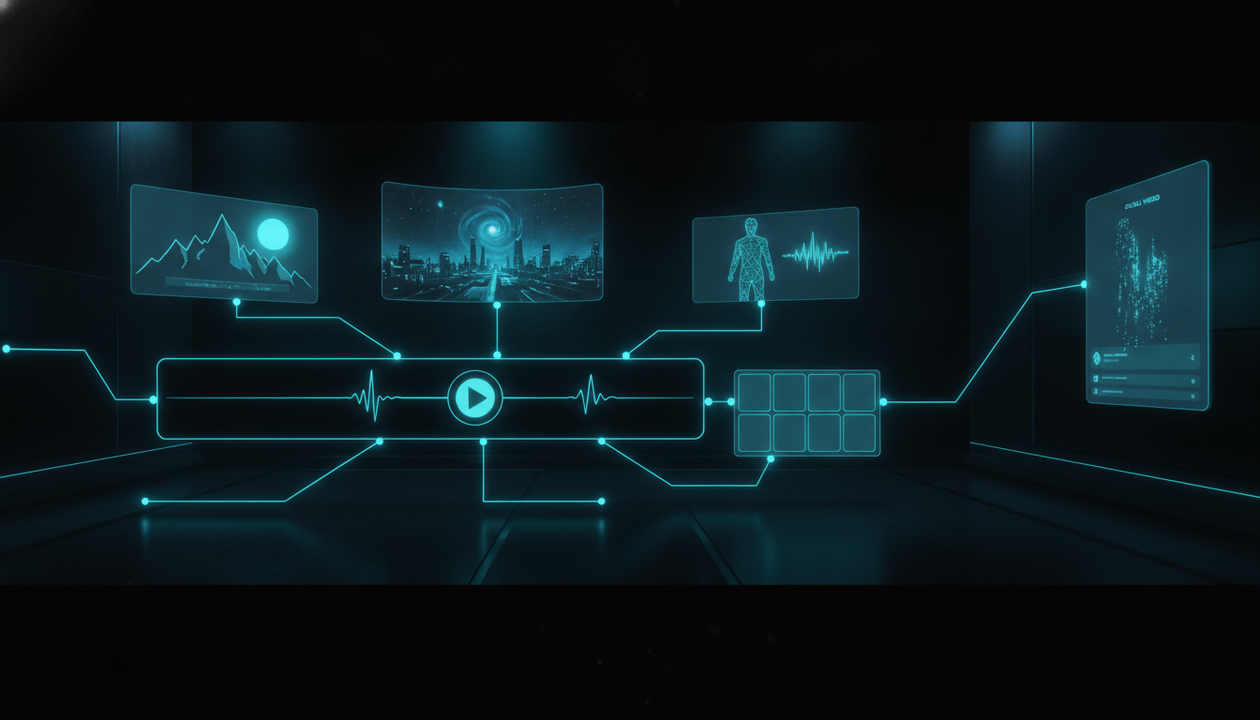
A normal text-to-video tool takes a prompt and generates a short clip. But YouTube videos are not one prompt. They are built from a title, thumbnail promise, hook, script, voiceover, scenes, pacing, captions, music, motion, and a final export that feels like one complete story.
That is why faceless creators need more than a text-to-video model.
They need a script-to-video workflow.
This guide breaks down what YouTube script-to-video AI should actually do, why most AI video generators fail for long-form faceless content, what features matter before you buy, and how OverseerOS Auto Edit helps creators turn scripts and voiceovers into matching scenes, AI visuals, captions, music, motion, and export-ready faceless videos.
Key Takeaways
- YouTube script-to-video AI should turn a full script into a structured video, not just generate isolated clips.
- The strongest workflow starts with the script and voiceover, then builds matching scenes around the narration.
- Generic text-to-video tools often fail for YouTube because they are clip-first, not story-first.
- Faceless creators need scene matching, style consistency, captions, voiceover alignment, music, motion, and export control.
- YouTube monetization policy rewards original and authentic content, while mass-produced, repetitive, or generic AI-template content can create risk.
- OverseerOS Auto Edit is built for faceless YouTube workflows where scripts become structured video timelines instead of random visuals.
- The goal is not to automate low-quality content. The goal is to produce original YouTube videos faster with stronger creative direction.
What Is YouTube Script-to-Video AI?
YouTube script-to-video AI is software that turns a written script into a video workflow.
A basic version may:
- Take your script
- Split it into scenes
- Add stock footage
- Generate captions
- Add voiceover
- Export a video
A stronger version should do much more.
It should help with:
- Script structure
- Voiceover timing
- Scene breakdown
- AI visual generation
- Visual style direction
- Character consistency
- Captions
- Music
- Motion
- Export-ready formatting
- Video pacing
- Thumbnail and title alignment
- Scene-by-scene review
The key word is workflow.
YouTube script-to-video AI is not just “generate a video.”
It is:
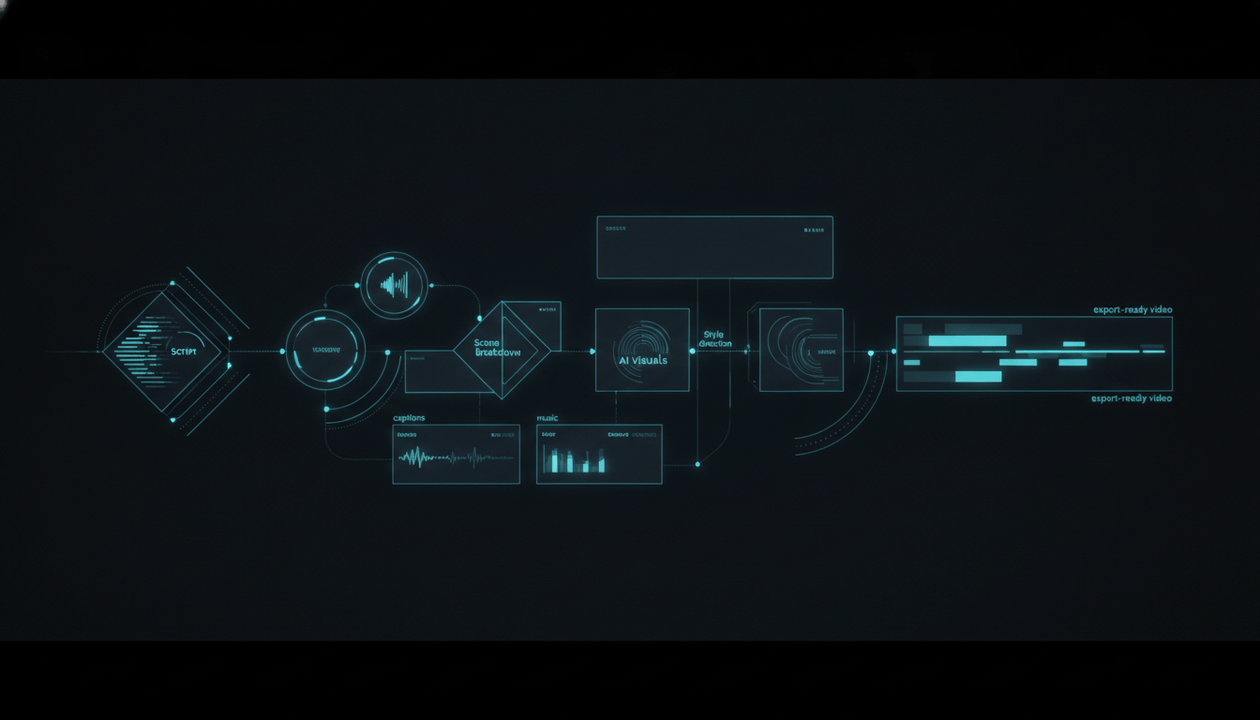
Script → Voiceover → Scenes → Visuals → Captions → Motion → Music → Export
That is what faceless creators actually need.
Script-to-Video AI vs Text-to-Video AI
These two terms sound similar, but they are not the same.
Text-to-Video AI
Text-to-video AI usually starts with a short prompt.
Example:
A futuristic city at night with flying cars and neon lights.
The tool generates a short clip.
This is useful for:
- Visual experiments
- B-roll
- Shorts
- Concept art
- Single scenes
- Motion clips
- Creative inspiration
But it is not enough for full YouTube production.
Script-to-Video AI
Script-to-video AI starts with a full script.
Example:
Most AI videos do not look fake because the visuals are bad. They look fake because every scene belongs to a different video...
The tool then needs to understand:
- What each section means
- Where one scene ends and another begins
- What the viewer should see during each line
- How the visuals should match the voiceover
- How the style should stay consistent
- How captions should appear
- How music should support the pacing
- How the final video should flow
That is a much bigger task.
A prompt creates a clip.
A script creates a video.
Why Most AI Video Generators Fail for YouTube
Many AI video generators are impressive in demos.
But YouTube creators quickly run into problems.
Problem 1: The Scenes Do Not Match
One scene looks cinematic.
The next scene looks like a cartoon.
The next scene looks like stock footage.
The next scene looks like a different channel.
The viewer may not know why it feels wrong, but they feel it.
A YouTube video needs visual continuity.
If every scene looks unrelated, the video feels cheap.
Problem 2: The Video Does Not Follow the Script
A script has logic.
It builds an argument, story, or explanation.
Many AI video tools generate visuals that look good but do not actually support the sentence being spoken.
Example script line:
“The real problem is that creators are using AI to generate clips instead of directing scenes.”
Weak visual:
Random robot typing on a laptop.
Better visual:
A messy timeline full of disconnected AI clips turning into a structured scene board.
The second visual supports the point.
The first is just decoration.
Problem 3: The Output Feels Like a Slideshow
Some script-to-video tools create videos by stacking stock clips, text overlays, and generic transitions.
That can work for very simple content, but it often feels low-effort.
Faceless YouTube needs more than slides.
It needs:
- Story movement
- Visual variety
- Scene purpose
- Pacing
- Emotional changes
- Clear progression
- Production direction
Otherwise, the video feels mass-produced.
Problem 4: Captions Are an Afterthought
Captions are not just accessibility.
For many faceless videos, captions help with:
- Clarity
- Pacing
- Retention
- Emphasis
- Mobile viewing
- Visual rhythm
If captions are ugly, mistimed, or disconnected from the style, the video feels less premium.
Problem 5: Voiceover Timing Is Ignored
The voiceover is the spine of a faceless video.
Every scene should support the narration.
If visuals change too early, too late, or at random moments, the video feels off.
Script-to-video AI should build around the voiceover.
Not the other way around.
The Real Buyer Question
When creators search for YouTube script-to-video AI, they are usually trying to solve one of five problems.
1. “I Have Scripts but Production Is Too Slow”
This is common for faceless channels.
The creator can research topics and write scripts, but turning those scripts into finished videos takes too much time.
They need faster production without losing quality.
2. “My AI Videos Look Random”
The creator has tried AI images or AI clips, but the final video feels inconsistent.
They need scene matching and style direction.
3. “I Want to Reduce Editing Costs”
The creator may be paying editors for every video.
They want software that can handle more of the production workflow.
4. “I Want to Launch a Faceless Channel Faster”
Beginners want to move from idea to video without building a full team first.
They need a guided workflow.
5. “I Want to Scale Without Publishing Low-Quality Content”
Serious operators want speed, but they do not want generic videos that damage the channel.
They need automation with control.
That is where the choice of tool matters.
What Good YouTube Script-to-Video AI Should Include
1. Script Understanding
The tool should understand the script as more than text.
It should identify:
- The hook
- The main sections
- The emotional shifts
- The key examples
- The visual moments
- The transitions
- The payoff
A weak tool treats every sentence the same.
A strong tool understands that some moments need a big visual, some need a simple explanation, and some need a pause.
2. Voiceover Alignment
The video should follow the narration.
A good script-to-video workflow should let creators:
- Generate or upload voiceover
- Sync scenes to voiceover timing
- Build visuals around spoken sections
- Review the pacing
- Export with audio and visuals aligned
This is especially important for faceless videos because the voiceover controls the rhythm.
3. Scene Breakdown
A long script needs to become a timeline.
That means the AI should break the script into scenes.
Each scene should have:
- A purpose
- A visual idea
- A style direction
- A prompt
- Timing
- Caption support
- Motion if needed
Example:
Script section:
“The old faceless YouTube workflow was built on cheap stock footage and generic narration.”
Scene idea:
A messy folder full of stock clips, generic AI voice files, and duplicated templates.
Script section:
“The new workflow is built on research, style direction, and controlled AI production.”
Scene idea:
A clean creator dashboard moving from research to script to voiceover to Auto Edit.
That is real script-to-video thinking.
4. Matching AI Visuals
The visuals should feel like they belong in the same video.
That means the tool should support:
- Consistent style
- Similar lighting
- Similar color palette
- Similar visual language
- Consistent characters if needed
- Reusable direction across scenes
Random visuals kill trust.
Matching visuals make the video feel intentional.
5. Character Consistency
Some faceless videos use recurring characters.
Examples:
- A faceless entrepreneur
- A detective-style narrator
- A futuristic AI analyst
- A historical character
- A symbolic business owner
- A recurring brand mascot
If the character changes face, outfit, age, or style across scenes, the video feels broken.
Good script-to-video AI should support character consistency, or at least let creators guide it.
6. Captions
A good tool should support captions that match the style of the video.
Captions should be:
- Readable
- Timed properly
- Not too large
- Not too distracting
- Consistent with the visual style
- Helpful for retention
Captions should feel like part of the edit.
Not a rushed add-on.
7. Music and Pacing
Music changes the emotional feel of a video.
A documentary-style video needs different music than a tutorial.
A dark AI breakdown needs different music than a motivational story.
A good workflow should help creators add background music that supports the video without overpowering the voiceover.
8. Motion and Animation
Static images can work, but motion helps the video feel alive.
A good script-to-video workflow should support:
- Subtle motion
- Zooms
- Pans
- Scene animation
- Motion clips
- Transitions
- Visual emphasis
The goal is not to overanimate.
The goal is to keep visual momentum.
9. Export-Ready Output
A serious tool should not stop at previews.
It should help creators export a video that is ready to review, refine, and upload.
That means:
- Proper aspect ratio
- Audio included
- Captions included if selected
- Music included
- Scenes rendered
- Final video downloadable
- Workflow saved for revision
This is the difference between a demo tool and a production tool.
Why Script-to-Video AI Matters for Faceless YouTube
Faceless channels depend on systems.
A creator-led channel can rely on personality.
A faceless channel needs structure.
That structure comes from:
- Topic choice
- Title promise
- Thumbnail
- Script
- Voiceover
- Visual direction
- Editing rhythm
- Production consistency
Script-to-video AI matters because it connects the middle of the workflow.
It takes the script and turns it into production.
Without that bridge, creators are stuck moving manually between:
- Google Docs
- ChatGPT
- ElevenLabs
- Canva
- image generators
- video editors
- caption tools
- stock footage sites
- Drive folders
- freelancers
That tool-switching slows everything down.
A good script-to-video workflow reduces the chaos.
How OverseerOS Auto Edit Helps
OverseerOS Auto Edit is built for faceless YouTube creators who want to move from script and voiceover into video production.
It helps with:
- Script-based video creation
- Voiceover-driven timing
- Matching scene generation
- AI visuals
- Style direction
- Consistent characters
- Captions
- Music
- Motion
- Export-ready faceless video workflows
The important part is not just generation.
It is direction.
OverseerOS Auto Edit is designed to help the video follow the script, not randomly decorate it.
That matters because the viewer does not care how impressive one AI image looks.
They care whether the whole video makes sense.
Script-to-Video AI Workflow Inside a Real Channel
Here is the workflow serious creators should use.
Step 1: Find the Topic
Do not start with the script.
Start with demand.
Use:
- Competitor research
- Breakout videos
- Trend signals
- Viewer questions
- Search intent
- Channel analysis
A weak topic creates a weak video no matter how good the AI tool is.
Step 2: Build the Packaging
Before producing the video, define:
- Title
- Thumbnail idea
- Hook
- Viewer promise
- First 30 seconds
The script should deliver the packaging promise.
Step 3: Write the Script
The script should be voiceover-friendly and visual.
It should include:
- Strong opening
- Simple language
- Clear sections
- Retention loops
- Examples
- Visual moments
- Payoff
A script-to-video tool works better when the script is built for video.
Step 4: Generate or Upload Voiceover
The voiceover becomes the timing base.
Listen to it.
Fix awkward lines.
Make sure the pacing is right.
A bad voiceover can make a good script feel weak.
Step 5: Generate Scenes
Break the script into scenes.
Each scene should answer:
- What is being said?
- What should the viewer see?
- What emotion should the visual create?
- What style should it follow?
- How does it connect to the next scene?
Step 6: Review the Timeline
Do not blindly export.
Review:
- Scene match
- Style consistency
- Caption timing
- Audio balance
- Pacing
- Visual clarity
- Repetition
- Weak moments
AI helps produce faster, but creator review is still important.
Step 7: Export and Improve
Export the video.
Then ask:
- Does the video deliver the title promise?
- Does the opening match the thumbnail?
- Do the scenes feel connected?
- Is the voiceover clear?
- Would the viewer feel satisfied?
If not, revise before publishing.
Script-to-Video AI vs AI Video Generator
Here is the simple difference.
| AI Video Generator | Script-to-Video AI |
|---|---|
| Starts with a prompt | Starts with a full script |
| Generates short clips | Builds a structured video |
| Good for visuals | Good for production workflows |
| Often clip-first | Story-first |
| May ignore voiceover | Voiceover-aligned |
| Can feel random | Can create scene flow |
| Useful for B-roll | Useful for faceless videos |
| Often needs manual assembly | Designed to move toward export |
If you want a single clip, use an AI video generator.
If you want a full faceless YouTube video, use script-to-video AI.
Script-to-Video AI vs Stock Footage Editors
Stock footage tools can be useful.
But stock footage often feels generic because many creators use the same clips.
Script-to-video AI gives creators more visual control.
It can create:
- Original AI visuals
- Niche-specific scenes
- Custom style direction
- Consistent characters
- Scene concepts that match the script more closely
That does not mean stock footage is useless.
It means serious creators need more control.
The future is not stock footage only.
It is directed visual production.
Script-to-Video AI vs Human Editors
Human editors still matter.
A great editor has taste, judgment, rhythm, and storytelling sense.
But many faceless creators use script-to-video AI to reduce repetitive work.
The best workflow may be hybrid:
- AI handles scene drafts, visuals, captions, and first-pass assembly.
- The creator or editor reviews, improves, and finalizes.
- The channel keeps human direction while reducing production bottlenecks.
AI should not remove quality control.
It should reduce friction.
Buyer Checklist: What to Look For
Before buying a YouTube script-to-video AI tool, ask these questions.
Script Handling
- Can it process full scripts?
- Can it split scripts into scenes?
- Does it support voiceover timing?
- Can it handle longer videos?
- Does it preserve the logic of the script?
Visual Quality
- Does it create matching visuals?
- Can it follow a style direction?
- Can it maintain character consistency?
- Does it avoid random scene changes?
- Does it support scene review?
Production Features
- Does it support captions?
- Does it support music?
- Does it support motion or animation?
- Can it export a finished video?
- Can you revise before export?
YouTube Fit
- Is it made for faceless YouTube workflows?
- Does it support 16:9 videos?
- Does it help with retention?
- Does it avoid slideshow-style output?
- Does it connect to thumbnails, titles, or scripts?
Control
- Can you edit prompts?
- Can you regenerate scenes?
- Can you change style direction?
- Can you control captions?
- Can you review scenes before publishing?
Originality
- Does it create original visuals?
- Does it avoid generic templates?
- Does it help make each video materially different?
- Does it support creator input and direction?
If a tool fails the originality and control sections, be careful.
Fast output is not enough.
Red Flags in Script-to-Video AI Tools
Avoid tools that promise:
- “Fully automatic YouTube income”
- “No script quality needed”
- “No editing or review needed”
- “Unlimited videos with no effort”
- “Generate monetizable videos instantly”
- “Copy viral channels automatically”
- “Mass produce faceless videos”
Those promises are not serious.
A real faceless YouTube business needs:
- Strategy
- Originality
- Quality control
- Packaging
- Viewer understanding
- Consistent production
AI can help.
But it should not turn the channel into a content factory with no direction.
Best Use Cases for YouTube Script-to-Video AI
AI and Tech Explainers
Great for:
- AI tool breakdowns
- software explainers
- future-of-work videos
- product comparisons
- automation workflows
Why it works:
These videos need clear visuals, dashboards, timelines, and conceptual scenes.
Psychology and Self-Improvement
Great for:
- emotional explanations
- behavior breakdowns
- relationship videos
- mindset content
- social dynamics
Why it works:
These videos need symbolic visuals, human scenarios, and strong narration.
Finance and Business
Great for:
- money lessons
- investing explainers
- business breakdowns
- startup stories
- productivity systems
Why it works:
These videos need charts, comparisons, clean visuals, and trust-focused pacing.
History and Documentary Channels
Great for:
- historical stories
- mystery documentaries
- war breakdowns
- biography videos
- dark history content
Why it works:
These videos need cinematic visuals, narration, pacing, and scene structure.
YouTube Automation Channels
Great for:
- creator workflow tutorials
- faceless channel guides
- AI tool comparisons
- strategy breakdowns
- case studies
Why it works:
These videos need screen-style visuals, workflow boards, thumbnails, timelines, and examples.
How to Write Better Scripts for Script-to-Video AI
The better the script, the better the video.
Use these rules.
Write Visually
Bad:
“This is important for creators.”
Better:
“This is the moment where the workflow breaks: the script is ready, but the visuals have no direction.”
The second line creates a visual.
Use Clear Scene Ideas
Instead of vague narration, write moments that can become scenes.
Example:
“Imagine a creator with a finished script, a voiceover file, ten AI images, and no clear timeline.”
That is easy to visualize.
Keep Sentences Voiceover-Friendly
Long sentences make voiceovers harder.
Use short, clear lines.
Add Transitions
Transitions help the video flow.
Examples:
- “But here is the problem.”
- “This is where most tools fail.”
- “The next step is what makes the difference.”
- “Now compare that to a real production workflow.”
Avoid Generic Filler
Delete lines like:
- “In today’s digital world...”
- “AI is rapidly changing everything...”
- “Content creation has never been easier...”
- “There are many tools available...”
Get to the point faster.
Example: Weak Script-to-Video Prompt vs Strong Prompt
Weak prompt:
Make a YouTube video about AI video tools.
Strong prompt:
Create a faceless YouTube video from this script about why most AI YouTube videos look fake.

Video style:
Dark premium AI documentary.

Audience:
Faceless creators and YouTube automation channel owners.

Visual direction:
Show a contrast between random AI clips and a structured scene-by-scene production workflow.

Scene rules:
Keep visuals consistent, use dark blue lighting, creator dashboard metaphors, clean timelines, and matching AI scenes.

Captions:
Readable, modern, minimal.

Music:
Subtle futuristic tension.

Goal:
Make the viewer understand that the problem is not AI video generation, but lack of scene direction.
The strong prompt gives direction.
Direction creates better output.
Why Originality Still Matters
YouTube creators should be careful with any tool that encourages mass production.
YouTube’s monetization policies emphasize original and authentic content. They also warn against content that appears mass-produced, repetitive, or made from generic templates with little variation.
That does not mean creators cannot use AI.
It means AI should be used to create better, more original videos, not generic content at scale.
For script-to-video AI, that means:
- Use original scripts
- Add your own angle
- Avoid copying other creators
- Do not rely on generic templates
- Review the final output
- Make each video materially different
- Use AI for direction and production, not lazy duplication
This is the smart path.
How OverseerOS Fits Into the Full Workflow
Script-to-video AI is powerful, but it is only one part of the channel system.
OverseerOS connects it to the bigger workflow.
Before the Script
Use OverseerOS to:
- Analyze channels
- Study competitors
- Find breakout videos
- Discover viral topics
- Track trends
- Build content plans
- Generate titles
- Create thumbnail ideas
During the Script
Use OverseerOS to:
- Generate scripts
- Improve scripts
- Match tone with CreatorDNA
- Turn trends into script variations
- Build voiceover-friendly structure
After the Script
Use OverseerOS to:
- Generate voiceovers
- Turn scripts into scenes
- Create AI visuals
- Maintain style direction
- Add captions
- Add music
- Add motion
- Export faceless videos
That is the advantage.
OverseerOS is not only asking:
“What video should AI generate?”
It helps answer:
“What video is worth making, how should it be packaged, how should it be scripted, and how should it be produced?”
That is much stronger.
Final Verdict
YouTube script-to-video AI is one of the most important tools for faceless creators.
But only if it is used correctly.
The weak version is:
Paste a script, generate random visuals, export a generic video.
The strong version is:
Start with a strong topic, write a clear script, generate voiceover, build matching scenes, control the style, add captions, music, and motion, then export a video that feels intentional.
That is the standard creators need now.
If you want random clips, use a text-to-video tool.
If you want a full faceless YouTube production workflow, use OverseerOS Auto Edit.
The future of faceless YouTube is not just faster generation.
It is better direction.
The creators who win will not be the ones who generate the most content.
They will be the ones who turn scripts into videos people actually want to watch.
FAQ
What is YouTube script-to-video AI?
YouTube script-to-video AI is software that turns a written script into a structured video workflow with voiceover, scenes, visuals, captions, music, motion, and export-ready output.
What is the best script-to-video AI for faceless YouTube?
The best script-to-video AI for faceless YouTube should support full scripts, voiceover timing, matching scenes, style consistency, captions, music, motion, and export-ready video workflows. OverseerOS Auto Edit is built for this type of faceless YouTube production.
Is script-to-video AI different from text-to-video AI?
Yes. Text-to-video AI usually creates short clips from prompts. Script-to-video AI starts with a full script and turns it into a structured video with scenes, timing, narration, and production flow.
Can AI turn a YouTube script into a full video?
Yes, but quality depends on the workflow. A strong tool should split the script into scenes, align visuals with narration, keep the style consistent, add captions and music, and allow review before export.
Why do AI script-to-video tools create random visuals?
Many tools are clip-first instead of story-first. They generate visuals that look good individually but do not follow the logic, pacing, or style of the full script.
Can script-to-video AI be monetized on YouTube?
AI-assisted videos can be monetized if they follow YouTube’s policies and provide original, authentic value. Repetitive, mass-produced, or generic AI-template videos may create monetization risk.
What should I look for in script-to-video software?
Look for script handling, voiceover alignment, scene breakdown, matching visuals, style direction, captions, music, motion, export controls, and revision options.
Does OverseerOS Auto Edit generate faceless videos?
Yes. OverseerOS Auto Edit helps creators turn scripts and voiceovers into faceless video workflows with matching scenes, AI visuals, captions, music, supported motion, and export-ready production.
Do I still need an editor if I use script-to-video AI?
Maybe. Script-to-video AI can reduce production work, but creators may still use editors for final polish, review, revisions, and quality control. The best workflow keeps human direction involved.
How do I make better videos with script-to-video AI?
Start with a strong topic, write a visual script, generate or upload voiceover, use consistent style direction, review every scene, avoid generic templates, and make sure the final video delivers the title and thumbnail promise.