Most YouTube videos do not fall apart because the idea was terrible.
They fall apart because the idea was never translated properly.
The creator had one idea in their head.
The title promised something slightly different.
The thumbnail created another expectation.
The script opened in the wrong place.
The voiceover missed the emotion.
The visuals felt random.
The editor guessed the pacing.
The final video looked finished, but it did not feel aligned.
That is not a creativity problem.
That is a briefing problem.
A YouTube creative brief is the document that turns a raw idea into a production-ready asset. It gives everyone involved in the video the same target before work begins.
For solo creators, it prevents messy thinking.
For faceless channels, it prevents random AI content.
For teams, it prevents expensive revisions.
For AI-assisted workflows, it prevents generic output.
A strong creative brief answers the questions every video needs before production starts:
- Who is this video for?
- Why does this topic matter now?
- What is the viewer promise?
- What is the title direction?
- What should the thumbnail make people feel?
- What is the hook?
- What is the retention structure?
- What should the visuals look like?
- What must the script include?
- What should the editor avoid?
- What does a successful finished video feel like?
Without that brief, every person and every tool makes assumptions.
And assumptions destroy consistency.
This guide breaks down how to build a YouTube creative brief system for personal creators, faceless channels, content teams, and AI-assisted video production workflows.
Key Takeaways
- A YouTube creative brief turns a raw video idea into a clear production plan for title, thumbnail, hook, script, visuals, voiceover, editing, and publishing.
- The creative brief is not bureaucracy. It protects the video promise before production time is wasted.
- A strong brief prevents the most common YouTube execution problems: mismatched thumbnails, slow hooks, generic scripts, random visuals, unclear tone, and expensive revisions.
- Faceless YouTube channels need creative briefs more than personal creators because the production work is often split across scripts, voiceovers, AI visuals, thumbnails, and editing.
- AI works better when guided by a brief because the prompt has channel context, viewer promise, tone, structure, and visual direction.
- The best creative briefs include topic-market fit, packaging, retention architecture, source notes, visual style, must-include points, must-avoid mistakes, and quality control criteria.
- OverseerOS helps creators build and execute creative briefs through OverseerOS Channel Analyzer, OverseerOS Viral X-Ray, OverseerOS Smart Content Planner, OverseerOS Viral Title Architect, OverseerOS AI YouTube Thumbnail Generator, OverseerOS Script ReSpark, OverseerOS Voiceover Studio, and OverseerOS Auto Edit.
What Is a YouTube Creative Brief?
A YouTube creative brief is a structured production plan for a video.
It is the bridge between strategy and execution.
A raw idea says:
“Make a video about YouTube retention.”
A creative brief says:
“This video is for serious creators who get clicks but lose viewers after the intro. The core point is that retention is architecture, not editing speed. The title should frame retention as a structural system. The thumbnail should show a video timeline with drop-off points. The hook should immediately challenge the belief that faster editing solves retention. The video should include a retention map, diagnosis table, faceless scene examples, and a final checklist.”
That is much stronger.
Now the writer, thumbnail designer, editor, voiceover artist, and AI tools know what they are building.
A creative brief is not a long essay.
It is a decision document.
It tells the team what matters.
Why Most YouTube Videos Need a Brief
Many creators skip the brief because they want to move fast.
But skipping the brief often makes production slower.
Without a brief:
- Writers create generic scripts.
- Thumbnail designers guess the emotion.
- Editors choose random pacing.
- AI tools produce broad output.
- Voiceovers miss the tone.
- Visuals do not match the narration.
- The final video does not deliver the title promise.
- Revisions become expensive.
- The channel loses consistency.
A brief saves time because it moves the hard thinking to the beginning.
That is where it belongs.
A video gets cheaper to fix before it is produced.
It gets more expensive to fix after the script, voiceover, visuals, edit, thumbnail, and upload assets already exist.
The creative brief is where you stop weak videos before they enter production.
The Difference Between a Video Idea and a Creative Brief
| Raw Idea | Creative Brief |
|---|---|
| “Make a video about AI thumbnails” | Defines audience, angle, title promise, thumbnail concept, hook, examples, visuals, structure, and CTA |
| Broad | Specific |
| Easy to misunderstand | Harder to misinterpret |
| Based on inspiration | Based on validated direction |
| Not production-ready | Ready for script, design, edit, and AI workflows |
| Creates assumptions | Reduces assumptions |
| Useful for brainstorming | Useful for execution |
A raw idea is a starting point.
A creative brief is a production instruction.
Do not confuse the two.
The 12 Parts of a World-Class YouTube Creative Brief
1. Video Job
Every video needs a job.
Before writing anything, define what the video is supposed to accomplish.
Possible video jobs:
| Video Job | Purpose |
|---|---|
| Search asset | Capture evergreen search demand |
| Suggested-video play | Reach new viewers through curiosity |
| Authority builder | Prove expertise and build trust |
| Trend capture | Move fast on current attention |
| Conversion asset | Attract buyers, users, sponsors, or serious leads |
| Community builder | Deepen trust with existing viewers |
| Format test | Validate a repeatable structure |
| Library pillar | Build a permanent resource around a core topic |
The job affects everything.
A search asset needs clarity.
A suggested-video play needs curiosity.
An authority builder needs depth.
A trend capture needs speed and relevance.
A conversion asset needs buyer-intent language.
A format test needs a repeatable structure.
If you do not know the job, you cannot judge the video.
2. Target Viewer
A video should not be made for “everyone interested in the niche.”
That is too broad.
The brief should define the exact viewer.
Weak:
“People who want to grow on YouTube.”
Stronger:
“Serious creators who already publish videos but feel their ideas, titles, thumbnails, scripts, and production workflow are disconnected.”
Weak:
“People interested in AI.”
Stronger:
“Creators and entrepreneurs who want to understand how AI changes content production without turning their brand into generic AI slop.”
Weak:
“Faceless channel owners.”
Stronger:
“Faceless YouTube operators who use writers, voiceovers, AI visuals, editors, and thumbnails, but struggle to keep the final video aligned.”
The more specific the viewer, the easier the production decisions become.
3. Viewer Pain or Desire
The brief should name the viewer’s emotional reason to care.
Viewer pain examples:
- “My videos look finished but do not perform.”
- “My team keeps misunderstanding the idea.”
- “AI gives me generic scripts.”
- “My editor uses random visuals.”
- “My thumbnails do not match the video.”
- “I waste too much production time on weak ideas.”
- “My faceless videos feel inconsistent.”
- “I do not know how to turn research into a production plan.”
Viewer desire examples:
- “I want a cleaner workflow.”
- “I want videos that feel intentional.”
- “I want my team to understand the same target.”
- “I want AI to help without making the content generic.”
- “I want to produce faster without lowering quality.”
- “I want every video to deliver the title promise.”
A creative brief should make the viewer pain obvious.
If there is no pain or desire, the video may not have enough demand.
4. Core Angle
The core angle is the main idea.
Not the topic.
The argument.
Topic:
“YouTube creative briefs”
Core angle:
“A creative brief is the missing system between a good idea and a production-ready video.”
Topic:
“AI content”
Core angle:
“AI does not ruin content. Unbriefed AI workflows ruin content.”
Topic:
“Faceless YouTube production”
Core angle:
“Faceless videos fail when the script, visuals, voiceover, thumbnail, and editor are not aligned around one promise.”
The core angle should be sharp enough to guide decisions.
If the angle is vague, the script will become vague.
5. Viewer Promise
The viewer promise is what the viewer should get by watching.
Example:
“By the end, you will know how to build a creative brief that turns a video idea into a clear production plan for the writer, thumbnail designer, voiceover, editor, AI tools, and final upload.”
A strong promise is:
- Specific.
- Useful.
- Deliverable.
- Connected to the title.
- Connected to the viewer pain.
A weak promise sounds like:
“You will learn about creative briefs.”
That is too generic.
A strong promise tells the viewer what will change.
6. Packaging Direction
The brief should include title and thumbnail direction before scripting.
This matters because packaging defines the promise.
Title Direction
Write 5 to 10 options.
For this article, title options could be:
- “YouTube Creative Brief System: How to Turn Video Ideas Into Production-Ready Assets”
- “The YouTube Creative Brief Every Serious Creator Should Use Before Production”
- “Why Your YouTube Team Needs a Creative Brief Before Writing the Script”
- “How to Brief YouTube Videos So Scripts, Thumbnails, and Edits Actually Match”
- “The Missing Step Between a YouTube Idea and a Finished Video”
Thumbnail Direction
Define the visual question.
Example thumbnail concept:
Split-screen: left side has messy disconnected production pieces, title, thumbnail, script, voiceover, visuals, editor notes. Right side has one clean creative brief connecting everything into a finished video.
The thumbnail should make the viewer feel:
“This is the system that fixes production chaos.”
This direction helps the designer avoid random visuals.
7. Hook Direction
The hook should continue the title and thumbnail promise.
For this article, a strong hook could be:
“Most YouTube production problems are not editing problems. They are briefing problems. The title promises one thing, the script opens somewhere else, the thumbnail creates another expectation, and the editor is forced to guess the actual video.”
That hook works because it names the pain immediately.
The brief should include:
- Opening line direction.
- First tension.
- First reframe.
- First payoff.
A weak brief says:
“Write a good intro.”
A strong brief says:
“Open by showing how videos fall apart when the idea is not translated into a shared production plan.”
8. Retention Structure
The brief should include the video structure before writing.
Not every word.
The architecture.
Example:
- Open with production chaos.
- Define what a creative brief is.
- Explain why raw ideas are not production-ready.
- Break down the 12 parts of a strong brief.
- Show examples for personal creators.
- Show examples for faceless teams.
- Show how AI workflows improve with briefs.
- Give a full template.
- Explain how OverseerOS supports the workflow.
- End with creative brief checklist.
This structure prevents the writer from turning the video into a generic explanation.
It gives the video movement.
9. Must-Include Points
Every brief should define what must be included.
For this article:
- A creative brief is the bridge between idea and execution.
- The brief should be built before script, thumbnail, voiceover, and edit.
- A brief prevents misalignment between packaging and production.
- Faceless channels need briefs more because work is split across people and tools.
- AI produces better output when given a brief.
- A brief should include target viewer, pain, angle, promise, packaging, hook, structure, visuals, tone, sources, must-avoid mistakes, and QC criteria.
- OverseerOS helps connect strategy, planning, packaging, scripts, thumbnails, voiceovers, and production.
Must-include points protect the strategic value of the video.
10. Must-Avoid Mistakes
This is one of the most important parts.
A good brief says what not to do.
For example:
- Do not write a generic “what is a creative brief” article.
- Do not make it sound like corporate marketing.
- Do not turn it into a project management tutorial.
- Do not ignore faceless creators.
- Do not ignore AI workflows.
- Do not make the template too vague.
- Do not claim a brief guarantees video performance.
- Do not make it only about teams. Solo creators also need it.
- Do not mention OverseerOS as if it magically fixes bad ideas.
- Do not use “AI can do everything” language.
Must-avoid notes prevent the output from drifting.
They are especially useful when working with AI or freelancers.
11. Visual and Production Direction
For video, the brief should explain what the viewer should see.
For faceless videos, this is critical.
Visual direction for this topic:
- Creator command center.
- Messy idea notes turning into a clear brief.
- Split-screen chaos vs aligned workflow.
- Title card, thumbnail sketch, script outline, voiceover waveform, scene list, editor timeline, QC checklist.
- Dark SaaS-style dashboard.
- Production board.
- Red flags on mismatched assets.
- Green alignment lines connecting title, thumbnail, hook, script, visuals, and edit.
Must avoid:
- Random generic robots.
- Stock footage of people in meetings.
- Corporate clip-art.
- Unrelated YouTube logos.
- Overly busy text-heavy screens.
The brief should also define:
- Tone.
- pacing.
- music mood.
- caption style.
- motion style.
- reference style.
- screenshot needs.
- scene examples.
Without visual direction, the editor or AI image workflow will guess.
Guessing creates inconsistency.
12. Quality Control Criteria
Before publishing, the video should pass the brief.
Quality control questions:
- Does the finished video deliver the viewer promise?
- Does the title match the actual content?
- Does the thumbnail create the right expectation?
- Does the hook confirm the click?
- Does the script follow the structure?
- Are the examples specific?
- Are the visuals relevant?
- Is the tone correct?
- Did we avoid the must-avoid mistakes?
- Would the target viewer feel this solved their problem?
- Does the video fit the channel’s positioning?
- Does this strengthen the channel library?
A brief is not finished when it is written.
It is finished when it becomes the standard for review.
The YouTube Creative Brief Template
Use this template before producing any serious video.
1. Working Title
The internal name of the video.
Example:
YouTube Creative Brief System
2. Video Job
What is this video supposed to do?
Example:
Authority builder and conversion asset for serious creators and faceless channel operators who need better production workflows.
3. Target Viewer
Who exactly is this for?
Example:
Creators, faceless channel owners, and small YouTube teams who already produce content but struggle with misalignment between ideas, titles, scripts, thumbnails, visuals, and editing.
4. Viewer Pain
What problem does the viewer feel?
Example:
They waste time because every production stage interprets the idea differently.
5. Viewer Desire
What do they want instead?
Example:
A clear system that turns a raw idea into a production-ready plan.
6. Core Angle
What is the main argument?
Example:
Most YouTube execution problems are briefing problems, not creativity problems.
7. Viewer Promise
What will they get by the end?
Example:
They will know how to create a YouTube creative brief that aligns title, thumbnail, hook, script, voiceover, visuals, edit, and quality control.
8. Title Options
Write 5 to 10.
Example:
- “YouTube Creative Brief System: How to Turn Video Ideas Into Production-Ready Assets”
- “The Creative Brief Serious YouTubers Should Use Before Production”
- “How to Brief YouTube Videos So Scripts, Thumbnails, and Edits Actually Match”
9. Thumbnail Direction
What should the viewer feel visually?
Example:
Production chaos turning into one clean creative brief system.
10. Hook Direction
How should the video start?
Example:
Start by showing how a video can fail when title, thumbnail, script, visuals, and edit are all based on different interpretations of the same idea.
11. Structure
What is the retention map?
Example:
- Production chaos.
- Define creative brief.
- Why raw ideas are not enough.
- 12 parts of a brief.
- Personal creator use case.
- Faceless team use case.
- AI workflow use case.
- Template.
- QC checklist.
- OverseerOS workflow.
12. Must-Include Points
What cannot be missed?
Example:
- Brief before script.
- Brief before thumbnail.
- Brief before AI prompts.
- Creative briefs reduce revisions.
- Faceless channels need visual direction.
- AI works better with clear context.
- Quality control should compare finished video against the brief.
13. Must-Avoid Mistakes
What should the creator, writer, designer, editor, or AI avoid?
Example:
- Do not make this corporate.
- Do not ignore thumbnails.
- Do not ignore visuals.
- Do not make it only for big teams.
- Do not use generic AI language.
14. Source and Research Notes
What facts, examples, or references support the video?
Example:
- YouTube title and thumbnail guidance.
- YouTube retention data.
- Internal channel analytics.
- Competitor examples.
- Audience comments.
- Product workflow notes.
15. Visual Direction
What should the video show?
Example:
- Creative brief dashboard.
- production timeline.
- title and thumbnail cards.
- script outline.
- voiceover waveform.
- scene board.
- editor timeline.
- QC checklist.
16. Voice and Tone
How should it sound?
Example:
Direct, practical, operator-level, premium, serious, simple, no corporate fluff.
17. CTA
What should the viewer do next?
Example:
Use OverseerOS to turn research, packaging, scripts, thumbnails, voiceovers, and production into one connected workflow.
18. Success Metrics
How will we judge the video?
Example:
- CTR.
- retention through first 30 seconds.
- comments from serious creators.
- saves.
- clicks to OverseerOS.
- trial signups.
- returning viewer response.
- internal use as a reference asset.
This template turns a video idea into a real production plan.
Creative Brief Example: Faceless YouTube Video
Here is what a brief could look like for a faceless video.
Working Title
Why Big Tech Is Spending Like AI Is the New Oil
Video Job
Suggested-video play and authority builder.
Target Viewer
AI-curious viewers, entrepreneurs, creators, and business-minded people who want to understand the money and power behind AI infrastructure.
Viewer Pain
They hear about AI deals, chips, data centers, and compute spending, but do not understand the bigger story.
Core Angle
AI companies are no longer only competing on software. They are competing on infrastructure, capital, compute, energy, and distribution.
Viewer Promise
The viewer will understand why AI is becoming a capital war and why infrastructure may decide who wins.
Packaging Direction
Title:
Why Big Tech Is Spending Like AI Is the New Oil
Thumbnail:
Big CEOs racing toward or hovering over a giant oil barrel/data-center metaphor.
Emotion:
Greed, power, urgency, capital war.
Hook Direction
“AI companies are no longer just fighting with better chatbots. They are fighting over the infrastructure that makes those chatbots possible.”
Structure
- Start with the money.
- Explain compute as the new bottleneck.
- Show why Big Tech is positioned like infrastructure owners.
- Explain chips, data centers, cloud, energy, and partnerships.
- Show why startups need giants.
- Explain who benefits.
- End with what this means for the future of AI.
Visual Direction
Use:
- Data centers.
- chips.
- energy grids.
- cloud maps.
- CEOs.
- capital flow graphics.
- oil infrastructure metaphors.
- server racks.
- cinematic dark business visuals.
Avoid:
- Generic robots.
- random glowing brains.
- fake charts.
- unrelated sci-fi visuals.
- overused AI stock images.
Voiceover Tone
High-stakes, cinematic, clear, serious, simple.
Quality Control
- Does the video explain the capital war clearly?
- Does the oil metaphor carry through?
- Are the visuals consistent?
- Does the title promise match the final script?
- Does the video avoid fake claims?
This brief gives the entire production team a shared target.
Creative Brief Example: Personal Creator Video
Personal creators need briefs too.
But the brief should protect voice and authenticity.
Working Title
I Used AI to Plan My YouTube Content for 30 Days. Here’s What Actually Helped.
Video Job
Personal experiment and trust builder.
Target Viewer
Creators who are curious about AI workflows but tired of generic AI tool lists.
Viewer Pain
They do not know which AI workflows actually improve their content process.
Core Angle
AI helped most when it organized decisions, not when it replaced creative judgment.
Viewer Promise
The viewer will see what AI actually helped with, what failed, and what workflow the creator would keep.
Packaging Direction
Thumbnail:
Creator or dashboard with messy planning before and clean system after.
Emotion:
Curiosity and proof.
Hook Direction
“For 30 days, I used AI to plan my YouTube content. The biggest surprise was that the best use of AI was not generating ideas. It was filtering them.”
Structure
- Why the experiment started.
- The workflow tested.
- What helped.
- What failed.
- What changed in the content process.
- Final verdict.
- What the viewer should copy.
Must-Include
- Real examples.
- screenshots or workflow clips.
- honest failures.
- personal opinion.
- before-and-after comparison.
Must-Avoid
- Fake results.
- generic AI hype.
- sounding like a tool advertisement.
- pretending the workflow solved everything.
A personal brief does not make the creator robotic.
It helps keep the video focused.
Creative Brief Example: OverseerOS Blog or Product-Led Article
For a product-led article, the brief needs SEO, AEO, GEO, and conversion alignment.
Working Title
YouTube Creative Brief System: How to Turn Video Ideas Into Production-Ready Assets
Video or Article Job
Authority builder, organic SEO asset, AEO/GEO answer source, and conversion bridge to OverseerOS planning and production workflows.
Target Reader
Serious creators, faceless YouTube operators, YouTube automation teams, and creator businesses looking for better content production systems.
Search Intent
The reader wants a practical workflow for briefing YouTube videos, managing creators or freelancers, using AI more effectively, and avoiding production chaos.
Core Angle
The creative brief is the missing execution layer between idea validation and finished video.
Conversion Fit
Natural links to:
Must Include
- Practical template.
- examples.
- faceless workflow.
- personal creator workflow.
- AI workflow.
- quality control checklist.
- OverseerOS workflow map.
Must Avoid
- Corporate project management tone.
- generic marketing advice.
- overclaiming product benefits.
- weak examples.
This is how content becomes both useful and conversion-aware.
Why AI Needs Creative Briefs
AI is only as useful as the direction it receives.
If you give AI a vague instruction, you usually get a vague result.
Weak prompt:
“Write a script about YouTube retention.”
Better brief-based prompt:
“Write a YouTube script for serious creators who get clicks but lose viewers after the intro. The core angle is that retention is architecture, not editing speed. Open by challenging the idea that fast editing fixes retention. Include a retention map, first payoff, section resets, faceless scene examples, and a final checklist. Keep the tone direct, practical, and operator-level.”
The second prompt is better because it includes:
- Target viewer.
- pain.
- angle.
- hook direction.
- structure.
- examples.
- tone.
- must-include points.
AI can help with writing, titles, thumbnails, voiceovers, visuals, and scene planning.
But without a brief, AI often defaults to average.
The brief is how you inject strategy before generation.
Creative Briefs for Faceless YouTube Teams
Faceless YouTube teams often need the most briefing discipline.
A typical faceless video may involve:
- Channel owner.
- researcher.
- scriptwriter.
- voiceover artist.
- thumbnail designer.
- AI image generator.
- video editor.
- publisher.
- quality reviewer.
If there is no brief, each person fills in the gaps differently.
The result:
- Script says one thing.
- thumbnail promises another.
- voiceover tone feels wrong.
- visuals are generic.
- editor adds random motion.
- final video feels disconnected.
A creative brief fixes this by giving everyone the same source of truth.
Faceless Team Brief Must Include
- Core angle.
- target viewer.
- title direction.
- thumbnail emotion.
- hook.
- structure.
- visual style.
- voiceover tone.
- pacing.
- must-use references.
- must-avoid visuals.
- quality control checklist.
- final CTA.
This is not optional if you want consistent output.
Faceless channels are only scalable when the brief is clear.
Creative Briefs for Solo Creators
Solo creators may think:
“I do not need a brief because I already know the idea.”
That is exactly why they need one.
The brief is not only for other people.
It is for your future self.
A solo creator brief helps you:
- clarify the angle.
- avoid rambling.
- write better hooks.
- make better thumbnails.
- avoid overproduction.
- record with more confidence.
- edit faster.
- make stronger decisions.
- review the video objectively.
The brief turns the idea from a feeling into a plan.
Solo creators do not need long briefs.
They need clear briefs.
A simple solo brief can be one page:
- Who is this for?
- What pain does it solve?
- What is the core belief?
- What is the title?
- What is the thumbnail?
- What is the hook?
- What are the 5 sections?
- What examples must I include?
- What should I avoid?
- What is the final viewer takeaway?
That alone can improve the video.
Creative Briefs for YouTube Shorts
Shorts need briefs too.
They just need shorter briefs.
A Shorts brief should define:
- The first second.
- The visual hook.
- The core payoff.
- The pacing.
- The caption style.
- The loop.
- The final action.
Example Shorts brief:
Topic
YouTube retention mistake.
Viewer
Creators who lose viewers after the intro.
Hook
“Your retention problem is probably not editing speed.”
Payoff
“It is that your video stops giving viewers reasons to stay.”
Structure
- Hook.
- quick reframe.
- example.
- fix.
- loop back to hook.
Visual Direction
Video timeline showing drop-off after intro, then repaired with first payoff and section resets.
Shorts are fast, but they still need intention.
A brief prevents short-form content from becoming random clips.
The Creative Brief Quality Score
Score your brief before production.
| Brief Element | 1 Point | 3 Points | 5 Points |
|---|---|---|---|
| Target viewer | Broad | Somewhat clear | Very specific |
| Viewer pain | Vague | Clear | Emotional and urgent |
| Core angle | Generic | Useful | Sharp and differentiated |
| Viewer promise | Weak | Understandable | Specific and deliverable |
| Packaging | Missing | Basic | Strong title and thumbnail direction |
| Hook | Generic | Related | Directly confirms promise |
| Structure | Loose | Organized | Retention-aware |
| Visual direction | Missing | Some notes | Clear and production-ready |
| Must-include points | Missing | Some | Strategic and specific |
| Must-avoid notes | Missing | Some | Prevents drift |
| Tone | Unclear | Usable | Precise and on-brand |
| QC criteria | Missing | Basic | Strong review standard |
Score meaning:
| Score | Decision |
|---|---|
| 12 to 29 | Not production-ready |
| 30 to 44 | Usable but needs clarity |
| 45 to 54 | Strong brief |
| 55 to 60 | Production-ready creative brief |
Do not start expensive production on a weak brief.
Fix the thinking first.
How OverseerOS Helps Build Better YouTube Creative Briefs
A strong creative brief needs inputs from strategy, research, packaging, scripts, voiceovers, thumbnails, and production.
That is where OverseerOS fits.
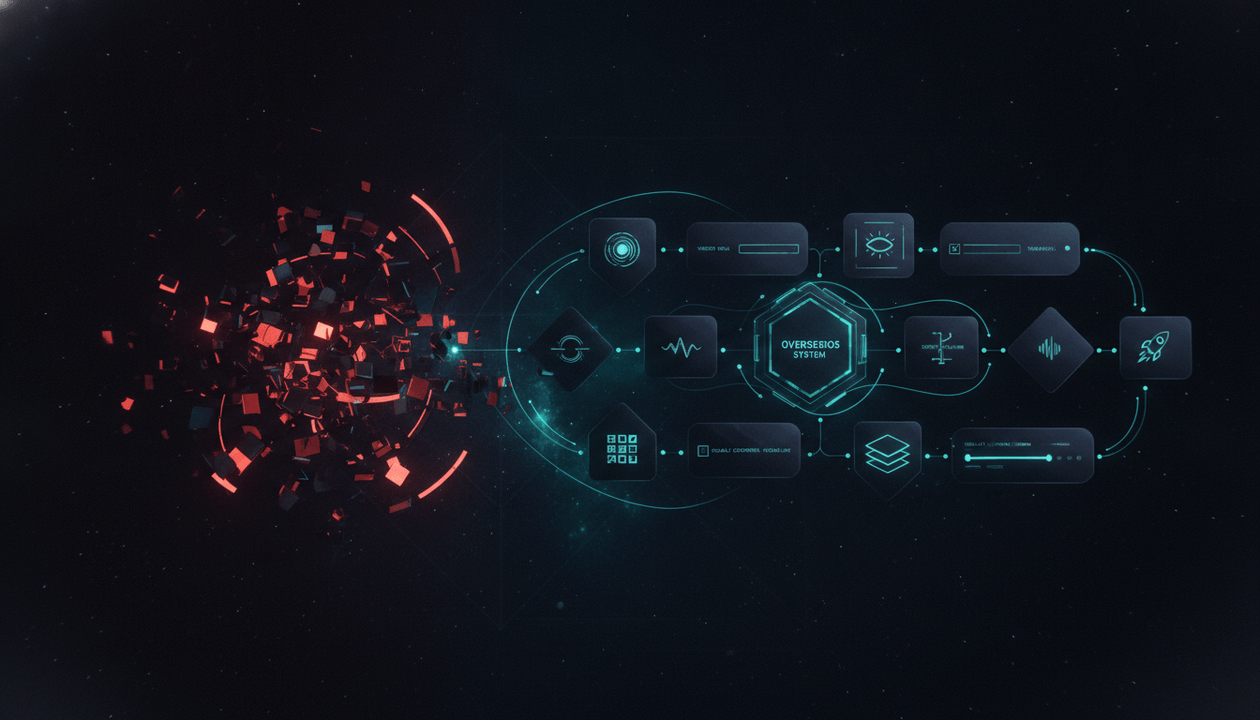
OverseerOS helps creators move from idea to execution without every stage becoming disconnected.
| Creative Brief Need | OverseerOS Workflow |
|---|---|
| Understand channel positioning | OverseerOS Channel Analyzer |
| Study competitor patterns | OverseerOS Viral X-Ray |
| Extract channel strategy | OverseerOS Channel Blueprint Cloner |
| Track competitor ideas | OverseerOS Overseer Feed |
| Plan topics | OverseerOS Smart Content Planner and OverseerOS Channel Content Planner |
| Build title direction | OverseerOS Viral Title Architect |
| Create thumbnail direction | OverseerOS Thumbnail Analyzer and OverseerOS AI YouTube Thumbnail Generator |
| Improve scripts | OverseerOS Script ReSpark and OverseerOS Quality Script Generation |
| Create voiceovers | OverseerOS Voiceover Studio |
| Produce faceless videos | OverseerOS Auto Edit |
| Maintain style direction | OverseerOS Style DNA and reference workflows |
For faceless creators, OverseerOS Auto Edit Studio helps turn scripts and voiceovers into scene-based video projects with visual direction, captions, music, motion, FX, and export workflows.
For thumbnail alignment, OverseerOS AI YouTube Thumbnail Generator helps creators build thumbnails from scratch, use style direction from YouTube URLs, work from analyzed-channel patterns, and create visuals that match the video promise.
For strategy and planning, OverseerOS helps creators reverse-engineer proven YouTube patterns, plan stronger topics, create better packaging, write scripts, generate voiceovers, and move videos into production workflows.
The biggest benefit is alignment.
The title, thumbnail, hook, script, voiceover, visuals, and edit should not feel like separate projects.
They should feel like one idea moving through different production stages.
That is what a creative brief makes possible.
Common YouTube Creative Brief Mistakes
Mistake 1: Writing the Brief After the Script
The brief should come before the script.
If the script is already done, the brief is no longer guiding production. It is just documenting decisions.
Mistake 2: Making the Brief Too Generic
A brief that says “make it engaging” is useless.
Specific direction beats vague motivation.
Mistake 3: Ignoring the Thumbnail
The thumbnail is part of the promise.
If the brief does not explain thumbnail emotion and visual direction, the packaging may drift away from the video.
Mistake 4: Ignoring the Hook
A video can have a good topic and still lose viewers if the opening is weak.
The brief should define the hook direction before writing.
Mistake 5: Giving AI No Context
If you ask AI to write without viewer, angle, tone, structure, and must-avoid notes, do not be surprised when the output sounds generic.
Mistake 6: No Must-Avoid Section
Must-avoid notes are extremely useful.
They stop the writer, designer, editor, or AI from making predictable mistakes.
Mistake 7: No Quality Control Criteria
The brief should become the review checklist.
If you do not use it to judge the finished video, you are missing half its value.
Final Verdict: A Better Brief Creates a Better Video Before Production Starts
A YouTube video does not become strong only in the edit.
It becomes strong when the idea is translated correctly before production begins.
That is what the creative brief does.
It aligns the viewer, promise, title, thumbnail, hook, structure, script, visuals, voiceover, editor, AI tools, and final review.
Without a brief, production becomes guesswork.
With a brief, production becomes execution.
The best creators in 2026 will not only make better videos.
They will build better pre-production systems.
They will know what the video is supposed to do.
They will know who it is for.
They will know what emotion the thumbnail should create.
They will know how the hook should open.
They will know what the script must include.
They will know what visuals belong.
They will know what the editor should avoid.
They will know how to judge the final asset.
That is the difference between a random upload and a production-ready YouTube asset.
If you want to produce more consistent videos, stop starting with the script.
Start with the brief.
FAQ
What is a YouTube creative brief?
A YouTube creative brief is a structured production plan that turns a raw video idea into clear direction for the title, thumbnail, hook, script, voiceover, visuals, edit, quality control, and publishing workflow.
Why do YouTubers need creative briefs?
YouTubers need creative briefs because videos often fail when the title, thumbnail, script, visuals, and edit are not aligned. A brief gives the creator, team, freelancers, and AI tools one shared target before production starts.
What should a YouTube creative brief include?
A YouTube creative brief should include the video job, target viewer, viewer pain, core angle, viewer promise, title options, thumbnail direction, hook direction, structure, must-include points, must-avoid mistakes, visual direction, tone, CTA, and quality control criteria.
Do solo creators need creative briefs?
Yes. Solo creators need creative briefs because the brief helps clarify the idea before writing, recording, editing, or designing the thumbnail. It prevents rambling, weak hooks, vague structure, and inconsistent execution.
Do faceless YouTube channels need creative briefs?
Yes. Faceless YouTube channels need creative briefs even more because production often involves scripts, voiceovers, AI visuals, thumbnails, and editing. A brief keeps every production stage aligned around one promise.
How does a creative brief help with AI content?
A creative brief gives AI better context. Instead of asking AI for generic scripts or ideas, the creator can provide the target viewer, pain, angle, structure, tone, must-include points, and must-avoid mistakes. This produces more useful AI-assisted output.
When should I write the creative brief?
Write the creative brief before the script, thumbnail, voiceover, visuals, and edit. The brief should guide production, not summarize it afterward.
What is the difference between a content idea and a creative brief?
A content idea is the topic or concept. A creative brief is the production plan that explains who the video is for, what it promises, how it should be packaged, how it should open, what it must include, and how the final asset should be reviewed.
How does OverseerOS help with YouTube creative briefs?
OverseerOS helps creators build better creative briefs by connecting channel analysis, competitor research, content planning, title creation, thumbnail generation, script workflows, voiceovers, and OverseerOS Auto Edit production tools into one YouTube-focused workflow.
What is the best YouTube creative brief strategy in 2026?
The best YouTube creative brief strategy is to align the idea, viewer, promise, title, thumbnail, hook, structure, visuals, production notes, and quality control criteria before production begins. This prevents generic scripts, random visuals, weak hooks, and expensive revisions.