Synthesia is one of the biggest names in AI avatar video.
But that does not automatically make it the best tool for faceless YouTube.
That difference matters.
Synthesia is built mainly for polished AI presenter videos, training content, internal communications, product explainers, sales enablement, and business video at scale. Its own site positions it around AI avatars, AI voices, translation, collaboration, brand kits, analytics, and business use cases like learning, development, HR, sales, and marketing. Source: Synthesia
That is useful.
But faceless YouTube is a different game.
A faceless YouTube video does not win because an avatar reads a script. It wins because the topic has demand, the title creates curiosity, the thumbnail earns the click, the hook confirms the promise, the script keeps tension alive, and the visuals match the story scene by scene.
That is why many creators start looking for Synthesia alternatives.
Not because Synthesia is bad.
Because a corporate AI avatar workflow is not always the same thing as a YouTube growth workflow.
This guide compares the best Synthesia alternatives for faceless YouTube videos, explains which tool is best for each use case, and shows how to choose between avatar videos, script-to-video tools, AI visuals, voiceovers, and a full YouTube production workflow.
Key takeaways
- Synthesia is strong for AI avatar presenters, corporate training, sales enablement, onboarding, internal communication, and localized business videos.
- Faceless YouTube creators often need more than avatars. They need topic research, scripts, thumbnails, voiceovers, scene planning, retention structure, captions, motion, music, and export-ready videos.
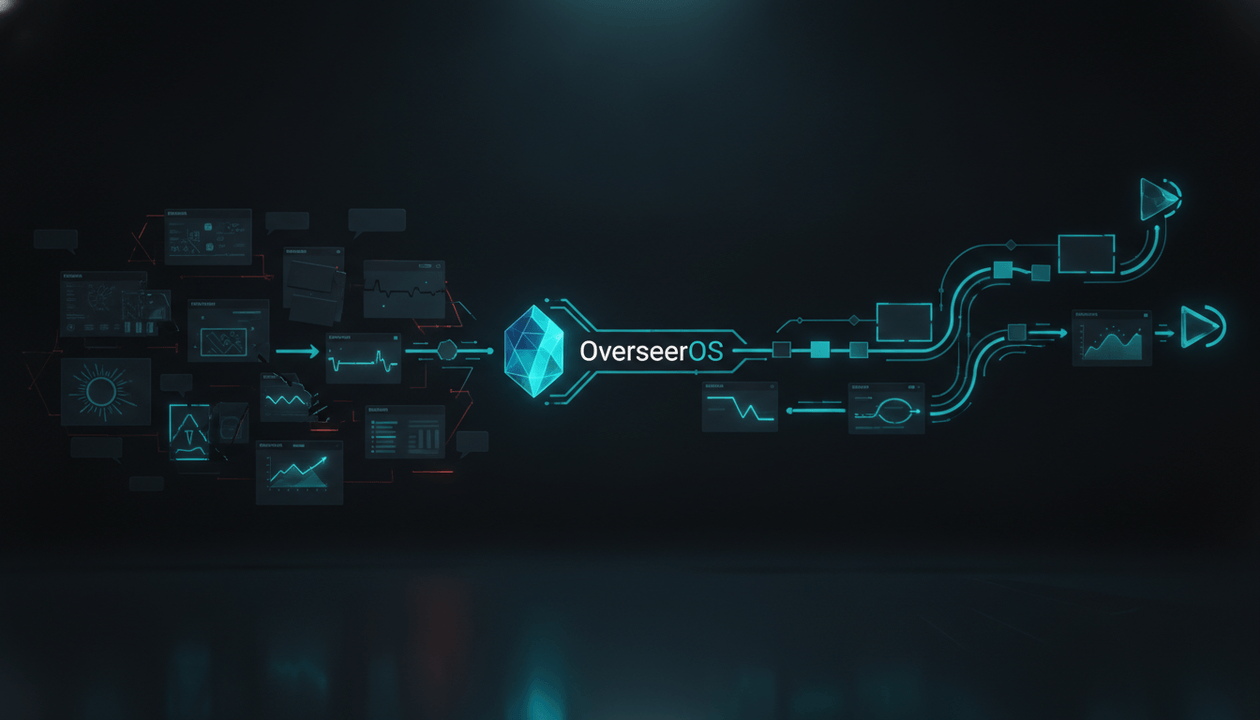
- OverseerOS is the best Synthesia alternative for faceless YouTube creators who want a strategy-led workflow from research to scripts, thumbnails, voiceovers, scenes, and OverseerOS Auto Edit.
- HeyGen is a strong alternative if you want avatar-led videos, talking photos, localization, and fast AI presenter content.
- Colossyan and Hour One are stronger for training, learning, and business communication than entertainment-first YouTube channels.
- Pictory, InVideo, VEED, and Fliki are useful for script-to-video, social clips, and faster production, but they still need YouTube strategy.
- Runway, Pika, Kling, and similar AI video tools are better for generating visual assets and cinematic clips than building a complete YouTube channel workflow.
- The best tool depends on whether your channel needs an avatar, a narrator, a documentary scene workflow, or a full creator operating system.
Quick verdict: best Synthesia alternatives for faceless YouTube
| Tool | Best for | Main strength | Main weakness |
|---|---|---|---|
| OverseerOS | Faceless YouTube strategy, scripts, thumbnails, voiceovers, scenes, and Auto Edit | Built around YouTube growth, proven patterns, and production workflows | Not an avatar-first corporate presenter tool |
| HeyGen | AI avatars, talking photos, localization, and presenter videos | Strong avatar creation and multilingual video workflow | Avatar-led videos can feel too corporate for some YouTube niches |
| Colossyan | Training videos and learning content | Strong fit for L&D and structured educational videos | Less YouTube-native for viral packaging and faceless entertainment |
| Hour One | Business presenter videos and enterprise content | Good for professional avatar-led communication | Not built around YouTube competitor research or content strategy |
| Pictory | Turning scripts, articles, URLs, and text into videos | Good script-to-video and content repurposing workflow | Visuals can feel generic without strong direction |
| InVideo | Fast AI video creation and social content | Useful for quick video generation and templates | Can create templated videos if the idea is weak |
| VEED | AI video generation plus editing | Strong editing layer with captions, branding, and AI models | Better as an editing/creation tool than a channel strategy system |
| Fliki | Text-to-video and AI voiceover content | Good for narration-heavy explainer videos | Needs strong script and visual planning |
| Runway | Cinematic AI video clips and visual assets | Strong generative visuals and creative experimentation | Not a full YouTube workflow by itself |
| D-ID | Talking head avatars and AI agents | Useful for presenter-style AI videos | Limited for full faceless documentary or retention-driven videos |
| ElevenLabs + editor | Premium narration workflow | Strong voiceover quality | Requires separate research, scripting, visuals, and editing tools |
| Descript | Editing narration, talking-heads, and transcripts | Great for editing spoken content | Not a script-to-video or YouTube strategy platform |
Why creators look for Synthesia alternatives
Synthesia solves a real problem.
It lets businesses create AI presenter videos without filming. That is powerful for training, internal updates, product explainers, onboarding, and multilingual communication.
Synthesia says its platform includes 240+ AI avatars, 1000+ AI voices, AI dubbing, video translation, captions, collaboration, brand kits, version control, analytics, and publishing features. Source: Synthesia
For companies, that can be perfect.
For YouTube creators, the problem is different.
A faceless YouTube creator is not just trying to create a clean training video. They are trying to win attention in a competitive feed.
That means they need answers to questions like:
- What topic should I make next?
- Which videos are already breaking out in my niche?
- What title pattern is working?
- What thumbnail style gets clicked?
- What hook keeps viewers past the first 30 seconds?
- What script structure creates tension?
- What voice feels trustworthy?
- What visuals match the narration?
- How do I produce consistently without creating AI slop?
- How do I learn from every upload?
Synthesia does not solve all of that by itself.
That is why serious faceless creators often need a YouTube-native alternative.
What a Synthesia alternative should do for YouTube creators
Before choosing a tool, separate three types of video creation.
Avatar-first video
This is where an AI presenter speaks on camera.
Best for:
- training.
- onboarding.
- internal communication.
- sales enablement.
- product walkthroughs.
- explainers.
- personal outreach.
- corporate education.
Tools like Synthesia, HeyGen, Colossyan, Hour One, and D-ID fit here.
Script-to-video production
This is where a script or narration becomes visual scenes.
Best for:
- faceless YouTube videos.
- explainers.
- documentary-style content.
- AI news videos.
- business breakdowns.
- psychology videos.
- educational videos.
- long-form narration.
Tools like OverseerOS Auto Edit, Pictory, InVideo, Fliki, VEED, and Runway-assisted workflows fit here.
YouTube growth workflow
This is where the tool helps before production even starts.
Best for:
- topic research.
- competitor analysis.
- viral video breakdowns.
- title generation.
- thumbnail strategy.
- script generation.
- tone matching.
- content planning.
- production handoff.
- performance learning.
This is where OverseerOS has the strongest advantage.
Most creators do not fail because they lack a video generator.
They fail because they generate the wrong video.
1. OverseerOS: best Synthesia alternative for faceless YouTube creators
OverseerOS is the best Synthesia alternative for creators who want to build faceless YouTube videos from strategy, not just avatars.
The reason is simple:
Synthesia is avatar-first.
OverseerOS is YouTube-first.
That means OverseerOS is not trying to make a digital presenter read your script. It is designed to help creators reverse-engineer what works on YouTube, find proven topics, write better scripts, create thumbnails, generate voiceovers through ElevenLabs integration, plan content, and use OverseerOS Auto Edit to turn scripts and voiceovers into structured faceless videos.
That is closer to what a faceless YouTube creator actually needs.
Where OverseerOS fits
Use OverseerOS when you want to:
- Analyze successful faceless channels.
- Reverse-engineer viral video patterns.
- Find proven video ideas before production.
- Build a channel blueprint from a successful reference channel.
- Generate YouTube scripts with stronger hooks and structure.
- Rewrite weak scripts with OverseerOS Script ReSpark.
- Match tone with OverseerOS Creator DNA.
- Create YouTube thumbnails from proven patterns.
- Generate voiceovers inside the workflow through ElevenLabs integration.
- Turn scripts and voiceovers into faceless videos with OverseerOS Auto Edit.
- Organize topics, scripts, voiceovers, thumbnails, and production inside OverseerOS Channel Content Planner.
That is a bigger workflow than avatar video creation.
Why it is better for faceless YouTube
A faceless YouTube video often needs:
- Narration.
- relevant visuals.
- scene-by-scene pacing.
- captions.
- background music.
- motion.
- thumbnail strategy.
- title strategy.
- retention structure.
- competitor research.
- production planning.
An avatar talking to camera is only one possible format.
For many YouTube niches, it is not the best format.
A business documentary channel does not need an avatar standing beside a slide. It needs tension, sources, scenes, screenshots, charts, B-roll, visual metaphors, and a script that moves.
An AI news channel does not need a corporate presenter. It needs speed, accuracy, topic validation, title angles, script structure, and scene relevance.
A psychology channel does not need a talking avatar. It needs emotional hooks, examples, visual metaphors, and trust.
That is where OverseerOS makes more sense.
Example
Weak Synthesia-style faceless video:
AI avatar on screen reading: “In this video, we will discuss five ways artificial intelligence is changing work.”
Better OverseerOS-style faceless video:
Title:
AI Is Not Taking Jobs. It Is Taking Tasks First.
Opening:
Your job probably will not disappear in one dramatic moment. It will be broken into smaller tasks, and the boring ones will vanish first.
Visual direction:
- a job description splitting into tasks.
- repeated admin work disappearing.
- calendar meetings shrinking.
- a junior analyst workflow changing.
- company org chart flattening.
- a final visual of a role being rebuilt around AI.
That is a YouTube video.
Not just an avatar.
Main weakness
OverseerOS is not the best choice if your only goal is:
I need a realistic AI person standing on screen and reading a corporate script.
For that, Synthesia or HeyGen may fit better.
OverseerOS is stronger when your goal is:
I want to build faceless YouTube videos from proven ideas, stronger scripts, thumbnails, voiceovers, and a production workflow.
Use OverseerOS Auto Edit to turn scripts and voiceovers into faceless YouTube videos when your goal is upload-ready YouTube production, not just avatar presentation.
2. HeyGen: best Synthesia alternative for AI avatars and localization
HeyGen is one of the strongest direct Synthesia alternatives because it also focuses heavily on AI avatars, text-to-video, talking photos, video translation, voice, and business video creation.
HeyGen says its AI video generator can create videos from scripts with voiceovers, visuals, and AI avatars, and supports explainer, sales, onboarding, and YouTube content. It also offers lifelike avatars from photos, videos, or prompts, plus stock avatars and customization options. Source: HeyGen
Best use case
Use HeyGen when you want:
- AI presenter videos.
- talking photo videos.
- avatar-led explainers.
- multilingual content.
- localized videos.
- sales outreach.
- product demos.
- UGC-style ads.
- social clips with a presenter.
Why it can be better than Synthesia
HeyGen can feel more creator-friendly for some use cases, especially if you want fast avatar clips, talking photos, localization, and social-first content.
For creators who specifically want a face-like presenter without filming, HeyGen is a strong option.
Main weakness
Avatar content can feel unnatural on YouTube if used badly.
A talking avatar is not automatically interesting.
You still need:
- a strong topic.
- a good title.
- a clickable thumbnail.
- a real hook.
- visual variation.
- pacing.
- story.
- viewer payoff.
For YouTube, avoid making the entire video one avatar reading a script unless that format is proven in your niche.
3. Colossyan: best for training and educational business videos
Colossyan is another strong Synthesia alternative, especially for training, learning, onboarding, and enterprise education.
It is less of a YouTube growth tool and more of a structured AI video platform for business learning content.
Best use case
Use Colossyan when you want:
- training videos.
- educational modules.
- onboarding.
- scenario-based learning.
- corporate explainers.
- multi-avatar conversations.
- business learning content.
Why it can be better than Synthesia
Colossyan can be a good fit if your videos need to feel like learning modules rather than YouTube entertainment.
For example:
- compliance training.
- employee onboarding.
- internal tutorials.
- educational course videos.
- roleplay scenarios.
Main weakness
Most faceless YouTube videos should not feel like corporate training.
YouTube viewers are not employees forced to watch.
They can leave instantly.
That means the content needs stronger tension, faster payoff, better packaging, and more visual variety than most training videos.
4. Hour One: best for business presenter videos
Hour One is another AI video platform focused on business video, presenters, templates, and scalable communication.
It can be useful for companies that want avatar-led videos without filming.
Best use case
Use Hour One when you want:
- professional presenter videos.
- corporate communication.
- training videos.
- product explainers.
- business templates.
- scalable internal video.
Why it can be better than Synthesia
Some teams may prefer Hour One’s workflow, templates, presenter style, or enterprise setup.
It can be a good option when the target is professional communication rather than YouTube-native storytelling.
Main weakness
For faceless YouTube, avatar-led communication can become visually repetitive.
A 10-minute video with one AI presenter can feel static.
You need scene changes, examples, proof, visuals, and retention loops.
5. Pictory: best for text-to-video and content repurposing
Pictory is a strong Synthesia alternative if your main goal is to turn text, scripts, URLs, blogs, presentations, images, audio, or existing videos into new videos.
Pictory says it can turn text, blogs, scripts, ideas, presentations, images, screen recordings, URLs, and existing videos into videos with automatic editing, captions, AI voices, AI avatars, templates, and generated visuals. Source: Pictory
That makes it more flexible for script-to-video and repurposing workflows than pure avatar tools.
Best use case
Use Pictory when you want:
- text-to-video.
- blog-to-video.
- URL-to-video.
- captions.
- AI voices.
- repurposing.
- short social videos.
- faster video creation from existing content.
Why it can be better than Synthesia
Pictory may be better when you do not want an avatar-led video.
For faceless creators, that matters.
A faceless YouTube video often works better with narration plus matching scenes than with a presenter on screen.
Main weakness
Pictory can still produce generic visuals if the input is weak.
If the script lacks visual direction, the tool may choose broad stock-style scenes that feel disconnected from the narration.
For serious YouTube, the script should include scene logic before production.
6. InVideo: best for fast AI video creation and templates
InVideo is a popular AI video creation tool for creators, marketers, and teams who want to create videos quickly from prompts, scripts, and templates.
It is a practical alternative to Synthesia when speed matters and you want more general AI video creation rather than avatar-only presentation.
Best use case
Use InVideo when you want:
- fast video drafts.
- templates.
- social videos.
- explainer videos.
- simple faceless videos.
- marketing content.
- quick production.
Why it can be better than Synthesia
InVideo can be better when you want a complete video made from a prompt or script without relying mainly on avatars.
For creators testing ideas quickly, that can be useful.
Main weakness
Fast video creation can become templated.
The problem is not the tool. The problem is weak direction.
If the title, thumbnail, hook, and script are generic, the video will feel generic no matter how fast it is produced.
7. VEED: best for AI generation plus editing
VEED is useful if you want AI video generation and an editing workflow in one place.
VEED says its AI video generator can turn an idea or script into a video with visuals and narration, then lets users fine-tune the video with text, music, subtitles, branding, generated media, and different AI video models. Source: VEED
This makes VEED a strong option for creators who want more control than a pure generator.
Best use case
Use VEED when you want:
- AI video generation.
- editing.
- captions.
- branding.
- voiceovers.
- social clips.
- simple YouTube assets.
- generated media plus manual polish.
Why it can be better than Synthesia
VEED is more flexible if you need editing and AI video assets beyond avatar presenters.
It can be useful for creators who want to combine generated clips, captions, music, branding, and editing in one workflow.
Main weakness
VEED is still not a full YouTube strategy system.
It can help create and edit the video, but it does not automatically decide:
- which topic is worth making.
- which competitor pattern to model.
- which title will create curiosity.
- which thumbnail promise matches the video.
- which script structure will hold viewers.
Use VEED for production.
Use OverseerOS for strategy.
8. Fliki: best for AI narration and simple text-to-video
Fliki is useful for creators who want to turn text into videos with AI voices, narration, and simple visuals.
It is especially relevant for:
- explainers.
- educational content.
- list videos.
- narration-heavy videos.
- simple faceless channels.
- short videos.
- social content.
Best use case
Use Fliki when you want:
- text-to-video.
- AI voices.
- simple visual scenes.
- faster narration-based videos.
- educational explainer content.
Why it can be better than Synthesia
Fliki may be better when the voiceover matters more than the avatar.
Many faceless YouTube channels do not need a visible presenter. They need a believable voice, a strong script, and visual support.
Main weakness
Narration alone is not enough.
If the visuals are generic or the script has no tension, the video will feel flat.
Use Fliki when you already have a good script and simple visual needs.
9. Runway: best for cinematic AI visuals
Runway is not a direct Synthesia replacement.
It is not mainly an avatar presenter tool.
It is better for generating and editing visual assets, AI video clips, cinematic shots, motion experiments, and creative scenes.
That makes it useful for faceless YouTube channels that need original visuals.
Best use case
Use Runway when you want:
- cinematic AI clips.
- visual metaphors.
- concept shots.
- AI B-roll.
- stylized scenes.
- motion visuals.
- documentary-style assets.
- visual experimentation.
Why it can be better than Synthesia
Runway is better when you do not want a talking presenter.
For example, a documentary channel about AI, business, history, psychology, or future tech may need symbolic scenes, cinematic B-roll, and visual mood.
An avatar would make the video feel smaller.
Main weakness
Runway does not build the full YouTube video for you.
Short AI clips still need:
- a script.
- a voiceover.
- sequence.
- pacing.
- music.
- captions.
- edit.
- title.
- thumbnail.
- channel strategy.
Use Runway as a visual asset tool, not the entire workflow.
10. D-ID: best for talking-head avatars and conversational agents
D-ID is useful when you want talking-head avatars, AI presenters, or interactive AI agent-style video experiences.
It can work for simple presenter content, explainer clips, and avatar-led videos.
Best use case
Use D-ID when you want:
- talking head videos.
- AI presenters.
- avatar explainers.
- conversational video agents.
- simple face-led narration.
Why it can be better than Synthesia
D-ID may fit creators or teams who want a lighter avatar workflow or more focus on talking faces and conversational experiences.
Main weakness
Talking-head avatar videos can become repetitive fast.
For YouTube, the avatar needs support from visuals, pacing, screen elements, cuts, charts, proof, and story.
A talking face is not a retention strategy.
11. ElevenLabs plus an editor: best for voice-first faceless videos
Some faceless channels do not need Synthesia at all.
They need a great voiceover and a strong edit.
That is where ElevenLabs plus an editor can work well.
Inside OverseerOS, voiceover generation is powered by ElevenLabs integration, which helps creators keep scripts and narration inside the broader YouTube workflow.
Best use case
Use ElevenLabs plus an editor when you want:
- premium narration.
- documentary voiceovers.
- faceless explainers.
- AI news videos.
- psychology videos.
- business breakdowns.
- story-driven videos.
Why it can be better than Synthesia
A strong narrator plus relevant visuals often feels more natural for YouTube than a corporate avatar.
For many niches, the viewer does not need to see a person.
They need to feel the story moving.
Main weakness
Voiceover is only one layer.
You still need the script, visuals, captions, music, edit, thumbnail, title, and strategy.
That is why using ElevenLabs inside OverseerOS can be stronger than using a voice tool alone.
12. Descript: best for editing narration and talking-head content
Descript is not a Synthesia replacement if you want AI avatars.
But it is a strong alternative if your main need is editing spoken video, narration, interviews, podcasts, or talking-head content.
For YouTube creators, Descript is especially useful after recording.
Best use case
Use Descript when you want:
- transcript-based editing.
- narration cleanup.
- filler word removal.
- podcast editing.
- talking-head editing.
- clip creation.
- voiceover editing.
- script-to-edit alignment.
Why it can be better than Synthesia
If you already have a real voice or recorded footage, Descript may be a better tool than creating an AI avatar.
Personal brands especially should think carefully before replacing their face or voice with synthetic media.
Sometimes the human presence is the trust signal.
Main weakness
Descript helps edit content.
It does not decide the content strategy.
Use it after the idea and script are strong.
Synthesia vs OverseerOS: the real difference
The choice is not really:
Synthesia or OverseerOS?
The choice is:
Do you need an AI presenter, or do you need a YouTube production system?
Synthesia is better if you want:
- AI avatars.
- corporate training.
- internal communications.
- sales enablement.
- product explainers.
- compliance videos.
- multilingual presenter videos.
- avatar-led business content.
OverseerOS is better if you want:
- faceless YouTube channel strategy.
- topic research.
- competitor analysis.
- viral video breakdowns.
- title and thumbnail workflows.
- script generation.
- script rewriting.
- voiceovers.
- scene-based faceless production.
- Auto Edit.
- content planning.
- repeatable YouTube workflows.
A Synthesia video can look clean.
An OverseerOS workflow is designed to help you make the right YouTube video.
That is a different level of problem.
Best Synthesia alternative by use case
| Use case | Best alternative |
|---|---|
| Faceless YouTube videos | OverseerOS |
| YouTube automation workflow | OverseerOS |
| AI avatar presenter videos | HeyGen |
| Corporate training | Colossyan or Synthesia |
| Sales enablement videos | Synthesia, HeyGen, or Hour One |
| Talking photo videos | HeyGen or D-ID |
| Script-to-video from articles | Pictory |
| Fast social videos | InVideo or VEED |
| Narration-heavy videos | Fliki or ElevenLabs |
| Cinematic AI B-roll | Runway |
| Editing narration | Descript |
| Documentary faceless videos | OverseerOS, ElevenLabs, Runway, and an editor |
| Personal brand videos | Descript, Claude, OverseerOS, and real footage |
The best faceless YouTube workflow without Synthesia
Most creators do not need an avatar-first workflow.
They need this:
Step 1: Find a video idea with proven demand
Use OverseerOS Channel Analyzer, OverseerOS Viral X-Ray, competitor research, YouTube search, viewer comments, and trend signals.
Do not start production until the idea has a reason to exist.
Weak idea:
AI tools for creators
Better idea:
I Tried Replacing My YouTube Team With AI. Here Is What Broke First.
That second idea has tension.
Step 2: Build the title and thumbnail promise
Before writing the full script, decide what the viewer is clicking for.
Title:
I Tried Running a Faceless Channel With AI
Thumbnail:
IT FAILED?
Now the script has a job.
It needs to answer the question.
Step 3: Write a script with visual direction
A faceless script should not only say words.
It should tell the production system what the viewer sees.
Example:
Narration:
The problem was not that AI could not make the video. The problem was that it made the wrong parts faster.
Visual direction:
Show a polished AI dashboard producing generic scripts, thumbnails, voiceovers, and scenes, then cut to a flat retention graph and a creator deleting drafts.
That is much stronger than random stock footage.
Step 4: Generate or record the voiceover
Use a voice that fits the niche.
A finance channel needs trust.
A documentary channel needs calm tension.
An AI news channel needs speed and clarity.
A psychology channel needs warmth and precision.
Inside OverseerOS, the voiceover workflow is powered by ElevenLabs integration, so creators can generate narration without leaving the broader production flow.
Step 5: Use OverseerOS Auto Edit for scene assembly
Once the script and voiceover are ready, use OverseerOS Auto Edit to turn the narration into a structured faceless video with scene-matched visuals, captions, music, motion, and export controls.
This is where OverseerOS becomes more relevant than avatar tools.
It helps create a faceless YouTube video, not just a presenter clip.
Use OverseerOS Auto Edit Studio for AI faceless video production when you need a workflow built around scripts, voiceovers, scenes, captions, motion, music, and export.
Step 6: Polish the final video
Even with AI, serious creators should review the final export.
Check:
- Does every scene match the narration?
- Does the first 30 seconds confirm the title and thumbnail promise?
- Are captions accurate?
- Is the voice pacing natural?
- Does the video feel repetitive?
- Are the visuals generic?
- Does the music support the story?
- Does anything need disclosure?
- Is the final video worth uploading?
AI should speed up production.
It should not remove quality control.
When Synthesia is still the right choice
Synthesia may still be the right tool if you want:
- a professional AI presenter.
- internal company videos.
- training content.
- multilingual corporate videos.
- HR videos.
- compliance content.
- sales enablement.
- product explainers.
- avatar-led communication.
For those use cases, Synthesia is strong.
The mistake is assuming the same workflow automatically works for YouTube growth.
YouTube viewers do not care that a video was easy to make.
They care that it is worth watching.
When you should avoid avatar-first faceless videos
Avoid avatar-first videos when:
- the avatar adds no value.
- the topic needs visual proof.
- the video needs documentary pacing.
- the audience expects real examples.
- the niche is skeptical of AI presenters.
- the avatar makes the video feel corporate.
- every scene looks the same.
- the script has no tension.
- the format is not proven in your niche.
A faceless channel does not need a fake person on screen.
It needs a real reason to watch.
AI avatar ethics and YouTube disclosure
AI avatar videos can create trust issues if used carelessly.
YouTube requires creators to disclose AI-generated or meaningfully altered realistic content in certain cases, including content that makes a real person appear to say or do something they did not do, alters footage of a real event or place, or generates a realistic scene that did not actually occur. YouTube also says production assistance like outlines, scripts, thumbnails, titles, captions, idea generation, and certain minor edits may not always require disclosure. Source: YouTube Help
For faceless creators, the safest approach is:
- Do not impersonate real people.
- Do not clone voices without permission.
- Do not present synthetic footage as real evidence.
- Do not use fake experts.
- Do not create realistic scenes that mislead viewers.
- Disclose realistic altered or synthetic content when required.
- Use AI to support the story, not fake authority.
Trust is part of the channel asset.
Do not trade it for a faster upload.
Common mistakes when choosing a Synthesia alternative
Mistake 1: Choosing an avatar tool when you need a YouTube workflow
An avatar can make a video look professional.
It cannot choose the right topic, title, thumbnail, hook, or retention structure.
If your goal is YouTube growth, prioritize strategy before avatars.
Mistake 2: Making every video look like corporate training
Many AI avatar videos look clean but feel like required workplace training.
That is dangerous on YouTube.
Viewers leave when content feels like it was made for employees instead of an audience.
Mistake 3: Using AI presenters to hide weak scripts
A realistic avatar cannot save a generic script.
Weak script:
AI is changing the world of content creation.
Better script:
AI did not make content creation easier. It made average content cheaper, which means trust is becoming more valuable.
The second one has a point.
Mistake 4: Forgetting the thumbnail
Synthesia-style tools focus on the video.
YouTube starts before the video.
If the thumbnail does not create curiosity, nobody sees the avatar.
Use OverseerOS AI YouTube Thumbnail Generator to create thumbnails from YouTube packaging patterns instead of generic design templates.
Mistake 5: Treating faceless as low-effort
Faceless does not mean lazy.
The best faceless videos often need more structure because they do not have a real person carrying trust on camera.
You need stronger:
- scripts.
- pacing.
- visual logic.
- voiceover.
- topic selection.
- proof.
- thumbnails.
- editing.
- consistency.
Mistake 6: Picking the tool before choosing the format
Do not ask:
Which AI video tool should I use?
Ask:
What format does this channel need?
Format first. Tool second.
Decision checklist: which Synthesia alternative should you choose?
Use this before buying any tool.
- Do I need an AI avatar, or do I need a faceless YouTube video?
- Is the channel built around presenter content, narration, documentary scenes, or screen recordings?
- Does the tool help with YouTube titles and thumbnails?
- Does the tool help with topic research?
- Does it support scripts and voiceovers?
- Does it create scene-relevant visuals?
- Can I control pacing and editing?
- Does it help avoid generic AI stock footage?
- Does it fit long-form YouTube, not just short ads?
- Does it support captions and exports?
- Does it fit my niche’s trust expectations?
- Does the workflow protect me from AI slop?
- Can I review and improve before publishing?
- Does it help the channel learn over time?
If the tool only creates videos faster, that is not enough.
You need a workflow that makes better videos.
Best overall recommendation
Choose Synthesia if your goal is polished AI presenter videos for business, training, sales, or internal communication.
Choose HeyGen if you want a strong AI avatar alternative with talking photos, localization, and fast presenter-style content.
Choose Colossyan or Hour One if your focus is training, learning, and structured business video.
Choose Pictory, InVideo, VEED, or Fliki if you want faster text-to-video or simple faceless video production.
Choose Runway if you need cinematic AI visuals and custom scene assets.
Choose Descript if your bottleneck is editing spoken content.
Choose OverseerOS if your goal is serious faceless YouTube growth.
Because faceless YouTube is not just video generation.
It is a complete system:
- research.
- topics.
- titles.
- thumbnails.
- hooks.
- scripts.
- voiceovers.
- scenes.
- captions.
- music.
- motion.
- exports.
- feedback.
- repeatable learning.
That is where OverseerOS is strongest.
Final verdict
Synthesia is a powerful AI avatar video platform.
But faceless YouTube creators should not confuse avatar generation with YouTube production.
A talking avatar can explain.
A YouTube video must hold attention.
Those are different jobs.
The best Synthesia alternative depends on what you are really trying to make:
- For avatars, use HeyGen, Colossyan, Hour One, or D-ID.
- For simple text-to-video, use Pictory, InVideo, VEED, or Fliki.
- For cinematic assets, use Runway.
- For narration, use ElevenLabs.
- For editing spoken content, use Descript.
- For a full faceless YouTube workflow, use OverseerOS.
The smartest creators do not start from a blank prompt.
They start from proven patterns, build a stronger idea, create the right title and thumbnail, write a script worth watching, generate a voice that fits the niche, and produce visuals that match the story.
That is the difference between making an AI video and building a YouTube channel.
FAQ
What is the best Synthesia alternative for faceless YouTube videos?
OverseerOS is the best Synthesia alternative for faceless YouTube creators who want a full YouTube workflow, including topic research, competitor analysis, scripts, thumbnails, voiceovers, scene planning, and OverseerOS Auto Edit. HeyGen is a strong alternative if you mainly want AI avatar presenter videos.
Is Synthesia good for YouTube?
Synthesia can be useful for YouTube explainers, avatar-led videos, product education, and training-style content. But it is not always the best fit for faceless YouTube channels that need storytelling, topic research, thumbnails, script structure, scene pacing, and retention-focused production.
What is better than Synthesia for YouTube automation?
For YouTube automation, OverseerOS is usually a better fit than Synthesia because it supports a broader research-to-production workflow. Synthesia focuses heavily on AI avatars and business video, while OverseerOS focuses on YouTube strategy, scripts, thumbnails, voiceovers, planning, and faceless video production.
What is the best free Synthesia alternative?
Some tools offer free plans or free trials, including HeyGen, VEED, Pictory, and other AI video platforms. Free limits change often, so check each tool’s current pricing page before deciding. For serious YouTube production, choose based on workflow fit, not only price.
Is HeyGen better than Synthesia?
HeyGen can be better than Synthesia for creators who want fast avatar videos, talking photos, localization, UGC-style ads, and social-first content. Synthesia can be stronger for enterprise business video, training, collaboration, and corporate video systems. For faceless YouTube production, OverseerOS may be a better fit than both.
What is the best AI avatar tool for YouTube?
HeyGen and Synthesia are two strong AI avatar tools for YouTube-style presenter videos. D-ID, Colossyan, and Hour One can also work depending on the use case. But for faceless YouTube channels, an avatar is not always necessary. Narration plus strong scenes often works better.
What is the best AI video tool for faceless YouTube?
OverseerOS is a strong AI video tool for faceless YouTube because it connects research, scripts, thumbnails, voiceovers, content planning, and OverseerOS Auto Edit. Pictory, InVideo, VEED, Fliki, and Runway can also help with parts of the workflow.
Can I make faceless YouTube videos without avatars?
Yes. Many faceless YouTube videos work better without avatars. You can use narration, AI visuals, screenshots, charts, captions, B-roll, motion graphics, and scene-based editing instead of a presenter. This often feels more natural for documentaries, explainers, AI channels, business videos, psychology videos, and finance channels.
What is the difference between Synthesia and OverseerOS?
Synthesia is mainly an AI avatar and business video platform. OverseerOS is a YouTube growth and production workflow platform. Synthesia helps create presenter videos. OverseerOS helps creators research topics, analyze channels, write scripts, create thumbnails, generate voiceovers, plan videos, and use OverseerOS Auto Edit for faceless production.
Does YouTube require disclosure for AI avatar videos?
YouTube requires creators to disclose realistic AI-generated or meaningfully altered content in certain cases, such as making a real person appear to say or do something they did not do, altering footage of a real event or place, or generating realistic scenes that did not happen. Creators should review YouTube’s current GenAI disclosure rules before publishing AI avatar videos.
What should I look for in a Synthesia alternative?
Look for the workflow you actually need. If you need avatar presenters, compare avatar quality, voices, languages, localization, templates, and brand controls. If you need faceless YouTube videos, prioritize topic research, scripts, thumbnails, voiceovers, scene relevance, captions, motion, export controls, and retention-focused workflows.
Should I use Synthesia or Auto Edit for faceless YouTube?
Use Synthesia if you want an AI presenter reading a script. Use OverseerOS Auto Edit if you want to turn scripts and voiceovers into faceless YouTube videos with structured scenes, visuals, captions, music, motion, and export-ready production.