Most creators write LinkedIn posts like resumes.
That is why nobody cares.
A YouTube video cannot become a strong LinkedIn post by copying the title, adding a professional-sounding caption, and ending with “watch the full video.” LinkedIn does not reward empty thought leadership. It rewards useful professional perspective, operator insight, credibility, experience, and ideas that help people understand their work better.
That makes LinkedIn one of the most valuable platforms for YouTube creators.
Especially if the channel teaches business, AI, marketing, creator economy, productivity, psychology, leadership, software, finance, education, career growth, or any topic with professional value.
But the post has to be translated.
A YouTube to LinkedIn post generator should not write:
New video is live. Check it out.
It should extract the strongest professional lesson from the video and turn it into a LinkedIn-native post that builds authority, earns saves, starts comments, and gives value before asking for a click.
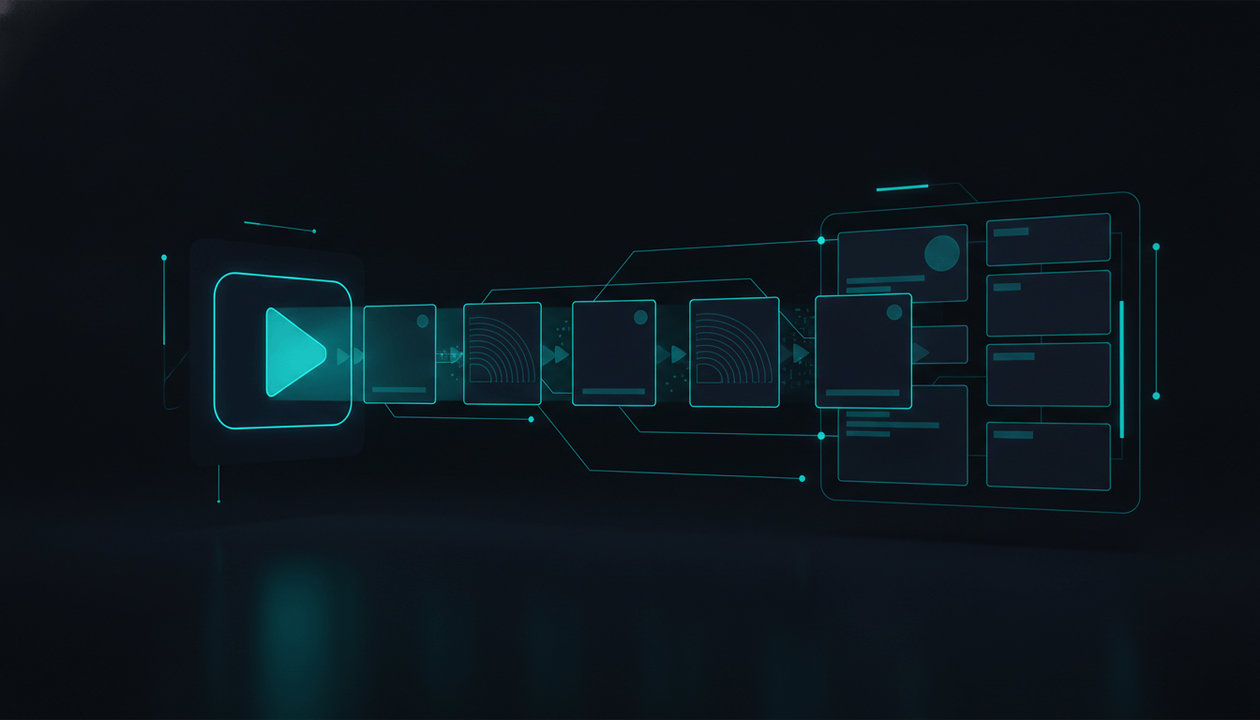
This guide shows how to turn YouTube videos into LinkedIn posts, carousels, newsletter angles, founder-style posts, and professional insights that feel native to LinkedIn instead of copied from YouTube.
Key Takeaways
- A YouTube to LinkedIn post generator should turn a video into a professional insight, not a generic caption.
- LinkedIn rewards credibility, experience, practical lessons, useful frameworks, and clear professional relevance.
- A strong LinkedIn post should usually give value even if nobody clicks the YouTube link.
- The best YouTube-to-LinkedIn workflow starts with the video’s core claim, then turns it into an operator lesson, business insight, career lesson, or practical framework.
- Do not lead every LinkedIn post with “new video is live.” Lead with the idea.
- The best LinkedIn posts often use contrast: old belief vs new belief, surface problem vs real problem, common mistake vs better system.
- OverseerOS can support this workflow by helping creators identify stronger ideas, preserve creator tone, and turn source content into platform-native distribution assets.
- The goal is not to promote a video on LinkedIn. The goal is to turn the video’s strongest idea into professional value.
What Is a YouTube to LinkedIn Post Generator?
A YouTube to LinkedIn post generator is an AI workflow that turns a YouTube video, transcript, article, script, or source idea into a LinkedIn-native post.
A good one can create:
- LinkedIn text posts
- founder-style posts
- professional lessons
- creator economy insights
- B2B thought leadership posts
- carousel outlines
- newsletter sections
- comment-driving questions
- launch posts
- video teaser posts
- case study posts
- framework posts
- contrarian posts
- personal experience posts
- company page posts
But the best version does not simply summarize the video.
It translates the video into professional relevance.
A YouTube video might be built around curiosity.
A LinkedIn post needs to show why the idea matters to someone’s work, business, career, team, channel, clients, strategy, or operating system.
That is a different job.
Why YouTube Links Usually Fail on LinkedIn
Most YouTube links fail on LinkedIn because creators post them like announcements.
Example:
New video is live: Why Most Creators Fail With AI Tools. Watch here.
This gives the reader no reason to care.
It assumes the upload itself is interesting.
It usually is not.
A stronger LinkedIn post gives the professional lesson first.
Example:
AI is not replacing creator strategy.
It is exposing it.
When production gets cheaper, the quality of the decision before production matters more.
Topic selection. Title clarity. Thumbnail tension. Script structure. Distribution angle.
The creators using AI as a shortcut will publish faster.
The creators using AI as a decision system will learn faster.
That post can stand alone.
It does not need the link to be useful.
That is the difference between promotion and authority.
The Rule: Do Not Share the Video. Share the Professional Lesson.
This is the main rule.
Do not ask:
How do I promote this YouTube video on LinkedIn?
Ask:
What professional lesson inside this video would help someone think better?
That one question changes the entire post.
Video title:
Why Better AI Tools Won’t Save Weak YouTube Channels
Weak LinkedIn post:
I made a new video about why AI tools won’t save creators. Watch it here.
Strong LinkedIn post:
Better AI tools will not save a weak content strategy.
They might actually make the weakness show up faster.
If the topic is unclear, AI can still write the script.
If the positioning is vague, AI can still create the post.
If the audience is wrong, AI can still help publish faster.
That is the part many teams miss.
AI does not remove the need for judgment.
It makes judgment more visible.
The second version belongs on LinkedIn.
It takes the video’s idea and turns it into a professional insight.
YouTube Caption vs LinkedIn Post
A YouTube caption announces or explains the video.
A LinkedIn post should teach, challenge, frame, or reveal something useful.
| YouTube Caption | LinkedIn Post |
|---|---|
| Announces the upload | Shares a professional lesson |
| Usually link-first | Usually value-first |
| Describes the topic | Frames the insight |
| Built for video traffic | Built for authority and discussion |
| Often casual or promotional | Clear, credible, and useful |
| “Watch this” | “Here is what this means” |
| Focuses on the content | Focuses on the reader’s work |
A LinkedIn post should not feel like a promotional wrapper.
It should feel like the idea has been rebuilt for a professional audience.
The 7-Step YouTube to LinkedIn Workflow
Use this workflow every time you turn a video into a LinkedIn post.
Step 1: Extract the Core Claim
Do not start with the title.
Start with the claim.
The claim is the thing the video proves.
Topic:
AI tools for creators
Core claim:
AI does not replace creator judgment. It multiplies the judgment you already have.
Topic:
YouTube thumbnails
Core claim:
A thumbnail should create a question, not explain the video.
Topic:
Content repurposing
Core claim:
A strong YouTube video should become a distribution system, not one lazy link.
Topic:
Short-form scripts
Core claim:
Shorts fail when they explain before creating curiosity.
Topic:
Faceless YouTube
Core claim:
Faceless channels fail when creators automate before finding a proven pattern.
The claim is the seed of the LinkedIn post.
Without it, the post becomes a summary.
Step 2: Translate the Claim Into Professional Relevance
LinkedIn readers ask:
Why does this matter for my work?
So translate the claim.
Examples:
| YouTube Core Claim | LinkedIn Relevance |
|---|---|
| AI multiplies judgment | Teams need better decision systems before scaling content |
| Shorts need curiosity | Attention is earned by sequencing information, not just speed |
| Thumbnails create questions | Packaging is a business communication problem |
| Content repurposing is translation | Distribution requires platform-specific messaging |
| Faceless channels need taste | Brand trust can exist even when the operator is invisible |
| Weak ideas fail faster with AI | Automation exposes strategy quality |
| One video can become 20 assets | Content ROI depends on extraction, not just production |
The LinkedIn version should sound useful to operators, founders, marketers, creators, consultants, educators, or professionals.
Step 3: Choose the LinkedIn Post Type
Different videos need different LinkedIn formats.
| Post Type | Best For | Example |
|---|---|---|
| Founder-style lesson | Personal insight, business lessons | “The mistake I kept seeing was...” |
| Operator insight | Systems, workflows, strategy | “The real bottleneck is not output. It is judgment.” |
| Framework post | Educational content | “Every strong content workflow needs 5 layers.” |
| Contrarian post | Belief shifts | “More content is not always the answer.” |
| Case study post | Real examples, analysis | “After studying 50 channels, one pattern kept showing up.” |
| Career lesson | Professional growth topics | “The skill is not using AI. It is knowing what to ask for.” |
| Carousel outline | Step-by-step frameworks | “One YouTube video into 10 LinkedIn assets.” |
| Newsletter angle | Deeper thought leadership | “Why creator distribution is becoming a business system.” |
| Company page post | Product or brand education | “Here is how creators can turn one source into native assets.” |
A good generator should not output the same format every time.
The format should match the video.
Step 4: Write the Opening With a Professional Hook
LinkedIn hooks should be clear.
Not clickbait.
Not vague.
Not corporate.
Bad openings:
Excited to share my latest video.
In today’s fast-paced creator economy...
Content creation is evolving rapidly.
This video is a game-changer.
Here’s what you need to know.
Better openings:
AI did not remove creator strategy. It exposed it.
Most creators are not short on content. They are short on extraction.
The hardest part of AI content is not prompting. It is judgment.
A thumbnail is not decoration. It is a business promise.
More output is not a content strategy.
The better openings make a clear claim immediately.
They do not waste the first line.
Step 5: Build the Post Around Contrast
LinkedIn posts work well when they clarify a difference.
Examples:
Output is not the moat. Judgment is.
Repurposing is not copying. It is translation.
A thumbnail is not a picture. It is the visual half of the promise.
AI is not the strategy. It is the engine.
Distribution is not promotion. It is idea translation.
Contrast makes the post easier to understand, save, and repeat.
A strong LinkedIn post often teaches one distinction.
Step 6: Give a Practical Takeaway
LinkedIn is professional.
The post should leave the reader with something useful.
A lesson.
A rule.
A checklist.
A framework.
A better way to think.
Weak ending:
Watch the full video to learn more.
Strong ending:
Before automating content, fix the decision before the content.
The topic. The audience. The angle. The promise. The distribution path.
That ending gives value.
The link can be optional.
Step 7: Decide Where the YouTube Link Belongs
Not every LinkedIn post needs a YouTube link.
You have four choices.
Option 1: No Link
Use this when the goal is authority, reach, or conversation.
Example:
The best content systems do not start with more output.
They start with better extraction.
No link needed.
The idea stands alone.
Option 2: Link at the End
Use this when the post gives value first, then offers the full video.
Example:
I made the full breakdown here: [link]
This works better than leading with the link.
Option 3: Link in the Comments
Use this when you want the post to remain cleaner.
Example:
I’ll put the full breakdown in the comments.
Use carefully. Do not make it feel like a trick.
Option 4: Native Video or Clip
Use this when you have a short clip or native video asset.
A strong LinkedIn video post still needs strong text framing.
The text should explain why the viewer should care before they watch.
The Best YouTube to LinkedIn Post Template
Use this template.
Turn this YouTube video/source into LinkedIn-native posts.

Video title:
[insert title]

Transcript or summary:
[insert transcript or summary]

Audience:
[founders / creators / marketers / operators / professionals / educators / consultants]

Core claim:
[the one thing the video proves]

Professional relevance:
[why this matters for work, business, career, strategy, or decision-making]

Creator voice:
[sharp / analytical / founder-led / educational / warm / direct / documentary-style]

Create:
1. One short LinkedIn post
2. One medium LinkedIn post
3. One long LinkedIn post
4. One founder-style post
5. One framework post
6. One carousel outline
7. One link-post version
8. Five alternate opening lines

Rules:
- Do not write a YouTube caption.
- Do not start with “new video is live.”
- Give value before asking for a click.
- Make the post useful without the video.
- Use simple professional language.
- Avoid corporate filler.
- Avoid fake vulnerability.
- Avoid generic thought leadership.
- Preserve the creator’s tone.
- Make each version use a different angle, not just different wording.
YouTube to LinkedIn Examples by Niche
Example 1: AI Tools for Creators
Source video:
The AI Tool Trap: Why Better Tools Won’t Save Weak YouTube Channels
Core claim:
AI makes weak creator strategy show up faster.
LinkedIn post:
AI is not replacing creator strategy.
It is exposing it.
When production gets cheaper, the quality of the decision before production matters more.
The topic. The audience. The title. The thumbnail. The first sentence. The distribution angle.
AI can help produce the asset.
But it cannot decide whether the asset deserves to exist.
That is the shift most creators and teams need to understand.
The new advantage is not just output.
It is better judgment at lower cost.
Why it works:
- It sounds professional.
- It creates a clear distinction.
- It turns a YouTube idea into a business insight.
- It gives value without needing the link.
Example 2: Content Repurposing
Source video:
How to Turn One YouTube Video Into 20 Content Assets
Core claim:
A YouTube video should become a distribution system, not one lazy link.
LinkedIn post:
Most teams think content ROI comes from publishing more.
But often, the bigger opportunity is extracting more from what already worked.
A strong YouTube video is not one asset.
It is a source file.
It can become a LinkedIn post, newsletter section, short-form script, internal sales note, customer education email, blog article, and follow-up topic.
The mistake is treating repurposing as copying.
Real repurposing is translation.
Same source. Different format. Different audience behavior. Different job.
That is where content starts compounding.
Why it works:
- It uses business language without sounding corporate.
- It reframes repurposing as ROI.
- It fits LinkedIn’s professional audience.
Example 3: YouTube Thumbnails
Source video:
Why Your Thumbnails Are Getting Ignored
Core claim:
A thumbnail should create a question, not explain the whole video.
LinkedIn post:
A YouTube thumbnail is not decoration.
It is the visual half of the promise.
The title tells the viewer what might be at stake.
The thumbnail makes them feel the gap.
Too much clarity, and there is no reason to click.
Too much confusion, and there is no reason to care.
The best packaging sits between the two.
Clear enough to understand.
Unfinished enough to create curiosity.
That is not only a YouTube lesson.
It is a communication lesson.
Why it works:
- It turns a creator tactic into a broader communication insight.
- It is useful for marketers, founders, and creators.
- It has a clean takeaway.
Example 4: Short-Form Scripts
Source video:
Why Most Shorts Scripts Fail
Core claim:
Shorts fail when they explain before creating curiosity.
LinkedIn post:
Most short-form videos do not fail because they are too slow.
They fail because they are too predictable.
The first sentence tells the viewer the shape of the video before the tension exists.
“Here are three tips...”
“In this video...”
“Today I’m going to show you...”
The viewer already knows where the content is going, so the brain checks out.
Strong short-form writing creates a gap first.
Then it earns the explanation.
That is not just a Shorts lesson.
It is a lesson in sequencing information.
Why it works:
- It connects short-form scripting to communication strategy.
- It avoids generic hook advice.
- It sounds professional and useful.
Example 5: Faceless YouTube
Source video:
Why Most Faceless YouTube Channels Fail After 90 Days
Core claim:
Faceless channels fail when creators automate before finding a proven pattern.
LinkedIn post:
Faceless does not mean judgmentless.
That is the mistake many creators make.
They remove the face, then assume the system can run on tools alone.
But the viewer still feels every decision.
The topic. The title. The thumbnail. The script. The pacing. The point of view.
AI can hide the production work.
It cannot hide weak taste.
The operator may be invisible.
The operating system is not.
Why it works:
- It is sharp and memorable.
- It turns faceless content into an operator lesson.
- It fits creator and business audiences.
LinkedIn Post Formats That Work for YouTube Creators
1. The Operator Lesson
Use this when the video teaches a system.
Template:
Most people think [surface belief].

But the real bottleneck is [deeper issue].

That changes how you think about [workflow].
Example:
Most people think AI content is an output problem.
But the real bottleneck is decision quality.
That changes how you think about every creator workflow.
2. The Contrarian Take
Use this when the video challenges a common belief.
Template:
[Common advice] is not wrong.

But it misses [deeper point].
Example:
“Post more” is not wrong.
But it misses the bigger point.
More output only helps when the direction is right.
3. The Framework Post
Use this when the video has steps.
Template:
Every [workflow] needs:

1. [Layer]
2. [Layer]
3. [Layer]
4. [Layer]
5. [Layer]
Example:
Every creator distribution system needs:
- Source
- Claim
- Platform match
- Native rewrite
- Feedback loop
4. The Lesson From Failure
Use this when the video explains mistakes.
Template:
The failure usually does not start at [surface problem].

It starts at [earlier decision].
Example:
The failure usually does not start at the edit.
It starts when the idea has no clear promise.
5. The Founder Reflection
Use this when the video connects to business building.
Template:
The more I study [topic], the more I think [lesson].

Not because [obvious reason].

Because [deeper reason].
Example:
The more I study creator workflows, the more I think distribution is not a posting problem.
Not because platforms are unimportant.
Because most creators never translate the idea for the platform.
6. The Before and After
Use this when the video shows a change in thinking.
Template:
Old way:
[old behavior]

Better way:
[new behavior]
Example:
Old way: Publish the YouTube video and share the link.
Better way: Extract the claim and rebuild it for every platform.
7. The Simple Rule
Use this when the video has one memorable takeaway.
Template:
Simple rule:

[clear principle]
Example:
Simple rule:
Do not repurpose the video.
Repurpose the claim.
8. The Strategic Question
Use this when the goal is comments.
Template:
What matters more for [outcome]:

[Option A] or [Option B]?
Example:
What matters more for AI-assisted content growth:
better tools or better topic selection?
9. The Carousel Outline
Use this when the video teaches a framework.
Template:
Slide 1: [Big promise]
Slide 2: [Common mistake]
Slide 3: [Core principle]
Slide 4: [Step 1]
Slide 5: [Step 2]
Slide 6: [Step 3]
Slide 7: [Final takeaway]
Example:
Slide 1: One YouTube video can become 20 assets Slide 2: But not by copying the caption Slide 3: Repurposing means translating the claim Slide 4: Extract the strongest idea Slide 5: Match it to the platform Slide 6: Rewrite natively Slide 7: Let the reaction guide the next video
How to Turn One YouTube Video Into 10 LinkedIn Posts
Let’s take one video.
Source video:
Why Most Creators Fail With AI Content
Core claim:
AI makes weak creative systems fail faster.
Post 1: Sharp Insight
AI does not fix weak content strategy.
It accelerates it.
Post 2: Operator Lesson
When production gets cheaper, judgment becomes more important.
The bottleneck moves from making the asset to deciding what deserves to exist.
Post 3: Founder-Style Reflection
The more I study AI creator tools, the more I think the biggest advantage is not speed.
It is decision quality.
Speed only helps when the direction is right.
Post 4: Framework
Before using AI to create content, define:
- Audience
- Pain
- Claim
- Proof
- Distribution path
Otherwise, you are automating confusion.
Post 5: Mistake Post
The mistake is not using AI for content.
The mistake is asking AI to create before you know what the content is supposed to prove.
Post 6: Team Lesson
AI content systems do not remove the need for strategy.
They make strategy more visible.
If the brief is weak, the output exposes it.
Post 7: Creator Economy Angle
The next creator moat is not who can produce the most.
It is who can choose better ideas, faster.
Post 8: Distribution Angle
More content is not distribution.
Distribution is turning one strong idea into the right shape for each platform.
Post 9: Question Post
What has improved your content results more:
better AI tools or better input decisions?
Post 10: Link Version
AI can make content production faster.
But if the strategy is weak, faster production only scales the weakness.
I made the full breakdown here: [link]
Same video.
Ten LinkedIn angles.
Not ten versions of the same caption.
How to Write LinkedIn Posts for Personal Profiles vs Company Pages
LinkedIn personal profiles and company pages need different styles.
Personal Profile Posts
Personal profile posts can be more direct, opinionated, and experience-driven.
Best formats:
- founder lessons
- operator insights
- personal observations
- mistakes learned
- short frameworks
- strong opinions
- behind-the-scenes thinking
- industry commentary
Example:
I used to think content repurposing meant getting more posts from the same video.
I now think that is the wrong frame.
Repurposing is not a volume strategy.
It is a translation strategy.
Same source. Different audience behavior. Different format. Different job.
Company Page Posts
Company page posts need to be useful without sounding like corporate filler.
Best formats:
- practical framework
- product education
- customer problem
- industry insight
- workflow breakdown
- data-backed observation
- feature use case
Example:
A common creator mistake is treating distribution as a final step.
Publish the video. Share the link. Move on.
But the stronger workflow starts earlier.
Every video should have a clear claim that can be turned into platform-native posts, Shorts, newsletters, and future ideas.
The video is the source.
Distribution is the system around it.
A company page can still sound human.
It just needs more clarity and less personal vulnerability.
What Makes LinkedIn Different From Facebook, Reddit, and X?
Use this platform map.
| Platform | What It Rewards | Best YouTube Repurposing Style |
|---|---|---|
| X | Compression, clarity, public reaction | Sharp claim or thread |
| Community discussion, useful context | Question or debate | |
| Human reflection, emotional clarity | Warm story or lesson | |
| Professional relevance, credibility, practical insight | Operator lesson or framework |
LinkedIn is not the place for random personal captions.
It is also not the place for robotic thought leadership.
The best LinkedIn posts sit in the middle.
Professional enough to be useful.
Human enough to be readable.
Specific enough to be credible.
Should You Use Hashtags on LinkedIn?
Use hashtags carefully.
A few specific hashtags can help categorize the post, but hashtag stuffing makes the post feel cheap.
Weak:
#YouTube #CreatorEconomy #AI #Marketing #Growth #Business #Success #ContentCreation #Motivation
Better:
AI is not replacing creator strategy.
It is exposing it.
If you use hashtags, keep them minimal and relevant.
The idea matters more.
Should You Add the YouTube Link?
Sometimes.
But not always.
Use this decision table.
| Goal | Link Strategy |
|---|---|
| Build authority | No link |
| Start discussion | No link or link at the end |
| Drive video views | Link at the end |
| Launch a new video | Link in the post after value |
| Share a deep breakdown | Link at the end or in comments |
| Build newsletter interest | Use post as standalone insight |
| Repurpose into a carousel | No link needed unless relevant |
The mistake is making the link carry the whole post.
The post should work before the link appears.
Should You Use Personal Stories?
Yes, if they are real.
No, if they are fake.
LinkedIn is full of forced personal stories.
Avoid:
I was sitting in a coffee shop when I realized...
I almost gave up, then this changed everything...
My intern taught me the biggest lesson about AI...
If the story is real and useful, use it.
If not, write the insight directly.
Strong LinkedIn writing does not need fake vulnerability.
It needs clear perspective.
Common YouTube to LinkedIn Mistakes
Mistake 1: Starting With “New Video Is Live”
This makes the post about your upload, not the reader’s work.
Weak:
New video is live. Watch here.
Better:
The best content systems do not start with more output.
They start with better extraction.
Mistake 2: Writing Like a Corporate Blog
Avoid:
- in today’s fast-paced world
- unlock your potential
- game-changing
- revolutionary
- seamless solution
- cutting-edge
- content is king
- this powerful strategy
- elevate your brand
- leverage your workflow
These phrases make the post sound generic.
Mistake 3: Summarizing the Video
Weak:
In this video, I cover how to repurpose YouTube videos into LinkedIn posts.
Better:
Repurposing is not copying.
It is translation.
A LinkedIn post and a YouTube video can start from the same claim, but they should not sound like the same asset.
Mistake 4: Making Every Post Too Long
LinkedIn supports longer posts, but length does not equal depth.
A short post with a strong idea can outperform a long post with weak thinking.
Use length only when the idea needs it.
Mistake 5: Copying X Posts Directly
An X post is often too compressed for LinkedIn.
X:
AI does not fix weak strategy. It accelerates it.
LinkedIn:
AI does not fix weak strategy.
It accelerates it.
That matters because the bottleneck is moving.
Production is getting cheaper.
The decision before production is becoming more important.
Same idea.
Different platform.
Mistake 6: Writing Fake Thought Leadership
LinkedIn users can smell generic AI posts.
Avoid vague posts that say nothing.
Weak:
Success comes from consistency, innovation, and adaptability.
Strong:
Consistency only works after the direction is right.
Repeating weak content does not build a brand.
It trains the market to ignore you.
Specific beats inspirational.
Mistake 7: Forgetting the Business Angle
LinkedIn readers care about professional value.
Even creator content should connect to:
- revenue
- strategy
- decision-making
- operations
- marketing
- leadership
- communication
- productivity
- positioning
- audience trust
- distribution
- customer education
Translate the creator lesson into a professional lesson.
How OverseerOS Helps With YouTube to LinkedIn Workflows
OverseerOS is built around YouTube creator intelligence.
That matters because a strong LinkedIn post should not start from a blank page.
It should start from a clear source.
A full workflow can look like this:
- Use OverseerOS to analyze winning YouTube videos and channel patterns.
- Build the video around a clear title, thumbnail, hook, and core claim.
- Publish the video.
- Extract the strongest professional lesson from the video.
- Turn that lesson into a LinkedIn-native post, carousel outline, or newsletter angle.
- Use OverseerOS Tone DNA to keep the creator’s voice consistent.
- Use comments and saves to find future video ideas.
- Use OverseerOS Script Studio to turn the strongest LinkedIn angle into a new script.
This is the bigger point.
LinkedIn should not just be a place to share the video.
It should be a place to test whether the idea has professional value.
If a LinkedIn post gets strong comments, that is a signal.
If people save the framework, that is a signal.
If professionals disagree with the claim, that is a signal.
If the post creates inbound questions, that is a signal.
Those signals can guide future videos.
Where OverseerOS Distribution Studio Fits
OverseerOS Distribution Studio is the source-to-social distribution layer inside OverseerOS.
Its platform registry is designed around platform-native contracts, meaning each platform needs its own rules, fields, limits, and writing behavior. That matters because a LinkedIn post should not be treated like an X post, Reddit post, or Facebook post.
For LinkedIn-style repurposing, the same principle applies:
- extract the source
- identify the strongest claim
- choose the professional angle
- write natively
- preserve tone
- avoid generic AI phrasing
- give value before the link
That is the difference between generic AI captions and a real creator distribution workflow.
LinkedIn Carousel Template From a YouTube Video
LinkedIn carousels work well when the video contains a framework.
Use this structure.
Slide 1:
[Big promise or belief shift]

Slide 2:
[Common mistake]

Slide 3:
[Core claim]

Slide 4:
[Step 1 or principle 1]

Slide 5:
[Step 2 or principle 2]

Slide 6:
[Step 3 or principle 3]

Slide 7:
[Example]

Slide 8:
[Final rule or takeaway]
Example:
Source video:
How to Turn One YouTube Video Into 20 Assets
Carousel:
Slide 1: One YouTube video can become 20 assets Slide 2: But not by copying the caption Slide 3: Repurposing means translating the claim Slide 4: Extract the strongest idea Slide 5: Match it to the platform Slide 6: Rewrite natively Slide 7: Track what people respond to Slide 8: The video is the source, not the finish line
That is a LinkedIn-native asset.
It does not need to send people back to YouTube immediately.
It builds authority.
LinkedIn Newsletter Template From a YouTube Video
A YouTube video can also become a LinkedIn newsletter section.
Use this structure.
Title:
[Professional lesson from the video]

Opening:
[Why this matters now]

Main point:
[Core claim]

Framework:
[3 to 5 steps or principles]

Example:
[Specific example from the video]

Takeaway:
[What the reader should do differently]
Example:
Title:
Why More Content Is Not Always a Better Content Strategy
Opening:
AI has made content production cheaper. But that does not mean every team should produce more. In many cases, the real bottleneck is not output. It is decision quality.
Main point:
AI multiplies the strategy you already have.
Framework:
Before scaling output, define the audience, claim, proof, format, and distribution path.
Takeaway:
The strongest teams will not use AI to publish the most. They will use AI to learn faster with less wasted production.
LinkedIn Company Page Template From a YouTube Video
Use this for a company page.
[Problem your audience recognizes]

[Why the usual approach fails]

[Better way to think about it]

[Simple framework or rule]

[Optional product or resource bridge]
Example:
Many creators treat distribution as an afterthought.
They publish a video, share the link once, and move on.
But a strong video contains more than one asset. It contains claims, examples, objections, lessons, and future ideas.
The better workflow is simple:
Extract the claim. Match it to the platform. Rewrite it natively. Track the reaction. Feed the signal back into the next video.
LinkedIn Personal Profile Template From a YouTube Video
Use this for founder-led or creator-led profiles.
I used to think [old belief].

But after [experience / analysis / pattern], I think [new belief].

The reason is [mechanism].

The takeaway:
[practical lesson]
Example:
I used to think content repurposing was mainly about saving time.
But after studying how strong creators distribute ideas, I think that is too small.
Repurposing is really about compounding proof.
One idea gets tested across platforms.
The strongest reaction becomes the next asset.
The next asset becomes the next video.
The takeaway:
Do not use repurposing to create noise.
Use it to find signal.
YouTube to LinkedIn Checklist
Before posting, check this.
- Did I extract the core claim from the video?
- Did I translate the claim into professional relevance?
- Does the post give value without the YouTube link?
- Does the opening make a clear point?
- Does it avoid “new video is live” as the main hook?
- Does it sound human, not corporate?
- Does it avoid generic AI thought leadership?
- Does it include a practical takeaway?
- Does the post match my creator voice?
- Is the link placement intentional?
- Could this become a carousel or newsletter?
- Could comments on this post guide a future video?
If the answer is no, rewrite it.
Manual Workflow vs OverseerOS Workflow
You can write LinkedIn posts manually.
But manual prompting has problems.
| Manual Prompting | OverseerOS Workflow |
|---|---|
| You rebuild the prompt every time | Source-first workflows help structure the process |
| Easy to summarize the video | Better workflow starts with the core claim |
| Tone often drifts | OverseerOS Tone DNA can preserve voice mechanics |
| LinkedIn becomes a generic caption | Native strategy forces professional relevance |
| Posts often sound like AI | Stronger prompts and source context reduce generic output |
| No feedback loop | LinkedIn comments can feed future OverseerOS content workflows |
Manual prompting can work.
OverseerOS helps turn the workflow into a repeatable creator system.
Final Verdict
A YouTube to LinkedIn post generator is only useful if it understands LinkedIn.
The goal is not to paste a YouTube link with professional-sounding words.
The goal is to turn the video’s strongest idea into a useful professional insight.
A good LinkedIn post should:
- extract one clear claim
- translate it into professional relevance
- use a strong opening
- avoid generic thought leadership
- give value before the link
- include a practical takeaway
- preserve the creator’s voice
- create authority, not just traffic
OverseerOS fits this workflow because it helps creators work from source intelligence, not blank-page prompting. OverseerOS can help creators identify stronger YouTube ideas, preserve tone, build scripts, and create a broader distribution workflow around each video.
The real shift is simple.
Do not use LinkedIn to announce that the video exists.
Use LinkedIn to publish the professional lesson inside the video.
That is how a YouTube upload becomes authority.
FAQ
What is a YouTube to LinkedIn post generator?
A YouTube to LinkedIn post generator is an AI workflow that turns a YouTube video, transcript, article, or source idea into a LinkedIn-native post, carousel outline, newsletter angle, or professional insight.
Can I share YouTube videos on LinkedIn?
Yes, you can share YouTube videos on LinkedIn. But a link alone is usually weak. The post should give professional value before asking someone to click.
Why do YouTube links get low engagement on LinkedIn?
YouTube links often get low engagement when the post feels like an announcement instead of an insight. LinkedIn readers usually respond better to useful lessons, frameworks, operator insights, and professional relevance.
Should I put the YouTube link at the top of a LinkedIn post?
Usually, no. Lead with the strongest professional lesson from the video. If you include the link, place it after the value or use it only when the post is clearly designed to drive video views.
What makes a good LinkedIn post from a YouTube video?
A good LinkedIn post extracts one strong claim from the video, translates it into professional relevance, uses clear language, gives a practical takeaway, and works even without the video link.
How do I turn a YouTube video into a LinkedIn carousel?
Extract the video’s core framework, then turn each step into one slide. A good carousel usually includes a strong opening, common mistake, core principle, steps, example, and final takeaway.
How do I turn a YouTube video into a LinkedIn newsletter?
Turn the video into a deeper professional lesson. Use a clear title, explain why the issue matters, share the core claim, give a framework, include an example, and end with a practical takeaway.
Should LinkedIn posts be personal?
They can be personal if the story is real and relevant. Do not force fake vulnerability. A clear professional insight is better than a fake personal story.
Should I use hashtags on LinkedIn?
Use hashtags sparingly. A few specific hashtags can help categorize a post, but hashtag stuffing makes the post look cheap. The idea matters more than the hashtags.
What is the difference between LinkedIn and X posts?
X rewards compression and public reaction. LinkedIn rewards professional relevance, credibility, practical lessons, and useful frameworks. The same YouTube video should be rewritten differently for each platform.
How does OverseerOS help with YouTube to LinkedIn posts?
OverseerOS helps creators start from stronger source intelligence. It can support the workflow by helping identify better content ideas, preserve creator tone with OverseerOS Tone DNA, build scripts with OverseerOS Script Studio, and create a broader distribution system around each video.
What should I avoid when turning YouTube videos into LinkedIn posts?
Avoid starting with “new video is live,” copying the YouTube title, using corporate filler, writing fake thought leadership, overusing hashtags, and making the link carry the entire post.
What is the best prompt for turning a YouTube video into a LinkedIn post?
The best prompt includes the video title, transcript or summary, audience, core claim, professional relevance, creator voice, desired post types, and rules like “do not write a YouTube caption,” “give value before the link,” and “make the post useful without the video.”