Most creators and founders validate products too late.
They build the SaaS. They create the course. They design the template. They record the sales page. Then they start asking if anyone wants it.
That is backwards.
YouTube can show you demand before you build.
Not perfectly. Not magically. But clearly enough to avoid some expensive mistakes.
If people are already watching videos about a problem, searching for tutorials, comparing tools, asking questions in comments, complaining about bad solutions, and clicking on “how to” content, that is a signal. It does not prove your product will sell, but it does prove something important:
The problem already has attention.
And attention is the first layer of product demand.
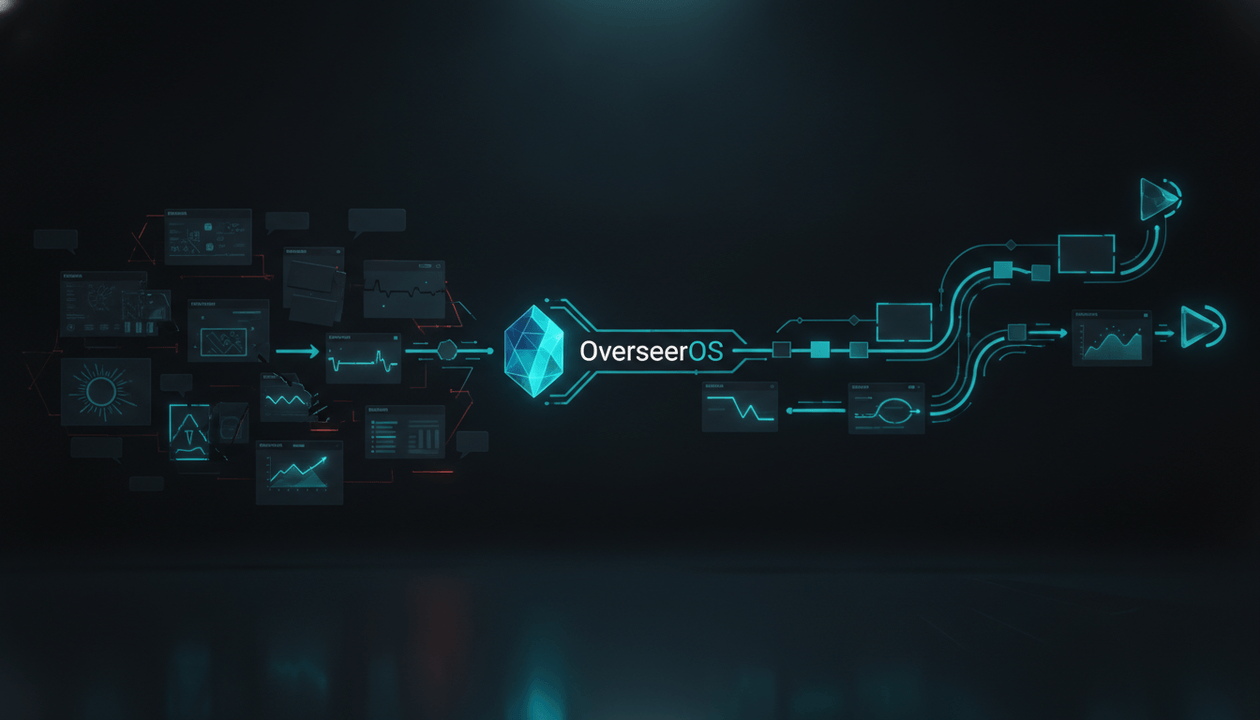
This guide shows you how to use YouTube as a product research engine before building a SaaS product, course, template, agency offer, digital product, newsletter, or creator tool. You will learn how to find demand, score product ideas, identify buyer intent, study competing solutions, extract customer language, and turn proven video patterns into product validation workflows with OverseerOS.
Key Takeaways
- YouTube is not only a publishing platform. It is a public database of problems, workflows, buying decisions, tutorials, objections, and audience language.
- A strong product idea usually has visible demand signals: tutorial searches, comparison videos, recurring comment pain, alternatives content, product walkthroughs, and videos outperforming channel baselines.
- Do not validate a product only by asking people if they “like the idea.” Validate whether they already search, watch, compare, complain, click, save, and pay around the problem.
- The best product research comes from studying videos around jobs-to-be-done, not just keywords. Look for what the viewer is trying to accomplish.
- A viral video is not automatically a product opportunity. You need to separate entertainment demand from buyer demand.
- Use OverseerOS Viral Channel Finder, OverseerOS Channel Blueprint Cloner, OverseerOS Viral X-Ray, OverseerOS Script Studio, OverseerOS Thumbnail Cloner, and OverseerOS Channel Content Planner to turn YouTube demand into a repeatable product research workflow.
- The smartest creators do not start from a blank page. They start from patterns that already worked.
What Is Video-to-Product Research?
Video-to-product research is the process of using YouTube videos, channels, comments, titles, thumbnails, search behavior, and content patterns to validate product demand before building.
Instead of starting with:
“I have an idea. Let me build it.”
You start with:
“People are already watching, searching, comparing, and asking for help around this problem. What product could solve it better?”
This method works especially well for:
- SaaS products
- AI tools
- creator tools
- templates
- courses
- paid communities
- agencies
- newsletters
- coaching offers
- digital products
- YouTube tools
- productivity systems
- no-code products
- workflow products
- software tutorial products
- affiliate and sponsor media businesses
The goal is not to copy a creator’s video.
The goal is to understand what the audience is already trying to do.
A YouTube video can reveal:
- the pain people care about
- the wording they use
- the tools they compare
- the mistakes they make
- the workflows they struggle with
- the price sensitivity they have
- the objections they repeat
- the products they already use
- the content formats they trust
- the outcomes they want
That is product research.
Why YouTube Is a Powerful Product Validation Tool
Most product validation advice focuses on surveys, interviews, landing pages, and MVPs. Those are useful. You still need real customer conversations and real purchase signals.
But YouTube adds something different.
YouTube shows public behavior around problems.
People vote with:
- searches
- clicks
- watch time
- comments
- likes
- saves
- shares
- repeat questions
- product comparisons
- tutorial demand
- creator trust
- content clusters
A founder might say:
I want to build a tool for creators.
That is too broad.
YouTube can show:
- creators watching “how to find viral video ideas”
- creators comparing thumbnail tools
- creators searching for AI script workflows
- creators asking for content calendar templates
- creators complaining that AI tools produce generic scripts
- creators watching videos about faceless channel production
- creators searching for sponsor tracking systems
- creators looking for title and thumbnail feedback
Now the idea is less vague.
It becomes:
Creators need a way to reverse-engineer proven YouTube patterns and turn them into video ideas, scripts, thumbnails, and publishing workflows.
That is much closer to a product.
This is why OverseerOS is built around evidence. OverseerOS helps creators and teams study what is already working on YouTube, then turn those patterns into original content workflows.
The Big Mistake: Confusing Views With Demand
A video with views is not always a product opportunity.
Some topics get attention because they are entertaining, shocking, emotional, or controversial. That does not mean the audience will buy a product.
Weak demand signal:
“I Watched TikTok for 24 Hours and Lost My Mind”
This might get views, but it does not automatically reveal a product people will buy.
Stronger demand signal:
“How to Turn TikTok Clips Into YouTube Shorts Without Losing Quality”
This shows a workflow problem.
Even stronger:
“Best Tools to Repurpose Long Videos Into Shorts”
This shows tool comparison and buyer intent.
The key is to separate three types of attention.
| Attention type | Viewer mindset | Product value |
|---|---|---|
| Entertainment attention | “This is interesting.” | Low to medium |
| Educational attention | “I want to learn this.” | Medium |
| Buyer-intent attention | “I need a solution.” | High |
A product should not be built only from entertainment attention.
You want buyer-intent attention.
Look for videos where the viewer is trying to:
- choose a tool
- solve a workflow
- fix a problem
- build a system
- compare options
- save time
- make money
- avoid mistakes
- improve output
- set something up
- copy a template
- automate a process
That is where products live.
The Video-to-Product Research Framework
Use this seven-step workflow before building any product.
| Step | Goal | Output |
|---|---|---|
| 1. Pick a buyer | Define who has the problem | Target customer |
| 2. Map the job | Identify what they are trying to do | Job-to-be-done |
| 3. Find demand videos | Study videos around the job | Video evidence list |
| 4. Extract pain | Read comments and patterns | Pain language |
| 5. Score monetization | Check if people already pay | Revenue potential |
| 6. Build product hypothesis | Turn demand into an offer | Product idea |
| 7. Test with content | Publish before building fully | Validation loop |
This workflow keeps you from building from ego.
It forces the idea to pass through public demand.
Step 1: Pick a Buyer, Not a Product
Do not start with the product idea.
Start with the buyer.
Weak:
I want to build a productivity app.
Better:
I want to help solo YouTube creators manage ideas, scripts, thumbnails, publishing, and performance in one workflow.
Weak:
I want to create a course.
Better:
I want to teach beginner creators how to build faceless YouTube channels using repeatable research, scripting, thumbnail, and production systems.
Weak:
I want to sell templates.
Better:
I want to sell Notion templates to small content agencies that need client content calendars, approval workflows, and sponsor tracking.
The buyer determines everything:
- what they search
- what they watch
- what they already pay for
- what language they use
- what tools they trust
- what level of complexity they can handle
- what offer makes sense
- what YouTube content will attract them
Use this prompt:
I help [buyer] get [outcome] without [pain].
Examples:
- I help faceless YouTube creators find proven video ideas without guessing.
- I help SaaS founders turn product workflows into demo videos without hiring a full production team.
- I help agencies manage client content calendars without messy spreadsheets.
- I help creators compare AI tools without wasting money on the wrong subscriptions.
- I help newsletter operators turn YouTube research into product ideas without starting from scratch.
If you cannot define the buyer, the product idea is not ready.
Step 2: Map the Job-to-Be-Done
A product exists because someone is trying to get something done.
Do not ask:
What feature should I build?
Ask:
What job is the buyer trying to complete?
Examples:
| Buyer | Job-to-be-done | Possible product |
|---|---|---|
| Faceless creator | Find video ideas that already have demand | YouTube idea research tool |
| SaaS founder | Turn product workflows into demo videos | Product demo script generator |
| Agency | Manage client content production | Content operations template |
| Creator | Make better thumbnails faster | Thumbnail style generator |
| Marketer | Repurpose one video into many posts | Distribution workflow tool |
| Course creator | Validate lesson demand before recording | YouTube demand research system |
| Affiliate creator | Pick products worth reviewing | Product comparison matrix |
| Small business owner | Automate repetitive admin tasks | Automation template pack |
The job is more important than the product category.
A creator does not want a “content management tool.” They want to avoid losing track of ideas, scripts, thumbnails, publish dates, and results.
A SaaS founder does not want a “demo video generator.” They want more users to understand the product quickly enough to try it.
A course creator does not want “content research.” They want to know which lessons people already care about before recording 40 modules.
That is the level where product ideas become sharp.
Step 3: Find Demand Videos
Now search YouTube around the job.
Use query patterns like:
- how to [job]
- best tools for [job]
- [tool] vs [tool]
- [tool] alternatives
- [job] tutorial
- [job] for beginners
- [job] mistakes
- how I [job]
- [job] workflow
- [job] template
- [job] checklist
- [job] step by step
- [job] software
- [job] automation
- [job] system
Example for creators:
- how to find viral video ideas
- best YouTube idea tools
- YouTube content planner tutorial
- how to write YouTube scripts with AI
- best AI thumbnail generator
- how to make faceless YouTube videos
- YouTube title formulas
- YouTube automation workflow
- how to clone a YouTube channel strategy
- how to analyze YouTube competitors
Example for SaaS founders:
- product demo video script
- how to make SaaS demo videos
- best product demo examples
- SaaS onboarding video examples
- how to create product walkthroughs
- product launch video script
- how to explain SaaS product
- product-led content strategy
Example for agencies:
- client content calendar template
- agency project management workflow
- how to manage client content
- best tools for content agencies
- agency onboarding workflow
- client reporting dashboard
- content approval process
You are looking for patterns, not one random video.
A product idea becomes stronger when many videos around the same job show demand.
Step 4: Separate Surface Metrics From Real Signals
Views are useful, but they are not enough.
You need to read the context.
Look at:
- channel size
- video age
- views relative to channel baseline
- comment quality
- title intent
- thumbnail promise
- content format
- whether the video is evergreen
- whether viewers ask buying questions
- whether there are competing products
- whether the creator links templates, tools, or affiliates
- whether the topic repeats across multiple channels
A video with 80,000 views on a 500,000-subscriber channel may be normal.
A video with 80,000 views on a 5,000-subscriber channel may be a breakout signal.
That is why baseline matters.
OverseerOS Viral Channel Finder is useful here because it helps surface breakout and fast-growing channels using public YouTube signals, including viral score, growth metrics, and the actual breakout videos behind each result. Instead of only looking at large channels, you can find smaller channels where a topic is outperforming the creator’s normal reach.
Step 5: Read the Comments Like Customer Interviews
Comments are messy, but they are gold.
Do not only read the top comments. Look for repeated customer language.
You are looking for:
- confusion
- objections
- requests
- frustrations
- alternatives
- comparisons
- pricing concerns
- workflow pain
- missing features
- audience segments
- real use cases
- “can you make a template?”
- “does this work for X?”
- “what tool did you use?”
- “is there a cheaper option?”
- “can this be automated?”
- “I tried this but got stuck”
- “do you have a full course?”
- “can you make one for beginners?”
- “does this work for my niche?”
Turn comments into product research.
| Comment pattern | What it may reveal |
|---|---|
| “Can you make a template?” | Template product demand |
| “What tool did you use?” | Software recommendation demand |
| “Does this work for beginners?” | Beginner onboarding gap |
| “Is there a cheaper option?” | Price sensitivity and alternatives demand |
| “Can you compare this to X?” | Comparison content and product positioning |
| “I tried this but got stuck” | Setup or usability problem |
| “Can this be automated?” | Automation product opportunity |
| “Does this work for my niche?” | Segment-specific version opportunity |
| “I need this for my team” | B2B or agency opportunity |
| “Do you have a course?” | Education product demand |
One comment is not enough.
Repeated comments are signals.
Step 6: Map Existing Solutions
Before building anything, list what people already use.
For each problem, identify:
- free alternatives
- paid tools
- templates
- courses
- agencies
- consultants
- Chrome extensions
- spreadsheets
- Notion systems
- AI prompts
- manual workflows
- communities
- YouTube tutorials
- newsletters
- open-source tools
A market with existing solutions is not automatically bad.
In many cases, it is a good sign.
No competition can mean no demand.
The question is not:
“Is anyone else solving this?”
The better questions are:
- What do existing solutions do well?
- What do they make too complicated?
- What do viewers still complain about?
- What is missing for a specific buyer?
- What is too expensive?
- What is too generic?
- What is not built for YouTube?
- What requires too much manual work?
- What is not connected to the next workflow?
Example:
There are many AI writing tools.
That does not mean there is no opportunity.
The gap might be:
AI writing tools generate generic scripts, but YouTube creators need scripts based on proven channel patterns, pacing, hooks, title promise, and retention structure.
That is a sharper product insight.
Step 7: Score the Product Opportunity
Use this scorecard before building.
Score each factor from 1 to 5.
| Factor | Question | Score |
|---|---|---|
| Buyer clarity | Can you define the exact buyer? | 1 to 5 |
| Pain strength | Is the problem expensive, frequent, or annoying? | 1 to 5 |
| Search demand | Are people searching for tutorials, tools, comparisons, or templates? | 1 to 5 |
| Video evidence | Are videos around the problem getting meaningful traction? | 1 to 5 |
| Comment pain | Do comments reveal repeated frustration or requests? | 1 to 5 |
| Existing spend | Are people already paying for tools, templates, courses, or services? | 1 to 5 |
| Competition gap | Is there a clear weakness in existing solutions? | 1 to 5 |
| Content cluster potential | Can this become multiple videos and pages? | 1 to 5 |
| Product simplicity | Can you test a simple version quickly? | 1 to 5 |
| Monetization path | Is there a clear way to charge? | 1 to 5 |
| Distribution fit | Can you reach this buyer through YouTube or search? | 1 to 5 |
| Trust safety | Can you sell this without hype or risky claims? | 1 to 5 |
Total score:
| Score | Decision |
|---|---|
| 50 to 60 | Strong opportunity. Build a test. |
| 40 to 49 | Good opportunity. Sharpen the buyer or offer. |
| 30 to 39 | Weak or unclear. Keep researching. |
| 20 to 29 | Too risky. Reframe the problem. |
| Under 20 | Skip. The evidence is not there. |
Do not treat the score as a perfect prediction.
Treat it as a discipline tool.
It forces you to explain why the idea deserves time.
The Video-to-Product Validation Matrix
Use this matrix to connect video signals to product ideas.
| Video signal | What it suggests | Product idea |
|---|---|---|
| Many “how to” videos | People need education | Course, tutorial library, template |
| Many “best tools” videos | People compare solutions | SaaS, affiliate site, buyer guide |
| Many “X vs Y” videos | Buyers are choosing | Comparison tool, review site, consulting |
| Many “mistakes” videos | People fail at the process | Checklist, audit, coaching, software guardrails |
| Many “template” requests | People want shortcuts | Template pack, paid workflow, Notion system |
| Many “workflow” videos | People want systems | SaaS, operating system, automation product |
| Many “alternatives” videos | People are dissatisfied | Better-positioned software, migration service |
| Many comments about time | Speed problem | Automation tool, AI workflow, service |
| Many comments about cost | Budget problem | cheaper alternative, free tool, template |
| Many niche questions | Segment opportunity | vertical-specific product |
| Many setup questions | Onboarding gap | setup service, wizard, guided tool |
| Many repeated objections | Trust gap | education-first product, transparent comparison |
This matrix helps you turn video research into product direction.
What Makes a YouTube Signal Strong?
Not all signals are equal.
Strong signals:
- multiple channels covering the same problem
- small channels getting breakout views
- comments asking for templates or tools
- videos ranking for comparison keywords
- repeat tutorial demand
- visible affiliate links or sponsors
- product categories with paid tools
- creators making follow-up videos
- old videos still getting comments
- viewers asking “which one should I use?”
- viewers complaining about existing tools
- videos solving urgent business workflows
Weak signals:
- one viral entertainment video
- trend with no buying behavior
- comments mostly jokes
- views driven by controversy
- no repeated problem
- no existing spend
- no clear buyer
- no product category
- no pain
- no next step
The best product ideas come from repeated strong signals.
Example: Validating a SaaS Idea With YouTube
Let’s say your idea is:
A tool that helps YouTube creators find proven video ideas.
Do not build first.
Research first.
Demand searches
Search:
- how to find viral YouTube video ideas
- how to find YouTube content ideas
- YouTube idea generator
- YouTube competitor analysis
- YouTube outlier finder
- how to analyze YouTube channels
- how to clone a YouTube channel strategy
- best YouTube tools for creators
Demand signals
Look for:
- videos with high views compared to channel size
- comments asking for tools
- creators complaining about idea quality
- comments saying “how did you find these channels?”
- videos comparing YouTube research tools
- affiliate links to creator tools
- repeated topics around outliers, competitors, thumbnails, scripts, titles
Product hypothesis
Creators do not only need “ideas.” They need a way to find content patterns that already worked, understand why they worked, and turn them into original topics, scripts, titles, and thumbnails.
That is a much stronger product hypothesis than:
Build an AI idea generator.
The difference is evidence.
Example: Validating a Course Idea With YouTube
Idea:
A course teaching freelancers how to build AI automation workflows for clients.
Research searches:
- AI automation agency
- how to build AI automations
- Zapier AI automation tutorial
- Make.com AI automation tutorial
- AI automation for small business
- how to sell AI automation services
- AI agency tutorial
- client automation workflow
- AI automation mistakes
Look for:
- tutorial videos getting traction
- comments asking for client examples
- comments asking about pricing
- comments asking what tools to use
- comments asking for templates
- videos about selling the service
- videos about delivering the workflow
- sponsor placements from automation tools
- creators selling courses or communities
Possible products:
- beginner course
- workflow template pack
- client onboarding kit
- automation proposal template
- done-for-you agency service
- paid community
- certification-style program
- YouTube channel plus newsletter
The course idea becomes stronger if viewers are not only watching tutorials, but also asking how to sell, price, deliver, and repeat the workflow.
Example: Validating a Template Product With YouTube
Idea:
A Notion template for YouTube content planning.
Research searches:
- Notion YouTube content calendar
- YouTube content planner template
- Notion content calendar for creators
- how to plan YouTube videos in Notion
- YouTube production workflow
- video content calendar template
- sponsor tracker template
- YouTube script tracker
Look for:
- template walkthrough videos
- creators linking paid templates
- comments asking for downloads
- comments asking for customization
- videos showing messy workflows
- recurring pain around planning, scripts, thumbnails, deadlines, sponsors
- content teams asking about multi-user workflows
Product hypothesis:
Solo creators and small teams want a simple YouTube planning system that connects video ideas, scripts, thumbnails, publishing, sponsor tracking, and performance review.
The template should not be a random dashboard.
It should match the workflow viewers already ask about.
The 5 Product Ideas That Come From YouTube Research
1. SaaS Product
Best when:
- the pain is repeated
- the workflow is frequent
- people already pay for tools
- existing tools are too generic
- automation or data creates leverage
- the buyer needs the workflow often
Example:
A YouTube research platform that helps creators find breakout channels and reverse-engineer proven patterns.
2. Course
Best when:
- viewers need step-by-step education
- the process has many decisions
- comments show confusion
- people ask for a full system
- the skill creates income or saves money
Example:
A course teaching agencies how to build AI automation workflows for clients.
3. Template
Best when:
- people ask for the file
- the workflow is repeatable
- the buyer wants speed
- the problem can be solved with structure
- the user does not need custom software yet
Example:
A content calendar, sponsor tracker, or product comparison scorecard.
4. Service
Best when:
- viewers want the result but do not want to do the work
- the workflow requires expertise
- businesses are the buyer
- the outcome is valuable enough to pay for
Example:
Done-for-you product demo videos for SaaS companies.
5. Media Business
Best when:
- there are many products in the category
- viewers need ongoing recommendations
- sponsors want access to the audience
- search demand is recurring
- affiliate revenue is possible
Example:
A YouTube channel and blog reviewing AI tools for creators.
This is why product research should not only ask “what should I build?”
It should ask:
“What is the best business model for this demand?”
The YouTube Product Validation Funnel
Use this funnel to go from research to product.
Stage 1: Observe
Study YouTube demand.
Collect:
- videos
- channels
- comments
- keywords
- thumbnails
- titles
- products mentioned
- tools linked
- sponsor placements
- repeated questions
Stage 2: Hypothesize
Write the product hypothesis.
Format:
[Buyer] needs a better way to [job] because [pain]. Existing solutions fail because [gap]. A useful product could [solution].
Example:
Faceless YouTube creators need a better way to turn proven channel patterns into original video ideas because generic AI tools start from blank prompts. Existing solutions fail because they do not connect competitor research, scripts, titles, thumbnails, and planning. A useful product could reverse-engineer public channel data and turn it into a repeatable content workflow.
Stage 3: Publish
Create validation content before building the full product.
Examples:
- tutorial
- buyer guide
- comparison
- template walkthrough
- workflow breakdown
- product demo mockup
- waitlist video
- “build with me” video
- free checklist
- free template
Stage 4: Measure
Track:
- views
- click-through rate
- watch time
- comments
- saves
- email signups
- template downloads
- replies
- DMs
- pre-orders
- affiliate clicks
- trial clicks
- calls booked
Do not only measure views.
Measure commitment.
Stage 5: Sell
Before building fully, test whether people will take action.
Examples:
- join waitlist
- download template
- book call
- pay pre-order
- request beta access
- buy minimum version
- reply with use case
- join private group
- fill survey after watching
The Lean Startup method popularized the idea of using minimum viable products and validated learning to test assumptions before scaling a product. The same principle applies here: use content to test whether the problem and promise deserve more investment. Source: Harvard Business Review
Stage 6: Build
Only build the version that the evidence supports.
Do not build every feature viewers mention.
Build the smallest version that solves the strongest repeated pain.
Stage 7: Repeat
Turn users back into research.
Use:
- customer interviews
- support tickets
- onboarding calls
- cancellation reasons
- feature requests
- demo questions
- comments
- YouTube analytics
- search queries
- user recordings
- customer success calls
Product validation does not end after launch.
It becomes the operating system.
The Content-First MVP
A content-first MVP is a simple way to test demand before building the full product.
Instead of building software first, publish content that simulates or teaches the workflow.
Examples:
| Product idea | Content-first MVP |
|---|---|
| YouTube idea research SaaS | “How to Find 100 Viral Video Ideas” + free spreadsheet |
| AI automation course | “I Built 3 Client Automations” + waitlist |
| Notion template | Template walkthrough video + paid download |
| Product demo service | Breakdown of 5 demo scripts + booking form |
| Thumbnail tool | “I Remade 10 Thumbnails Using Proven Patterns” + email capture |
| Sponsor tracker | “How to Track YouTube Sponsorships” + spreadsheet |
| SaaS onboarding tool | “Fix Your Trial Onboarding Flow” + audit offer |
| Product comparison database | “Best Tools for X” blog + newsletter signup |
This works because you are testing the promise before building the product.
If nobody watches, clicks, comments, downloads, or signs up, that is information.
If people do, you have a stronger reason to build.
How to Use OverseerOS for Video-to-Product Research
OverseerOS is built for this kind of work because it starts from public YouTube patterns, not blank-page guessing.
Step 1: Find Demand With OverseerOS Viral Channel Finder
Use OverseerOS Viral Channel Finder to discover breakout channels in a niche.
Search for niches like:
- AI tools
- faceless YouTube
- SaaS tutorials
- productivity
- automation
- no-code
- creator tools
- software reviews
- course creation
- online business
- small business tools
- YouTube growth
- agency workflows
Look for channels where specific formats are outperforming:
- tutorials
- comparisons
- workflow breakdowns
- template walkthroughs
- product demos
- mistakes videos
- tool stacks
- beginner guides
A breakout video around a workflow may reveal product demand.
Step 2: Reverse-Engineer Channels With OverseerOS Channel Blueprint Cloner
Use OverseerOS Channel Blueprint Cloner to study channels that already own the audience you want.
Look for:
- tone DNA
- hook patterns
- pacing
- viral topic formulas
- tags
- keywords
- hidden insights
- untapped topic opportunities
- upload cadence
- title patterns
- content structure
This helps answer:
- What does this audience already respond to?
- What problems are repeated?
- What formats earn trust?
- What topics are missing?
- What products could naturally fit?
Step 3: Analyze Individual Videos With OverseerOS Viral X-Ray
Use OverseerOS Viral X-Ray on specific breakout videos.
Study:
- title promise
- thumbnail question
- opening hook
- video structure
- audience pain
- proof moments
- product mentions
- CTA
- comment questions
- why the video likely worked
The goal is to turn a video into a product insight.
Example:
If a video about “best AI tools for YouTube creators” breaks out, do not only think “make that video.”
Ask:
- Which tools did the audience care about?
- Which workflow did they want?
- Which comments revealed frustration?
- What product would make the workflow easier?
- What follow-up content would test demand?
Step 4: Build the Validation Calendar With OverseerOS Channel Content Planner
Use OverseerOS Channel Content Planner to turn product hypotheses into content tests.
For each idea, plan:
- target buyer
- problem
- video angle
- search intent
- title
- thumbnail
- CTA
- validation metric
- product hypothesis
- follow-up test
Example:
| Field | Example |
|---|---|
| Buyer | Faceless YouTube creators |
| Problem | Finding proven ideas without copying |
| Video angle | How to Find Viral Faceless YouTube Ideas |
| Search intent | Tutorial and tool discovery |
| CTA | Download free idea scorecard |
| Validation metric | Downloads, comments, replies |
| Product hypothesis | Creators want a repeatable YouTube idea research workflow |
| Follow-up | Best YouTube competitor analysis tools |
Step 5: Write the Content With OverseerOS Script Studio
Use OverseerOS Script Studio to turn the validation idea into a strong YouTube script.
A validation video should include:
- problem
- proof
- workflow
- examples
- mistakes
- checklist
- CTA
- question for viewers
The goal is not just views.
The goal is learning.
End with a CTA that reveals intent:
- download the template
- join the waitlist
- comment your use case
- book a beta call
- try the workflow
- vote on the next version
Step 6: Package the Test With OverseerOS Thumbnail Cloner and OverseerOS Viral Title Generator
Use OverseerOS Thumbnail Cloner to create a thumbnail from proven visual patterns.
Use OverseerOS Viral Title Generator to create title variations.
For validation content, the package should make the problem obvious.
Strong angles:
- “I Found the Pattern”
- “Stop Guessing”
- “Use This Workflow”
- “Before You Build”
- “This Is the Demand”
- “People Already Want This”
- “I Tested the Niche”
- “Don’t Build Yet”
- “Find Buyers First”
The click is not just traffic. It is a market signal.
Step 7: Repurpose With OverseerOS Distribution Studio
Use OverseerOS Distribution Studio to turn the validation video into platform-native posts.
A single research video can become:
- X thread
- LinkedIn post
- Reddit-safe discussion
- newsletter section
- blog post
- short-form script
- founder update
- waitlist post
- sponsor outreach asset
This matters because product validation should not depend on one platform.
You want signals from multiple channels.
The Video-to-Product Research Sheet
Use this table for every product idea.
| Field | What to write |
|---|---|
| Buyer | Who has the problem? |
| Job | What are they trying to accomplish? |
| Pain | What makes the job hard? |
| Current solution | What do they use now? |
| YouTube searches | What queries reveal demand? |
| Breakout videos | Which videos prove attention? |
| Comment patterns | What do viewers repeat? |
| Existing products | What tools/templates/courses exist? |
| Gap | What is missing or weak? |
| Product hypothesis | What could solve it better? |
| Content MVP | What video can test demand? |
| CTA | What action proves interest? |
| Success metric | What result means continue? |
| Risk | What could make this a false signal? |
| Next test | What should you test after this? |
This sheet is simple, but it keeps product research grounded.
The Product Demand Scorecard
Use this after collecting evidence.
| Score | Meaning |
|---|---|
| 5 | Strong proof from multiple sources |
| 4 | Good proof but needs more validation |
| 3 | Some signal, still uncertain |
| 2 | Weak signal |
| 1 | Mostly guesswork |
Score these categories:
| Category | Score |
|---|---|
| Buyer clarity | 1 to 5 |
| Problem frequency | 1 to 5 |
| Pain intensity | 1 to 5 |
| Search behavior | 1 to 5 |
| Video traction | 1 to 5 |
| Comment demand | 1 to 5 |
| Existing spend | 1 to 5 |
| Competition gap | 1 to 5 |
| Content testability | 1 to 5 |
| Product simplicity | 1 to 5 |
| Monetization path | 1 to 5 |
| Distribution fit | 1 to 5 |
Decision:
| Total | Action |
|---|---|
| 50 to 60 | Build a landing page, MVP, or paid test |
| 40 to 49 | Publish validation content and collect leads |
| 30 to 39 | Keep researching and sharpen the buyer |
| 20 to 29 | Reframe the problem |
| Under 20 | Skip |
How to Avoid False Positives
YouTube can reveal demand, but it can also mislead you.
Avoid these traps.
Trap 1: Confusing Curiosity With Purchase Intent
A video about “AI is replacing everyone” may get views.
That does not mean viewers will buy your AI productivity template.
Look for buying behavior, not just curiosity.
Trap 2: Trusting One Viral Video
One viral video can be luck, timing, controversy, or personality.
Look for repeated patterns across multiple videos and channels.
Trap 3: Ignoring Channel Baseline
A million-view video from a giant channel may not mean much.
A 100,000-view video from a tiny channel may mean a lot.
Baseline matters.
Trap 4: Building From Comments Alone
Comments are useful, but people often say they want things they will not pay for.
Use comments to form hypotheses.
Use clicks, signups, calls, pre-orders, and purchases to validate commitment.
Trap 5: Copying the Existing Solution
If the market already has tools, do not build the same thing.
Find the gap:
- simpler
- faster
- cheaper
- more specific
- more trusted
- more visual
- more automated
- more connected
- more YouTube-native
- more beginner-friendly
- more agency-ready
Trap 6: Building Too Much
Research does not give you permission to build everything.
It tells you what to test first.
Start with the smallest useful version.
The Best Video Formats for Product Validation
1. Problem Breakdown
Use this when the audience does not fully understand the pain yet.
Example:
Why Most Creators Pick the Wrong Video Ideas
Product insight:
People may need a research workflow.
2. Workflow Tutorial
Use this when the buyer is trying to complete a job.
Example:
How to Find Viral YouTube Ideas Before Writing a Script
Product insight:
People may want a tool, checklist, or template.
3. Tool Comparison
Use this when buyers are choosing between existing solutions.
Example:
Best YouTube Research Tools for Creators
Product insight:
The market already pays for tools, but gaps may exist.
4. Template Walkthrough
Use this when the product can start as a template.
Example:
My YouTube Idea Validation Spreadsheet
Product insight:
Template downloads can test willingness to use the workflow.
5. Build-in-Public Test
Use this when you want feedback while building.
Example:
I’m Building a Tool to Find Viral YouTube Patterns
Product insight:
Audience feedback can shape the first version.
6. Landing Page Video
Use this when you are ready to test signups.
Example:
Join the Waitlist for a YouTube Research Workflow Tool
Product insight:
Waitlist conversion shows stronger commitment than comments.
7. Paid Beta Offer
Use this when the product is simple enough to sell early.
Example:
I’ll Analyze Your Channel and Build a 30-Day Content Plan
Product insight:
If people pay for a manual version, software may be worth building.
The Validation CTA Ladder
Not every CTA means the same thing.
Some actions are weak. Some are strong.
| CTA | Strength | What it proves |
|---|---|---|
| Like the video | Low | Light interest |
| Comment “yes” | Low | Curiosity |
| Answer a question | Medium | Problem relevance |
| Download checklist | Medium | Workflow interest |
| Join email list | Medium | Future interest |
| Join waitlist | High | Product curiosity |
| Book a call | High | Serious pain |
| Try beta | High | Activation intent |
| Pre-order | Very high | Purchase intent |
| Pay for manual service | Very high | Real demand |
| Refer a friend | Very high | Strong belief |
Do not fool yourself with weak validation.
A comment is useful.
A payment is stronger.
How to Turn YouTube Research Into a Product Roadmap
Once you validate demand, organize product features by evidence.
Use this table.
| Evidence | Product decision |
|---|---|
| Many viewers ask for beginner help | Build onboarding or guided mode |
| Many ask for templates | Start with template library |
| Many compare tools | Add comparison pages or recommendation logic |
| Many complain about manual work | Build automation first |
| Many mention team use | Add collaboration later |
| Many ask for niche versions | Create vertical-specific workflows |
| Many struggle with setup | Add setup wizard or done-for-you service |
| Many ask about pricing | Create clear tiers and use-case pages |
| Many request examples | Build example library |
| Many ask for export | Prioritize export workflows |
Do not build based on the loudest comment.
Build based on repeated evidence.
How This Becomes an SEO, AEO, and GEO Advantage
Video-to-product research does more than validate products.
It also creates content that search engines and AI systems can understand.
When you publish around validated demand, you can create:
- tutorials
- comparison posts
- buyer guides
- templates
- checklists
- glossary pages
- product demos
- case studies
- FAQ pages
- alternatives pages
- workflow pages
This helps you rank because each product idea becomes a topic cluster.
It helps AEO because answer engines prefer clear, structured answers.
It helps GEO because AI agents need entities, workflows, use cases, and citations they can connect.
Example cluster:
Product idea:
YouTube idea research tool
Content cluster:
- How to Find Viral YouTube Video Ideas
- Best YouTube Idea Generator Tools
- YouTube Competitor Analysis Workflow
- How to Analyze Breakout YouTube Channels
- YouTube Outlier Finder Guide
- YouTube Content Planner Template
- Best AI Tools for YouTube Creators
- How to Turn Competitor Research Into Original Videos
- YouTube Title and Thumbnail Research Workflow
- YouTube Video Idea Scorecard
That cluster does not only attract traffic.
It teaches the market why the product should exist.
Google’s video SEO documentation explains that video content can appear across Google Search, Video mode, Google Images, and Discover, and recommends making videos discoverable with clear pages, metadata, thumbnails, and structured data where relevant. Source: Google Search Central
Common Mistakes in Video-to-Product Research
Mistake 1: Starting With the Product
Do not start with features.
Start with the buyer and the job.
Mistake 2: Only Looking at Viral Videos
Viral content can be misleading.
Look for buyer-intent content, not just high views.
Mistake 3: Ignoring Comments
Comments reveal customer language.
Customer language is product copy.
Mistake 4: Building Before Testing a CTA
Before building a SaaS product, test a smaller action:
- waitlist
- template
- audit
- call
- paid beta
- manual service
Mistake 5: Copying What Already Exists
If you build the same product as everyone else, the research did not help.
Find the gap.
Mistake 6: No Clear Segment
“Creators” is broad.
“Faceless YouTube creators trying to turn proven patterns into scripts and thumbnails” is sharper.
Mistake 7: Treating YouTube as the Only Source
YouTube is powerful, but it should be paired with:
- customer interviews
- landing page tests
- search data
- community research
- competitor reviews
- sales calls
- support tickets
- beta usage
Mistake 8: Measuring Views Instead of Commitment
Views are not enough.
Track downloads, signups, calls, replies, pre-orders, and purchases.
Mistake 9: No Content Cluster
One validation video is a signal.
A cluster is a strategy.
Mistake 10: Overbuilding the First Version
Build the smallest version that tests the strongest pain.
Video-to-Product Research Template
Use this before building.
Buyer:
[Who has the problem?]Job-to-be-done:
[What are they trying to accomplish?]Pain:
[What makes it hard, slow, expensive, or confusing?]Current workaround:
[What do they use now?]YouTube searches:
- [Search 1]
- [Search 2]
- [Search 3]
Breakout videos:
- [Video 1]
- [Video 2]
- [Video 3]
Comment patterns:
- [Repeated comment/question]
- [Repeated comment/question]
- [Repeated comment/question]
Existing solutions:
- [Tool/template/course/service]
- [Tool/template/course/service]
Gap:
[What is missing or weak?]Product hypothesis:
[Buyer] needs [product] to [outcome] because [pain].Content MVP:
[What video, template, or post will test demand?]CTA:
[Waitlist, download, call, beta, pre-order, paid service]Success metric:
[What number or signal means continue?]Next test:
[What will you test after the first signal?]
Final Verdict
YouTube can be more than a place to promote products after you build them.
It can help you decide what to build in the first place.
The workflow is simple:
- Pick a buyer.
- Map the job they are trying to complete.
- Find YouTube videos around that job.
- Study breakout videos, comments, comparisons, tutorials, and templates.
- Score the product opportunity.
- Publish content before building fully.
- Measure commitment, not just views.
- Build the smallest useful version.
- Turn demand into a product, offer, or content cluster.
The best product ideas are not born from random brainstorming.
They come from repeated evidence.
If creators are already searching, watching, comparing, asking, complaining, and trying to solve the same problem, you have something worth studying.
Use OverseerOS Viral Channel Finder to find breakout channels, OverseerOS Channel Blueprint Cloner to reverse-engineer proven channel patterns, OverseerOS Viral X-Ray to study individual videos, OverseerOS Channel Content Planner to build validation calendars, OverseerOS Script Studio to write test content, and OverseerOS AI YouTube Thumbnail Generator to package your validation videos with stronger visual patterns.
Stop building first and hoping demand appears later.
Find the demand first.
Then build around what the market has already started asking for.
FAQ
What is video-to-product research?
Video-to-product research is the process of using YouTube videos, comments, search behavior, titles, thumbnails, and content patterns to validate product ideas before building. It helps founders and creators identify real audience problems, buyer intent, existing solutions, and product gaps.
Can YouTube validate a SaaS idea?
YouTube can help validate whether a problem has attention, search demand, workflow pain, and existing product interest. It cannot fully prove people will buy your SaaS, but it can help you identify stronger hypotheses before building.
What YouTube signals show product demand?
Strong signals include repeated tutorial demand, comparison videos, alternatives videos, comments asking for tools or templates, small channels getting breakout views, viewers asking buying questions, and existing products being mentioned or linked.
Are views enough to validate a product idea?
No. Views show attention, not necessarily purchase intent. Stronger validation comes from comments, downloads, waitlist signups, beta requests, booked calls, pre-orders, paid templates, or manual service purchases.
How do I use YouTube comments for product research?
Look for repeated questions, frustrations, tool requests, template requests, pricing concerns, comparison requests, setup problems, and niche-specific use cases. Comments help reveal customer language and unmet needs.
What is a content-first MVP?
A content-first MVP is a way to test demand with content before building the full product. For example, you can publish a tutorial, template walkthrough, buyer guide, or product demo mockup and measure whether viewers download, sign up, reply, or pay.
What products can be validated with YouTube research?
You can validate SaaS products, courses, templates, newsletters, agencies, services, paid communities, creator tools, software tools, digital products, and media businesses using YouTube research.
How does OverseerOS help with product research?
OverseerOS helps creators and teams study what is already working on YouTube. You can use OverseerOS Viral Channel Finder to discover breakout channels, OverseerOS Channel Blueprint Cloner to analyze channel patterns, OverseerOS Viral X-Ray to study individual videos, OverseerOS Channel Content Planner to plan validation content, and OverseerOS Script Studio to write test videos.
What is the biggest mistake in product validation?
The biggest mistake is building the product before validating the problem. Start by proving that a specific buyer already cares about the problem, searches for solutions, watches related content, compares options, and takes action.
How do I know if a product idea is worth building?
A product idea becomes stronger when it has a clear buyer, painful job-to-be-done, repeated YouTube demand, strong comments, existing spend, weak current solutions, a clear monetization path, and a simple first version you can test quickly.