Most creators treat YouTube packaging like decoration.
They finish the video, write a title, make a thumbnail, upload it, and hope the algorithm gives it a chance.
That is backwards.
On YouTube, the packaging is not decoration.
The packaging is the first test.
Before anyone hears your hook, watches your edit, sees your proof, or understands your value, they judge one thing:
Is this video worth clicking?
That judgment happens through the title, thumbnail, topic, promise, and the first few seconds of the video.
That is YouTube packaging strategy.
Not “make a better thumbnail.”
Not “write a catchy title.”
Not “add more contrast.”
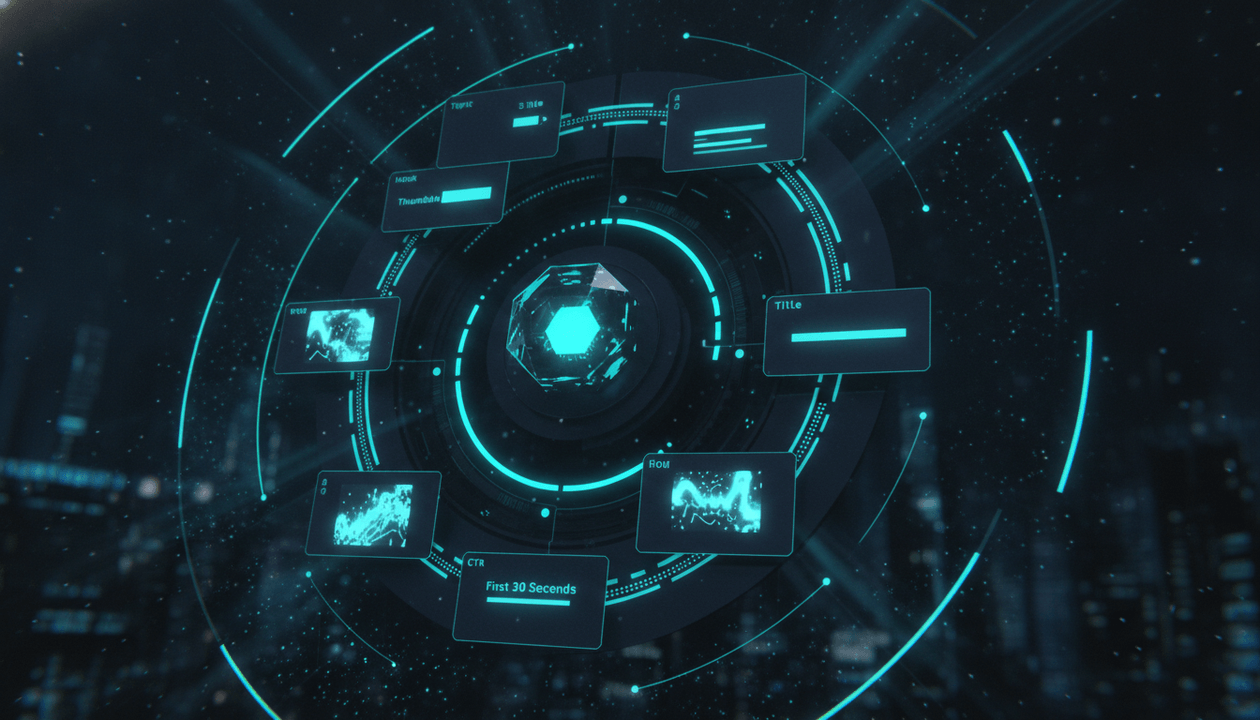
A real YouTube packaging strategy makes the title, thumbnail, hook, and first 30 seconds work together so the viewer feels one clean promise from click to payoff.
This guide breaks down how YouTube packaging actually works, why most creators get it wrong, how to build a click promise that does not collapse after the intro, and how OverseerOS Thumbnail Generator, OverseerOS competitor analysis, and OverseerOS Auto Edit help creators build videos from proven patterns instead of guessing.
Key Takeaways
- YouTube packaging is the combination of your topic, title, thumbnail, hook, and opening delivery.
- A strong thumbnail gets attention, but the title gives the click a reason.
- The first 30 seconds must continue the exact promise made by the title and thumbnail.
- High CTR with weak retention usually means the packaging overpromised or the opening failed.
- Low CTR with strong retention usually means the video is good, but the click promise is weak.
- OverseerOS helps creators reverse-engineer high-performing videos, study titles and thumbnails, generate thumbnail concepts, and turn proven patterns into repeatable workflows.
- Great packaging is not clickbait. Great packaging makes the real value of the video obvious before the viewer clicks.
What Is YouTube Packaging Strategy?
YouTube packaging strategy is the system behind how a video is presented before and immediately after the click.
It includes:
- Topic
- Title
- Thumbnail
- Opening hook
- First 30 seconds
- Viewer promise
- Curiosity gap
- Emotional reason to watch
- Search or browse positioning
- Match between the click and the content
A video is not packaged well just because the thumbnail looks good.
A video is packaged well when the viewer sees the title and thumbnail, understands the promise, clicks, and immediately feels:
“Yes. This is the video I expected.”
That is the part most creators miss.
They optimize for the click but forget the confirmation after the click.
The first 30 seconds must prove that the packaging was honest.
Why Packaging Matters Before the Algorithm Cares
Creators often say:
“The algorithm didn’t push my video.”
Sometimes that is true.
But often, the video failed before the algorithm had enough reason to expand it.
YouTube first needs viewer signals.
The basic packaging loop looks like this:
- YouTube shows the video to potential viewers.
- Viewers see the title and thumbnail.
- Some click.
- YouTube measures whether they keep watching.
- If the click and watch behavior are strong, YouTube has more reason to test the video with more people.
This is why packaging cannot be separated from retention.
A title and thumbnail may earn the click, but the intro has to defend the click.
If viewers leave immediately, the packaging created the wrong expectation.
The 5 Parts of a YouTube Packaging System
A real packaging system has five connected parts.
| Packaging Part | Main Job | Failure Mode |
|---|---|---|
| Topic | Gives the video market demand | Nobody cares enough to click |
| Title | Creates the reason to click | Too vague, too long, or too generic |
| Thumbnail | Creates instant visual curiosity | Too cluttered or disconnected from the title |
| Hook | Confirms the promise after the click | Starts too slow or talks around the topic |
| First 30 seconds | Proves the video is worth staying for | Fails to escalate or deliver direction |
Most creators only optimize the title and thumbnail.
That is not enough.
If the topic is weak, packaging cannot save it.
If the hook is weak, packaging creates disappointment.
If the thumbnail creates one promise and the title creates another, the viewer gets confused.
If the first 30 seconds do not continue the curiosity, the click turns into a drop.
The Big Packaging Mistake: Selling a Different Video Than You Deliver
This is the most common YouTube packaging mistake.
The title and thumbnail sell one video.
The actual video delivers another.
Example:
Title:
I Found the AI Tool That Replaced My Editor
Thumbnail:
“NO MORE EDITOR”
Opening:
“In today’s video, I’ll explain the rise of AI tools and why they are changing the content landscape.”
That opening breaks the promise.
The viewer clicked because they expected a direct story about a specific tool replacing an editor.
Instead, they got a generic intro.
Better opening:
“Last month, I gave one AI tool the same raw script I usually send to my editor. The result was not perfect, but it changed how I think about faceless YouTube production.”
Now the video matches the click.
The viewer feels rewarded.
Title, Thumbnail, and Hook Must Create One Question
Good packaging creates one dominant question in the viewer’s mind.
Not five questions.
One.
Example:
Title:
Why Most AI YouTube Videos Look Fake
Thumbnail:
“Looks Fake?”
Hook:
“Most AI videos do not fail because the images are bad. They fail because every scene looks like it came from a different universe.”
The question is clear:
Why do AI videos look fake, and how do I avoid it?
Everything aligns.
Weak version:
Title:
How to Make Better AI Videos
Thumbnail:
“AI Tools”
Hook:
“AI is changing the future of content creation.”
That is too broad.
No pressure.
No specific question.
No clear promise.
The Packaging Promise Framework
Every video should have one packaging promise.
Use this formula:
This video helps [specific viewer] understand or achieve [specific outcome] by revealing [specific tension, mistake, system, proof, or transformation].
Examples:
This video helps faceless YouTube creators understand why their AI videos look random by revealing the missing scene direction system behind professional-looking videos.
This video helps small creators improve clicks by showing how title, thumbnail, and first 30 seconds work together instead of being treated separately.
This video helps AI channel owners find better topics by showing how to reverse-engineer breakout videos before writing a script.
Once you define the promise, every packaging element gets easier.
The title sells the promise.
The thumbnail visualizes the promise.
The hook confirms the promise.
The first 30 seconds escalates the promise.
The video delivers the promise.
The 4 Types of YouTube Packaging
Most videos fit into one of four packaging types.
1. Search Packaging
Search packaging is for viewers actively looking for an answer.
Examples:
- How to make YouTube thumbnails
- Best AI video generator for faceless YouTube
- How to find viral video ideas
- YouTube title formulas
- How to clone a YouTube channel strategy
Search packaging should be clear.
Title example:
How to Find Viral YouTube Ideas Before You Write the Script
Thumbnail text:
“FIND WINNERS”
Hook:
“If you choose the wrong topic, the script does not matter. Here is how to find topics that already have proof of demand.”
Search packaging should not be too mysterious because the viewer already has a need.
2. Browse Packaging
Browse packaging is for viewers not actively searching.
They are scrolling.
Your video interrupts them.
Examples:
- I Changed One Thumbnail and the Video Came Back
- This AI Channel Was Built Backwards
- Why Your Videos Feel Expensive but Still Fail
- The YouTube Strategy Nobody Sees
- I Studied 100 Viral Thumbnails
Browse packaging needs more curiosity and emotion.
Title example:
This Thumbnail Was Quietly Killing the Video
Thumbnail text:
“0.7% CTR”
Hook:
“The video was good. The edit was clean. The topic was strong. But one visual mistake stopped people from clicking.”
3. Authority Packaging
Authority packaging works when the viewer wants expert insight.
Examples:
- The YouTube Packaging System Top Creators Use
- How Professional Creators Think About Thumbnails
- What 1M+ View Videos Have in Common
- The Content Research Stack Serious Creators Use
Authority packaging needs specificity.
Title example:
The YouTube Packaging System Serious Creators Use Before Uploading
Thumbnail text:
“BEFORE UPLOAD”
Hook:
“Most creators package videos after production. Serious creators package the video before the script is written.”
4. Transformation Packaging
Transformation packaging sells change.
Examples:
- From 2% CTR to a Clickable Thumbnail System
- I Rebuilt My YouTube Workflow
- How One Title Changed the Entire Video
- The Script Was Good. The Packaging Was Broken.
Transformation packaging works when you can show a before and after.
Title example:
I Fixed the Packaging Before Touching the Edit
Thumbnail text:
“IT WAS THIS”
Hook:
“The video did not need more editing. It needed a better promise.”
How to Build a Strong YouTube Title
A YouTube title has one job:
Make the right viewer want the answer.
Not everyone.
The right viewer.
A strong title usually has at least one of these:
- A clear outcome
- A specific pain
- A surprising contradiction
- A curiosity gap
- A strong object
- A result
- A mistake
- A comparison
- A system
- A transformation
Weak title:
YouTube Packaging Tips
Better:
Why Your Thumbnail Gets Clicks but the Video Still Dies
Weak title:
AI Video Generation Guide
Better:
Why Most AI YouTube Videos Look Fake
Weak title:
How to Grow on YouTube
Better:
The YouTube Strategy That Starts Before the Script
Weak title:
Thumbnail Design Tutorial
Better:
This Thumbnail Mistake Kills Good Videos
The title should make the viewer feel a specific tension.
The 5 Strongest Title Angles
Use these when packaging your next video.
| Angle | Formula | Example |
|---|---|---|
| Mistake | The [thing] that kills [desired outcome] | The Thumbnail Mistake That Kills Good Videos |
| Contradiction | Why [common belief] is wrong | Why Better Editing Won’t Save a Weak Idea |
| System | The [system] behind [result] | The YouTube Packaging System Behind Viral Videos |
| Proof | I studied/tested/fixed [specific thing] | I Studied 100 Viral Thumbnails |
| Transformation | From [bad state] to [better state] | From Random AI Scenes to a Finished Video |
These work because they give the viewer a reason to care.
How to Build a Strong YouTube Thumbnail
A thumbnail has one job:
Make the promise visible before the viewer reads everything.
That means it should usually have:
- One focal point
- One emotional idea
- Strong contrast
- Simple composition
- Readable text if text is used
- A visual that adds something the title does not say
- A clear relationship to the video
Weak thumbnail:
A generic laptop with the words “YouTube Growth Tips.”
Better thumbnail:
A video analytics chart dropping hard, with a red circle around the thumbnail section and text: “NOT THE EDIT.”
The second one creates a question:
What was wrong if it was not the edit?
That is stronger packaging.
Title and Thumbnail Should Not Repeat Each Other
This is a big one.
Most creators waste packaging space because the title and thumbnail say the same thing.
Bad:
Title:
How to Improve Your YouTube Thumbnail
Thumbnail text:
Better Thumbnail
Better:
Title:
How I Fixed a Video That Was Getting No Clicks
Thumbnail text:
0.9% CTR
Now the viewer thinks:
What did they change?
The thumbnail creates the tension.
The title provides the situation.
Together, they sell the click.
Use this table.
| Title | Weak Thumbnail Text | Strong Thumbnail Text |
|---|---|---|
| Why Most AI Videos Look Fake | AI Videos | Looks Fake? |
| The YouTube Packaging System | Packaging Tips | Before Upload |
| I Rebuilt My Content Workflow | New Workflow | 5 Tools Gone |
| This Thumbnail Killed the Video | Bad Thumbnail | 0.7% CTR |
| How to Find Viral Topics | Viral Ideas | Before They Blow Up |
The thumbnail should make the title stronger, not repeat it.
The First 30 Seconds Must Confirm the Click
The viewer clicked because your packaging created an expectation.
Your opening must confirm that expectation fast.
A strong first 30 seconds usually does three things:
- Restates the problem in a sharper way.
- Shows the viewer they are in the right place.
- Creates a reason to keep watching.
Example:
Title:
Why Most AI YouTube Videos Look Fake
Thumbnail:
“Looks Fake?”
Weak opening:
“AI video tools are becoming more popular every year.”
Strong opening:
“Most AI videos do not look fake because the visuals are low quality. They look fake because the scenes do not belong to the same video.”
The strong opening immediately pays off the click.
It makes the viewer feel understood.
The Packaging Chain
Use this chain before publishing.
Topic → Promise → Title → Thumbnail → Hook → First 30 Seconds → Delivery
If one part breaks, the whole video suffers.
Topic
Is the idea worth clicking?
Promise
What does the viewer get?
Title
Why should they click now?
Thumbnail
Can they understand the tension instantly?
Hook
Does the opening confirm the promise?
First 30 Seconds
Does the video build momentum fast?
Delivery
Does the rest of the video pay off what was promised?
Packaging is not finished until the delivery matches the promise.
How to Diagnose Packaging Problems With Analytics
You do not need to guess blindly.
Use your analytics as a signal.
High CTR, Low Retention
Meaning:
People clicked, but the video did not satisfy the promise.
Possible problems:
- The hook was too slow.
- The title overpromised.
- The thumbnail implied something the video did not deliver.
- The intro talked around the topic.
- The video started with background instead of payoff direction.
Fix:
- Rewrite the first 30 seconds.
- Make the opening match the click promise.
- Remove generic intro lines.
- Check if the thumbnail/title are too dramatic for the actual video.
Low CTR, High Retention
Meaning:
The video may be good, but not enough people wanted to click.
Possible problems:
- The title is too vague.
- The thumbnail is too generic.
- The topic is not framed with enough tension.
- The promise is unclear.
- The video looks like something the viewer has seen before.
Fix:
- Repackage the title and thumbnail.
- Add specificity.
- Use contrast.
- Make the outcome clearer.
- Study stronger competing thumbnails.
Low CTR, Low Retention
Meaning:
Both the packaging and video likely need work.
Possible problems:
- Weak topic.
- Weak promise.
- Weak opening.
- Generic packaging.
- No clear viewer pain.
Fix:
- Rebuild the topic angle first.
- Do not only change the thumbnail.
- Rewrite the promise.
- Study videos that already worked in the niche.
High CTR, High Retention
Meaning:
You found a strong packaging-content match.
Do not just celebrate.
Extract the pattern.
Ask:
- What title structure worked?
- What thumbnail emotion worked?
- What topic angle worked?
- What hook confirmed the click?
- What did the first 30 seconds do well?
- Can this become a repeatable format?
That is how channels scale.
How OverseerOS Helps Build Better YouTube Packaging
The fastest way to improve packaging is not to guess harder.
It is to study what already works.
OverseerOS is built around that idea.
With OverseerOS, creators can reverse-engineer high-performing videos, study competitor channels, analyze title and thumbnail patterns, find proven topic angles, and turn those patterns into content workflows.
For packaging specifically, creators can use:
- OverseerOS competitor analysis to study videos already winning in a niche
- OverseerOS Viral Channel Finder to find channels with breakout momentum
- OverseerOS Smart Content Planner to organize promising ideas
- OverseerOS Thumbnail Generator to create thumbnails from scratch, clone thumbnail styles from YouTube URLs, clone styles from analyzed channels, and use 1M+ view thumbnail styles
- OverseerOS Auto Edit to make sure the video itself continues the promise with matching scenes, captions, style direction, and export-ready production
That is the real advantage.
Packaging should not be created after the video.
Packaging should guide the video.
If the title and thumbnail promise a dark cinematic breakdown, the script, voiceover, scenes, captions, and pacing should support that promise.
That is why packaging connects naturally to production.
The Packaging Research Workflow
Use this workflow before writing your next script.
Step 1: Find 10 Winning Videos in Your Niche
Look for videos that overperformed relative to the channel.
Do not only look at big channels.
A video with 300,000 views on a 20,000-subscriber channel is often more useful than a video with 1 million views on a massive channel.
You want breakout patterns.
Step 2: Study the Title Patterns
Ask:
- Is the title searchable or curiosity-driven?
- Does it use a mistake, system, transformation, or comparison?
- Is the promise specific?
- What words create tension?
- What is the viewer pain?
Example:
“Why Your Videos Get Clicks But Still Die”
Pattern:
Contradiction between click and retention.
Step 3: Study the Thumbnail Patterns
Ask:
- What is the focal point?
- Is there text?
- What emotion is shown?
- What contrast is used?
- What colors repeat?
- Is the thumbnail simple or dense?
- Does it add something the title does not say?
Step 4: Study the Hook
Click into the video and watch the first 30 seconds.
Ask:
- Does the hook match the packaging?
- How fast does it confirm the promise?
- Does it restate the tension?
- Does it show proof?
- Does it delay too much?
- Does it introduce a story?
Step 5: Build Your Own Version
Do not copy.
Model the pattern.
Example pattern:
“Most people think X is the problem, but the real problem is Y.”
Original video idea:
Why Better Editing Won’t Save a Weak YouTube Idea
Packaging:
Title:
Better Editing Won’t Save This
Thumbnail:
“NOT THE EDIT”
Hook:
“If your topic is weak, no amount of editing can force people to care.”
This is how you build from proven logic while keeping the idea original.
The Packaging Scorecard
Before publishing, score your video.
| Category | Question | Score |
|---|---|---|
| Topic demand | Does the target viewer care about this problem now? | /5 |
| Promise clarity | Can the viewer understand what they get? | /5 |
| Title strength | Does the title create a reason to click? | /5 |
| Thumbnail clarity | Is there one clear focal point? | /5 |
| Thumbnail-title fit | Do they work together instead of repeating? | /5 |
| Hook match | Does the intro confirm the click fast? | /5 |
| First 30 seconds | Does the video build momentum immediately? | /5 |
| Accuracy | Does the video deliver what the packaging promises? | /5 |
| Niche fit | Does the style match audience expectations? | /5 |
| Pattern strength | Is this based on a proven format or just a guess? | /5 |
Score guide:
- 45-50: Strong packaging
- 38-44: Publishable but needs testing
- 30-37: Rework before upload
- Under 30: The idea or promise is probably not ready
Examples of Better YouTube Packaging
Example 1: AI Video Topic
Weak packaging:
Title:
AI Video Generator Tutorial
Thumbnail:
“AI VIDEO”
Hook:
“AI video tools have become popular recently.”
Better packaging:
Title:
Why Most AI YouTube Videos Look Fake
Thumbnail:
“LOOKS FAKE?”
Hook:
“Most AI videos do not fail because the visuals are low quality. They fail because the scenes do not feel like they belong together.”
Why it works:
- Specific pain
- Strong viewer recognition
- Clear curiosity gap
- Hook confirms the title instantly
Example 2: Thumbnail Topic
Weak packaging:
Title:
How to Make Better Thumbnails
Thumbnail:
“THUMBNAIL TIPS”
Hook:
“Today I’ll share tips to improve your thumbnails.”
Better packaging:
Title:
This Thumbnail Mistake Kills Good Videos
Thumbnail:
“0.7% CTR”
Hook:
“The video was not bad. The topic was not bad. The edit was not bad. The thumbnail made people ignore it.”
Why it works:
- Strong consequence
- Clear pain
- Specific metric
- Immediate tension
Example 3: Faceless Channel Topic
Weak packaging:
Title:
How to Start a Faceless YouTube Channel
Thumbnail:
“FACELESS YouTube”
Hook:
“Faceless YouTube channels are a great way to make content without showing your face.”
Better packaging:
Title:
Most Faceless Channels Fail Before the First Video
Thumbnail:
“WRONG NICHE”
Hook:
“Most faceless channels do not fail because the creator lacks motivation. They fail because the niche was chosen before there was proof of demand.”
Why it works:
- Challenges a common belief
- Gives a sharper reason to watch
- Makes the viewer question their current plan
The Best Packaging Angles by Creator Type
| Creator Type | Best Packaging Angle | Example |
|---|---|---|
| Faceless creator | Mistake, system, proof | Why Most Faceless Channels Fail Early |
| AI creator | Contradiction, tool test, future shift | The AI Workflow That Replaced My Editor |
| Finance creator | Risk, regret, transformation | Why You Still Feel Broke |
| Psychology creator | Hidden behavior, social tension | The Silent Habit That Makes People Lose Respect |
| Education creator | Simplification, breakthrough | This Finally Made Dopamine Make Sense |
| Business creator | System, leverage, case study | The One-Person Media Company System |
| Commentary creator | Conflict, reveal, opinion | The Real Reason This Channel Collapsed |
Different audiences click for different reasons.
Do not use one packaging style for every niche.
Why Packaging Should Happen Before the Script
Most creators write the script first and package later.
That creates a problem.
The script may not deliver what the title and thumbnail need.
Better workflow:
- Choose the topic.
- Define the packaging promise.
- Draft the title and thumbnail idea.
- Write the hook.
- Write the script to deliver the promise.
- Create scenes that support the promise.
- Finalize the title and thumbnail.
- Upload and measure.
This is why serious creators package early.
The packaging tells the script what job it has to do.
The “Click Promise” Template
Use this for every video.
Target viewer:
[Who is this for?]

Current pain or desire:
[What do they care about?]

Video promise:
[What will they understand, avoid, achieve, or decide?]

Title angle:
[Mistake / system / contradiction / proof / transformation / comparison]

Thumbnail visual:
[What should they see in one second?]

Thumbnail text:
[1 to 4 words max if needed]

Opening line:
[First sentence after the click]

First 30 seconds:
[How will you prove the video is worth watching?]

Main payoff:
[What must the video deliver by the end?]

Accuracy check:
[Does the video actually deliver what the title and thumbnail imply?]
Example:
Target viewer:
Faceless YouTube creator using AI tools.

Current pain:
Their videos look random even when the AI images are high quality.

Video promise:
Show why AI videos look fake and how to fix scene consistency.

Title angle:
Contradiction.

Title:
Why Most AI YouTube Videos Look Fake

Thumbnail visual:
Two timelines side by side: one messy AI scene pile, one clean structured scene board.

Thumbnail text:
Looks Fake?

Opening line:
Most AI videos do not look fake because the visuals are bad. They look fake because every scene belongs to a different video.

Main payoff:
A scene-by-scene framework for making AI visuals match the script.
That is packaging.
Not decoration.
Common YouTube Packaging Mistakes
Mistake 1: Starting With a Generic Topic
Generic topics create generic packaging.
Bad:
YouTube growth tips
Better:
Why your video gets clicks but still dies
The second has tension.
Mistake 2: Making the Thumbnail Too Busy
If the viewer has to study the thumbnail, it failed.
One focal point.
One emotion.
One visual idea.
Mistake 3: Writing a Title That Explains Too Much
A title should create interest, not summarize the whole video.
Bad:
How to improve your YouTube click-through rate by using better thumbnail and title strategies
Better:
Your Thumbnail Isn’t the Problem
Mistake 4: Using Clickbait That the Video Cannot Deliver
Clickbait may earn clicks, but it destroys trust and retention when the video fails to deliver.
The packaging should sharpen the truth, not fake the truth.
Mistake 5: Ignoring the First 30 Seconds
A strong thumbnail can get the click.
A weak opening can lose it instantly.
The intro has to continue the same promise.
Mistake 6: Copying Competitors Instead of Extracting Patterns
Do not copy a competitor’s thumbnail.
Ask why it works.
Then build your own version.
How to Test and Improve Packaging After Publishing
YouTube gives creators packaging data through metrics like impressions, impressions click-through rate, views, average view duration, and watch time. YouTube’s own help docs recommend reviewing CTR in context, including where the video was shown and how it performed in the first 24 hours on surfaces like Home, Suggested, and Subscriptions.
Use this process:
After 24 Hours
Check:
- CTR by traffic source
- Average view duration
- First 30-second retention
- Impressions
- Traffic source mix
- Whether the video reached subscribers or new viewers
Do not judge one number alone.
A high CTR on subscribers may not mean the thumbnail works for new viewers.
A lower CTR on a wider browse push may still be fine if watch time is strong.
After 3 to 7 Days
Ask:
- Did the video get tested beyond subscribers?
- Did Browse or Suggested pick it up?
- Did viewers leave after the hook?
- Did the title attract the wrong audience?
- Does the thumbnail look weak beside competitors?
When to Change Packaging
Change the title or thumbnail if:
- Retention is strong but CTR is weak.
- The topic is strong but impressions are not converting.
- The thumbnail looks too similar to competitors.
- The title is vague.
- Viewers who click actually stay.
Do not change packaging blindly if retention is also weak.
In that case, the video itself may not deliver.
Final Verdict
YouTube packaging strategy is not about making videos look more clickable.
It is about making the right promise to the right viewer, then delivering that promise immediately.
The title creates the reason to click.
The thumbnail makes the promise visible.
The hook confirms the viewer is in the right place.
The first 30 seconds proves the video will be worth watching.
The content delivers the payoff.
When those pieces work together, the video feels clear before and after the click.
That is what most creators miss.
They optimize thumbnails in isolation.
They write titles after the edit.
They open with generic context.
Then they wonder why the video gets ignored or dies after the click.
The better workflow is simple:
Reverse-engineer proven videos.
Extract the packaging pattern.
Build your title, thumbnail, hook, and opening together.
Then create the video to deliver that promise.
That is exactly where OverseerOS fits.
If you want to study high-performing videos, generate stronger thumbnail concepts, reverse-engineer competitor packaging, and turn proven patterns into repeatable creator workflows, start with OverseerOS.
Do not package videos after they are finished.
Package the promise before the video is built.
FAQ
What is YouTube packaging strategy?
YouTube packaging strategy is the process of creating a strong topic, title, thumbnail, hook, and opening that work together to make the right viewer click and keep watching.
Is YouTube packaging just the title and thumbnail?
No. Title and thumbnail are the visible parts before the click, but the hook and first 30 seconds are part of packaging too because they confirm whether the click promise was accurate.
What makes a good YouTube title?
A good YouTube title creates a clear reason to click. It can use a mistake, transformation, contradiction, system, proof, or comparison, but it must accurately represent the video.
What makes a good YouTube thumbnail?
A good YouTube thumbnail has one clear focal point, strong contrast, readable text if text is used, a clear emotional trigger, and a visual idea that works with the title.
Should the title and thumbnail say the same thing?
No. The title and thumbnail should work together. The title should explain the promise, while the thumbnail should make the tension or result visible.
Why do videos get high CTR but low retention?
High CTR with low retention usually means the packaging earned the click, but the video did not satisfy the promise. The intro may be too slow, the title may overpromise, or the thumbnail may create the wrong expectation.
Why do videos get low CTR but high retention?
Low CTR with high retention usually means the video may be good, but the packaging is not creating enough interest. The title may be vague, the thumbnail may be weak, or the topic may not be framed with enough tension.
How can OverseerOS help with YouTube packaging?
OverseerOS helps creators reverse-engineer high-performing videos, study title and thumbnail patterns, analyze competitors, generate thumbnail concepts, and turn proven video patterns into repeatable workflows.
Should creators package videos before writing the script?
Yes. The strongest workflow is to define the title, thumbnail idea, hook, and click promise before writing the full script. That way, the video is built to deliver the promise instead of trying to package a weak idea after production.
Is strong YouTube packaging clickbait?
Not if it is accurate. Strong packaging makes the real value of the video clear and compelling. Clickbait misleads the viewer or promises something the video does not deliver.