Most creators do not have a hook problem.
They have a hook system problem.
They write every intro from scratch, borrow a line that sounded good on another channel, or ask AI for 20 generic openers that sound “engaging” but have no connection to the title, thumbnail, audience, or format. Then they wonder why viewers leave in the first 30 seconds.
A real YouTube hook library fixes that.
It gives you a repeatable way to collect proven opening patterns, understand why they worked, and adapt them into your own videos without copying someone else’s script. The goal is not to build a folder of clever lines. The goal is to build a working decision system for stronger intros, better retention, and faster scripting.
Key takeaways
- A YouTube hook library should store patterns, not just quotes.
- The best hooks only work when they match the title, thumbnail, and actual payoff of the video.
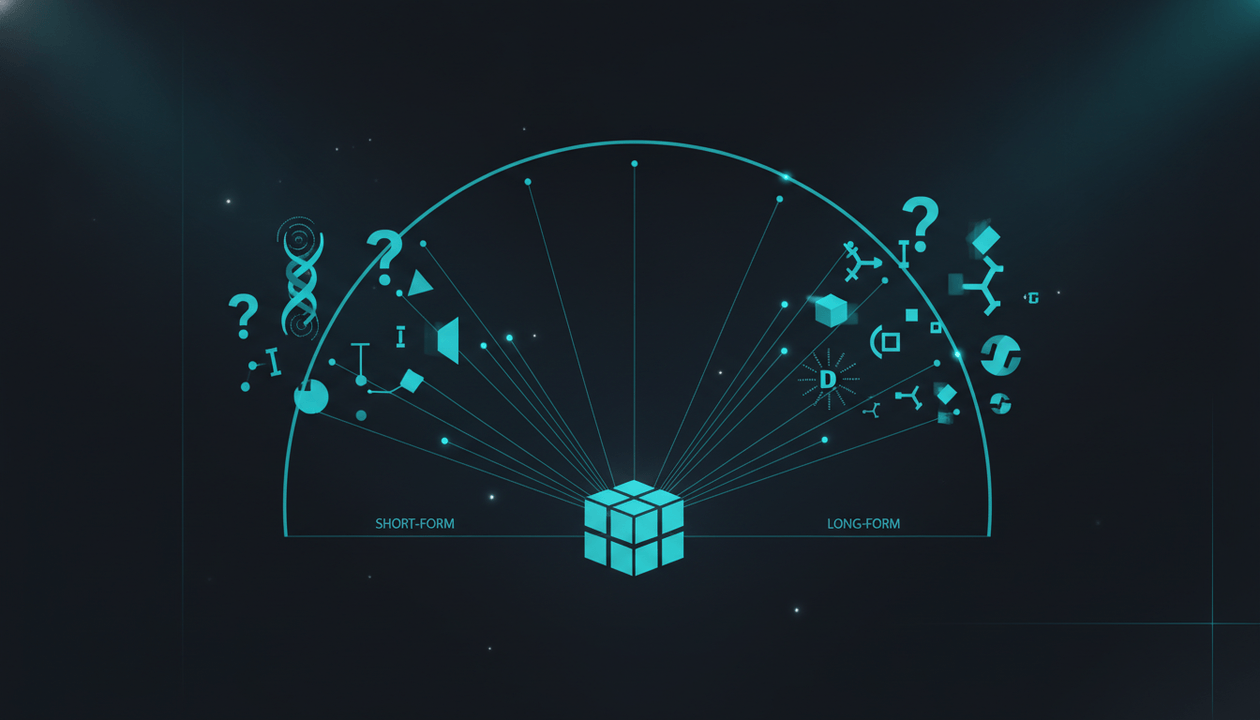
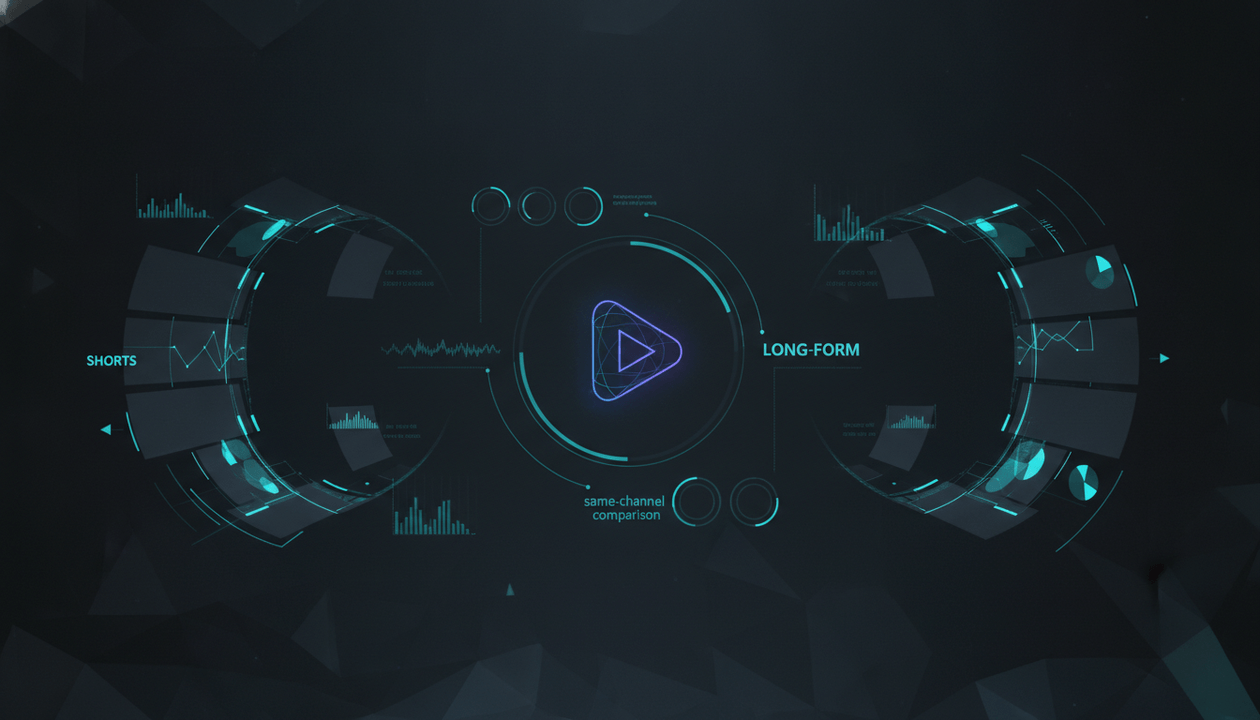
- Long-form and Shorts need different hook timing, pacing, and visual density.
- Most creators save too many examples and too little context, which makes the library useless in practice.
- A strong hook library should track hook type, promise, tension device, visual opening, and adaptation notes.
- The smartest creators do not start from a blank page. They start from patterns that already worked.
- A hook library becomes far more useful when it connects to competitor research, channel analysis, and script planning.
What a YouTube hook library actually is
A YouTube hook library is a structured collection of proven opening patterns from videos that already held attention.
That sounds obvious, but most “hook libraries” are just one of these:
- a messy Notes app list
- screenshots with no explanation
- copied intros with no tags
- AI-generated lines with no evidence behind them
- generic swipe files that ignore niche, format, and audience
A real hook library should help you answer five questions fast:
- What kind of opening works in my niche?
- What promise does this hook make?
- What tension device makes the viewer stay?
- What visual or structural support makes the opening land?
- How do I adapt this pattern into something original for my own video?
That is the difference between saving hooks and building a hook asset.
Why hooks matter more than most creators think
YouTube’s own retention reporting highlights how many viewers are still watching after the first 30 seconds, and YouTube explicitly recommends changing the opening when intros underperform (YouTube Help).
That matters because your hook is not working alone.
It is the handoff between the click and the content.
Your title and thumbnail create the promise. Your hook proves the promise was worth clicking. The rest of the video earns the watch time.
If the hook breaks that chain, the video usually loses momentum early.
Why most hook libraries fail
The top pages ranking for hook-related searches usually do one of three things well:
- give lots of hook examples
- categorize common hook types
- offer a generator or swipe-file style resource
That is useful, but it is incomplete.
Most of them miss the operational part:
- how to build a reusable hook database
- how to link the hook to title and thumbnail promise
- how to separate long-form from Shorts
- how to decide which hooks are worth keeping
- how to turn competitor openings into original scripts
- how to use a hook library inside a real production workflow
That gap is exactly why most creators have “saved hooks” but still write weak intros.
The 5-part framework for a useful YouTube hook library
1. Save the pattern, not just the line
Do not save this:
“I analyzed 100 videos and found something weird.”
Save this instead:
- Hook type: data-backed discovery
- Promise: new insight from research
- Tension device: hidden pattern
- Best for: education, strategy, commentary
- Visual support: graph, results screen, before/after evidence
- Risk: sounds weak if the proof is thin
The line matters less than the underlying mechanic.
2. Save the click context
A hook without its title and thumbnail context is half a pattern.
If the title is:
I Tested 12 Faceless YouTube Niches for 30 Days
and the opening is:
I thought one niche would dominate, but the winner was not even in my top three.
that hook works because it continues the experiment promise.
If you save the opening but not the packaging context, you lose the reason it worked.
3. Separate long-form from Shorts
Shorts hooks usually need instant compression.
Long-form hooks have more room to create tension, frame the problem, and set stakes.
A mixed library becomes noisy fast unless you tag the format clearly.
4. Save what happened after the hook
A good hook does not just grab attention.
It hands the viewer into the next beat.
Track what comes immediately after:
- proof
- story setup
- contradiction
- demonstration
- roadmap
- reveal delay
- visual escalation
This is where many copied hooks fail. The opener sounds good, but the follow-through is weak.
5. Add an adaptation note
Every saved hook should answer:
How would I make this mine?
That one note protects you from lazy imitation.
Examples:
- Change the evidence source from “I analyzed 100 videos” to “I reviewed 40 channels in this niche.”
- Change the emotional angle from shock to skepticism.
- Keep the experiment structure, but swap the subject.
- Use the same curiosity mechanism, but a different payoff.
What to store in every hook entry
Use a table like this for every hook you save:
| Field | What to capture | Why it matters |
|---|---|---|
| Source video | URL, channel, niche, format | Preserves context |
| Title promise | What the click is promising | Keeps hook-title alignment clear |
| Thumbnail angle | Curiosity, result, fear, contrast, authority | Shows the emotional setup |
| Hook type | Question, result-first, mistake, story, experiment, warning, contradiction | Makes retrieval easier |
| First line | The actual opening words | Useful reference |
| Tension device | What makes the viewer stay | The real reusable asset |
| Visual opening | Face, text, graph, action, proof, B-roll, screen demo | Helps editors and scriptwriters |
| Handoff | What happens in the next 10-20 seconds | Prevents broken intros |
| Best use case | Shorts, long-form, education, commentary, finance, faceless, etc. | Improves pattern matching |
| Adaptation note | How to make it original | Protects quality and ethics |
The hook types worth building around
A useful library does not need 300 random examples.
It needs strong categories.
Result-first hooks
Best for tutorials, tests, case studies, and business content.
Example pattern:
We changed one thing, and retention jumped hard.
Why it works: It shows payoff before explanation.
Mistake hooks
Best for educational, strategy, and coaching content.
Example pattern:
Most creators think the problem is editing. It is not.
Why it works: It creates tension through misdiagnosis.
Experiment hooks
Best for faceless channels, business, self-improvement, and commentary.
Example pattern:
I tried this for 30 days because I wanted to know if it actually worked.
Why it works: It gives the viewer a test, a goal, and an outcome to follow.
Story hooks
Best for personal brands, documentaries, and transformation content.
Example pattern:
I almost scrapped this idea entirely, and that turned out to be the reason it worked.
Why it works: It creates narrative motion.
Authority hooks
Best for education, analysis, and niche expert channels.
Example pattern:
After reviewing 50 channels in this niche, the same intro mistake kept showing up.
Why it works: It establishes proof fast.
Contradiction hooks
Best for opinion, commentary, and strategy content.
Example pattern:
The advice everyone repeats about growth is exactly what keeps small channels stuck.
Why it works: It challenges a belief the viewer already has.
The workflow that turns a hook library into better videos
Here is the simple workflow serious creators can actually use.
Step 1: Pull hooks from videos that already proved something
Start with videos that clearly earned attention.
That does not always mean the biggest channels.
It means videos where the opening, topic, and packaging seem to have worked together.
Good sources:
- direct competitors
- adjacent competitors
- breakout channels
- top videos inside your niche
- strong performers in similar audience psychology
If you already do competitor research, this becomes much easier. A strong YouTube competitor analysis workflow gives you better raw material than random inspiration hunts.
Step 2: Save only the openings with a clear mechanism
Do not save every decent intro.
Save hooks where you can clearly explain why they worked.
Bad save:
“This sounds engaging.”
Good save:
Uses a contradiction plus a delayed reveal, backed by a before/after graph in the first 8 seconds.
Step 3: Tag by promise, not just topic
A finance video and a productivity video can use the same hook pattern if they create the same kind of promise.
Useful promise tags:
- hidden mistake
- faster result
- myth busting
- proof from research
- transformation
- challenge
- warning
- curiosity reveal
- authority insight
This makes the library reusable across topics.
Step 4: Build a “best for” matrix
Use a quick score from 1 to 5 for each saved hook:
| Score area | What to ask |
|---|---|
| Clarity | Is the promise obvious fast? |
| Curiosity | Does it create a real open loop? |
| Specificity | Does it feel concrete, not generic? |
| Packaging fit | Does it match the title and thumbnail? |
| Reusability | Can I adapt the pattern across topics? |
If a hook scores low on clarity or packaging fit, do not save it.
Step 5: Turn the hook library into script inputs
Your library should not be a dead archive.
When you script a new video, pull 3 to 5 relevant hook patterns and ask:
- Which one best matches this title promise?
- Which one fits the viewer’s emotional state?
- Which one my editor can support visually?
- Which one feels native to this channel voice?
- Which one avoids sounding like every other creator in the niche?
Step 6: Test the intro against retention, not vibes
If your own videos are live, use YouTube’s retention reporting to see whether the opening actually held attention (YouTube Help).
What to look for:
- steep drop in first 30 seconds
- flat or above-typical intro performance
- mismatch between packaging promise and opening
- spike after a reveal that came too late
The point of a hook library is not “write cooler intros.”
The point is to compound what the data keeps rewarding.
The faster way to apply this inside OverseerOS
A hook library becomes much more valuable when it is connected to the rest of your workflow.
That is where OverseerOS features for YouTube research and scripting fit naturally.
OverseerOS is designed for creators who do not want to guess their way into a better intro. Instead of collecting random openers, you can start with public patterns that already worked:
- reverse-engineer channels with the Channel Blueprint Cloner
- study hooks from high-performing videos through the Hook Library workflow
- connect those patterns to title, thumbnail, and script planning
- move from research into scripting instead of losing context between tools
That matters because a hook should not be written in isolation.
The strongest hook usually comes from a stronger chain:
proven topic -> clear title promise -> clickable thumbnail angle -> matching hook -> stronger script flow
Or more simply:
The smartest creators do not start from a blank page. They start from patterns that already worked.
If you want the hook library to become a usable production system instead of a swipe-file graveyard, it helps to reverse-engineer high-performing YouTube videos with OverseerOS.
Copyable YouTube hook library template
Use this template every time you save a hook:
| Field | Fill this in |
|---|---|
| Source video URL | |
| Channel | |
| Niche | |
| Format | Long-form / Shorts |
| Title promise | |
| Thumbnail angle | |
| Hook type | |
| First line | |
| Tension device | |
| Visual opening | |
| Handoff after hook | |
| Why it worked | |
| Best use case | |
| Adaptation note | |
| Score out of 25 |
Quick example
| Field | Fill this in |
|---|---|
| Source video URL | competitor video URL |
| Channel | faceless business channel |
| Niche | online business |
| Format | long-form |
| Title promise | hidden reason creators stay stuck |
| Thumbnail angle | mistake + frustration |
| Hook type | contradiction |
| First line | “The advice everyone repeats is exactly what keeps small channels small.” |
| Tension device | conflict with accepted belief |
| Visual opening | red X over common advice, fast zoom, on-screen text |
| Handoff after hook | quick proof, then 3-part breakdown |
| Why it worked | strong promise, fast tension, clear viewer pain |
| Best use case | strategy, commentary, educational |
| Adaptation note | swap “small channels” for your niche-specific pain point |
| Score out of 25 | 22 |
Common mistakes that ruin hook libraries
Saving full scripts instead of patterns
If you save full intros with no analysis, you will default to imitation.
Ignoring the title and thumbnail
A hook that sounds strong on paper can still fail if it does not continue the click promise.
Mixing Shorts and long-form with no tags
This creates a noisy library that feels big but is hard to use.
Saving too much weak material
A smaller library of sharp patterns beats a giant folder of average examples.
Copying emotional surface without the real mechanism
The goal is not to sound dramatic. The goal is to understand the tension device behind the drama.
Never reviewing your own retention
If your library never gets updated from your own results, it stays theoretical.
Final verdict
A YouTube hook library is not valuable because it gives you more lines.
It is valuable because it helps you stop improvising the most important handoff in the video.
The best creators build libraries of proven patterns, not just clever wording. They track what the title promised, what the thumbnail implied, what the first line delivered, and what kind of tension kept viewers watching. Then they turn those patterns into original videos that feel sharper, faster, and more intentional.
If your intros still feel random, the fix is not another generic hook generator.
The fix is a better evidence base.
Build the library. Tag it properly. Connect it to packaging and script flow. Then use a workflow that helps you study what already works before you write the next opening.
FAQ
What is a YouTube hook library?
A YouTube hook library is a structured collection of proven intro patterns, usually saved with context such as title promise, thumbnail angle, hook type, tension device, and adaptation notes. The point is to reuse the mechanism, not copy the wording.
How many hooks should be in a good library?
Start small. Twenty to fifty high-quality entries with strong tags are more useful than a few hundred random examples.
Should I save full competitor intros?
You can save them for reference, but the working asset should be the analyzed pattern: why it worked, what it promised, how it handed off, and how to adapt it into something original.
Are Shorts and long-form hooks the same?
No. Shorts usually need much faster compression and visual interruption. Long-form hooks have slightly more room to create stakes, context, and payoff tension.
Can AI help build a hook library?
Yes, but only if it is grounded in proven examples. Generic AI hook lists are usually weak because they start from blank prompts instead of evidence. The better workflow is to study what already worked, extract the pattern, then use AI to adapt it.