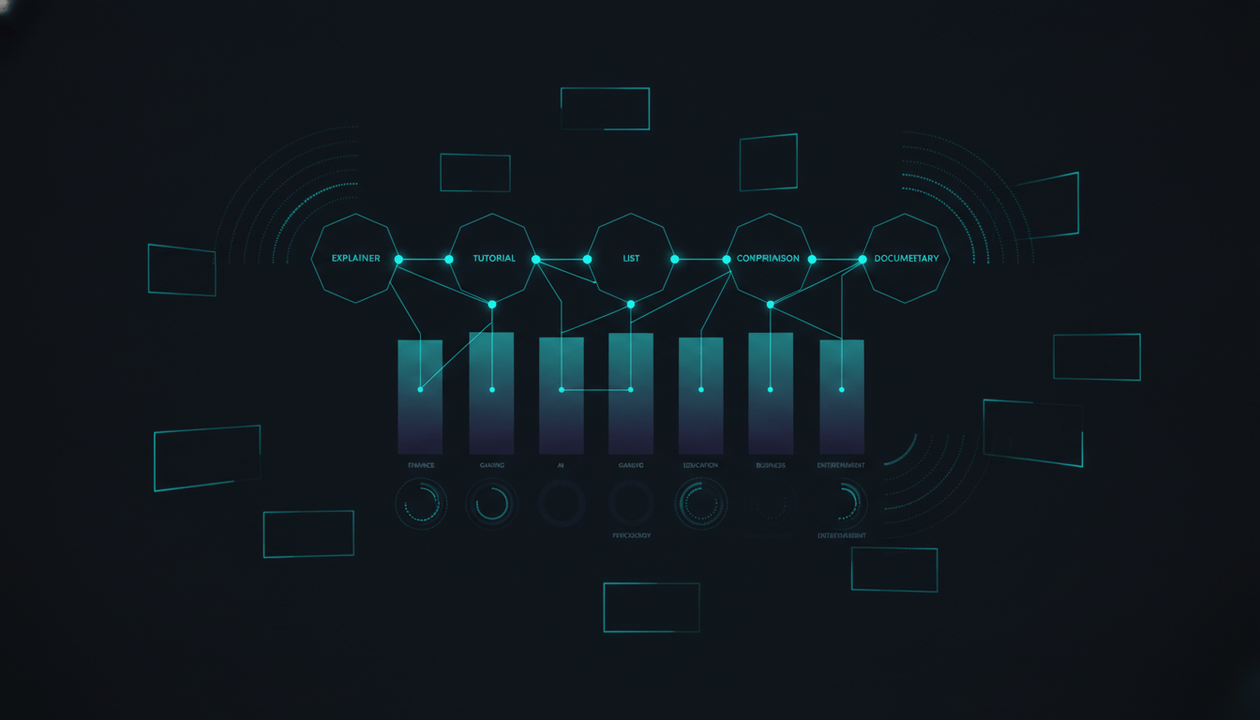
Most creators think YouTube channel positioning means picking a niche.
That is only the surface.
A niche tells people what your channel is about.
Positioning tells people why your channel should exist.
That difference matters.
Two channels can both cover AI tools. One feels generic. The other becomes the channel for solo creators who want to save 10 hours a week with practical AI workflows. Two channels can both cover finance. One feels like another money channel. The other becomes the channel that explains wealth-building for people who hate complicated investing advice.
Same niche.
Different positioning.
That is why some channels become memorable and others disappear into the feed.
YouTube channel positioning is the strategic promise behind your channel. It defines who you serve, what problem you solve, what transformation you offer, how your content feels, and why a viewer should choose you instead of every other creator in the niche.
If viewers cannot understand your channel quickly, they will not remember it.
If they cannot remember it, they will not return.
If they do not return, every upload starts from zero.
This guide shows you how to position a YouTube channel, build a clear channel promise, avoid generic niche positioning, study competitors without copying, and turn your positioning into video topics, titles, thumbnails, hooks, and content lanes.
Key Takeaways
- YouTube channel positioning is the clear strategic promise that tells viewers who your channel is for, what problem it solves, and why it is different.
- A niche is not positioning. “AI,” “fitness,” “finance,” and “YouTube growth” are categories, not reasons to watch.
- Strong positioning makes the channel easier to understand, easier to remember, and easier to recommend.
- Weak positioning makes every video feel disconnected, even if the videos are good.
- Channel positioning should influence your name, description, homepage, content lanes, video formats, title style, thumbnail style, tone, hook patterns, and audience promise.
- The best positioning is specific enough to attract the right viewer and flexible enough to support many videos.
- You do not need to invent positioning from nothing. You can study successful channels, find their audience promise, decode their repeatable patterns, and build an original position from proven strategy signals.
- OverseerOS helps creators reverse-engineer winning channels into blueprints so they can understand tone DNA, hook patterns, pacing, viral topic formulas, content structure, keywords, and untapped opportunities before building their own channel strategy.
What Is YouTube Channel Positioning?
YouTube channel positioning is the place your channel occupies in the viewer’s mind.
It answers:
Who is this channel for?
What problem does it solve?
What transformation does it promise?
Why should I watch this creator instead of someone else?
What kind of videos should I expect here?
What does this channel believe that makes it different?
A weak channel says:
I make videos about YouTube growth.
A positioned channel says:
I help small creators stop guessing and build YouTube channels from proven competitor signals.
A weak channel says:
I make videos about AI tools.
A positioned channel says:
I test AI tools through real creator workflows so solo creators know what actually saves time.
A weak channel says:
I make videos about fitness.
A positioned channel says:
I help busy men over 35 build strength without living in the gym.
The positioned version is stronger because it gives the viewer a reason to care.
YouTube Positioning vs Niche
A niche is the category.
Positioning is the reason to choose you inside that category.
| Niche | Weak positioning | Strong positioning |
|---|---|---|
| YouTube growth | “Tips to grow on YouTube” | “Proof-based YouTube strategy for creators who want to stop guessing” |
| AI tools | “Best AI tools” | “Real AI workflow tests for creators, freelancers, and solo founders” |
| Finance | “Personal finance advice” | “Simple wealth-building for people who hate complicated investing” |
| Fitness | “Workout tips” | “Strength training for busy people who only have 30 minutes” |
| Psychology | “Psychology facts” | “Dark psychology lessons that explain modern relationships and power” |
| History | “Historical stories” | “History lessons that reveal timeless power, ambition, and betrayal” |
| Business | “Startup advice” | “Solo founder systems for building lean internet businesses” |
The niche tells YouTube and viewers the broad topic.
Positioning tells the viewer:
This channel is for me.
That is the real win.
YouTube Positioning vs Branding
Branding is how your channel looks and sounds.
Positioning is what your channel means.
Branding includes:
- Channel name
- Logo
- banner
- colors
- thumbnail style
- tone of voice
- editing style
- music
- intro style
- channel description
- handle
Positioning includes:
- Audience
- problem
- promise
- transformation
- point of view
- content lanes
- differentiation
- trust mechanism
- reason to return
Branding makes the channel recognizable.
Positioning makes the channel meaningful.
A beautiful banner cannot fix a vague channel.
A premium logo cannot save random content.
A good thumbnail style helps, but if viewers do not understand why the channel exists, the brand does not stick.
YouTube Positioning vs Content Strategy
Content strategy is what you publish.
Positioning is why those videos belong together.
Example content strategy:
Post 2 videos per week:
- 1 competitor analysis
- 1 thumbnail teardown
Example positioning:
This channel helps small creators reverse-engineer proven YouTube patterns before making videos.
The positioning explains why competitor analysis and thumbnail teardowns belong on the same channel.
Without positioning, your content calendar becomes a random list.
With positioning, your content calendar becomes a system.
Why YouTube Channel Positioning Matters
1. Positioning makes your channel easier to understand
A viewer should understand your channel in seconds.
They should not need to watch 10 videos to figure out what you do.
If your homepage, titles, thumbnails, and video topics all point in the same direction, the viewer gets it fast.
They think:
This channel helps people like me solve this problem.
That is positioning.
2. Positioning makes your channel easier to remember
Viewers do not remember generic channels.
They remember clear ideas.
Examples:
The channel that tests AI tools in real workflows.
The channel that breaks down small YouTube channels before they blow up.
The channel that explains finance without jargon.
The channel that turns history into life lessons.
The channel that shows faceless creators what is actually working.
That memory is valuable.
If the viewer can describe your channel in one sentence, your positioning is working.
3. Positioning makes your content easier to plan
A positioned channel has filters.
When a topic appears, you can ask:
Does this fit our viewer?
Does this fit our promise?
Does this fit our content lanes?
Does this strengthen the channel identity?
Does this help us become known for something?
If the answer is no, skip it.
Positioning protects you from chasing every trend.
4. Positioning makes titles and thumbnails stronger
A generic channel writes generic titles.
A positioned channel knows the viewer’s pain.
Generic title:
YouTube Tips for Beginners
Positioned title:
Why Small Channels Should Stop Copying Big Creators
Generic thumbnail:
YouTube logo + growth arrow
Positioned thumbnail:
Small creator copying a giant channel, with the copy failing
The second version is stronger because the channel understands the viewer and the enemy.
5. Positioning helps build returning viewers
A viewer returns when they know what kind of value to expect.
If your videos jump between unrelated ideas, returning viewers hesitate.
If your channel has a clear promise, viewers know why they subscribed.
They think:
This channel keeps helping me solve the same important problem from different angles.
That is how a channel becomes part of a viewer’s routine.
The YouTube Channel Positioning Formula
Use this formula:
This channel helps [specific viewer]
achieve [desired transformation]
by [unique method or point of view]
without [main pain, confusion, or enemy].
Examples:
This channel helps small YouTube creators find video ideas with proven demand by studying competitor outliers instead of guessing.

This channel helps solo creators use AI tools in real workflows without wasting time on hype.

This channel helps busy professionals build strength with simple training systems without spending hours in the gym.

This channel helps faceless creators build profitable content systems by reverse-engineering channels already working in their niche.

This channel helps beginners understand money through simple investing lessons without jargon or fear-based advice.
If you cannot fill this in, your positioning is not clear yet.
The 7 Layers of Strong YouTube Channel Positioning
1. Audience
The first layer is who the channel is for.
Weak audience:
Anyone interested in YouTube
Strong audience:
Small creators who want to grow without guessing
Weak audience:
People who like AI
Strong audience:
Solo creators who want AI workflows that save time
The narrower the audience, the easier it is to create a strong promise.
This does not mean only a small group can watch.
It means the channel has a clear center.
2. Problem
The second layer is the problem the audience wants solved.
Examples:
I do not know what videos to make.
My videos are good but do not get clicks.
I waste time making videos nobody wants.
I do not know which AI tools are worth using.
I want to start a faceless channel but do not know which niche is real.
I cannot understand why competitors are growing faster.
A strong channel is built around a real pain.
Not just a topic.
Pain creates urgency.
3. Transformation
The third layer is the result the viewer wants.
Examples:
From random uploads to a proven content system.
From guessing ideas to validating demand.
From generic thumbnails to clear click promises.
From tool overload to a simple AI workflow.
From niche confusion to a validated channel direction.
From weak scripts to retention-focused storytelling.
A transformation makes the channel feel valuable.
The viewer is not just consuming information.
They are moving toward a better state.
4. Point of View
The fourth layer is what the channel believes.
This is where differentiation gets stronger.
Examples:
Do not guess. Reverse-engineer what already works.
Do not chase trends blindly. Validate them against your audience.
Do not copy competitors. Decode the strategy behind their success.
Do not make videos one at a time. Build repeatable content lanes.
Do not start with scripts. Start with packaging and viewer demand.
Do not judge thumbnails by design. Judge them by viewer decision clarity.
A point of view gives the channel personality.
Without a point of view, the channel becomes another advice channel.
5. Method
The fifth layer is how the channel solves the problem.
Examples:
Competitor analysis
Outlier analysis
Viral X-Ray
Topic clusters
Case studies
Frameworks
Experiments
Teardowns
Step-by-step tutorials
Real workflow tests
The method makes your promise believable.
A channel that says “I help you grow” is vague.
A channel that says “I help you grow by reverse-engineering competitor outliers and turning them into original topic systems” is much stronger.
6. Content Lanes
The sixth layer is what the channel repeatedly publishes.
Example channel positioning:
Proof-based YouTube strategy for small creators
Content lanes:
- Competitor breakdowns
- Outlier video analysis
- Thumbnail teardowns
- Topic validation workflows
- Script and hook improvements
- Channel audit case studies
The lanes support the positioning.
They are not random.
They all point back to the same promise.
7. Tone
The seventh layer is how the channel feels.
Examples:
Calm expert
Aggressive truth-teller
Curious investigator
Premium documentary
Friendly teacher
Dark storyteller
Data-driven strategist
High-energy experimenter
Tone is part of positioning because viewers remember how a channel makes them feel.
A finance channel can feel calm and trustworthy.
Another finance channel can feel urgent and rebellious.
Same niche.
Different positioning.
The YouTube Positioning Statement
Every channel should have a positioning statement.
Use this:
For [specific viewer],
this channel is the place to [main transformation]
through [method/content style],
unlike [generic alternative],
because [unique belief or advantage].
Example:
For small YouTube creators, this channel is the place to build a content strategy from proven demand through competitor analysis, outlier research, and packaging breakdowns, unlike generic YouTube advice channels, because every idea starts with evidence instead of guessing.
Another example:
For solo creators, this channel is the place to find AI workflows that actually save time through real tests, experiments, and tool comparisons, unlike generic AI news channels, because every video shows the workflow in action.
Another example:
For faceless channel operators, this channel is the place to find validated niches, proven formats, and repeatable video systems through real channel breakdowns, unlike generic niche-list videos, because every recommendation is tied to public performance signals.
This sentence should guide the channel.
It should influence what you make and what you reject.
The YouTube Channel Promise
Your channel promise is the viewer-facing version of your positioning.
It should be simpler.
Positioning statement:
For small YouTube creators, this channel is the place to build a content strategy from proven demand through competitor analysis, outlier research, and packaging breakdowns, unlike generic YouTube advice channels, because every idea starts with evidence instead of guessing.
Channel promise:
Stop guessing what to post. Build your YouTube channel from proven patterns.
Another positioning statement:
For solo creators, this channel is the place to find AI workflows that actually save time through real tests, experiments, and tool comparisons.
Channel promise:
Real AI workflows for creators who want to save time, not chase hype.
Another positioning statement:
For busy beginners, this channel is the place to learn investing through simple examples without jargon.
Channel promise:
Simple investing lessons for people who hate complicated finance.
A channel promise should be clear enough to use in:
- About section
- channel banner
- channel trailer
- pinned comment
- video intro
- website copy
- newsletter
- social bio
- content planner
YouTube Channel Positioning Examples
Example 1: Generic AI channel
Weak positioning:
I make videos about AI tools.
Problems:
- Too broad
- Too crowded
- No clear viewer
- No unique method
- No reason to return
Stronger positioning:
I test AI tools inside real creator workflows so solo creators know which tools actually save time.
Why it works:
- Clear audience: solo creators
- Clear problem: AI tool overload
- Clear method: real workflow tests
- Clear promise: save time
- Clear differentiation: not hype, practical proof
Content lanes:
- AI tool experiments
- workflow teardowns
- creator automation tests
- AI scriptwriting comparisons
- AI thumbnail workflows
- AI content planning systems
Example 2: Generic YouTube growth channel
Weak positioning:
I help people grow on YouTube.
Problems:
- Everyone says this
- No clear method
- No unique angle
- Too many possible topics
Stronger positioning:
I help small creators reverse-engineer proven YouTube patterns before making videos.
Why it works:
- Clear audience: small creators
- Clear enemy: guessing
- Clear method: reverse-engineering proven patterns
- Clear content system: competitor analysis, outliers, thumbnails, scripts, topic validation
Content lanes:
- outlier analysis
- channel audits
- competitor breakdowns
- thumbnail teardowns
- hook and retention analysis
- topic validation workflows
Example 3: Generic fitness channel
Weak positioning:
I make fitness videos.
Stronger positioning:
I help busy men over 35 build strength with simple workouts that do not require living in the gym.
Why it works:
- Clear audience
- Clear transformation
- Clear limitation
- Clear content filter
Content lanes:
- 30-minute workouts
- strength basics
- recovery for busy adults
- nutrition without obsession
- realistic progress stories
Example 4: Generic finance channel
Weak positioning:
I teach personal finance.
Stronger positioning:
I explain wealth-building for beginners who want simple investing without jargon, fear, or hype.
Why it works:
- Clear audience
- Clear emotional barrier
- Clear promise
- Clear tone
Content lanes:
- beginner investing
- money mistakes
- simple portfolio examples
- no-jargon market explainers
- long-term wealth habits
The 5 Tests of Strong YouTube Positioning
Test 1: Can a viewer describe your channel in one sentence?
If the viewer says:
It is a channel about business, AI, productivity, and some YouTube stuff.
Your positioning is weak.
If the viewer says:
It is the channel that tests AI workflows for creators.
Your positioning is stronger.
Test 2: Can you reject good ideas?
Strong positioning helps you say no.
If every idea feels like it could fit, your positioning is too broad.
Example:
Channel positioning:
AI workflows for YouTube creators
Good fit:
I Let AI Build My YouTube Content Calendar
Bad fit:
The History of OpenAI
The second may be interesting, but it does not serve the channel promise unless framed through creator workflows.
Test 3: Do your videos feel connected?
Look at your last 20 uploads.
Can you group them into a clear system?
If not, the channel may lack positioning.
Strong positioning creates connected uploads.
Weak positioning creates a content pile.
Test 4: Does your channel have a clear enemy?
An enemy does not have to be a person.
It can be:
Guesswork
Generic advice
AI hype
Complicated finance
Boring education
Random uploads
Bad thumbnails
Overediting
Copycat content
Information overload
A clear enemy makes your channel more memorable.
Example:
This channel fights random YouTube guessing.
That is stronger than:
This channel gives YouTube tips.
Test 5: Can your positioning create 50 video ideas?
Positioning must be specific, but not too small.
Too broad:
YouTube tips
Too narrow:
Only YouTube thumbnail font size tutorials
Strong:
Proof-based YouTube strategy for small creators
That can create 50+ videos.
How to Position a YouTube Channel Step by Step
Step 1: Choose the viewer
Write:
This channel is for...
Bad:
Everyone who wants to grow
Better:
Small YouTube creators who are tired of guessing what to post
Better:
Solo creators who want practical AI workflows
Better:
Faceless channel operators who want proven niche and topic signals
The viewer should feel specific.
Step 2: Name the pain
Write:
They struggle with...
Examples:
They do not know what videos to make.
They waste time making videos nobody clicks.
They copy competitors without understanding why the videos worked.
They are overwhelmed by AI tools.
They do not know how to turn ideas into a content system.
The pain should be real enough to drive attention.
Step 3: Define the transformation
Write:
This channel helps them go from [old state] to [new state].
Examples:
From random uploads to a proven content system.
From guessing topics to validating demand.
From generic thumbnails to clear click promises.
From AI tool overload to practical workflows.
From weak scripts to retention-first videos.
Transformation is what makes the channel valuable.
Step 4: Choose the method
Write:
We do this through...
Examples:
competitor analysis
outlier research
case studies
experiments
teardowns
step-by-step workflows
channel audits
thumbnail breakdowns
script rewrites
The method makes the promise believable.
Step 5: Define the point of view
Write:
We believe...
Examples:
We believe creators should stop guessing and start studying proven patterns.
We believe AI tools only matter if they improve real workflows.
We believe good thumbnails are not judged by design, but by viewer decision clarity.
We believe small creators should not copy big creators blindly.
We believe content strategy should start before the script.
This is where the channel becomes more than information.
It becomes a viewpoint.
Step 6: Pick 3 to 5 content lanes
Your content lanes should support the positioning.
Example positioning:
Proof-based YouTube strategy for small creators.
Content lanes:
1. Competitor analysis
2. Outlier videos
3. Thumbnail and title teardowns
4. Script and hook improvement
5. Topic validation workflows
Example positioning:
Practical AI workflows for solo creators.
Content lanes:
1. AI tool experiments
2. Workflow tutorials
3. Tool comparisons
4. Automation case studies
5. Behind-the-scenes creator systems
If a video does not fit one of the lanes, question it.
Step 7: Turn the positioning into channel assets
Your positioning should show up in:
- Channel name
- handle
- banner
- profile description
- channel trailer
- playlists
- homepage sections
- video topics
- title style
- thumbnail style
- script intros
- pinned comments
- end screens
The channel should feel aligned everywhere.
If the about section says one thing but the videos say another, the positioning breaks.
The YouTube Channel Positioning Map
Use this template:
Channel niche:

Specific viewer:

Viewer pain:

Desired transformation:

Main enemy:

Point of view:

Unique method:

Content lanes:
1.
2.
3.
4.
5.

Tone:
Calm / aggressive / cinematic / funny / analytical / emotional / premium / simple

Channel promise:

Positioning statement:

What we will make:

What we will not make:

Channels to study:

How we will be different:
Filled Example: YouTube Growth Channel
Channel niche:
YouTube growth

Specific viewer:
Small creators and faceless channel operators who want to stop guessing

Viewer pain:
They do not know which topics, thumbnails, hooks, and formats are worth making

Desired transformation:
From random uploads to a proven content system

Main enemy:
Guesswork, generic advice, and blind copying

Point of view:
Creators should reverse-engineer what already works, then create original videos from proven patterns

Unique method:
Competitor analysis, outlier research, viral X-Ray, topic clusters, thumbnail teardowns, and script strategy

Content lanes:
1. Competitor breakdowns
2. Outlier video analysis
3. Thumbnail and title teardowns
4. Script and hook strategy
5. Topic validation workflows

Tone:
Direct, strategic, proof-based, no fluff

Channel promise:
Stop guessing what to post. Build your channel from proven YouTube patterns.

Positioning statement:
For small creators and faceless channel operators, this channel is the place to build a YouTube content strategy from proven demand through competitor analysis, outlier research, and packaging breakdowns, unlike generic advice channels, because every idea starts with evidence instead of guessing.

What we will make:
Breakdowns, audits, templates, experiments, strategy frameworks, competitor analysis, packaging teardowns

What we will not make:
Generic motivation, unrelated creator news, random productivity videos, broad social media tips

Channels to study:
Successful YouTube growth channels, faceless strategy channels, creator economy channels, AI workflow channels

How we will be different:
We will focus on proof, public signals, and repeatable systems instead of vague “be consistent” advice.
Filled Example: AI Creator Workflow Channel
Channel niche:
AI tools

Specific viewer:
Solo creators who want to save time with practical AI workflows

Viewer pain:
They are overwhelmed by AI hype and do not know which tools are actually useful

Desired transformation:
From AI tool overload to a simple creator workflow

Main enemy:
Hype, tool spam, and fake productivity

Point of view:
AI tools only matter if they improve a real workflow

Unique method:
Tool tests, workflow experiments, comparisons, behind-the-scenes systems, practical tutorials

Content lanes:
1. AI workflow experiments
2. Tool comparisons
3. Creator automation tutorials
4. AI script and thumbnail workflows
5. Time-saving case studies

Tone:
Practical, honest, experimental, clear

Channel promise:
Real AI workflows for creators who want to save time, not chase hype.

Positioning statement:
For solo creators, this channel is the place to find AI workflows that actually save time through real tests, experiments, and tool comparisons, unlike generic AI news channels, because every video shows the workflow in action.

What we will make:
Experiments, workflow walkthroughs, tool comparisons, before/after productivity tests

What we will not make:
Random AI news, hype-only demos, broad tech commentary, tools with no creator use case

How we will be different:
We will test tools inside real creator tasks instead of reviewing features in isolation.
The YouTube Positioning Scorecard
Score your channel from 1 to 5.
| Element | Question | Score |
|---|---|---|
| Audience | Is it clear who the channel is for? | |
| Problem | Is the viewer pain specific? | |
| Transformation | Is the promised result clear? | |
| Differentiation | Is there a reason to choose this channel over others? | |
| Point of view | Does the channel believe something specific? | |
| Content lanes | Do the video ideas fit into a repeatable system? | |
| Tone | Does the channel have a recognizable voice? | |
| Packaging | Do titles and thumbnails support the position? | |
| Homepage | Does the channel page make the promise obvious? | |
| Repeatability | Can the position support 50+ videos? |
Total:
| Score | Meaning |
|---|---|
| 10-24 | Weak or unclear positioning |
| 25-34 | Usable but too broad |
| 35-44 | Strong positioning |
| 45-50 | Excellent channel identity |
If your score is low, do not fix thumbnails first.
Fix the channel promise.
How to Audit Your Current YouTube Positioning
Open your channel and ask:
1. What does the banner promise?
If the banner is only a logo, it may be wasting space.
A banner should help the viewer understand:
Who is this for?
What kind of videos happen here?
Why should I subscribe?
2. What does the description say?
Weak description:
Welcome to my channel. I make videos about business, AI, and life.
Stronger description:
I help solo creators use AI to plan, write, and package better videos without wasting time on hype.
3. Do the last 12 videos belong together?
If your last 12 videos feel like 12 different channels, positioning is weak.
If they feel like different angles of the same promise, positioning is strong.
4. Do the thumbnails create a recognizable style?
This does not mean every thumbnail must look identical.
It means the viewer can feel the same strategic identity.
Examples:
Data-driven
cinematic
minimalist
dramatic
educational
premium
raw and personal
5. Does the channel have a clear “enemy”?
If there is no enemy, the channel may feel soft.
Examples:
Guesswork
AI hype
bad advice
overcomplication
copycat content
weak hooks
random uploads
financial confusion
fitness extremes
A clear enemy sharpens the promise.
6. Would a subscriber know what the next video might be?
If the next video could be anything, the channel is not positioned strongly enough.
A subscriber should have a rough expectation.
Not exact.
But directional.
The 3 Levels of YouTube Positioning
Level 1: Category positioning
This is the weakest level.
Examples:
AI channel
fitness channel
finance channel
YouTube growth channel
history channel
psychology channel
This tells people the topic, but not why they should care.
Level 2: Audience positioning
This is stronger.
Examples:
AI tools for creators
fitness for busy parents
finance for beginners
YouTube growth for small channels
history for entrepreneurs
psychology for relationships
Now the viewer is clearer.
Level 3: Transformation positioning
This is strongest.
Examples:
AI workflows that save creators 10 hours a week
simple strength systems for busy parents who only have 30 minutes
finance lessons that make investing feel simple for beginners
proof-based YouTube strategy for small creators who want to stop guessing
history lessons that reveal power, ambition, and betrayal
relationship psychology that helps people understand manipulation and attraction
This gives the viewer a reason to return.
Aim for level 3.
The Positioning Ladder
Use this ladder to sharpen a weak channel idea.
Broad category
AI
Niche
AI tools for creators
Audience
AI tools for solo YouTube creators
Problem
AI tools for solo YouTube creators overwhelmed by tool hype
Transformation
AI workflows that help solo YouTube creators save time and publish faster
Point of view
Real AI workflows for solo creators who want to save time, not chase hype
That final version is positioning.
The Positioning-to-Content System
Once your positioning is clear, turn it into a content system.
Example positioning:
Proof-based YouTube strategy for small creators who want to stop guessing.
Content system:
| Content lane | Example video |
|---|---|
| Competitor analysis | I Studied 20 Small Channels Breaking Out Right Now |
| Outlier videos | How to Find Videos Beating a Channel’s Baseline |
| Thumbnail teardowns | Why This Ugly Thumbnail Beat the Pretty One |
| Script strategy | The First 30 Seconds That Make Viewers Leave |
| Topic validation | How to Know If a YouTube Idea Is Worth Making |
| Channel audits | I Audited a Small Channel and Found the Real Problem |
| Format strategy | The Video Format Small Channels Should Use More Often |
Every lane supports the promise.
That is how positioning becomes execution.
Common YouTube Positioning Mistakes
Mistake 1: Positioning only by topic
Bad:
This is a channel about AI.
Better:
This is a channel about AI workflows that save creators time.
Topic is not enough.
Mistake 2: Serving too many viewers
Bad:
This channel is for creators, entrepreneurs, students, investors, and anyone who wants to improve.
Better:
This channel is for solo creators building lean content systems.
If you try to speak to everyone, nobody feels personally addressed.
Mistake 3: No clear transformation
Bad:
We talk about YouTube strategy.
Better:
We help creators go from random uploads to a proven content system.
A transformation makes the promise stronger.
Mistake 4: Copying the leader
If every channel in your niche copies the biggest creator, the niche becomes crowded with clones.
Do not copy the surface.
Study the strategy.
Ask:
What audience do they serve?
What promise do they make?
What content lanes do they repeat?
What formats work for them?
What tone makes them recognizable?
What can we adapt differently?
Mistake 5: Changing positioning every month
A channel needs enough consistency for viewers to understand it.
You can evolve.
But if the core promise changes constantly, the audience never forms a clear memory.
Mistake 6: Having a strong idea but weak homepage
Your videos may be positioned, but your channel page may still look generic.
Make sure the channel page reinforces:
- Who it is for
- what it helps with
- what videos to watch first
- what promise the channel makes
- what content lanes exist
Mistake 7: Confusing aesthetic with strategy
A premium thumbnail style is not positioning.
A cinematic intro is not positioning.
A beautiful logo is not positioning.
Those things help only after the strategy is clear.
How to Use Competitor Research for Positioning
Competitor research is not about copying.
It is about understanding what positions already exist in the market.
For each competitor, write:
Channel:
Audience:
Main promise:
Tone:
Content lanes:
Repeated formats:
Best-performing topics:
Thumbnail style:
Title style:
What they believe:
What they avoid:
What gap they leave open:
Then look for the white space.
Questions to ask:
Who is underserved?
What pain is not being addressed clearly?
What format is missing?
What tone is missing?
What promise is overused?
What promise feels fresh?
What do viewers complain about in comments?
What do competitors do well that you can adapt?
What do competitors ignore that you can own?
Positioning is stronger when it is built against the market.
Not in isolation.
How OverseerOS Helps With YouTube Channel Positioning
OverseerOS is built for creators who want to understand what already works before choosing topics, writing scripts, designing thumbnails, or planning uploads.
That is exactly what channel positioning needs.
You should not position your channel from vibes alone.
You should study the channels already winning in the niche.
Channel Analyzer
Channel Analyzer helps creators understand a channel’s public performance, content strategy, growth patterns, upload frequency, top videos, and engagement signals.
For positioning, use it to ask:
What is this channel known for?
Which videos define the channel?
Which topics repeat?
Which formats keep working?
Which viewer problem does the channel keep solving?
Channel Blueprint Cloner
The Channel Blueprint Cloner is the strongest tool for positioning research.
It turns a public YouTube channel into a structured strategy blueprint.
Use it to study:
- Tone DNA
- hook patterns
- pacing
- primary emotion
- viral topic formulas
- structural patterns
- signature phrases
- upload cadence
- title patterns
- tags and keywords
- hidden insights
- untapped topic opportunities
This helps you understand the strategic system behind a channel.
Not just the surface.
Viral X-Ray
Viral X-Ray helps analyze individual videos to understand why they worked.
For positioning, use it to inspect:
- Title promise
- thumbnail psychology
- hook
- structure
- audience emotion
- payoff
- repeatable pattern
One video can reveal how a channel expresses its positioning in practice.
Viral Channel Finder
The Viral Channel Finder helps find breakout channels in a niche using public YouTube signals.
This is useful because positioning opportunities often appear first in smaller breakout channels.
A small channel may own a fresh angle before big channels notice.
By studying those channels early, you can spot new positioning gaps.
Smart Content Planner
Smart Content Planner helps turn positioning into planned content.
Positioning should not stay as a sentence.
It should become:
content lanes
topic clusters
titles
scripts
thumbnail direction
voiceover workflow
publishing plan
That is how strategy becomes output.
YouTube Channel Positioning Workflow
Use this workflow before launching or repositioning a channel.
Step 1: Analyze 5 to 10 channels in the niche
Do not only study the biggest channels.
Include:
- biggest channels
- fastest-growing channels
- small breakout channels
- channels with strong loyal audiences
- channels with repeated formats
Step 2: Write each channel’s promise
For each competitor, complete:
This channel helps [viewer] achieve [result] through [method/style].
If you cannot define their promise, their positioning may be weak.
Step 3: Find repeated content lanes
Look at the channel’s top videos.
Group them by:
- topic
- format
- viewer pain
- title pattern
- thumbnail pattern
- emotional promise
- audience type
Step 4: Find the market gap
Ask:
What are all competitors doing?
What is nobody doing?
What is overused?
What viewer is underserved?
What tone is missing?
What content lane has demand but weak execution?
Step 5: Write your positioning statement
Use:
For [viewer], this channel is the place to [transformation] through [method], unlike [generic alternative], because [belief/advantage].
Step 6: Build 3 to 5 content lanes
Each content lane should support the promise.
If a lane does not support the positioning, remove it.
Step 7: Create the first 20 video ideas
A strong position should generate at least 20 ideas quickly.
If it cannot, the positioning may be too narrow.
Step 8: Translate it into channel assets
Update:
- name
- handle
- description
- banner
- trailer
- homepage sections
- playlists
- pinned video
- video descriptions
- end screens
The viewer should feel the positioning everywhere.
YouTube Channel Positioning Template
Use this template.
Channel niche:

Specific viewer:

Viewer pain:

Desired transformation:

Main enemy:

Point of view:

Unique method:

Content lanes:
1.
2.
3.
4.
5.

Tone:

Channel promise:

Positioning statement:

About section:

Banner line:

First 5 videos:
1.
2.
3.
4.
5.

First 5 playlists or homepage sections:
1.
2.
3.
4.
5.

Competitors to study:

What they all do:

What they ignore:

Our differentiation:

What we will not publish:

Why viewers should subscribe:
Example About Sections
YouTube growth channel
Stop guessing what to post.

This channel helps small YouTube creators build content strategies from proven demand. We study competitor outliers, thumbnail patterns, hooks, formats, and topic clusters so you can plan original videos with stronger evidence before you record.

If you want proof-based YouTube strategy without generic advice, you are in the right place.
AI workflow channel
AI tools are everywhere. Most of them waste your time.

This channel tests AI tools inside real creator workflows so solo creators know what actually helps with research, scripts, thumbnails, content planning, and production.

No hype. No random tool spam. Just practical AI workflows that save time.
Faceless channel strategy
This channel helps faceless creators find proven niches, winning formats, and video ideas backed by real public demand signals.

We break down small channels, outlier videos, content systems, scripts, thumbnails, and packaging patterns so you can build a faceless channel without guessing.
Final Verdict
YouTube channel positioning is not a slogan.
It is the strategic reason your channel exists.
A niche tells people what you cover.
Positioning tells people why they should care.
When positioning is weak, every upload has to fight alone.
When positioning is strong, every video strengthens the same viewer promise.
That is how a channel becomes memorable.
So before making another video, ask:
Can a new viewer understand why this channel exists in less than 10 seconds?
If not, fix the positioning first.
If you want to build stronger YouTube positioning faster, use OverseerOS to analyze winning channels, clone channel blueprints, study tone DNA, decode viral topic formulas, inspect hooks and thumbnails, and turn proven strategy signals into original content plans.
FAQ
What is YouTube channel positioning?
YouTube channel positioning is the strategic promise that defines who your channel is for, what problem it solves, what transformation it offers, and why viewers should choose it over other channels in the niche.
What is the difference between a YouTube niche and positioning?
A niche is the broad category your channel covers. Positioning is the specific reason viewers should watch your channel inside that category. “AI tools” is a niche. “Real AI workflows for creators who want to save time, not chase hype” is positioning.
Why is channel positioning important on YouTube?
Positioning helps viewers understand, remember, and return to your channel. It also makes content planning easier because every topic, title, thumbnail, and format can be filtered through the same channel promise.
How do I position my YouTube channel?
Start by defining your specific viewer, their main pain, the transformation they want, your unique method, your point of view, your content lanes, and your channel promise. Then translate that positioning into your channel page and video strategy.
What is a YouTube channel promise?
A channel promise is the simple viewer-facing version of your positioning. It tells viewers what kind of value they can expect if they subscribe.
What is an example of strong YouTube positioning?
A strong example is: “I help small creators stop guessing and build YouTube channels from proven competitor signals.” It defines the viewer, the problem, the transformation, and the method.
Can I change my YouTube channel positioning?
Yes. Repositioning can be useful if your current channel feels too broad, random, or unclear. But avoid changing your promise too often, because viewers need consistency to remember the channel.
How many content lanes should a positioned channel have?
Most channels should start with 3 to 5 content lanes. Enough to create variety, but not so many that the channel feels random.
Is branding the same as positioning?
No. Branding is how your channel looks and sounds. Positioning is what your channel means to the viewer. Branding supports positioning, but it cannot replace it.
How does OverseerOS help with YouTube channel positioning?
OverseerOS helps creators analyze winning channels, clone channel blueprints, study tone DNA, inspect hook patterns, decode viral topic formulas, find untapped opportunities, and turn public strategy signals into original content plans.