Most creators do not have a script problem.
They have a source problem.
They start with a vague topic, ask AI for a script, paste the output into a voiceover tool, and wonder why the video feels flat. The script sounds clean. The grammar is fine. The structure looks acceptable. But viewers can feel the emptiness.
That is the real danger of AI-assisted YouTube in 2026. Not that AI is useless. The danger is that AI makes it easy to produce scripts with no research depth, no original angle, no tension, no evidence, and no reason to keep watching.
A better system is the source-to-script workflow.
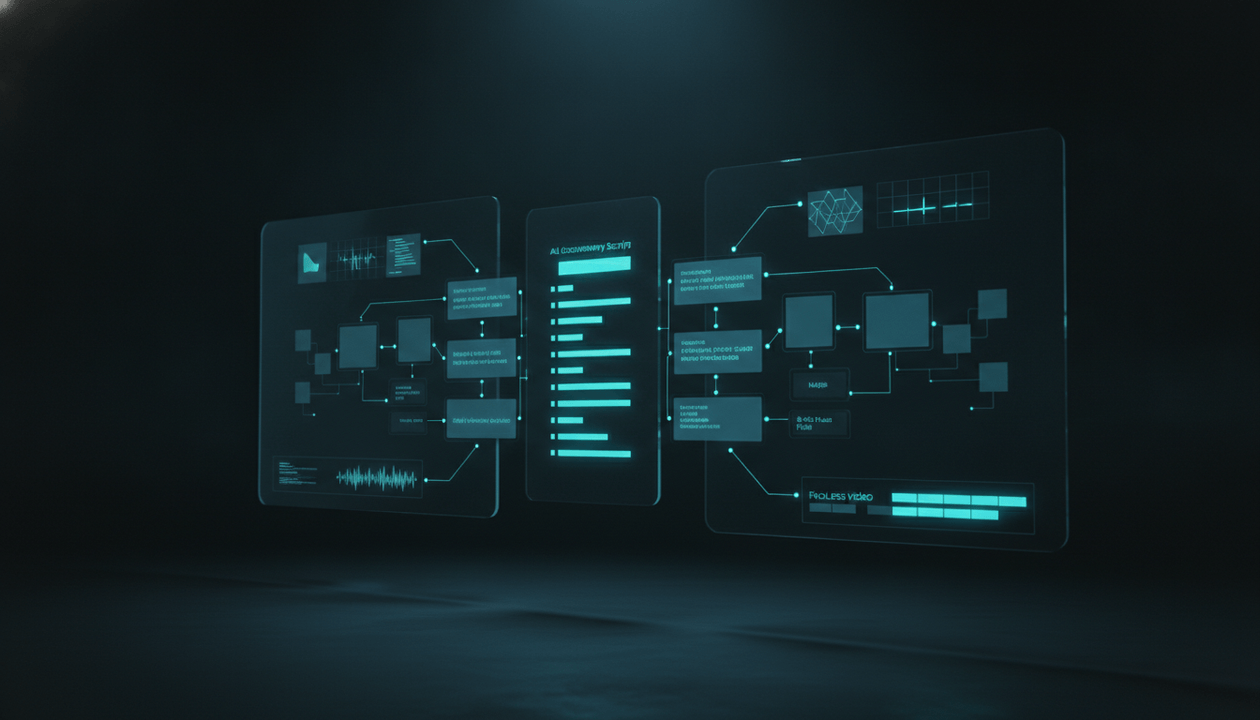
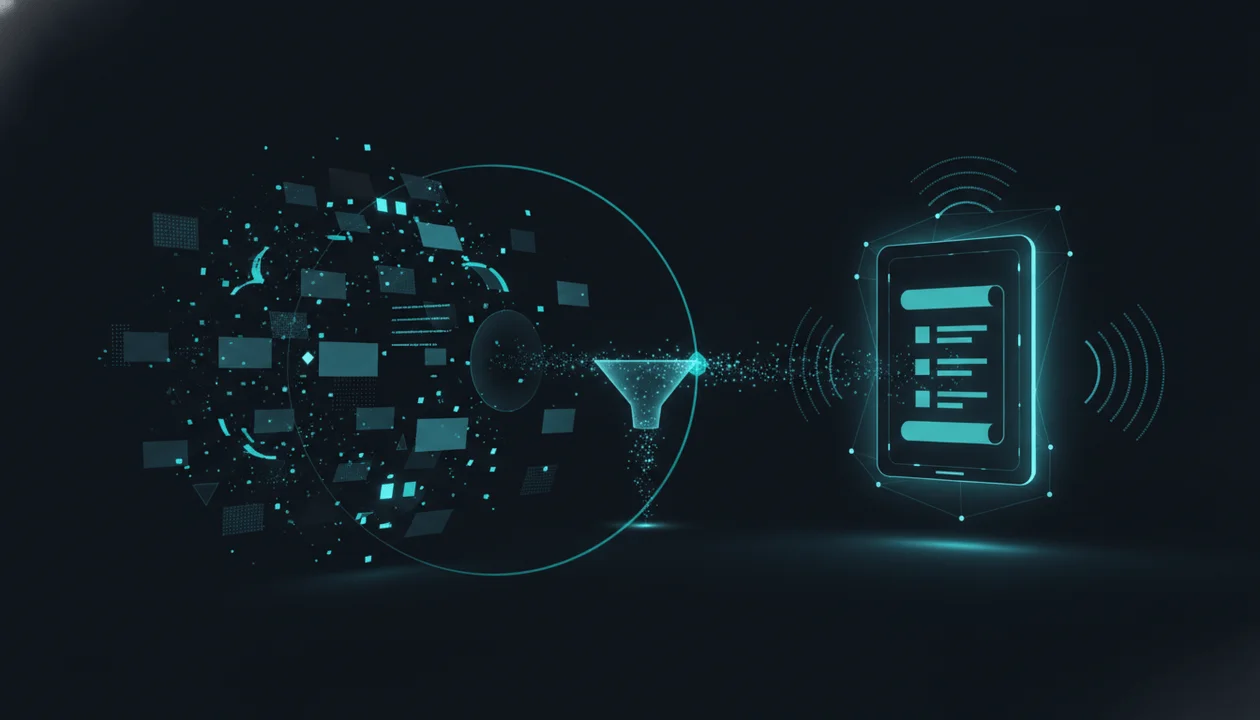
Instead of starting from a blank AI prompt, you start from real inputs: articles, news, competitor videos, research papers, transcripts, comments, viewer objections, trend signals, and public performance patterns. Then you turn those sources into a video that feels original, useful, and built for retention.
That is how serious YouTube creators, faceless channel operators, and content teams should use AI now: not as a replacement for thinking, but as a production layer on top of better research.
Key Takeaways
- A source-to-script workflow turns research, articles, transcripts, and trend signals into original YouTube scripts instead of generic AI drafts.
- The biggest difference between a strong AI-assisted script and AI slop is not the tool. It is the quality of the input, angle, structure, and review process.
- YouTube’s monetization policies reward original and authentic content, while mass-produced, repetitive, low-value AI templates can create real channel risk.
- A strong source-to-script system separates research, angle selection, hook writing, script structure, fact-checking, packaging, and voiceover readiness.
- Faceless creators need this more than anyone because they cannot rely on personality alone to cover weak research or generic writing.
- OverseerOS helps creators turn public signals, trending topics, article research, transcripts, and proven YouTube patterns into original scripts through tools like Trend to Script, Script ReSpark, Viral X-Ray, MindOS, and Script Studio.
- The best creators do not ask AI to “write a YouTube script.” They build a source-backed creative brief first, then use AI to speed up the workflow.
What Is a Source-to-Script Workflow?
A source-to-script workflow is a repeatable process for turning raw research material into a finished YouTube script.
The source can be:
- A news article
- A research paper
- A competitor video transcript
- A YouTube trend
- A Reddit discussion
- A product update
- A legal or platform policy change
- A founder interview
- A podcast segment
- A public dataset
- A viral video in your niche
- Your own older video that needs a stronger remake
The output is not a summary.
The output is a YouTube-native script with:
- A clear viewer promise
- A strong hook
- A specific angle
- A structured storyline
- Evidence-backed claims
- Retention loops
- Visual direction
- Voiceover-ready pacing
- Title and thumbnail alignment
- A final payoff that satisfies the click
That last part matters.
A blog article and a YouTube script are not the same product. A blog article can be scanned. A YouTube script must be experienced in order. Every sentence either pulls the viewer forward or gives them a reason to leave.
Why Normal AI YouTube Scripts Feel Like Slop
Most AI YouTube scripts fail because the prompt is too weak.
A creator writes:
Write a 10-minute YouTube script about why AI is changing education.
The tool produces something that sounds like this:
Artificial intelligence is transforming education in many ways. From personalized learning to automated grading, AI is helping students and teachers around the world. In this video, we will explore the benefits, challenges, and future of AI in education.
That is not a hook. That is a school essay introduction with a microphone.
The problem is not that AI wrote it. The problem is that the creator gave it no real material to work with.
No sources. No point of view. No viewer fear. No contradiction. No stakes. No audience level. No story spine. No reason this video should exist today.
A better source-to-script input would look like this:
Topic: AI tutors in schools Core angle: Parents think AI tutors will help kids learn faster, but the real shift is that schools may stop measuring learning the old way. Sources: recent policy update, one founder interview, two teacher reactions, one student example, one competitor video with strong comments. Viewer: parents, teachers, and education creators worried about where learning is going. Promise: explain what AI tutoring actually changes, what people are missing, and what a smart parent should watch next. Tone: clear, serious, documentary-style, not hype. Hook direction: “The biggest AI education story is not that students can cheat. It is that schools may no longer know what learning means.”
Now the script has something to build from.
The 6-Part Source-to-Script Framework
A strong source-to-script workflow has six parts.
| Stage | Goal | Weak Version | Strong Version |
|---|---|---|---|
| 1. Source selection | Choose what the video is built on | Random article or trend | Multiple sources with a clear tension |
| 2. Angle extraction | Decide what the video is really about | “AI is changing X” | “The hidden shift nobody is explaining” |
| 3. Viewer promise | Define why someone should watch | “Learn about this topic” | “Understand what this means before it affects you” |
| 4. Script architecture | Turn research into a story | Summary of facts | Hook, context, conflict, proof, payoff |
| 5. Packaging alignment | Match title, thumbnail, and hook | Three separate ideas | One clear click promise repeated across all three |
| 6. Final human review | Remove generic output | Polished AI draft | Original, accurate, watchable script |
This is the workflow serious creators need because YouTube is no longer forgiving generic production at scale.
YouTube’s own monetization policies say channels should publish original and authentic content, and that content should not be mass-produced or repetitive. The same policy page also lists generic AI-generated templates without original insights or perspective as content that can violate monetization rules. Source: YouTube Help
That does not mean AI is banned.
It means lazy AI output is a bad strategy.
Step 1: Start With Better Sources
The quality of the script depends on the quality of the inputs.
Most creators use weak sources:
- One trending tweet
- One competitor video
- One article
- One vague keyword
- One AI-generated outline
- One Reddit thread with no verification
That is not enough.
A strong source stack gives the script depth. For most educational, documentary, business, tech, finance, psychology, and faceless videos, use this structure:
| Source Type | What It Gives You | Example |
|---|---|---|
| Primary source | Original facts | Official blog post, product update, court filing, research paper |
| Expert source | Interpretation | Interview, podcast, analyst comment, founder quote |
| Competitor source | YouTube-native packaging | Viral video title, hook, structure, thumbnail angle |
| Audience source | Viewer language | Comments, Reddit threads, forum questions |
| Contrarian source | Tension | Criticism, counterargument, failed case study |
| Fresh source | Timing | New update, trend, policy shift, public event |
A video built on one source feels thin.
A video built on five sources can feel like a real explanation.
Weak Source Stack
Source 1: An article about AI replacing jobs Prompt: Write a YouTube script about AI replacing jobs
Strong Source Stack
Source 1: Official company announcement about an AI agent Source 2: Recent layoff report Source 3: Founder interview explaining the product Source 4: Competitor video that got 1M views on the same fear Source 5: Reddit thread where workers explain what they are actually worried about Source 6: One expert counterargument saying the fear is exaggerated
Now the script can become:
Everyone is asking whether AI will replace workers. But the real story is more specific: companies are not replacing entire jobs first. They are replacing the boring middle layer of work that made junior employees valuable.
That is a video.
Step 2: Extract the Real Angle
The angle is not the topic.
The topic is what the video is about. The angle is why the viewer should care.
Bad topic:
The future of faceless YouTube
Better angle:
Faceless YouTube is not dying because of AI. It is dying because every channel is starting to sound the same.
Bad topic:
How AI changes finance
Better angle:
The safest finance channels in 2026 will not be the ones making the boldest predictions. They will be the ones viewers trust when the market gets confusing.
Bad topic:
YouTube automation tools
Better angle:
Automation only works when the creative decisions are not automated.
A strong source-to-script workflow should extract at least five possible angles before writing.
Use this table:
| Angle Type | Question to Ask | Example |
|---|---|---|
| Hidden shift | What is changing under the surface? | “AI is not replacing creators. It is replacing average creators.” |
| Mistake | What are people getting wrong? | “Most faceless channels are using AI at the wrong stage.” |
| Warning | What happens if viewers ignore this? | “The next wave of demonetization risk is not AI use. It is repetitive output.” |
| Opportunity | What can smart creators do now? | “Small creators can use research depth as a moat.” |
| Contrarian | What sounds true but is incomplete? | “Better scripts do not start with better writing. They start with better sources.” |
| System | What repeatable process solves it? | “Use a source-to-script workflow before touching the final draft.” |
The best YouTube angles usually contain tension.
Not:
How to write better YouTube scripts
Better:
Why your AI YouTube scripts sound good but still lose viewers
That second version has conflict. It speaks to a real pain.
Step 3: Build the Viewer Promise Before the Script
The viewer promise is the contract between your packaging and your video.
If the title says:
AI Slop Is Killing Faceless YouTube
Then the first 30 seconds cannot start with:
Welcome back to the channel. Today we are going to talk about faceless YouTube automation and how artificial intelligence has changed the content landscape.
That breaks the promise.
A better opening:
Faceless YouTube did not become harder because AI got worse. It became harder because AI got good enough for everyone to make the same video. Same voice. Same structure. Same stock footage. Same fake urgency. The channels that survive are going to be the ones that use AI for speed, but use research for taste.
The promise is clear.
The viewer clicked for a warning about AI slop. The hook immediately pays that off.
Before writing the full script, define:
- What did the viewer click for?
- What fear, desire, or curiosity brought them here?
- What will they understand by the end?
- What will they be able to do differently?
- What must the first 30 seconds prove?
YouTube’s own thumbnail and title guidance says titles should accurately represent the video, and that thumbnails and titles help viewers decide whether to watch. It also recommends using analytics to evaluate how titles and thumbnails perform across audiences. Source: YouTube Help
So the script cannot be separate from the packaging.
The title makes a promise. The thumbnail visualizes the promise. The hook confirms the promise. The script delivers the promise.
Step 4: Turn Sources Into a Story Spine
A bad source-to-script workflow summarizes sources in order.
That creates this structure:
- Article one says this.
- Article two says this.
- Expert says this.
- Here are the pros and cons.
- Thanks for watching.
That is not a YouTube script. That is research notes read out loud.
A better workflow turns sources into a story spine.
Use this structure:
1. The disruption
What changed?
A new AI tool just made it possible to create realistic training videos from a single prompt.
2. The surface reaction
What does everyone think this means?
Most people are calling this the end of video editors.
3. The deeper truth
What is actually happening?
But the bigger shift is not editing. It is that companies can now test ten versions of the same training video before a human editor would finish one.
4. The proof
What sources support this?
Company demos, user examples, pricing shifts, creator reactions, and early adoption patterns.
5. The consequence
What happens next?
Low-value editing becomes cheaper. Strategic editing becomes more valuable.
6. The creator lesson
What should the viewer do?
If you are a creator, learn how to direct AI, not just use AI.
This structure works because it creates movement.
The viewer is not just receiving facts. They are watching understanding unfold.
Step 5: Write the Hook From the Tension, Not the Topic
The hook should not introduce the topic.
The hook should open the tension.
Weak:
In this video, we will discuss how to turn articles into YouTube scripts using AI.
Better:
The fastest way to make a bad YouTube script is to ask AI to write one from scratch. The better way is to feed it the right sources first, then force it to build a video around a real angle.
Weak:
Today we are talking about the future of AI content.
Better:
AI did not make YouTube easier. It made average content worthless.
Weak:
This video explains how to research your competitors.
Better:
Your competitors are giving you the answer key. Most creators just do not know how to read it.
A strong hook usually does one of these things:
- Reveals a hidden problem
- Challenges a common belief
- Names a painful mistake
- Shows a high-stakes change
- Creates a curiosity gap
- Promises a useful framework
- Makes the viewer feel understood
For source-to-script videos, the best hook often comes from the contradiction inside your sources.
Example:
Everyone is using AI to write faster. But the creators winning in 2026 are using AI to research deeper.
That is the article’s core belief in one line.
Step 6: Convert Research Into Script Blocks
Once the angle and story spine are clear, turn the sources into script blocks.
A script block is not a paragraph. It is a function.
Each block should do one job.
| Script Block | Job | Example |
|---|---|---|
| Hook | Make the viewer stay | “AI made scripts cheaper. It also made weak scripts easier to spot.” |
| Context | Explain why this matters now | “YouTube is under more pressure to identify synthetic and repetitive content.” |
| Reframe | Change how the viewer sees the problem | “The issue is not using AI. The issue is using AI with no source discipline.” |
| Proof | Add evidence or example | “YouTube’s policy focuses on original, authentic value, not mass-produced repetition.” |
| Framework | Give the viewer a usable system | “Use the 6-part source-to-script workflow.” |
| Example | Make the idea concrete | “Here is how one AI news article becomes three different video angles.” |
| Mistake | Warn against bad execution | “Do not summarize the source. Transform it.” |
| Payoff | Close the loop | “The better your sources, the less your script sounds like everyone else.” |
This makes the script easier to write, edit, and assign to a team.
It also makes AI more useful because you are no longer asking it to magically create a finished video. You are asking it to improve a defined part of the workflow.
Example: Turning One Article Into Three YouTube Scripts
Let’s say the source is an article about YouTube making AI-generated content labels more visible.
YouTube’s Help Center says creators must disclose when they use AI to meaningfully alter or generate photorealistic content, including making a real person appear to say or do something they did not do, altering footage of a real event or place, or generating a realistic scene that did not occur. It also says creators do not need to disclose AI used for production assistance like outlines, scripts, thumbnails, titles, captions, or idea generation. Source: YouTube Help
Most creators would make this video:
YouTube Just Changed AI Content Rules
That is fine, but generic.
A source-to-script workflow creates multiple angles.
| Angle | Best For | Possible Title | Hook Direction |
|---|---|---|---|
| Policy explainer | Creator education | YouTube’s AI Disclosure Rules Explained for Creators | “YouTube is not banning AI, but it is drawing a line around realistic synthetic content.” |
| Trust strategy | Faceless channels | The New Trust Problem for AI YouTube Channels | “The more realistic AI content becomes, the more viewers will look for signs they can trust you.” |
| Monetization risk | Operators and agencies | AI YouTube Channels Need to Stop Making This Mistake | “The biggest risk is not using AI. It is publishing content that looks mass-produced.” |
| Packaging angle | Growth creators | Why AI Labels Could Change How Viewers Click | “The click is no longer just title and thumbnail. It is trust before playback.” |
| Workflow angle | Serious creators | Source-to-Script Workflow: How to Use AI Without Making Slop | “The smartest creators will not use AI less. They will use better inputs.” |
Same source. Five different videos.
That is the power of source-to-script thinking.
How Faceless Creators Should Use This Workflow
Faceless creators need stronger systems because they usually do not have a personal face, lifestyle, or reputation carrying the video.
That means the script has to do more work.
A faceless script must create trust through:
- Research depth
- Clear structure
- Specific examples
- Strong pacing
- Accurate claims
- Useful insights
- Consistent voice
- Premium narration
- Visual direction
- Ethical transformation of sources
The weak faceless workflow is:
- Find a viral topic.
- Ask AI for a script.
- Generate a voiceover.
- Add stock footage.
- Make a thumbnail.
- Upload.
The strong faceless workflow is:
- Find a proven topic pattern.
- Collect sources.
- Extract the original angle.
- Define the viewer promise.
- Build a retention-first outline.
- Draft the script in blocks.
- Add examples and visual notes.
- Check claims.
- Rewrite for pacing and voiceover.
- Align the title, thumbnail, and hook.
- Save the learnings for the next video.
That is slower at first, but faster once the system is built.
It also creates a content moat because your videos stop sounding like every other AI-assisted channel.
How Personal Creators Should Use This Workflow
Personal creators have an advantage: trust.
But trust can become a weakness if the video has no research discipline.
A personal creator can use source-to-script to make stronger opinion content.
Instead of:
Here is my opinion about AI replacing jobs.
Use:
I looked at three signs that AI job replacement is already happening, but the part nobody talks about is how it changes the first five years of a career.
That sounds more credible because it combines viewpoint with evidence.
Personal creators should use sources to support:
- Stronger arguments
- Better examples
- More original frameworks
- Contrarian but defensible opinions
- Deeper industry analysis
- Better storytelling
- More useful takeaways
The goal is not to hide behind research.
The goal is to make your point sharper.
The Source-to-Script Prompt Stack
Do not use one giant prompt.
Use a prompt stack.
Each prompt should solve one stage of the workflow.
Prompt 1: Source Extraction
Analyze the source material below. Extract the most important facts, claims, examples, dates, numbers, names, contradictions, and unanswered questions.

Do not write a script yet.

Organize the output into:
1. Core facts
2. Strongest claims
3. Weak or unsupported claims
4. Viewer-relevant tensions
5. Possible YouTube angles
6. What needs verification
Prompt 2: Angle Generation
Based on the extracted source notes, generate 10 YouTube video angles.

For each angle, include:
- Target viewer
- Core promise
- Why the viewer would click
- What makes the angle different
- Possible title
- Possible thumbnail concept
- First 15 seconds hook idea

Avoid generic angles. Focus on tension, consequence, timing, and viewer pain.
Prompt 3: Story Spine
Build a YouTube story spine for this selected angle.

Use this structure:
1. Disruption
2. Surface reaction
3. Deeper truth
4. Proof
5. Consequence
6. Creator/viewer lesson
7. Final payoff

Make the structure clear enough for a writer, voiceover artist, and editor to understand.
Prompt 4: Script Draft
Write a YouTube script from the approved story spine.

Requirements:
- Open with tension, not a generic intro.
- Keep the language simple and direct.
- Use short voiceover-friendly sentences.
- Add examples where the viewer may need clarity.
- Do not invent facts.
- Mark any claim that needs verification.
- Include visual direction notes where useful.
- Make the first 30 seconds match the title and thumbnail promise.
Prompt 5: Script Audit
Audit this script before production.

Score it from 1 to 10 on:
- Hook strength
- Source depth
- Originality
- Retention flow
- Clarity
- Voiceover pacing
- Viewer payoff
- Title and thumbnail alignment
- Risk of sounding like generic AI content

Then give the exact changes needed to make it stronger.
This prompt stack beats the one-prompt method because it forces the script to pass through research, angle, structure, draft, and review.
That is how you avoid AI slop.
Where OverseerOS Fits Into the Workflow
The fastest way to apply this system is to stop treating research, scripting, titles, thumbnails, and planning as separate tools.
That is the problem OverseerOS is built to solve.
OverseerOS helps creators reverse-engineer public YouTube patterns, turn sources into original content plans, and keep the workflow connected from research to script.
For this source-to-script workflow, the strongest tools are:
- Trend to Script: turn fresh news, articles, YouTube URLs, and trend research into structured script-ready workflows.
- Script ReSpark: rewrite article content, transcripts, pasted drafts, or rough scripts into stronger original YouTube scripts with better hooks, pacing, clarity, and tone.
- Viral X-Ray: analyze public YouTube video signals, hooks, structure, thumbnails, transcripts, and visible strategy before creating your own original angle.
- MindOS: map loose ideas, research, timelines, hooks, and video angles into structured outlines.
- Script Studio: build scripts from titles, outlines, reference videos, tone direction, retention notes, and planner workflows.
The important part is the philosophy.
OverseerOS is not there to help you copy a source. It is there to help you transform sources into original YouTube assets.
That is the difference between:
“Rewrite this article.”
And:
“Extract the strongest angle from this article, compare it to what is already working on YouTube, build a unique video structure, and turn it into a script that matches my channel tone.”
That is a serious creator workflow.
The Source-to-Script Checklist
Use this before approving any AI-assisted YouTube script.
Source Quality
- The script is built from more than one source.
- The primary facts come from credible sources.
- The script separates facts from interpretation.
- Any numbers, dates, or policy claims are verified.
- The script does not rely on a single competitor video as the entire source.
Originality
- The video has a clear angle, not just a topic.
- The script adds original commentary, framing, examples, or structure.
- The final video is not a lightly paraphrased article or transcript.
- The creator’s point of view is obvious.
- The script would still feel useful if the viewer had already seen the source.
Retention
- The first 30 seconds immediately deliver on the title and thumbnail.
- The video opens a clear question the viewer wants answered.
- Each section adds a new layer, not a repeated point.
- There are examples before the viewer gets confused.
- The ending gives a real payoff, not a generic summary.
Production Readiness
- The script is easy to read out loud.
- Sentences are not too long for voiceover.
- Visual notes are included where needed.
- The title, thumbnail, and hook point to the same promise.
- The script is saved into a repeatable planner or workflow.
Risk Check
- The script avoids unsupported claims.
- The script does not present synthetic or altered media as real.
- The script does not copy another creator’s structure too closely.
- The content is not mass-produced with minimal variation.
- The script has enough original insight to justify existing.
Common Source-to-Script Mistakes
Mistake 1: Summarizing Instead of Transforming
A source is not a script.
An article might explain what happened. A YouTube script must explain why the viewer should care.
Weak:
The article says YouTube added AI labels.
Stronger:
YouTube’s AI labels are not just a policy update. They are a signal that trust is becoming part of the video experience.
Mistake 2: Using Competitors as the Only Source
Competitor videos are useful for understanding packaging, structure, and viewer demand.
They are not enough for factual depth.
Use competitor videos to answer:
- What title angle worked?
- What thumbnail promise worked?
- What hook pattern worked?
- What viewer question worked?
- What comments reveal hidden demand?
Do not use them as your only research base.
Mistake 3: Asking AI to Invent Authority
AI can make weak scripts sound confident.
That is dangerous.
A confident unsupported claim is worse than an honest simple explanation.
Bad:
Studies show that most YouTube viewers prefer AI-generated scripts when they are optimized for retention.
Better:
The safer claim is simpler: viewers reward clarity, relevance, and payoff. AI can help with those things only when the creator gives it strong research and reviews the result.
Mistake 4: Ignoring the Title and Thumbnail Until the End
The title and thumbnail should shape the script before the final draft.
If the thumbnail says:
THEY LIED
The script must reveal what the lie is quickly.
If the title says:
The AI Tool That Changed Everything
The script must explain what changed and why it matters.
If the title says:
I Tested 7 Faceless YouTube Niches
The script must deliver the test, not a generic list.
Script and packaging are one system.
Mistake 5: Making Every Script Follow the Same Template
Templates help teams move faster.
But if every video follows the same emotional rhythm, the channel starts to feel mass-produced.
Keep the workflow consistent, but vary the substance.
Strong channels repeat:
- Research standards
- Quality control
- Packaging discipline
- Voice and tone
- Production process
Weak channels repeat:
- The same intro
- The same structure
- The same emotional beats
- The same stock phrases
- The same AI pacing
- The same generic ending
YouTube’s monetization guidance specifically warns against content that appears template-driven with little variation, especially when it lacks original insight or educational value. Source: YouTube Help
A Practical Source-to-Script Workflow for Teams
Here is a simple team workflow for a faceless or personal YouTube operation.
| Role | Responsibility | Output |
|---|---|---|
| Researcher | Collect sources, competitor videos, comments, and proof | Source brief |
| Strategist | Choose the angle and viewer promise | Creative brief |
| Writer | Turn the brief into a script | Draft script |
| Channel lead | Check positioning, accuracy, and originality | Approved script |
| Thumbnail designer | Build visual promise from the same angle | Thumbnail concept |
| Voiceover artist | Record with correct pacing and emotion | Voiceover file |
| Editor | Match visuals to script beats | Final video |
| Analyst | Review performance after publishing | Learning notes |
For solo creators, you can still use the same workflow. You just wear every hat.
The key is to keep the stages separate.
Do not research, write, package, and approve at the same time. That is how weak ideas slip through.
Source-to-Script Template
Use this for every video before writing.
Video Topic:
[What is the broad topic?]

Primary Viewer:
[Who is this for?]

Viewer State:
[What does the viewer already believe, fear, want, or misunderstand?]

Core Source:
[Main source link or material]

Supporting Sources:
[Additional sources, transcripts, comments, examples, or expert references]

Competitor Pattern:
[What similar video worked, and what pattern are we studying?]

Main Tension:
[What conflict or contradiction makes this interesting?]

Original Angle:
[What is our unique take?]

Viewer Promise:
[What will the viewer understand or be able to do by the end?]

Title Direction:
[Possible title promise]

Thumbnail Direction:
[Visual concept and emotional trigger]

Hook:
[First 15 to 30 seconds]

Story Spine:
1. Disruption
2. Surface reaction
3. Deeper truth
4. Proof
5. Consequence
6. Lesson
7. Payoff

Must-Include Points:
- [Point 1]
- [Point 2]
- [Point 3]

Claims to Verify:
- [Claim 1]
- [Claim 2]

Production Notes:
[Visuals, pacing, tone, examples, voiceover instructions]

Final CTA:
[What should the viewer do next?]
This template forces the script to become a real video plan, not just written text.
Final Verdict
The creators who win in 2026 will not be the ones who generate the most scripts.
They will be the ones who build the strongest inputs.
AI can help you write faster. But if the source material is weak, the angle is generic, and the structure is copied from every other channel in the niche, the final video will still feel empty.
The better workflow is simple:
Start with sources. Extract the angle. Define the viewer promise. Build the story spine. Write in script blocks. Check the claims. Rewrite for retention. Align the title, thumbnail, and hook. Then publish.
That is how creators turn AI from a slop machine into a serious production advantage.
And if you want to make that process repeatable, use OverseerOS to turn public YouTube signals, trend research, article sources, transcripts, hooks, and scripts into original creator workflows.
The smartest creators do not start from a blank page.
They start from proof.
FAQ
What is a source-to-script workflow?
A source-to-script workflow is a process for turning research material into a YouTube script. Instead of asking AI to write from a vague topic, you start with sources such as articles, transcripts, competitor videos, research, comments, and trend signals. Then you extract an angle, build a structure, and write an original script for YouTube.
How do I turn an article into a YouTube script?
Start by extracting the article’s facts, claims, examples, and tensions. Then choose a YouTube angle, define the viewer promise, build a hook, create a story spine, and rewrite the information into a script with pacing, examples, and visual direction. Do not simply summarize the article.
Can I use AI to write YouTube scripts?
Yes. AI can help with research organization, outlining, rewriting, pacing, hook generation, and script editing. The stronger approach is to use AI inside a source-backed workflow instead of asking it to invent a full script from scratch.
Does YouTube require disclosure for AI-written scripts?
YouTube’s GenAI disclosure guidance says creators do not need to disclose AI used for production assistance such as creating or improving an outline, script, thumbnail, title, infographic, captions, or idea generation. Disclosure is required when AI is used to meaningfully alter or generate realistic content, such as making a real person appear to say or do something they did not do, altering footage of a real event or place, or generating a realistic scene that did not occur. Source: YouTube Help
How do I avoid AI slop on YouTube?
Avoid one-prompt scripts, generic templates, unsupported claims, repetitive structures, and thin summaries of other sources. Use multiple sources, build a real angle, add original commentary, check facts, rewrite for voiceover pacing, and make sure the video delivers a clear viewer payoff.
Is using competitor transcripts safe?
Competitor transcripts can be useful for studying structure, pacing, hooks, and content flow, but copying or lightly paraphrasing another creator’s script is a bad idea. The safer workflow is to extract patterns, understand why the video worked, then create your own angle, script, examples, and packaging.
What is the best AI tool for source-to-script YouTube workflows?
The best tool is one that connects research, competitor analysis, angle development, script rewriting, and content planning. OverseerOS is built for this kind of workflow with tools like Trend to Script, Script ReSpark, Viral X-Ray, MindOS, Script Studio, Creator DNA, and the AI Content Planner.
Why do AI YouTube scripts sound generic?
AI YouTube scripts sound generic when the input is generic. If the prompt has no sources, viewer profile, angle, tension, examples, title direction, or retention structure, the output usually becomes a broad essay-style script. Better inputs create better scripts.
What should every YouTube script include?
Every strong YouTube script should include a clear hook, viewer promise, context, tension, examples, proof, transitions, retention loops, visual direction, and a final payoff. The script should also match the title and thumbnail promise from the first 30 seconds.
Can faceless YouTube channels use this workflow?
Yes. Faceless YouTube channels should use source-to-script workflows because they rely heavily on research, voiceover, structure, visuals, and packaging. Without a visible personality, the script must create trust through clarity, originality, and useful information.