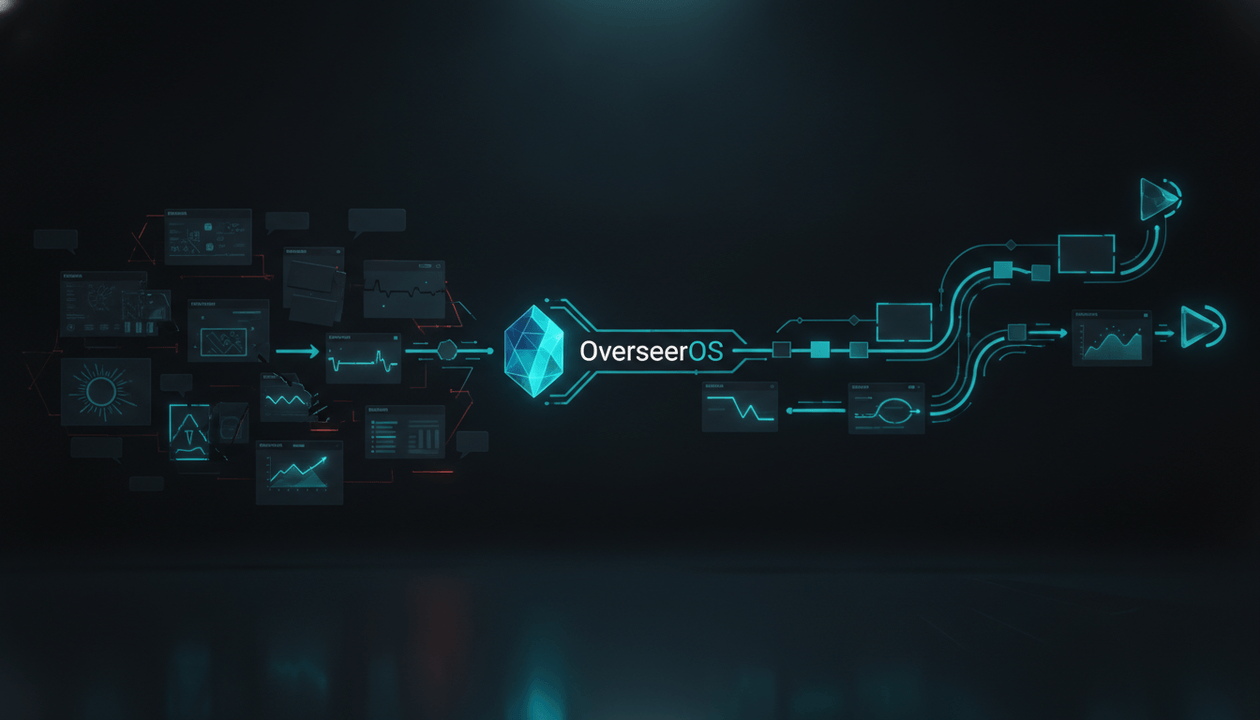
Running a faceless YouTube channel sounds simple until you realize how many moving parts sit between a topic idea and a published video.
Most creators do not fail because they lack ideas. They fail because they have no repeatable system tying research, scripting, voiceover, visuals, editing, packaging, publishing, and analytics together.
Every stage demands decisions. Without a clear process connecting them, time disappears, consistency collapses, and the channel turns into random uploads instead of a real content machine.
This playbook gives you that system, stage by stage, with practical templates you can use today.
What a Faceless YouTube Automation Workflow Actually Means
A faceless YouTube automation workflow is a repeatable production process for creating YouTube videos without appearing on camera.
The creator does not need to be the face of the channel. The video can be built using voiceover, stock footage, screen recordings, AI-generated images, motion graphics, captions, archival visuals, text overlays, and editing templates.
The word automation does not mean pressing one button and flooding YouTube with low-effort videos. That is how creators produce generic content nobody wants to watch.
Real automation means systemizing the workflow.
Instead of asking, “What should I make today?” you follow a process:
- Research the topic
- Validate demand
- Find the angle
- Write the script
- Create the voiceover
- Map the visuals
- Edit the video
- Create the thumbnail and title
- Publish
- Study the analytics
- Improve the next video
That is the difference between a creator randomly uploading and a creator building a machine.
The best faceless channels are not random AI content farms. They are structured media operations. Some are run by teams. Some are run by solo creators using AI. The workflow is what matters.
Why Faceless Channels Scale So Well
Faceless channels scale because the production process can be broken into separate parts.
A traditional creator channel often depends on one person showing up, recording, presenting, editing, and publishing. That creates a bottleneck. If the creator is tired, busy, sick, or uninspired, the channel slows down.
A faceless channel works differently.
The production process can be divided into clear roles:
| Stage | Role |
|---|---|
| Research | Finds topics, trends, competitors, and audience demand |
| Script | Turns the idea into a strong narrative |
| Voiceover | Records or generates the narration |
| Visuals | Finds footage, images, graphics, or screen recordings |
| Editing | Assembles the final video |
| Packaging | Creates the title, thumbnail, and description |
| Analytics | Studies performance and improves the next upload |
That structure makes faceless channels easier to delegate, automate, and scale.
It also removes the friction that stops many creators from starting. No camera setup. No lighting setup. No need to show your face. No pressure to perform on camera. No dependency on one person’s daily availability.
What remains is the part YouTube actually rewards: the idea, the story, the packaging, and the viewer experience.
A faceless channel can work in many niches, but it performs best when the value is not tied to the creator’s personality. That is why faceless formats are common in history, science, finance, psychology, business, tech, documentaries, horror, true crime, and self-improvement.
The subject drives the click.
The story keeps the viewer watching.
The system keeps the channel publishing.
Choosing a Niche That Can Actually Scale
Niche selection decides how hard the rest of the workflow will be.
A bad niche makes everything harder. Topics are harder to find. Titles are harder to package. Scripts become repetitive. Monetization stays weak. The audience does not know why they should subscribe.
A strong niche does the opposite. It creates a clear lane.
Before choosing a niche, run it through five filters.
1. Search Demand
Does the niche have topics people search for again and again?
Good signs include YouTube autocomplete suggestions, videos from smaller channels getting strong views, topics staying relevant for months or years, and people asking repeat questions in comments, Reddit, forums, or Google.
Bad signs include only huge channels getting views, topics depending entirely on breaking news, interest disappearing after a few days, or the niche having no repeatable question pattern.
Evergreen demand matters because a strong faceless channel should build a back catalog that keeps working after publishing.
2. Content Depth
Can you create 100 videos in this niche without repeating yourself?
That is the real test.
A niche is not strong because you can think of five video ideas. It is strong if it can support years of content.
Ask yourself:
- Are there many subtopics?
- Are there beginner, intermediate, and advanced angles?
- Are there stories, mistakes, myths, comparisons, rankings, tutorials, and case studies?
- Are new questions constantly appearing?
A niche with depth gives you room to scale.
3. Monetization Potential
Not all views are equal.
A million views in entertainment does not pay the same as a million views in software, finance, business, or legal education.
Higher-value niches usually attract advertisers with higher customer value.
Strong monetization niches include:
- Personal finance
- Investing
- Software
- Business
- Entrepreneurship
- Career development
- Legal education
- Health education
- Productivity
- AI tools
- Real estate
Lower monetization niches can still work, but they usually need more volume or stronger backend monetization through affiliates, sponsors, products, or memberships.
4. Production Feasibility
Can you produce videos in this niche without needing expensive footage, expert interviews, or complex animations every time?
Some niches look profitable but are painful to produce.
A good faceless automation niche should be easy to turn into visuals.
| Niche | Visual Difficulty |
|---|---|
| Software tutorials | Low, because screen recordings work |
| Personal finance | Medium, because charts and stock footage can work |
| History documentaries | Medium to high, because visuals need atmosphere |
| Science explainers | High, because concepts may need animations |
| Celebrity news | Low to medium, but copyright risk can be higher |
| True crime | Medium, but requires careful legal and ethical handling |
Pick a niche where production quality is achievable with your current resources.
5. Competitive Openings
Do not only study the biggest channels.
Study mid-size channels.
A niche where only giant channels get views is harder to enter. A niche where 50k to 500k subscriber channels regularly get strong views is more attractive, because it means YouTube is still testing and rewarding new entrants.
Look for videos where the views are higher than the subscriber count.
Example:
| Channel Size | Video Views | Signal |
|---|---|---|
| 40,000 subscribers | 25,000 views | Normal audience pull |
| 40,000 subscribers | 180,000 views | Strong topic signal |
| 40,000 subscribers | 900,000 views | Breakout topic |
| 800,000 subscribers | 120,000 views | Weak topic or packaging |
| 800,000 subscribers | 2,500,000 views | Strong mainstream demand |
When a smaller channel gets a video far above its subscriber base, pay attention.
That usually means YouTube found a broader audience for that topic.
Niche Scoring Template
Use this before committing to a niche.
| Filter | Score 1-5 | Notes |
|---|---|---|
| Search demand | ||
| Evergreen potential | ||
| Content depth | ||
| Monetization potential | ||
| Production feasibility | ||
| Mid-size channel opportunity | ||
| Total score |
Decision rule:
- 25 to 30: Strong niche
- 19 to 24: Possible, but needs a sharper angle
- Below 19: Avoid or reposition
Researching Topics Using Demand, Not Guesswork
Most creators pick topics based on what sounds interesting.
That is dangerous.
A better workflow starts with demand.
Your job is not to invent demand. Your job is to find where demand already exists, then create a better version of what the audience clearly wants.
Start with a seed keyword related to your niche.
Examples:
- Ancient Rome
- Personal finance
- AI tools
- Dark psychology
- NBA scandals
- Productivity habits
- True crime mysteries
- Software tutorials
Then search that keyword on YouTube.
Look for:
- Autocomplete suggestions
- Videos with high views compared to subscriber count
- Repeated title patterns
- Comment sections full of follow-up questions
- Videos with weak thumbnails but strong views
- Old videos that still get recommended
- New videos that break out quickly
Do not just ask, “Is this topic popular?”
Ask:
- Why did this specific video work?
- Was it the topic?
- Was it the title?
- Was it the thumbnail?
- Was it the timing?
- Was it the emotional promise?
- Was it the controversy?
- Was it the story angle?
- Was it the audience identity?
That question is where better videos come from.
Topic Research Template
Use this for each candidate topic.
| Field | Answer |
|---|---|
| Seed keyword | |
| Candidate topic | |
| Competitor video examples | |
| Highest view count found | |
| Subscriber count of that channel | |
| View-to-subscriber ratio | |
| Is the topic evergreen? | Yes / No |
| Is the topic trending? | Yes / No |
| Can we create a better angle? | Yes / No |
| Thumbnail opportunity | |
| Title opportunity | |
| Final score 1-10 |
AI Prompt for Topic Research
Use this after collecting competitor examples.
I am building a faceless YouTube channel in the [NICHE] niche.
Here are competitor videos that performed well:
- [TITLE] - [VIEWS] views - [CHANNEL SIZE] subscribers
- [TITLE] - [VIEWS] views - [CHANNEL SIZE] subscribers
- [TITLE] - [VIEWS] views - [CHANNEL SIZE] subscribers
Analyze these videos and tell me:
- What topic patterns are repeating?
- What emotional promises are being used?
- What title structures are working?
- What viewer curiosity gaps are being created?
- What new video angles could compete with these without copying them?
- Which ideas are evergreen and which are trend-dependent?
Give me 10 video ideas ranked by breakout potential.
This gives AI context. Without context, it will generate generic ideas. With proof, it becomes much more useful.
Turning the Topic Into a Strong Angle
A topic is not enough.
A topic is the subject.
An angle is the reason someone should watch your version.
| Topic | Weak Angle | Strong Angle |
|---|---|---|
| Ancient Rome | The history of Ancient Rome | The Roman habit that made daily life more brutal than people realize |
| Saving money | How to save money | Why most people stay broke even when they earn more |
| AI tools | Best AI tools | The AI tools quietly replacing entire freelancer workflows |
| Productivity | How to be productive | The simple reason your productivity system keeps failing |
| True crime | A famous case explained | The overlooked mistake that changed the entire investigation |
The topic gets you into the niche.
The angle gets the click.
The Angle Formula
Use this:
This video is about [TOPIC], but specifically it shows [UNIQUE PROMISE] for [SPECIFIC VIEWER].
Examples:
This video is about ancient Roman food, but specifically it shows how the diet of ordinary Romans reveals how unequal the empire really was.
This video is about saving money, but specifically it shows why most budgeting advice fails for people with irregular income.
This video is about AI tools, but specifically it shows which tools are actually replacing manual content workflows instead of just looking impressive in demos.
A strong angle creates direction before the script starts.
Without an angle, the script becomes a Wikipedia summary.
Writing Hooks That Make People Keep Watching
Your opening needs tension fast.
Here are five hook types that work well for faceless videos.
1. The Contradiction Hook
Most people think [common belief]. But the truth is almost the opposite.
Example:
Most people think ancient Rome was clean, organized, and advanced. But for ordinary people, daily life was often dirty, loud, dangerous, and brutally unfair.
2. The Consequence Hook
One decision created [specific consequence].
Example:
One financial mistake can quietly keep someone broke for ten years, even if their income keeps going up.
3. The Hidden System Hook
Behind [visible outcome], there is a system most people never see.
Example:
Behind every viral faceless channel is a production system most beginners never build.
4. The Specific Scenario Hook
Imagine [specific situation]. Now here is why it matters.
Example:
Imagine waking up in ancient Rome with no running water, no privacy, and no guarantee that today’s food is safe to eat.
5. The Open Loop Hook
This started as [simple thing]. Then it became [unexpected thing].
Example:
This started as a simple software update. Then it quietly changed how millions of creators make videos.
Hook Writing Template
Write three hooks before scripting.
| Hook Type | Draft |
|---|---|
| Contradiction | |
| Consequence | |
| Specific scenario |
Then choose the one with the clearest tension.
Do not start scripting until the hook is locked.
Writing the Script Like a Retention System
A faceless video script is not an essay.
It is not a blog post read out loud.
It is a retention system.
Every section has one job: make the viewer want to hear the next section.
A weak script gives information.
A strong script controls curiosity.
The Basic Faceless Script Structure
For an 8 to 12 minute video, use this structure:
| Section | Purpose | Approx. Length |
|---|---|---|
| Hook | Create curiosity fast | 20 to 40 seconds |
| Context | Explain why the topic matters | 60 to 120 seconds |
| Stakes | Show what is at risk or why it matters now | 60 to 120 seconds |
| Main sections | Deliver the core value | 4 to 8 minutes |
| Payoff | Resolve the main promise | 60 to 90 seconds |
| CTA | Ask for a simple next action | 10 to 20 seconds |
For most narration, estimate 130 to 150 spoken words per finished minute.
| Video Length | Approx. Script Length |
|---|---|
| 5 minutes | 650 to 750 words |
| 8 minutes | 1,040 to 1,200 words |
| 10 minutes | 1,300 to 1,500 words |
| 15 minutes | 1,950 to 2,250 words |
Do not obsess over word count. Obsess over pacing.
The Middle Is Where Videos Die
Most faceless videos lose viewers in the middle.
The hook creates curiosity. The ending promises payoff. But the middle often becomes flat.
To fix that, every 60 to 90 seconds should introduce one of these:
- A new question
- A surprising detail
- A consequence
- A contradiction
- A mini story
- A visual shift
- A pattern interruption
- A “but then” moment
Weak middle section:
There are several reasons this happened. The first reason is...
Better middle section:
But this is where the story gets strange. The system was not failing because people ignored it. It was failing because people followed it exactly.
That type of sentence creates forward motion.
Script Brief Template
Before writing, fill this out.
| Field | Answer |
|---|---|
| Video topic | |
| Target viewer | |
| Main promise | |
| Emotional driver | Fear / curiosity / ambition / shock / relief |
| Viewer’s current belief | |
| New belief after watching | |
| Main hook | |
| Main sections | |
| Final takeaway |
AI Prompt for Scriptwriting
Write a faceless YouTube script based on this brief:
Topic: [TOPIC] Target viewer: [VIEWER] Main promise: [PROMISE] Angle: [ANGLE] Tone: [TONE] Video length: [LENGTH] Hook: [HOOK]
Structure:
- Hook, 20 to 40 seconds
- Context and stakes
- Main body with 3 to 5 sections
- Strong payoff
- Short call to action
Rules:
- Write for voiceover, not for reading.
- Use simple spoken language.
- Keep sentences clean and natural.
- Add curiosity gaps throughout the script.
- Avoid generic filler like “in today’s fast-paced world.”
- Do not sound like a motivational blog post.
- Every 60 to 90 seconds, introduce a new question, contradiction, or consequence.
- Make the middle section feel like the story is moving forward.
Script Editing Checklist
After the first draft, cut aggressively.
- Does the first sentence create curiosity?
- Can the viewer understand the topic in the first 15 seconds?
- Is there a clear reason to keep watching?
- Does every section connect to the main promise?
- Are there examples, not just claims?
- Are there pattern breaks in the middle?
- Does the ending deliver the payoff?
- Did you remove generic AI phrasing?
- Does it sound natural when read out loud?
The read-out-loud test is brutal but useful.
If a sentence feels awkward to say, rewrite it.
Creating or Recording the Voiceover
The voiceover is the emotional spine of a faceless video.
Bad visuals can sometimes survive if the voiceover is strong.
A bad voiceover kills everything.
You have two options:
- Record a human voiceover
- Generate an AI voiceover
Both can work.
The right choice depends on the niche, budget, and quality bar.
Human Voiceover
Human voiceover usually sounds more natural, especially for storytelling, drama, humor, and emotional topics.
Use human voiceover if your niche depends on:
- Trust
- Emotion
- Suspense
- Storytelling
- Personality
- Nuance
Examples include history documentaries, true crime, psychology, self-improvement, finance, spirituality, and commentary.
Basic setup:
- Quiet room
- USB or XLR microphone
- Pop filter
- Audacity, Adobe Audition, Descript, or similar audio tool
- Light compression
- Noise reduction
- Loudness normalization
AI Voiceover
AI voiceover is faster and easier to scale.
Use AI voiceover if your workflow needs:
- Fast production
- Multiple uploads per week
- Consistent narration
- Lower cost per video
- Easy revisions
AI voices work best when the script is already strong. They cannot save boring writing.
The mistake beginners make is choosing a voice that sounds impressive for 10 seconds but annoying for 10 minutes.
Choose a voice that is:
- Clear
- Natural
- Not too dramatic
- Not too robotic
- Matched to the niche
- Comfortable for long listening
Voice Direction Template
Use this before recording or generating audio.
| Field | Direction |
|---|---|
| Channel tone | |
| Narration style | Calm / dramatic / documentary / conversational / authoritative |
| Speed | Slow / medium / fast |
| Emotion level | Low / medium / high |
| Pronunciation notes | |
| Words to emphasize | |
| Words to avoid mispronouncing |
AI Voiceover Prompt
Read this script in a [TONE] style.
The pacing should be [PACE].
The emotion should feel [EMOTION].
The delivery should sound like [REFERENCE STYLE].
Avoid sounding exaggerated, robotic, or overly promotional.
Important pronunciation notes:
[NOTES]
Script:
[SCRIPT]
Audio Quality Checklist
- Voice is louder than background music
- No harsh background noise
- No distracting mouth clicks
- Pacing feels natural
- Important words are clear
- File exported in high quality
- Voice matches the channel identity
Building a Visual Map Before Editing
Do not open your editing software first.
That is how editing becomes slow.
Before editing, create a visual map.
A visual map tells you what should appear on screen during each part of the script.
This is where many faceless creators waste time. They try to “feel it out” inside the editor. That creates chaos.
Instead, map the video before editing.
Visual Map Template
| Script Line or Section | Visual Type | Specific Visual Idea | Source |
|---|---|---|---|
| Hook | Dramatic B-roll | Dark room, fast cuts, close-up of screen | Stock |
| Main claim | Text overlay | Big number or keyword | Editor |
| Example | Screen recording | Show tool, chart, article, or process | Original |
| Story section | AI image or archival image | Scene matching the narration | AI / archive |
| Data point | Graphic | Simple chart or animated number | Editor |
Visual Types for Faceless Videos
Use a mix of these:
| Visual Type | Best For |
|---|---|
| Stock footage | General mood, pacing, lifestyle, business, tech |
| Screen recording | Tutorials, software, tools, research, workflows |
| AI images | History, abstract ideas, impossible scenes, story moments |
| Charts | Finance, data, business, comparisons |
| Text overlays | Key claims, names, dates, numbers |
| Archival images | History, biographies, documentaries |
| Motion graphics | Explainers, science, systems, processes |
| Captions | Retention and accessibility |
The best faceless videos do not just “fill the screen.”
They use visuals to help the viewer understand faster.
Visual Pacing Rule
For most faceless videos, change the visual every 3 to 7 seconds.
But do not follow this blindly.
Fast cuts work well for:
- AI tools
- Business
- Drama
- News
- Social media topics
- Commentary
Slower pacing works better for:
- History
- Spirituality
- Deep psychology
- Documentaries
- Emotional storytelling
The visual rhythm should match the topic.
Visual Map AI Prompt
Create a visual map for this faceless YouTube script.
For each section, suggest:
- Visual type
- Specific visual idea
- Text overlay if needed
- B-roll or AI image suggestion
- Any chart, screen recording, or graphic needed
Rules:
- Do not suggest random stock footage.
- Every visual must support the sentence being spoken.
- Include pattern breaks every 30 to 60 seconds.
- Keep visuals realistic for a solo creator to produce.
Script:
[SCRIPT]
Editing With a Repeatable Production Template
Editing is where most faceless channels lose time.
Not because editing is impossible, but because creators rebuild the same structure every time.
The highest-leverage automation move is creating an editing template.
Your template should include:
- Intro style
- Font system
- Caption style
- Lower thirds
- Background music levels
- Transition style
- Color grade
- Sound effects
- Outro
- Export settings
- Thumbnail export frame style if needed
Once that template exists, every video starts from the same base.
You only swap the script, voiceover, visuals, and specific overlays.
Editing Software Options
| Tool | Best For |
|---|---|
| CapCut Desktop | Fast editing, captions, simple faceless videos |
| DaVinci Resolve | Higher-quality editing, color, professional control |
| Premiere Pro | Team workflows and advanced editing |
| Final Cut Pro | Fast Mac-based editing |
| Descript | Transcript-based editing and revisions |
| After Effects | Motion graphics and advanced visual systems |
For beginners, CapCut or DaVinci Resolve is enough.
For serious channels, the tool matters less than the template.
Editing Checklist
- Import final voiceover
- Place voiceover on timeline first
- Add visuals according to visual map
- Add text overlays for important ideas
- Add captions if they fit the style
- Add music at low volume
- Add subtle sound effects for transitions or reveals
- Remove dead space
- Watch once without stopping
- Fix boring sections
- Export at 1080p minimum
The 3-Pass Editing System
Use three passes.
Pass 1: Structure
Build the full video from start to finish.
Do not obsess over details yet.
Pass 2: Retention
Watch for boring sections.
Ask:
- Where would I click away?
- Where does the pace slow down?
- Where does the visual stop supporting the narration?
- Where do I need a pattern break?
Fix those moments.
Pass 3: Polish
Add captions, music, sound effects, color, zooms, transitions, and final details.
This prevents you from wasting hours polishing a weak structure.
Creating the Title and Thumbnail
The title and thumbnail are not afterthoughts.
They are the packaging.
A good video with weak packaging dies quietly.
A decent video with strong packaging gets tested.
You need both.
The Thumbnail Job
A thumbnail should communicate the video’s core promise in under two seconds.
Good thumbnails usually have:
- One clear focal point
- High contrast
- Simple composition
- Emotional tension
- Minimal text
- A visual curiosity gap
Bad thumbnails usually have:
- Too many elements
- Too much text
- Weak contrast
- No clear subject
- No emotional signal
- Generic AI-looking visuals
Thumbnail Formula
Use this:
Main subject + emotional contrast + curiosity gap
Examples:
| Topic | Thumbnail Concept |
|---|---|
| Ancient Roman food | Poor citizen meal vs elite feast |
| AI tools replacing jobs | Human worker vs automated dashboard |
| Budgeting mistakes | Empty wallet next to rising income chart |
| Forgotten historical figure | Face in shadow with one highlighted decision |
| Productivity trap | Calendar full of tasks, progress stuck at zero |
Title Job
The title should make the viewer want the answer.
Weak title:
How to Save Money
Better title:
Why You Still Feel Broke Even After Making More Money
Weak title:
Ancient Rome Explained
Better title:
What Daily Life in Ancient Rome Was Really Like
Weak title:
Best AI Tools for YouTube
Better title:
The AI Tools Quietly Replacing YouTube Production Teams
Title Formula Options
Use one of these:
Why [common problem] happens even when [expected solution]
The [hidden thing] behind [visible result]
How [specific group] uses [specific system] to get [specific result]
What nobody tells you about [topic]
The mistake that makes [desired result] almost impossible
Packaging Checklist
- Does the title create curiosity?
- Does the thumbnail make sense without reading the title?
- Do the title and thumbnail work together?
- Is the promise specific?
- Is there emotional tension?
- Is the thumbnail readable on mobile?
- Is there one clear focal point?
- Does the video deliver what the packaging promises?
Never bait a viewer with a promise the video does not deliver.
That may get the click once. It will hurt retention and trust.
Publishing, Measuring, and Improving the Next Video
Publishing is not the end.
It is the start of the feedback loop.
Every video gives you data. That data should change how you make the next video.
The First 48-Hour Review
In the first 48 hours, look at:
| Metric | What It Tells You |
|---|---|
| Click-through rate | Whether title and thumbnail are working |
| Average view duration | Whether the video holds attention |
| 30-second retention | Whether the hook works |
| Retention dips | Where the video gets boring or confusing |
| Traffic sources | Where YouTube is testing the video |
| Subscriber conversion | Whether the video attracts the right audience |
| Comments | What viewers want more of |
Diagnostic Framework
Use this to identify the problem.
| Problem | Likely Cause |
|---|---|
| Low impressions | Topic may not have enough demand or channel is still early |
| High impressions, low CTR | Title or thumbnail problem |
| Good CTR, poor retention | Script, pacing, or video delivery problem |
| Strong first 30 seconds, big middle drop | Weak structure after hook |
| Good retention, low subscribers | Topic may be too broad or not aligned with channel identity |
| Good views, low revenue | Niche or audience has weaker monetization |
Post-Publish Review Template
Fill this out after every upload.
| Field | Answer |
|---|---|
| Video title | |
| Publish date | |
| Topic | |
| Angle | |
| CTR | |
| Average view duration | |
| 30-second retention | |
| Biggest retention drop | |
| Best retention moment | |
| Main traffic source | |
| Subscriber gain | |
| What worked? | |
| What failed? | |
| What should we repeat? | |
| What should we change next time? |
Over time, this becomes your channel’s internal playbook.
That is how a faceless channel gets better.
Not by guessing.
By building a feedback loop.
The Biggest Mistake: Automating AI Slop
Automation is powerful.
But it can also destroy a channel if used badly.
The biggest mistake is thinking faceless YouTube automation means mass-producing generic videos with the same script structure, same AI voice, same stock clips, same pacing, and same recycled ideas.
That is not a media business.
That is content spam.
A faceless channel can look low-effort very quickly if every video feels the same.
Common AI-slop patterns include:
- Same intro structure every video
- Generic AI voice with no emotion
- Stock footage that does not match the script
- No original examples
- No real research
- No strong angle
- Rewritten competitor videos
- Repetitive listicle format
- No clear channel identity
- Uploading volume without improving quality
The fix is simple:
Automate the workflow, not the judgment.
Use AI to speed up:
- Research
- Pattern discovery
- Outlining
- First drafts
- Visual mapping
- Editing prep
- Repurposing
- Analytics summaries
But keep human judgment in:
- Topic selection
- Angle selection
- Story structure
- Final script edit
- Visual taste
- Packaging decisions
- Quality control
The channels that win are not the ones that automate the most.
They are the ones that systemize production while keeping the content original, useful, and watchable.
Example Workflow: From One Topic to One Finished Video
Let’s walk through a real example.
Niche:
History documentaries
Seed keyword:
Ancient Rome
Topic idea:
What daily life in ancient Rome was really like
That topic is too broad.
So we sharpen the angle.
Angle
Most videos show ancient Rome through emperors, armies, and monuments. This video shows what daily life was like for ordinary people living in crowded apartments, eating cheap food, using public toilets, and surviving a city that was much harsher than people imagine.
Hook
When most people imagine ancient Rome, they picture marble temples, powerful emperors, and disciplined soldiers. But for ordinary people, Rome was loud, dirty, crowded, and dangerous. If you woke up there as a normal citizen, your day would not begin in a palace. It would probably begin in a tiny apartment with bad air, thin walls, and no guarantee that the street below was safe.
Script Sections
- The apartment problem
- The food ordinary people actually ate
- The noise, smells, and danger of the city
- Public baths and toilets
- Why Rome looked glorious from far away but brutal up close
Visual Map
| Section | Visual Direction |
|---|---|
| Hook | Cinematic shots of Rome, then contrast with crowded streets |
| Apartment problem | Narrow Roman apartment interior |
| Food | Bread, porridge, olives, street food, market visuals |
| City danger | Crowded alley, carts, fire, street noise |
| Baths and toilets | Historical illustrations, recreated bathhouse visuals |
| Final payoff | Wide shot of Rome with darker narration |
Title Options
- What Daily Life in Ancient Rome Was Really Like
- Ancient Rome Was Nothing Like You Imagine
- The Brutal Reality of Daily Life in Ancient Rome
Thumbnail Concept
Split-screen:
Left side: marble Roman empire fantasy.
Right side: dirty crowded apartment or street life.
Thumbnail text:
REAL ROME
Production Plan
| Day | Task |
|---|---|
| Day 1 | Research, angle, hook, outline |
| Day 1 | Script draft |
| Day 2 | Script edit and voiceover |
| Day 2 | Visual map and asset sourcing |
| Day 3 | Edit, thumbnail, title, publish |
This is what a real workflow looks like.
Not “make me a video about Rome.”
A system.
Recommended AI Tools for Each Stage
AI tools are useful, but they should sit inside the workflow.
Do not start with the tool.
Start with the job.
Tool Stack by Production Stage
| Stage | Useful Tools | Best Use |
|---|---|---|
| Topic research | YouTube search, Google Trends, vidIQ, TubeBuddy, OverseerOS | Find demand and competitor patterns |
| Scripting | ChatGPT, Claude, Gemini | Outlines, hooks, drafts, rewrites |
| Voiceover | ElevenLabs, Murf, PlayHT, Descript | AI narration and revisions |
| Visuals | Midjourney, Adobe Firefly, Leonardo, DALL-E | AI images and concept visuals |
| Stock footage | Pexels, Pixabay, Storyblocks, Artgrid, Envato | B-roll and supporting visuals |
| Editing | CapCut, DaVinci Resolve, Premiere Pro, Final Cut Pro | Final assembly |
| Captions | CapCut, Descript, Premiere Pro, Submagic | Captions and short-form edits |
| Analytics | YouTube Studio, vidIQ, TubeBuddy, OverseerOS | Performance review and strategy |
Practical Decision Rule
Use this:
| Need | Best Direction |
|---|---|
| Fast beginner workflow | CapCut + ChatGPT + ElevenLabs |
| Higher-quality documentaries | Claude + human or AI voiceover + DaVinci Resolve |
| Software tutorials | Screen recording + clean narration + simple editing |
| Short-form repurposing | Opus Clip, Vizard, Submagic, or CapCut |
| Serious channel strategy | YouTube Studio + competitor analysis + repeatable planning system |
Do not subscribe to ten tools before you have a workflow.
A simple workflow used consistently beats a complicated stack used randomly.
When you map that stack, the repurposing stage is where most tools overlap, so compare the top Taja AI alternatives for clips, captions, and scheduling before you subscribe.
Monetization Strategies for Faceless Channels
Most beginners think monetization means AdSense.
That is only one layer.
A faceless channel can monetize through:
- YouTube ad revenue
- Affiliate marketing
- Sponsorships
- Digital products
- Templates
- Courses
- Paid communities
- Newsletters
- Consulting
- Software offers
The best monetization path depends on the niche.
YouTube Partner Program
For long-form channels, the full ad revenue target is usually 1,000 subscribers plus 4,000 valid public watch hours in the last 12 months.
Shorts-focused channels can also qualify through the Shorts path, which usually requires 1,000 subscribers plus 10 million valid public Shorts views in the last 90 days.
YouTube also has an earlier access tier for some monetization features, but ad revenue requires the higher threshold.
For most long-form faceless channels, the practical target is:
1,000 subscribers + 4,000 valid public watch hours in the last 12 months
But do not build the whole business around AdSense.
AdSense is the base layer, not the ceiling.
Monetization by Niche
| Niche | Strong Monetization Paths |
|---|---|
| Finance | AdSense, affiliates, sponsors, digital products |
| AI tools | Affiliates, software deals, sponsors |
| Business | Courses, templates, consulting, sponsorships |
| History | AdSense, memberships, sponsors, books |
| Psychology | Courses, digital products, sponsors |
| Tech tutorials | Affiliates, software partnerships, sponsors |
| Self-improvement | Digital products, memberships, sponsors |
| True crime | AdSense, memberships, podcasts, sponsors |
When to Add Monetization
Use this sequence:
| Channel Stage | Focus |
|---|---|
| 0 to 1,000 subscribers | Validate niche, improve retention, build consistency |
| 1,000 to 10,000 subscribers | Add affiliate links and basic sponsorship outreach |
| 10,000 to 50,000 subscribers | Create stronger sponsor packages and test digital products |
| 50,000+ subscribers | Build backend products, newsletter, community, or software funnel |
The best monetization strategy is not “add links everywhere.”
It is to understand what your audience already wants and place the right offer in front of them.
Faceless Channel Patterns That Keep Showing Up
Successful faceless channels do not all look the same.
But they often follow repeatable patterns.
Here are three that show up again and again.
Pattern 1: The Evergreen Explainer Channel
This channel answers questions people search for repeatedly.
Examples:
- How does inflation work?
- What causes memory loss?
- Why do empires collapse?
- How do black holes form?
- What happens inside the body during fasting?
Why it works:
- Topics stay relevant
- Search traffic compounds
- Old videos can keep bringing views
- The format is easy to repeat
Best niches:
- Science
- Finance
- Health education
- History
- Technology
- Psychology
Winning structure:
- Hook
- Simple explanation
- Deeper mechanism
- Real-world example
- Final takeaway
Key advantage:
The back catalog becomes the asset.
Pattern 2: The Documentary Story Channel
This channel turns information into narrative.
Examples:
- The company that collapsed overnight
- The forgotten decision that changed a war
- The scandal that destroyed a billionaire
- The invention nobody believed in
Why it works:
- Story creates retention
- Viewers watch for payoff
- Titles can create strong curiosity
- The same structure works across many topics
Best niches:
- History
- Business
- Crime
- Sports
- Biographies
- Technology
- Dark stories
Winning structure:
- Cold open
- Setup
- Rising tension
- Turning point
- Collapse or payoff
- Lesson
Key advantage:
A great script can beat expensive visuals.
Pattern 3: The Utility Channel
This channel helps viewers solve a specific problem.
Examples:
- Best AI tools for editing
- How to budget on a low income
- How to use Notion for content planning
- How to start a faceless YouTube channel
Why it works:
- Viewer intent is high
- Affiliate monetization is easier
- Tutorials build trust
- Search demand is clear
Best niches:
- Software
- AI
- Productivity
- Personal finance
- Career
- Business systems
Winning structure:
- Problem
- Tool or method
- Step-by-step process
- Example
- Mistakes to avoid
- Next action
Key advantage:
The viewer is often close to taking action, buying a tool, or subscribing for more help.
Complete Faceless YouTube Automation Workflow Template
Use this for every video.
1. Topic Research
| Question | Answer |
|---|---|
| What is the seed keyword? | |
| What competitor videos performed well? | |
| Which video overperformed relative to channel size? | |
| What is the likely reason it worked? | |
| Is the topic evergreen? | |
| Is the topic monetizable? |
2. Angle
| Question | Answer |
|---|---|
| What is the basic topic? | |
| What is the unique angle? | |
| What does the viewer believe before watching? | |
| What should they believe after watching? | |
| What emotion should the video create? |
3. Hook
| Hook Type | Draft |
|---|---|
| Contradiction | |
| Consequence | |
| Specific scenario | |
| Hidden system | |
| Open loop |
4. Script
| Section | Notes |
|---|---|
| Hook | |
| Context | |
| Stakes | |
| Main point 1 | |
| Main point 2 | |
| Main point 3 | |
| Payoff | |
| CTA |
5. Voiceover
| Field | Direction |
|---|---|
| Voice type | |
| Tone | |
| Speed | |
| Emotion | |
| Pronunciation notes |
6. Visual Map
| Script Section | Visual Idea | Asset Needed |
|---|---|---|
| Hook | ||
| Section 1 | ||
| Section 2 | ||
| Section 3 | ||
| Payoff |
7. Editing
| Task | Done |
|---|---|
| Voiceover placed | [ ] |
| Visuals added | [ ] |
| Captions added | [ ] |
| Music added | [ ] |
| Pattern breaks added | [ ] |
| Full review completed | [ ] |
| Export completed | [ ] |
8. Packaging
| Field | Answer |
|---|---|
| Final title | |
| Thumbnail concept | |
| Thumbnail text | |
| Main curiosity gap | |
| Description keyword |
9. Analytics Review
| Metric | Result |
|---|---|
| CTR | |
| Average view duration | |
| 30-second retention | |
| Biggest drop-off | |
| Best moment | |
| Lesson for next video |
How OverseerOS Helps Systemize This Workflow
A faceless YouTube channel does not need more random ideas.
It needs a system that shows what is already working, why it is working, and how to turn those patterns into videos.
That is where OverseerOS fits into the workflow.
Instead of guessing, you can use OverseerOS to reverse-engineer successful channels and build from proven patterns.
The workflow becomes:
- Find a successful channel
- Analyze what performs best
- Study titles, thumbnails, topics, and video structure
- Clone the strategic blueprint
- Generate topic ideas from proven patterns
- Write scripts in the channel’s style direction
- Plan voiceover and visuals
- Build a repeatable content calendar
The point is not to copy another creator.
The point is to decode the pattern behind what works.
For example, if a channel’s best videos all use negative curiosity titles, one-person story arcs, dark thumbnails, slow documentary pacing, strong first-person consequences, and 12 to 18 minute runtimes, that is not random.
That is a channel blueprint.
Once you understand the blueprint, you can build original videos with a similar strategic structure.
That is the real advantage.
Not “AI writes a video.”
A system finds what works, turns it into a repeatable plan, and helps you produce with less guesswork.
FAQ
What is the best faceless YouTube automation workflow?
The best workflow is topic research, demand validation, angle selection, scriptwriting, voiceover, visual mapping, editing, thumbnail and title creation, publishing, and analytics review.
The key is not just using AI tools. The key is connecting every step so each video gets easier and better to produce.
Can faceless YouTube channels still get monetized?
Yes, faceless channels can be monetized if they follow YouTube’s policies and create original, valuable content.
The risk is not being faceless. The risk is publishing repetitive, mass-produced, low-value content that does not add anything original.
What are the best niches for faceless YouTube automation?
Strong niches include personal finance, AI tools, business, history, science explainers, psychology, software tutorials, self-improvement, and documentaries.
The best niche has four things: clear audience demand, many possible topics, strong monetization potential, and a production style you can repeat.
What AI tools should I use for faceless YouTube videos?
For scripting, use tools like ChatGPT, Claude, or Gemini. For voiceover, use tools like ElevenLabs, Murf, PlayHT, or Descript. For visuals, use stock footage platforms, AI image tools, screen recordings, and editing software like CapCut, DaVinci Resolve, Premiere Pro, or Final Cut Pro.
The exact tool matters less than the workflow.
How long should a faceless YouTube video be?
Most faceless long-form videos work well between 8 and 15 minutes, but length depends on the niche and topic.
A tutorial may only need 6 minutes. A documentary may need 20 minutes.
The better question is: how long does this video need to deliver the promise without filler?
How do I make faceless videos not feel generic?
Use stronger angles, better hooks, original examples, cleaner scripts, and visuals that actually match the narration.
Avoid generic AI intros, random stock footage, repetitive title formats, robotic narration, weak story structure, and unclear payoffs.
A faceless video still needs taste.
Should I use AI voiceover or human voiceover?
Use human voiceover when the niche depends heavily on trust, emotion, or storytelling.
Use AI voiceover when you need speed, consistency, and lower production cost.
For serious channels, test both. The audience will tell you through retention.
How many videos should I publish per week?
For a new faceless channel, one to three strong videos per week is better than seven rushed videos.
Consistency matters, but quality controls whether the consistency compounds.
A weak daily upload schedule just teaches YouTube and viewers to ignore you faster.
What is the biggest mistake beginners make?
The biggest mistake is automating before understanding the audience.
Many creators generate scripts, voices, and visuals before validating whether the topic is worth making.
The right order is demand first, angle second, production third, and automation fourth.
Final Takeaway
A faceless YouTube automation workflow is not about removing effort.
It is about putting effort in the right place.
Bad automation creates more generic videos.
Good automation creates a repeatable system for finding better ideas, writing stronger scripts, producing faster, and learning from every upload.
The channels that win are not the ones uploading the most.
They are the ones with the clearest system.
Research what works. Build a sharp angle. Write for retention. Match visuals to the story. Package the video properly. Study the data. Then repeat.
That is how a faceless channel becomes more than a collection of uploads.
It becomes a machine.
OverseerOS helps creators build that machine by reverse-engineering what already works on YouTube and turning proven patterns into repeatable content workflows.
Related guides
For a deeper breakdown of YouTube storytelling techniques, see YouTube Storytelling Techniques: 6 Ways to Keep Viewers Watching Longer.
For more on niche selection, read Faceless YouTube Channel Ideas for 2026: 30 Niches Ranked by Difficulty, Revenue, and Content Depth.