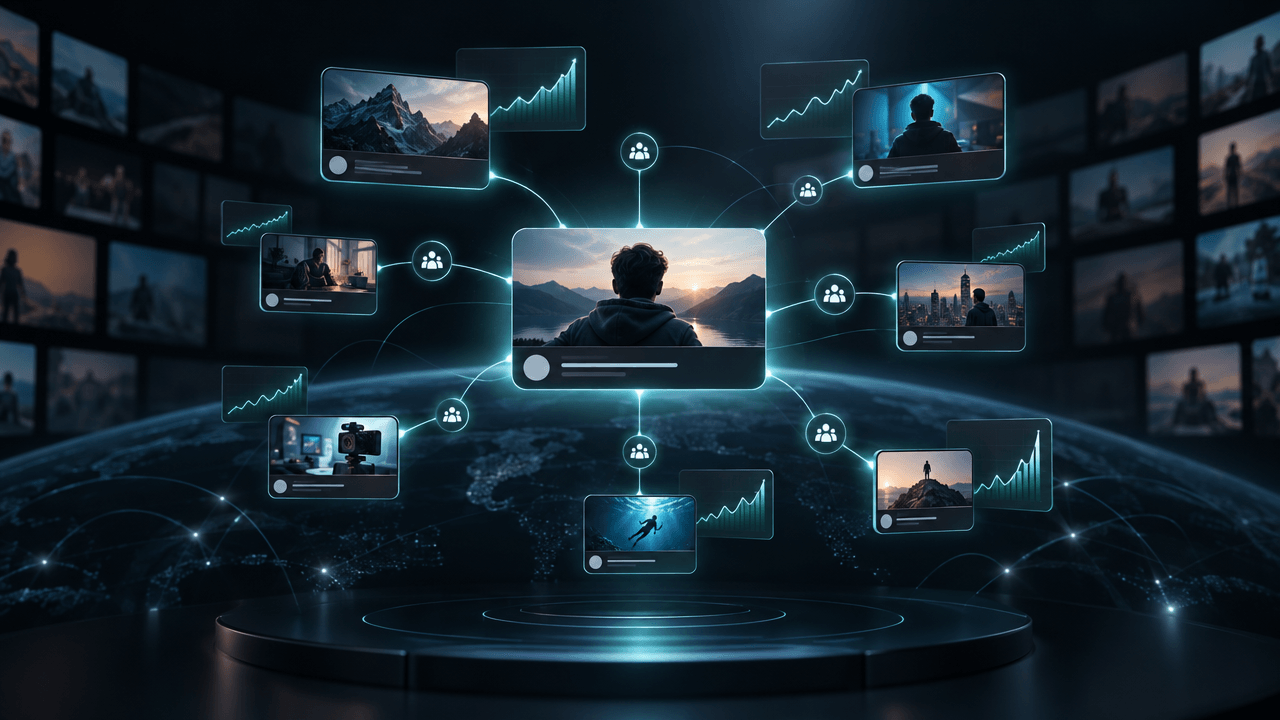
Most YouTube channel idea generators solve the easiest part of the problem.
They produce names.
They may suggest:
- AI news
- Personal finance
- Psychology
- Luxury
- History
- Productivity
- True crime
- Celebrity stories
Those are not channel strategies.
They are categories.
A useful YouTube channel idea generator should help you define:
- The specific viewer
- The recurring audience promise
- The content format
- The storytelling system
- The topic engine
- The title and thumbnail direction
- The production model
- The competitive opening
- The first videos
- The biggest risk
- The evidence showing why the idea deserves testing
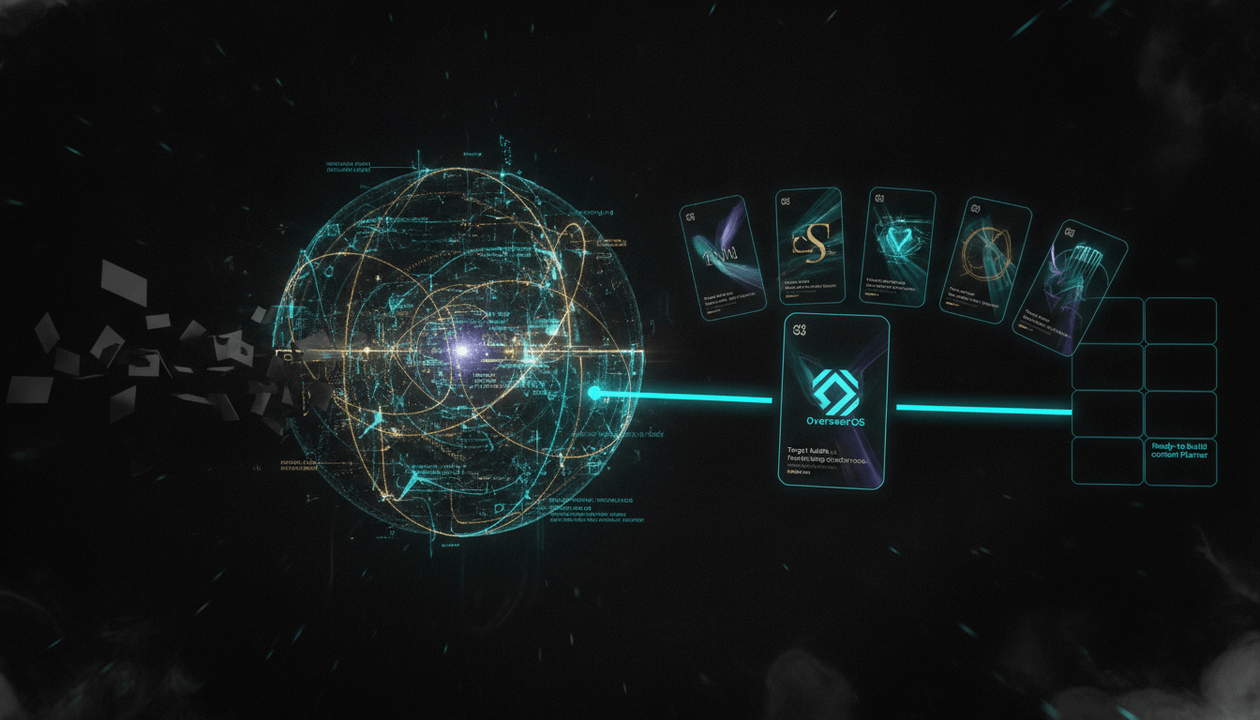
The best overall option is OverseerOS Niche Bender because it starts with a proven YouTube channel, extracts the transferable Format DNA behind it, conducts live market research, and turns the strongest findings into up to five validated new-channel opportunities.
NexLev is strongest for browsing and filtering faceless YouTube niches at scale. YouTube Studio Inspiration is the best free first-party idea tool for an existing channel. vidIQ Daily Ideas is useful for personalized video suggestions and relative view-potential signals. 1of10 is best for outlier-led ideation. Spotter Studio is designed for professional creator ideation workflows, while Subscribr connects outlier ideas with titles, thumbnails, and scripts.
The most important distinction is this:
A video idea generator tells you what to publish next. A channel idea generator should tell you what channel to build, who it serves, why it should exist, and how it can produce dozens of coherent videos.
This guide compares the best YouTube channel idea generator tools in 2026 and gives you a complete framework for turning AI suggestions into original, evidence-backed channel concepts.
Key Takeaways
- OverseerOS Niche Bender is the best overall tool for producing complete, validated YouTube channel opportunities from a proven source format.
- NexLev is best for exploring large numbers of faceless niches, channels, keywords, growth signals, and public market data.
- YouTube Studio Inspiration is the best free option for generating ideas based on an existing channel’s first-party audience and content data.
- vidIQ Daily Ideas is best for continuously generating personalized video ideas for an active channel.
- 1of10 is best for finding public outlier videos and turning their underlying patterns into new ideas, titles, and thumbnail directions.
- Spotter Studio is best suited to established creators and teams building a more structured ideation process.
- Subscribr is strongest when the creator wants to move quickly from outlier research to a title, thumbnail concept, and finished script.
- Most tools in this category are really video idea generators, not full channel idea generators.
- A viable channel idea requires more than a niche. It needs an audience, promise, format, topic system, packaging language, production model, differentiation, and launch plan.
- Public YouTube data can reveal demand, momentum, competitors, and outliers, but it cannot reveal another creator’s private click-through rate, retention, revenue, or returning-viewer data.
- AI-generated ideas should be treated as hypotheses, not guarantees.
- A channel should not be launched because one tool produced an attractive name or score.
- The best channel opportunities sit at the intersection of market demand, format fit, supply gap, operator advantage, and production feasibility.
- The strongest workflow begins with public evidence and ends with a controlled multi-video test.
Quick Verdict: Best YouTube Channel Idea Generator Tools
| Tool | Best For | Generates Full Channel Concepts | Uses YouTube Evidence | Packaging Support | Execution Support |
|---|---|---|---|---|---|
| OverseerOS Niche Bender | Validated new-channel opportunities | Strong | Strong | Strong | Strong |
| NexLev | Faceless niche and channel discovery | Moderate | Strong | Moderate | Moderate |
| YouTube Studio Inspiration | Free ideas based on your existing channel | Limited | Strong first-party data | Strong | Moderate |
| vidIQ Daily Ideas | Personalized recurring video ideas | Limited | Strong | Moderate | Moderate |
| 1of10 | Outlier-led ideas and packaging | Limited | Strong | Strong | Moderate |
| Spotter Studio | Professional ideation workflows | Moderate | Channel-informed | Strong | Strong |
| Subscribr | Moving from proven ideas to scripts | Limited | Strong | Strong | Strong |
The Direct Answer: What Is the Best YouTube Channel Idea Generator?
OverseerOS Niche Bender is the best YouTube channel idea generator for creators who want complete, evidence-backed channel opportunities rather than generic niche suggestions.
It accepts a YouTube channel URL and produces up to five new-channel profiles based on the source channel’s transferable Format DNA.
Each accepted opportunity can include:
- A proposed channel name
- A specific channel concept
- Target audience and promise
- Bend category
- Opportunity score
- Why the format transfers
- Market evidence
- Content pillars
- Launch-video ideas
- Packaging direction
- Main risk
- Supporting sources
- Original concept art
- One-click creation of a ready-to-work OverseerOS Channel Content Planner
Choose NexLev when the primary need is broad faceless-niche discovery.
Choose YouTube Studio Inspiration or vidIQ when the channel already exists and the main problem is deciding what video to publish next.
Choose 1of10 when outlier videos and packaging are the central inspiration source.
Choose Spotter Studio for a professional team ideation environment.
Choose Subscribr when the priority is going from a proven video pattern to a script quickly.
What Is a YouTube Channel Idea Generator?
A YouTube channel idea generator is software that helps a creator develop a potential channel position.
A basic generator may produce:
- Niche names
- Channel names
- Video categories
- Audience suggestions
- Content themes
A stronger channel idea generator should also help define:
- Target viewer
- Audience problem or desire
- Channel promise
- Content format
- Storytelling structure
- Content pillars
- Topic formula
- Title system
- Thumbnail direction
- Production requirements
- Competitive differentiation
- Launch-video plan
- Business model
- Risks
- Supporting evidence
The difference is important.
“Travel” is not a channel idea.
“Animated five-minute investigations into the hidden decisions that caused famous tourism projects to fail” is a channel idea.
“Finance” is not a channel idea.
“Calm visual case studies explaining one expensive financial mistake to first-time business owners” is a channel idea.
“Psychology” is not a channel idea.
“Story-driven animated videos helping conflict-avoidant adults recognize one relationship pattern before it becomes a crisis” is a channel idea.
The best generator creates a coherent media concept, not a list of topics.
Channel Idea Generator vs Video Idea Generator
These searches are often treated as interchangeable.
They solve different problems.
YouTube Channel Idea Generator
Answers:
What channel should I build?
The output should include:
- Audience
- Positioning
- Format
- Promise
- Content pillars
- Differentiation
- Production model
- Launch plan
YouTube Video Idea Generator
Answers:
What should this channel publish next?
The output may include:
- Topic
- Angle
- Title
- Thumbnail
- Hook
- Outline
Example
Channel idea:
A faceless documentary channel explaining the hidden engineering compromises behind everyday technology failures.
Video ideas:
- Why Touchscreens Become Useless in the Rain
- The Tiny Design Error That Grounded an Entire Aircraft
- Why Smart Homes Still Fail During Emergencies
- The Battery Problem Nobody Has Solved
- The Elevator Safety System That Changed Every City
The channel idea creates the system.
The video ideas populate it.
Channel Idea Generator vs YouTube Niche Finder
A YouTube niche finder helps identify markets, keywords, categories, and channels worth investigating.
A channel idea generator should convert that market information into a buildable position.
Niche Finder Output
Career development
Channel Idea Generator Output
Anonymous workplace case studies showing ambitious professionals how one hidden communication mistake affected a promotion, negotiation, or resignation.
A niche finder helps answer:
Where is activity happening?
A channel idea generator helps answer:
What specific channel should exist there?
Channel Idea Generator vs OverseerOS Niche Bender
Traditional AI channel generators begin with text prompts.
OverseerOS Niche Bender begins with a proven YouTube channel.
It asks:
What transferable system is making this format work, and where else could that system create value?
That process is called YouTube niche bending.
Instead of inventing a channel from nothing, OverseerOS Niche Bender uses a real source format as strategic evidence.
What a Strong YouTube Channel Idea Must Contain
A complete channel idea has ten components.
1. Target Viewer
Define a recognizable person in a specific situation.
Weak:
People interested in business.
Stronger:
First-time SaaS founders trying to understand why promising products stop growing.
2. Audience Promise
Explain what the viewer receives repeatedly.
Example:
Every video reveals the hidden decision behind a company’s growth plateau and the lesson founders can apply before making the same mistake.
3. Repeatable Format
Define the viewing experience.
Examples:
- Animated case study
- Narrated investigation
- On-camera experiment
- Ranked comparison
- Expert teardown
- Recurring fictional story
- Before-and-after transformation
- Visual timeline
- Myth-versus-evidence explainer
- Documentary countdown
4. Topic Formula
Define how subjects are selected and framed.
Example:
Recognizable company
+ hidden strategic mistake
+ measurable consequence
+ practical founder lesson
5. Storytelling Structure
Define how most videos progress.
Example:
Unexpected result
→ original ambition
→ hidden constraint
→ critical decision
→ escalating consequences
→ final outcome
→ transferable lesson
6. Packaging Language
Define the recurring relationship between titles and thumbnails.
Example:
- Title reveals the decision.
- Thumbnail reveals the consequence.
- Neither repeats the other.
- One recognizable object carries the visual concept.
- Text remains minimal or absent.
7. Production Model
Define what the team must create.
Examples:
- Narration
- Archival research
- Motion graphics
- Screen recordings
- Interviews
- AI-generated visuals
- Original filming
- Animation
- Maps
- Data visualization
8. Differentiation
Explain why the channel should exist when alternatives already exist.
Possible differentiation:
- Underserved audience
- Uncommon format
- Original data
- Better storytelling
- Greater transparency
- Narrower positioning
- Stronger visual identity
- New geography
- Better examples
- A distinctive point of view
9. Launch Plan
A real channel idea should immediately support at least five coherent videos.
10. Main Risk
Examples:
- Saturated market
- Weak topic depth
- High research cost
- Difficult packaging
- Expertise requirements
- Copyright exposure
- Dependence on trends
- Limited monetization
- Format too expensive
- Audience too narrow
When one of these ten components is missing, the idea is incomplete.
How We Evaluated the Best YouTube Channel Idea Generator Tools
The tools were evaluated using seven criteria.
1. Channel-Level Thinking
Does the tool generate a complete position or only isolated video ideas?
2. Evidence Quality
Does it use:
- Public YouTube data
- First-party channel data
- Outliers
- Competitor evidence
- Current research
- Audience signals
or does it rely mainly on generic AI output?
3. Specificity
Does the result define:
- Audience
- Format
- Promise
- Angle
- Production
- Launch topics
or merely return a broad niche label?
4. Validation
Does the tool help evaluate:
- Demand
- Competition
- Newcomer accessibility
- Saturation
- Format fit
- Audience fit
- Risk
5. Packaging Support
Can it help turn the channel idea into:
- Titles
- Thumbnails
- Hooks
- Recognizable visual language
6. Execution Support
Can the idea move into:
- Content planning
- Research
- Scripts
- Production
- Team workflows
7. Honesty
Does the product distinguish between:
- Public evidence
- Estimates
- predictions
- Guarantees
- Private competitor data
No legitimate tool can guarantee a successful channel.
1. OverseerOS Niche Bender: Best Overall YouTube Channel Idea Generator
OverseerOS Niche Bender is the strongest tool in this comparison because it is built specifically for generating new-channel opportunities rather than isolated topics.
The workflow begins with a successful YouTube channel.
The user pastes the channel URL or @handle and selects one of four bend modes:
- Best Opportunities
- Related
- Cross-Niche
- Completely Different
OverseerOS Niche Bender then analyzes the source channel’s public Format DNA and researches where that format might work again.
What OverseerOS Niche Bender Analyzes
The source analysis can include:
- Winning format
- Audience promise
- Topic formulas
- Storytelling structure
- Hook pattern
- Title pattern
- Thumbnail style
- Production model
- Representative videos
- Outlier performance
- Recent activity
- Transcript openings
- Transferable elements
- Creator-specific advantages
Transferable vs Creator-Specific
This distinction is one of the tool’s strongest strategic features.
A channel may succeed partly because of:
- Celebrity
- Personal expertise
- Exclusive access
- A large budget
- An established audience
- A recognizable face
- A unique personality
- Proprietary information
Those advantages may not transfer.
OverseerOS Niche Bender separates them from reusable principles such as:
- Documentary escalation
- Curiosity-led openings
- Recurring comparison structures
- Visual storytelling
- Audience transformation
- Title-thumbnail complementarity
- Production simplicity
- Topic selection formulas
The Four Bend Modes
Best Opportunities
Searches across all bend distances and attempts to return the strongest valid mix.
Related
Finds neighboring opportunities close to the source niche.
Cross-Niche
Moves the format into a meaningfully different subject or market.
Completely Different
Searches for far or contrarian applications of the format.
What Each Opportunity Includes
An accepted profile can contain:
- Channel name
- Specific concept
- Bend category
- Opportunity score
- Evidence rating
- Why the format transfers
- Market evidence
- Content pillars
- Launch-video ideas
- Packaging direction
- Main risk
- Supporting sources
- Original key art
Opportunity Scoring
The score is recomputed using:
Opportunity Score =
(Format Fit × 0.40)
+ (Demand × 0.35)
+ (Supply Gap × 0.25)
This score compares the returned opportunities.
It is not a percentage likelihood of success.
Validation Controls
OverseerOS Niche Bender can reject a candidate when it is:
- Too broad
- Too vague
- Semantically duplicated
- Missing a valid source
- Supported only by weak sources
- Internally inconsistent
- Saturated while claiming an unrealistic supply gap
- Unsupported by market evidence
The product returns up to five profiles.
It may return fewer rather than filling the page with weaker concepts.
Build This Channel
The strongest execution feature is Build This Channel.
Selecting it creates an OverseerOS Channel Content Planner containing:
- Channel concept
- Audience promise
- Content pillars
- Format direction
- Packaging direction
- Launch-video ideas
- Source-channel context
- Source Format DNA
The launch ideas are added as planned topics.
Best For
- New YouTube channel concepts
- Faceless channel operators
- Multi-channel media businesses
- Creators launching a second channel
- Agencies
- Channel strategists
- Format-first niche research
- Cross-niche expansion
- Launch planning
- Teams that need research and execution connected
Main Strength
OverseerOS Niche Bender generates a complete opportunity rather than an attractive category name.
Main Limitation
A strong research result still requires human execution.
OverseerOS Niche Bender cannot know every personal advantage, budget constraint, legal requirement, or production weakness of the operator.
It also cannot reveal a competitor’s private:
- Impressions
- Click-through rate
- Retention
- Traffic sources
- Returning viewers
- Revenue
Access
OverseerOS Niche Bender is available on Pro and Elite plans.
Pro users receive three fresh research runs per day.
Elite users receive ten.
2. NexLev: Best for Faceless YouTube Niche Discovery
NexLev is designed heavily around faceless YouTube research.
Its Niche Finder helps users discover and monitor:
- Niches
- Channels
- Keywords
- Channel growth
- Video performance
- Engagement
- Public outliers
- Revenue estimates
- Competitor activity
It is useful for creators who want to browse a large market database before selecting a channel direction.
Niche Finder
NexLev positions its Niche Finder around:
- Advanced filtering
- Curated niche exploration
- Public channel data
- Channel monitoring
- Keyword research
- Faceless outliers
- Growth signals
- Market analysis
Where NexLev Fits in Channel Ideation
NexLev is strongest during the market-discovery phase.
It can help answer:
- Which faceless categories are active?
- Which channels are growing?
- Which formats are producing outliers?
- Which niches contain smaller successful channels?
- Which markets deserve deeper investigation?
The user can then convert those findings into a specific channel concept.
Best For
- Faceless creators
- Niche browsing
- Large-scale channel research
- Public market data
- Competitor monitoring
- Keyword research
- Operators looking for established categories
- Creators who prefer filtering over open-ended brainstorming
Main Strength
NexLev provides a broad research environment for discovering niches and channels using public YouTube signals.
Main Limitation
Finding a promising niche does not automatically produce a differentiated channel.
The operator still needs to define:
- Audience
- Promise
- Format
- Story structure
- Packaging
- Launch topics
- Strategic advantage
NexLev is better at finding the market than fully designing the channel position.
3. YouTube Studio Inspiration: Best Free First-Party Idea Generator
YouTube Studio Inspiration is the strongest free idea tool for creators who already operate a YouTube channel.
It can generate and brainstorm:
- Ideas
- Titles
- Thumbnails
- Outlines
- Hooks
The suggestions can use information connected to the creator’s existing channel.
Channel-Based Suggestions
YouTube Studio Inspiration can show suggested ideas based on channel data.
Users can also:
- Enter prompts
- Refine suggestions
- Request similar ideas
- Build from previously published videos
- Save ideas
- Review related content
Idea Evidence
Idea cards can include signals such as:
- Audience interest
- Aggregated comment insights
- Prediction signals
- Channel alignment
- Related topical interest
- Related videos
- Creator names
- Views
- Thumbnails
- Upload dates
Why First-Party Data Matters
Third-party tools can study public competitors.
YouTube Studio can connect ideas with information from the creator’s own channel.
That makes it useful for determining:
- Whether current viewers may care
- How an idea connects to existing videos
- Which audience questions are emerging
- Whether a topic fits the channel
- What related content viewers already consume
Best For
- Existing channels
- Free ideation
- Audience-aligned video ideas
- First-party validation
- Titles
- Thumbnails
- Hooks
- Outlines
- Testing extensions of existing content pillars
Main Strength
It is connected to the platform and the creator’s own channel context.
Main Limitation
YouTube Studio Inspiration primarily helps decide what an existing channel should make next.
It is not designed to produce a complete new-channel strategy containing:
- Market positioning
- Production model
- Competitive supply gap
- Multi-channel opportunity comparison
- Full launch architecture
It is also most useful when the channel has enough data to personalize the suggestions.
4. vidIQ Daily Ideas: Best for Personalized Recurring Suggestions
vidIQ Daily Ideas generates recurring video suggestions tailored to an active YouTube channel.
The system can use:
- The channel’s history
- Similar channels
- Related keywords
- Successful comparable videos
- Current topic patterns
- Industry trends
Personalized Idea Feed
vidIQ provides fresh idea suggestions and allows creators to save or dismiss them.
This is useful for creators who publish frequently and need a continuous pipeline.
View Prediction
Ideas can receive relative potential classifications based on analysis of similar content.
vidIQ describes these as comparative signals rather than guarantees.
Creators should use them to prioritize research.
They should not treat them as promised views.
Similar-Video Research
Users can inspect successful videos connected to a suggested idea.
That helps answer:
- Has the topic already worked?
- Which channels covered it?
- How was it packaged?
- Is the opportunity current?
- Is the topic aligned with the channel?
Title Recommendations
Daily Ideas can also provide title suggestions connected to a proposed topic.
Best For
- Existing channels
- Frequent publishers
- Personalized video ideation
- Daily inspiration
- Competitor-informed topics
- View-potential prioritization
- Search and trend research
Main Strength
vidIQ connects ongoing ideation with channel history and comparable YouTube content.
Main Limitation
Daily Ideas is primarily a video-level feature.
It can help test the possible content of a channel, but it does not automatically define a complete new-channel identity.
A useful new-channel workflow could involve entering several proposed pillars into vidIQ and checking whether each pillar produces enough strong video ideas.
5. 1of10: Best for Outlier-Led Channel Ideation
1of10 combines public YouTube outlier discovery with AI-assisted ideas, titles, and thumbnails.
Its tools include:
- YouTube Outlier Finder
- YouTube Idea Generator
- YouTube Title Generator
- Thumbnail tools
- Niche Explorer
- Trending Formats
- Competitor tracking
- Virality monitoring
- Saved research
Outlier-Led Research
An outlier is a video performing substantially above its channel’s normal baseline.
Outliers can reveal:
- Strong topic demand
- Unusual packaging
- Emerging formats
- Audience curiosity
- New market openings
- Ideas capable of attracting viewers beyond the existing subscriber base
Idea Generator
1of10 can create ideas tailored to a connected channel using YouTube data.
For new-channel research, creators can use it to test:
- Whether a proposed niche produces enough outliers
- Which title mechanisms repeat
- Which formats are rising
- Whether multiple channels prove the opportunity
- Whether the topic universe is deep enough
Title and Thumbnail Support
A channel concept becomes more credible when it can generate several strong packages.
1of10 helps explore that layer.
Best For
- Outlier research
- Browse-led channels
- Entertainment
- Documentary channels
- Faceless creators
- Packaging
- Finding recurring public patterns
- Testing whether a proposed channel idea can produce clickable videos
Main Strength
1of10 connects evidence from public winners with ideas and packaging.
Main Limitation
A set of strong outlier-inspired videos does not automatically create a coherent channel.
The operator still needs to define:
- Audience promise
- Content pillars
- Format consistency
- Production model
- Differentiation
- Long-term strategic identity
Avoid turning outlier research into title or thumbnail imitation.
Extract the principle and rebuild it around original content.
6. Spotter Studio: Best for Professional Creator Ideation
Spotter Studio is positioned as an ideation system for professional YouTubers.
It focuses on helping creators:
- Develop ideas
- Refine concepts
- Plan videos
- Conduct research
- Improve creative efficiency
- Move from an early thought toward a fuller video project
Channel-Tailored Ideation
Spotter Studio emphasizes suggestions tailored to the creator and channel rather than generic prompting.
That makes it useful for established creators who already know:
- Their audience
- Their format
- Their production model
- Their creative voice
Team Ideation
Professional teams often struggle with:
- Scattered ideas
- Weak briefs
- Unclear ownership
- Endless brainstorming
- Losing context between research and production
- Developing ideas without deciding which should advance
A structured ideation system can make that process more consistent.
Best For
- Established creators
- Creator businesses
- Professional teams
- High-output channels
- Structured brainstorming
- Developing flagship video concepts
- Teams with an existing channel strategy
Main Strength
Spotter Studio focuses on the creative-development process, not only producing raw suggestions.
Main Limitation
It is most naturally suited to creators who already operate a channel and understand their positioning.
A new creator may still need a separate market and niche research process before using professional ideation tools effectively.
7. Subscribr: Best for Turning Proven Ideas Into Scripts
Subscribr connects YouTube idea discovery with scriptwriting.
Its workflow can include:
- Connecting a channel
- Finding outlier videos
- Tracking competitors
- Generating data-backed ideas
- Producing titles
- Suggesting thumbnail concepts
- Writing scripts
- Editing scripts
- Research assistance
Outlier Idea Generator
Subscribr identifies videos performing above a channel’s normal level and uses those patterns to develop new ideas.
It can provide:
- Ideas
- Titles
- Angles
- Thumbnail concepts
Idea-to-Script Workflow
After choosing an idea, the creator can move into a script workflow without rebuilding the context elsewhere.
This is useful when production speed is the main bottleneck.
How It Supports Channel Ideation
Subscribr can help test a possible channel idea by determining whether it supports:
- Strong outlier-inspired topics
- Repeatable hooks
- Multiple title directions
- Viable scripts
- Faceless production
- Long-form storytelling
Best For
- Faceless channels
- Idea-to-script workflows
- Outlier research
- Competitor tracking
- Script generation
- Solo creators
- Teams prioritizing production speed
Main Strength
Subscribr reduces the distance between research and a usable script.
Main Limitation
Its core strength is video development within a defined direction.
The creator still needs to establish the broader channel thesis before generating many scripts.
A fast script workflow cannot rescue a weak position.
Best Tool by Use Case
| Use Case | Best Tool |
|---|---|
| Generate a complete new YouTube channel concept | OverseerOS Niche Bender |
| Turn a proven format into new markets | OverseerOS Niche Bender |
| Find faceless niches at scale | NexLev |
| Research public niche and channel data | NexLev |
| Generate free ideas from an existing channel | YouTube Studio Inspiration |
| Find audience-aligned next-video ideas | YouTube Studio Inspiration |
| Receive recurring personalized ideas | vidIQ |
| Rank video ideas by relative potential | vidIQ |
| Find outlier-led opportunities | 1of10 |
| Develop titles and thumbnails from public patterns | 1of10 |
| Build a professional team ideation process | Spotter Studio |
| Move from an outlier to a finished script | Subscribr |
| Create a launch-ready planner from an opportunity | OverseerOS Niche Bender |
| Research a new faceless media portfolio | OverseerOS Niche Bender plus NexLev |
| Validate launch topics for an existing audience | YouTube Studio plus OverseerOS |
| Build scripts after choosing the channel direction | OverseerOS plus Subscribr |
The 100-Point YouTube Channel Idea Score
Do not select a channel concept because it sounds exciting.
Score it.
Rate each factor from 0 to 5.
Calculate:
Factor Score = Rating ÷ 5 × Weight
| Factor | Weight | Core Question |
|---|---|---|
| Audience clarity | 10 | Can the target viewer be described precisely? |
| Audience demand | 15 | Is there evidence that the viewer cares? |
| Format-market fit | 15 | Does the format naturally serve this market? |
| Differentiation | 15 | Why should this channel exist? |
| Topic depth | 10 | Can it support dozens of strong videos? |
| Packaging potential | 10 | Can the channel create distinctive titles and thumbnails? |
| Newcomer accessibility | 10 | Can unfamiliar or smaller channels earn attention? |
| Production feasibility | 5 | Can the model be sustained? |
| Operator advantage | 5 | Does the team bring a meaningful edge? |
| Business alignment | 5 | Does the channel support a valuable outcome? |
| Total | 100 |
How to Interpret the Score
| Score | Interpretation | Decision |
|---|---|---|
| 85 to 100 | Exceptional channel hypothesis | Build a controlled launch plan |
| 70 to 84 | Strong opportunity | Validate packaging and production |
| 55 to 69 | Promising but incomplete | Improve the weakest factors |
| 40 to 54 | High-risk concept | Run a smaller test first |
| Below 40 | Weak channel thesis | Reject or rebuild |
This manual framework is separate from the OverseerOS Niche Bender opportunity score.
It adds operator-specific considerations.
Factor 1: Audience Clarity
Complete:
This channel is for [specific viewer] who wants [specific outcome] but struggles with [specific obstacle].
Weak:
People who like technology.
Stronger:
Non-technical small-business owners who want to understand which AI systems are worth adopting without sitting through product hype.
Factor 2: Audience Demand
Evidence may include:
- Successful comparable channels
- Outlier videos
- Search behavior
- Audience comments
- Community discussions
- Product demand
- Repeated questions
- Trend data
- Industry activity
- Successful related formats
One famous creator is weak evidence.
Several independent signals are stronger.
Factor 3: Format-Market Fit
Ask:
- Does the storytelling mechanism suit the subject?
- Can the format repeat without becoming forced?
- Does the audience enjoy this viewing experience?
- Can the promise be delivered consistently?
- Does the production model make sense?
A powerful format can fail when moved into the wrong market.
Factor 4: Differentiation
Complete:
Existing channels mostly [current pattern], while this channel will [meaningful difference] for [specific viewer].
Weak:
We will make better videos.
Stronger:
Existing cybersecurity channels focus on technical news, while this channel will tell cinematic stories about one human decision behind major security failures for non-technical business leaders.
Factor 5: Topic Depth
Write 30 potential videos.
Then divide them into pillars.
A channel idea is fragile when the first ten ideas are strong and the next twenty are repetitions.
Factor 6: Packaging Potential
Create five title-thumbnail combinations.
The channel should support a recognizable packaging system without making every video look identical.
Factor 7: Newcomer Accessibility
Look for:
- Smaller-channel outliers
- Emerging channels
- Successful new entrants
- Videos where subject strength exceeded creator fame
- Formats with low dependence on personality
- Viewer willingness to click unfamiliar channels
A market may have demand but remain dominated by established personalities.
Factor 8: Production Feasibility
Estimate:
- Research hours
- Script time
- Recording
- Visual creation
- Editing
- Thumbnail work
- Fact-checking
- Cost
- Revision risk
- Publishing cadence
Factor 9: Operator Advantage
Possible advantages:
- Expertise
- Access
- Data
- Storytelling
- Editing
- Speed
- Distribution
- Language
- Geography
- Existing audience
- Team experience
- Proprietary workflow
Factor 10: Business Alignment
Possible channel outcomes:
- Advertising revenue
- Sponsorships
- Affiliate income
- Product trials
- Consulting leads
- Newsletter growth
- Brand authority
- Media portfolio value
- Customer education
- Community building
How to Generate a Strong YouTube Channel Idea Step by Step
Step 1: Choose the Starting Method
There are three strong starting points.
Market First
Begin with a market or audience.
Example:
First-time managers.
Problem First
Begin with a recurring problem.
Example:
People become managers without learning how to handle conflict.
Format First
Begin with a proven channel format.
Example:
Animated stories that reveal a hidden behavioral pattern.
OverseerOS Niche Bender specializes in the format-first method.
Step 2: Collect Proven References
Find three to ten relevant channels.
Include:
- Direct competitors
- Emerging channels
- Format leaders
- Adjacent creators
- Channels outside the niche using a transferable format
Use:
- OverseerOS Viral Channel Finder
- NexLev
- 1of10
- YouTube Search
- YouTube Studio
- vidIQ
Step 3: Identify the Winning Format DNA
Study:
- Audience promise
- Topic formula
- Hooks
- Storytelling
- Titles
- Thumbnails
- Production
- Video length
- Recurring sections
- Emotional payoff
Separate the format from the topic.
Step 4: Separate Transferable Advantages
Transferable:
- Structure
- Packaging logic
- Audience transformation
- Production method
- Topic selection
- Hook mechanism
Potentially non-transferable:
- Celebrity
- Face
- Reputation
- Access
- Budget
- Personality
- Existing audience
- Exclusive relationships
Step 5: Generate Several Channel Positions
Create:
- Three related opportunities
- Three cross-niche opportunities
- Three completely different opportunities
Do not judge yet.
Step 6: Define Each Concept Completely
For every candidate, write:
- Viewer
- Promise
- Format
- Topic formula
- Pillars
- Packaging
- Production
- Advantage
- Risk
- First five videos
Step 7: Validate Demand and Supply
Research:
- Active channels
- Recent videos
- Outliers
- Smaller creators
- Competition
- Search interest
- Viewer comments
- Content quality
- Market gaps
Use the YouTube niche saturation checker framework to avoid confusing activity with accessibility.
Step 8: Generate Five Launch Videos
The videos should prove the same channel promise from different angles.
Step 9: Build the Packaging System
Create:
- Five titles
- Five thumbnail concepts
- A repeated visual language
- A clear title-thumbnail relationship
Step 10: Estimate Production Economics
Determine:
- Cost per video
- Time per video
- Publishing capacity
- Team requirements
- Revenue path
- Break-even assumptions
Step 11: Score the Idea
Use the 100-point framework.
Step 12: Launch a Controlled Test
Publish a coherent group of videos.
Do not judge the thesis from one upload.
Copy-and-Paste YouTube Channel Idea Generator Prompt
Use this with a general AI assistant when a specialized tool is unavailable.
You are a YouTube channel strategist.

I want you to generate buildable YouTube channel concepts, not broad niche labels.

SOURCE FORMAT OR CHANNEL
[Describe the successful channel or paste your observations]

TARGET MARKET OR INTERESTS
[Optional]

MY SKILLS AND RESOURCES
Expertise:
Production skills:
Budget:
Team:
Preferred format:
Publishing capacity:
Business goal:

For each proposed channel, provide:

1. Channel name
2. Specific target viewer
3. Recurring audience promise
4. Differentiated channel concept
5. Repeatable video format
6. Topic formula
7. Three content pillars
8. Five launch-video ideas
9. Title pattern
10. Thumbnail direction
11. Production model
12. Why the source format transfers
13. Main competitive advantage
14. Main risk
15. Evidence that would need verification before launch

Generate:

- 3 related concepts
- 3 cross-niche concepts
- 3 completely different concepts

Reject:

- Broad niche labels
- Generic ideas
- Concepts dependent on copying another creator
- Ideas with no repeatable topic engine
- Ideas requiring private competitor data
- Unsupported revenue claims
- Guaranteed-growth claims

End by ranking the strongest three based on:

- Format fit
- Audience demand
- Supply gap
- Production feasibility
- Operator advantage

Clearly label assumptions that require external research.
This prompt improves structure.
It does not provide live YouTube research by itself.
Copy-and-Paste Channel Opportunity Brief
YOUTUBE CHANNEL OPPORTUNITY BRIEF

CHANNEL NAME
[Working name]

TARGET VIEWER
[Specific viewer]

VIEWER SITUATION
[What is happening in their life when they watch?]

AUDIENCE PROMISE
[What will every video deliver?]

CHANNEL CONCEPT
[One precise paragraph]

FORMAT
[Documentary, tutorial, animation, experiment, interview, etc.]

TOPIC FORMULA
[How subjects will be selected]

STORY STRUCTURE
1.
2.
3.
4.
5.

CONTENT PILLARS
1.
2.
3.

TITLE SYSTEM
[Recurring title mechanisms]

THUMBNAIL SYSTEM
[Visual hierarchy, focal object, emotion, text rules]

PRODUCTION MODEL
Research:
Script:
Voice:
Visuals:
Editing:
Publishing cadence:

TRANSFERABLE FORMAT ELEMENTS
1.
2.
3.
4.

NON-TRANSFERABLE SOURCE ADVANTAGES
1.
2.
3.

MARKET EVIDENCE
Relevant channels:
Recent outliers:
Smaller-channel proof:
Audience questions:
Search or trend evidence:

DIFFERENTIATION
Existing channels:
Our difference:
Why viewers should care:

FIRST 10 VIDEOS
1.
2.
3.
4.
5.
6.
7.
8.
9.
10.

BUSINESS MODEL
Advertising:
Sponsors:
Affiliates:
Products:
Services:
Other:

MAIN RISKS
1.
2.
3.

100-POINT SCORE
Audience clarity:
Audience demand:
Format-market fit:
Differentiation:
Topic depth:
Packaging potential:
Newcomer accessibility:
Production feasibility:
Operator advantage:
Business alignment:

TOTAL:

TEST PLAN
Number of videos:
Budget:
Timeline:
Primary success signals:
Kill criteria:
Double-down criteria:
Example: Turning a Proven Business Channel Into New Ideas
Assume the source format is:
Cinematic documentaries showing how one hidden decision caused a famous company to collapse.
Format DNA
- Recognizable subject
- Hidden-cause curiosity
- Rise-and-fall narrative
- Escalating consequences
- Archival visuals
- One strategic lesson
- Titles focused on an irreversible mistake
- Thumbnails focused on visible collapse
Related Channel Idea
The Creator Business Autopsy
Audience:
Creators building products, agencies, courses, and media businesses.
Promise:
Reveal the hidden decision that caused a promising creator business to collapse.
Launch ideas:
- The Sponsorship Deal That Destroyed a Creator’s Trust
- Why This Massive Newsletter Business Stopped Growing
- The Course Launch That Turned an Audience Against Its Creator
- How One Platform Dependency Killed the Business
- The Expansion That Broke a Profitable Media Brand
Cross-Niche Channel Idea
Megaproject Failure Files
Audience:
Viewers fascinated by engineering, infrastructure, and large-scale ambition.
Promise:
Reveal the planning decision behind failed airports, stadiums, cities, railways, and ships.
Completely Different Channel Idea
Expeditions That Were Doomed
Audience:
History and survival viewers.
Promise:
Reconstruct the leadership and planning decision that made a famous expedition fail before the disaster became visible.
The subjects change.
The transferable system remains:
Ambition
→ hidden weakness
→ irreversible decision
→ escalating consequences
→ collapse
→ lesson
Example: Turning an Animated Psychology Format Into New Ideas
Source format:
Soft animated stories following a recurring character through a relatable emotional pattern.
Related Idea
The Quiet Conflict
Animated workplace stories helping conflict-avoidant professionals recognize passive aggression, unclear boundaries, and hidden resentment.
Cross-Niche Idea
Money Patterns
Animated stories showing how shame, identity, and family habits shape everyday financial decisions.
Completely Different Idea
The Negotiation Inside Your Head
Narrative animations where competing mental biases become recurring characters during important decisions.
The transferable elements include:
- Recurring character
- Emotional recognition
- Soft narration
- One hidden pattern
- Story before explanation
- Practical closing insight
The creator-specific art, characters, scripts, branding, and voice should not be copied.
How to Test a Channel Idea Before Launching It
Test 1: The 30-Title Test
Write 30 credible video titles.
Failure signals:
- Repetitive subjects
- Titles requiring exaggeration
- Weak distinction between pillars
- Ideas that depend on one trend
- No natural follow-ups
Test 2: The Five-Thumbnail Test
Create five distinct thumbnail concepts using one recognizable visual system.
Failure signals:
- Every thumbnail needs heavy text
- Concepts are too abstract
- The images look identical
- The title carries the entire promise
- The channel has no visual identity
Test 3: The Small-Channel Proof Test
Find evidence that unfamiliar or smaller channels can earn attention in the market.
Test 4: The Production Test
Produce one representative video privately or as a pilot.
Measure:
- Cost
- Time
- Research burden
- Revision difficulty
- Visual availability
- Enjoyment
- Repeatability
Test 5: The Audience Test
Present the channel promise and five ideas to people matching the target viewer.
Do not ask:
Do you like this?
Ask:
- Which video would you click first?
- What do you expect this channel to deliver?
- Which idea feels generic?
- What would make you subscribe?
- Which promise feels unbelievable?
- What is missing?
Test 6: The Business Test
Determine whether the likely audience supports the intended business outcome.
Test 7: The Ten-Video Test
Publish a coherent set before making a final judgment.
The Five-Channel Launch Portfolio
A media operator should not automatically launch every strong result.
Classify opportunities by strategic role.
Core Business Channel
Directly supports the main company or revenue engine.
Authority Channel
Builds trust in a valuable market.
Cash-Flow Channel
Targets a proven monetizable audience with manageable production.
Experimental Channel
Tests an emerging format or market cheaply.
Long-Term Media Asset
Requires greater investment but could build durable intellectual property.
Most small teams should focus on one primary launch at a time.
Common YouTube Channel Idea Generator Mistakes
Mistake 1: Accepting a Broad Niche as a Channel Idea
“History” is not positioning.
Mistake 2: Asking AI for Profitable Niches Without Context
The output cannot account for your:
- Skills
- Budget
- Geography
- Language
- Production capacity
- Business
- Audience knowledge
Mistake 3: Trusting Revenue Estimates
Public tools cannot know another creator’s exact:
- RPM
- Sponsorship revenue
- Affiliate income
- Product sales
- Revenue share
- Geography mix
- Production costs
Mistake 4: Choosing Only by Demand
Demand without differentiation creates a crowded channel.
Mistake 5: Choosing Only by Low Competition
Low competition may indicate low viewer interest.
Mistake 6: Copying a Proven Channel Too Closely
Transfer principles.
Do not copy:
- Scripts
- Titles
- Thumbnails
- Branding
- Characters
- Original frameworks
- Visual sequences
Mistake 7: Ignoring Creator-Specific Advantages
The source format may depend on a host, reputation, access, or budget.
Mistake 8: Building a Channel Around One Viral Video
One outlier is not a repeatable market.
Mistake 9: Skipping Packaging
An idea that cannot produce a clear title and thumbnail is not ready.
Mistake 10: Ignoring Topic Depth
A channel needs a durable topic engine.
Mistake 11: Treating AI Scores as Predictions
A score helps rank ideas.
It does not guarantee views.
Mistake 12: Generating Scripts Before Validating the Channel
Fast production creates expensive commitment to weak strategies.
Mistake 13: Ignoring Production Economics
The channel must survive operational reality.
Mistake 14: Launching Too Many Channels
Opportunity discovery can create distraction.
Mistake 15: Judging the Channel After One Upload
You need enough data to separate:
- Topic weakness
- Packaging weakness
- Production weakness
- Channel-position weakness
- Normal early-stage variance
The 45-Minute YouTube Channel Idea Workflow
Minutes 0 to 5: Define Your Constraints
Write:
- Skills
- Budget
- Format
- Team
- Publishing capacity
- Business goal
Minutes 5 to 12: Find a Proven Source
Use:
- OverseerOS Viral Channel Finder
- NexLev
- 1of10
- YouTube Search
Minutes 12 to 20: Extract the Format DNA
Record:
- Promise
- Hook
- Story
- Topic formula
- Packaging
- Production
- Transferable elements
Minutes 20 to 28: Generate Channel Bends
Create:
- Related
- Cross-Niche
- Completely Different
Minutes 28 to 35: Validate
Check:
- Demand
- Competitors
- Outliers
- Supply gap
- Smaller-channel proof
- Topic depth
Minutes 35 to 40: Build Five Packages
Create five titles and thumbnails.
Minutes 40 to 45: Score and Decide
Choose:
- Build
- Research further
- Test smaller
- Reject
OverseerOS Niche Bender can complete much of the channel analysis, market research, opportunity generation, scoring, and planner setup in one workflow.
YouTube Channel Idea Checklist
Audience
- The target viewer is specific.
- The viewer’s problem or desire is clear.
- The channel serves a recurring need.
- The audience is strategically valuable.
Promise
- The audience promise fits in one sentence.
- Every pillar supports that promise.
- The promise is meaningful and believable.
- Viewers would understand why they should subscribe.
Format
- The format is repeatable.
- It suits the audience.
- It can support several topics.
- The production model is realistic.
- Transferable and creator-specific elements are separated.
Market
- Multiple evidence sources support demand.
- Recent competitors were reviewed.
- Smaller-channel proof exists.
- Supply and saturation were evaluated.
- Public-data limitations are understood.
Content
- Three clear pillars exist.
- At least 30 credible titles exist.
- The first ten videos form a coherent test.
- Follow-up ideas exist.
- Topic depth is sufficient.
Packaging
- A recurring title system exists.
- A recurring thumbnail system exists.
- Five strong packages were created.
- The visual identity is distinct.
- The promise remains honest.
Execution
- Production cost was estimated.
- Publishing capacity was assessed.
- Expertise and sourcing requirements are understood.
- Copyright and policy risks were reviewed.
- The team has a clear advantage.
Decision
- The 100-point score is complete.
- The main risk is documented.
- Kill criteria exist.
- Double-down criteria exist.
- The next action is clear.
Final Verdict
The best YouTube channel idea generator depends on the level of strategy required.
Use OverseerOS Niche Bender when you need a complete new-channel opportunity built from a proven format and validated through live market evidence.
It is the strongest option for:
- New-channel positioning
- Related niche expansion
- Cross-niche strategy
- Completely different format transfers
- Content pillars
- Launch-video ideas
- Packaging direction
- Opportunity scoring
- Source-backed validation
- One-click planner creation
Use NexLev when the main priority is browsing faceless niches, public channels, keywords, outliers, and market signals at scale.
Use YouTube Studio Inspiration when you already have a channel and want free ideas connected to your own audience and publishing history.
Use vidIQ Daily Ideas when you need a continuous stream of personalized video suggestions and comparative potential signals.
Use 1of10 when outlier discovery, titles, thumbnails, and browse-led ideation are the priority.
Use Spotter Studio when an established creator or team needs a structured professional ideation environment.
Use Subscribr when the channel direction already exists and the main goal is moving quickly from a proven topic pattern into a title, thumbnail concept, and script.
The winning process is:
- Find a proven channel or market.
- Extract the transferable format.
- Separate creator-specific advantages.
- Generate several specific channel positions.
- Validate demand and supply.
- Test topic depth.
- Develop the packaging system.
- Estimate production economics.
- Score the opportunity.
- Launch a controlled set of videos.
- Learn from first-party YouTube Analytics.
- Strengthen or reject the thesis.
The goal is not to generate the most channel ideas.
The goal is to identify the one channel your team has a credible reason to build.
Frequently Asked Questions
What is the best YouTube channel idea generator?
OverseerOS Niche Bender is the best option for generating complete, validated new-channel opportunities.
It analyzes a proven source channel, extracts its Format DNA, researches new markets, and produces up to five opportunity profiles with scores, evidence, pillars, launch ideas, packaging, risks, sources, and planner integration.
What is a YouTube channel idea generator?
A YouTube channel idea generator is software that helps develop a potential channel concept.
The strongest tools define the audience, promise, format, topic system, packaging, production model, differentiation, launch ideas, and risks.
Can AI generate a complete YouTube channel idea?
AI can generate the strategic structure of a channel.
The idea still needs validation using current market evidence, public YouTube performance, production constraints, and human judgment.
What is the difference between a YouTube niche and a channel idea?
A niche is a market category.
A channel idea is a differentiated content system designed for a specific viewer.
“Psychology” is a niche.
“Animated relationship stories for conflict-avoidant adults” is a channel idea.
What is the difference between a channel idea generator and a video idea generator?
A channel idea generator determines what media property to build.
A video idea generator determines what that channel should publish next.
What is the best free YouTube channel idea generator?
YouTube Studio Inspiration is the strongest free first-party option for creators with an existing channel.
It can generate ideas, titles, thumbnails, hooks, and outlines using channel-connected context.
What is the best channel idea generator for faceless YouTube?
OverseerOS Niche Bender is best for generating complete faceless channel positions from proven formats.
NexLev is useful for discovering and filtering faceless niches and channels at scale.
How does OverseerOS Niche Bender generate channel ideas?
The user pastes a YouTube channel URL and chooses a bend mode.
OverseerOS Niche Bender analyzes the source Format DNA, researches demand and competition, rejects weak candidates, and returns up to five ranked opportunities.
What are the OverseerOS Niche Bender modes?
The modes are:
- Best Opportunities
- Related
- Cross-Niche
- Completely Different
How many channel ideas does OverseerOS Niche Bender return?
It returns up to five validated opportunity profiles.
It may return fewer when weaker candidates fail validation.
Does OverseerOS Niche Bender use live research?
Yes.
The strongest candidates are researched against current demand and competition, and accepted profiles include supporting sources.
How does OverseerOS Niche Bender score ideas?
The opportunity score is calculated from:
- 40% format fit
- 35% demand
- 25% supply gap
Does a high score guarantee YouTube success?
No.
A score is a comparative research signal.
Success depends on execution, packaging, audience satisfaction, production, timing, consistency, and other factors.
Can a channel idea generator show competitor revenue?
A public tool cannot know a competitor’s exact total revenue without authorized private access.
Revenue estimates should be treated cautiously.
Can a channel idea generator see competitor CTR or retention?
No ordinary public tool can access another creator’s private click-through rate or audience-retention data.
How many ideas should a new channel have before launching?
A strong channel thesis should support at least 30 credible ideas and a focused first test of approximately five to ten videos.
How do I know whether a channel idea is too broad?
The idea is probably too broad when it does not specify:
- Viewer
- Promise
- Format
- Angle
- Topic formula
- Packaging
- Production
How do I know whether a channel idea is too narrow?
Warning signs include:
- Fewer than 30 credible topics
- Repetitive titles
- No natural adjacent pillars
- Dependence on one product or event
- Weak follow-up potential
Should I choose a niche based on RPM?
No.
Public RPM estimates can be unreliable and do not account for:
- Geography
- Video length
- Audience
- Advertiser demand
- Monetized playbacks
- Seasonality
- Business revenue
- Production cost
Should I copy a successful channel idea?
No.
Study transferable strategic principles.
Create original:
- Positioning
- Videos
- Scripts
- Titles
- Thumbnails
- Branding
- Research
- Visuals
- Point of view
What is Format DNA?
Format DNA is the repeatable content system behind a channel.
It can include:
- Audience promise
- Topic formula
- Story structure
- Hook
- Title pattern
- Thumbnail style
- Production model
- Transferable elements
- Creator-specific advantages
What is a related channel idea?
A related idea moves a proven format into a neighboring market or audience.
What is a cross-niche channel idea?
A cross-niche idea transfers the format into a meaningfully different subject while preserving the underlying viewer experience.
What is a completely different channel idea?
A completely different idea applies the format to a far or contrarian market.
Is NexLev a channel idea generator?
NexLev is primarily a niche, channel, keyword, and faceless-market research platform.
It can help users discover markets and evidence used to build a channel concept.
Is vidIQ a channel idea generator?
vidIQ Daily Ideas primarily generates video ideas for an existing channel.
It can help test whether a proposed channel direction contains enough promising topics.
Is 1of10 useful for new YouTube channel ideas?
Yes.
1of10 can help identify outliers, trending formats, competitor patterns, titles, thumbnails, and niche opportunities.
The creator still needs to assemble those findings into a coherent channel strategy.
Is Spotter Studio useful for beginners?
Spotter Studio is most naturally suited to established creators and professional teams with an existing audience and creative direction.
Is Subscribr useful for faceless channels?
Yes.
Subscribr supports outlier-led ideas, titles, thumbnails, scripts, research, and faceless content workflows.
What should I do after generating a channel idea?
Validate:
- Demand
- Competition
- Topic depth
- Packaging
- Production cost
- Operator advantage
- Business value
Then launch a controlled multi-video test.
How can I turn an OverseerOS Niche Bender result into a planner?
Select Build This Channel on an accepted opportunity.
OverseerOS creates a Channel Content Planner containing the strategy and adds the launch-video ideas as planned topics.
Who can use OverseerOS Niche Bender?
OverseerOS Niche Bender is available to Pro and Elite users.
What are the daily OverseerOS Niche Bender limits?
Pro users receive three fresh runs per day.
Elite users receive ten fresh runs per day.
Where can I try OverseerOS Niche Bender?
Eligible users can open OverseerOS Niche Bender here.