Most personal brand creators do not need more AI tools.
They need a smarter content system.
That matters because personal brand YouTube is different from faceless YouTube. A faceless channel can sometimes win with pure packaging, production volume, and topic selection. A personal brand channel has a harder job: every video has to grow the creator’s authority, protect their trust, sound like them, and move the audience closer to buying, subscribing, booking, joining, or believing.
That means the best AI tools for personal brand YouTube channels are not the tools that generate the most content. They are the tools that help you make better decisions before you create.
This guide breaks down the best AI tools for personal brand creators, what each one is best for, where each tool is weak, and how to build a real workflow around research, topics, titles, hooks, scripts, thumbnails, repurposing, and trust.
Key takeaways
- The best AI tool for a personal brand YouTube channel is not a generic chatbot. It is a workflow that helps you choose stronger ideas, package them better, and publish consistently without losing your voice.
- Personal brand creators need AI for research, positioning, scripts, titles, thumbnails, editing, clips, voiceovers, and distribution.
- OverseerOS is best for creators who want to reverse-engineer what already works on YouTube instead of starting every video from a blank page.
- ChatGPT and Claude are useful writing assistants, but they do not automatically understand your channel, competitors, thumbnails, retention style, or video strategy.
- YouTube Studio is still mandatory because it gives you native analytics, audience signals, and A/B testing for titles and thumbnails.
- The strongest creator stack combines strategy tools, production tools, and trust tools.
- Avoid any AI workflow that makes your personal brand sound generic, fake, overproduced, or disconnected from your actual expertise.
Quick verdict: best AI tools for personal brand YouTube creators
| Tool | Best for | Main strength | Main weakness |
|---|---|---|---|
| OverseerOS | YouTube strategy, competitor research, titles, scripts, thumbnails, planning | Turns proven YouTube patterns into repeatable workflows | Not a replacement for your point of view or lived experience |
| ChatGPT | Brainstorming, outlining, rewriting, ideation | Flexible general-purpose assistant | Generic unless you give it strong context |
| Claude | Long-form writing, research synthesis, script structure | Strong writing quality and long-context reasoning | Still needs fact-checking and channel-specific direction |
| YouTube Studio | Analytics, audience signals, title and thumbnail tests | Native platform data from your actual channel | Does not build your strategy for you |
| Descript | Editing talking-head videos, podcasts, interviews | Text-based video editing and audio cleanup | Not built for YouTube strategy or packaging |
| CapCut | Fast editing, Shorts, simple social video production | Beginner-friendly editing and templates | Can make personal brands look templated if overused |
| OpusClip | Turning long videos into short clips | Fast repurposing from long-form content | Clips still need human taste and context |
| Canva | Thumbnails, slides, simple visuals | Easy visual creation for non-designers | Generic templates can hurt differentiation |
| ElevenLabs | Voiceovers, narration, dubbing support | High-quality AI voice generation | Personal brand creators should not hide behind fake authority |
| Buffer | Multi-platform publishing and repurposing | Helps distribute content beyond YouTube | Does not tell you what video you should make next |
| Notion AI | Content planning, notes, knowledge base | Flexible workspace for creator operations | Requires you to build the system yourself |
| Riverside | Interviews, podcasts, recording, clips | Strong for creator-led conversations | Not a full YouTube growth system |
What personal brand creators actually need from AI
A personal brand YouTube channel is not just a content machine. It is a trust machine.
That changes the tool requirements.
A faceless creator might ask:
How can I make more videos faster?
A personal brand creator should ask:
How can I create videos that make the right people trust me faster?
That is a much better question.
Because if you are a coach, founder, educator, consultant, expert, investor, creator, or operator, your videos are not only judged by views. They are judged by whether people believe you are worth listening to.
So your AI stack needs to help with seven things:
- Finding video ideas your audience already wants.
- Turning your expertise into clear angles.
- Packaging videos with strong titles and thumbnails.
- Writing scripts that sound like you.
- Improving retention without fake hype.
- Repurposing long-form videos into useful short-form assets.
- Keeping your brand consistent across every upload.
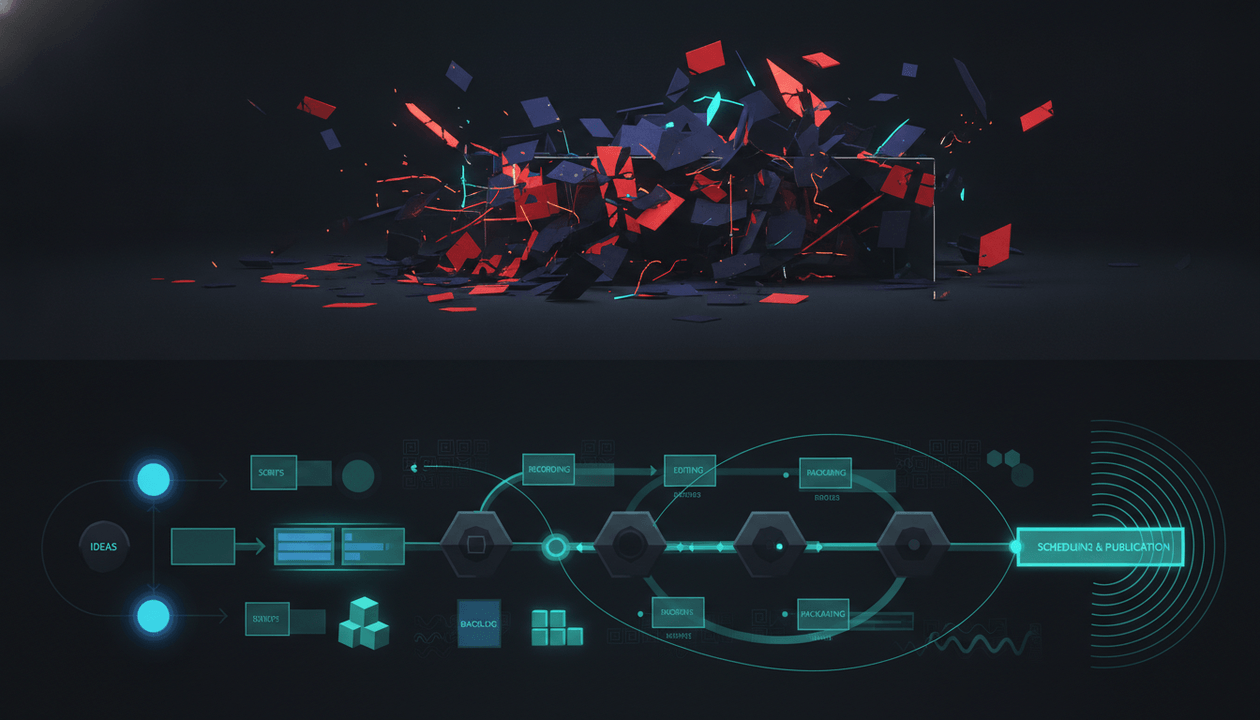
The wrong AI workflow creates volume.
The right AI workflow creates authority.
1. OverseerOS: best AI tool for YouTube strategy and proven content patterns
OverseerOS is the best fit for personal brand creators who want AI to help with YouTube growth strategy, not just content generation.
Most AI tools start with a prompt.
OverseerOS starts with proof.
That is the difference.
Instead of asking AI to “give me 10 video ideas,” OverseerOS is built around reverse-engineering what is already working on YouTube. You can analyze channels, study viral videos, identify title patterns, generate scripts, create thumbnail concepts, track competitors, and build content plans from public signals instead of guessing.
For personal brand creators, this matters because your content should not feel random. It should compound.
A good personal brand channel needs clear patterns:
- What topics should you be known for?
- What problems does your audience repeatedly search for?
- Which formats make you look credible?
- Which titles create curiosity without sounding clickbaity?
- Which thumbnails make your expertise feel premium?
- Which competitors are winning attention in your niche?
- Which ideas are trending but still fit your authority?
OverseerOS helps answer those questions before you waste time filming.
Where OverseerOS fits in the personal brand workflow
Use OverseerOS when you need to:
- Analyze successful channels in your niche.
- Reverse-engineer why a competitor’s videos are working.
- Find video ideas based on proven demand.
- Create stronger YouTube titles from working patterns.
- Build scripts that match a specific creator tone or channel style.
- Turn trending topics into YouTube scripts.
- Create thumbnail concepts from scratch.
- Clone thumbnail style principles from YouTube URLs or analyzed channels.
- Track competitor channels through OverseerOS Overseer Feed.
- Organize video ideas inside OverseerOS Channel Content Planner.
- Rewrite weak drafts with OverseerOS Script ReSpark.
- Generate metadata with OverseerOS SEO tools.
- Use OverseerOS Creator DNA to keep tone more consistent.
For personal brand creators, the biggest advantage is simple:
You do not have to choose between “authentic personal voice” and “proven YouTube strategy.”
You can use your own expertise, but package it through patterns already working in the market.
Best use case
OverseerOS is best for:
- Coaches building authority channels.
- Founders using YouTube to attract users or customers.
- Educators turning expertise into content.
- Consultants creating trust before sales calls.
- Personal brands entering competitive niches.
- Creators who want better titles, thumbnails, scripts, and topic decisions.
- Faceless creators expanding into creator-led content.
- Personal creators who want to stop guessing what to upload.
Example workflow
Let’s say you are a fitness coach.
A generic AI tool might suggest:
10 Morning Habits for Better Health
That is not terrible, but it is weak. It sounds like every other video.
A stronger OverseerOS-style workflow would be:
- Analyze 3 to 5 fast-growing fitness, longevity, or performance channels.
- Find which topics are breaking out.
- Study the title patterns.
- Identify the emotional angle behind the click.
- Create a unique version based on your own expertise.
- Generate title options.
- Build a thumbnail concept.
- Draft the script in your voice.
- Add your own examples, client stories, and real point of view.
The final idea might become:
I Fixed My Sleep Before My Diet. My Body Changed Anyway.
That is more personal, more clickable, and more authority-driven.
Main weakness
OverseerOS can help you find patterns, write faster, and package better ideas. But it should not replace your actual thinking.
For personal brands, your opinion is the asset.
The best use of OverseerOS is not to outsource your voice. It is to turn your voice into better YouTube assets.
Try the YouTube growth platform built around proven content patterns if you want one system for research, titles, scripts, thumbnails, planning, and competitor intelligence.
2. ChatGPT: best general AI assistant for quick ideation
ChatGPT is still useful for personal brand creators because it is flexible.
You can use it to brainstorm angles, simplify explanations, rewrite intros, create outlines, generate examples, summarize notes, and turn messy thoughts into usable content.
It is especially useful when you already know what you want to say but need help shaping it.
Best use cases
Use ChatGPT for:
- Brainstorming video angles.
- Turning rough notes into outlines.
- Rewriting unclear sections.
- Creating analogy ideas.
- Simplifying complex explanations.
- Drafting LinkedIn posts from YouTube scripts.
- Generating FAQ sections.
- Creating first-pass hooks.
Example
Weak prompt:
Write me a YouTube script about productivity.
Better prompt:
I am a productivity coach for founders. My belief is that most productivity advice fails because it ignores emotional avoidance. Give me 10 YouTube video angles that challenge common productivity advice, with a strong title, thumbnail idea, and opening hook for each.
That second prompt gives the model a point of view. Without that, you get average AI content.
Main weakness
ChatGPT is not a YouTube strategist by default.
It does not automatically know your channel history, your competitors, your audience, your thumbnails, your retention patterns, or what is currently breaking out in your niche.
That means ChatGPT is strongest as a writing and thinking assistant, not as your entire YouTube growth system.
3. Claude: best for long-form scripts and thoughtful rewrites
Claude is strong for personal brand creators who care about tone, structure, nuance, and longer scripts.
It is especially useful for creators who make:
- Educational videos.
- Commentary videos.
- Founder-led content.
- Thought leadership.
- Long-form essays.
- Documentary-style personal brand videos.
- Expert breakdowns.
Claude tends to be good at taking a messy idea and turning it into a cleaner argument. That is valuable for personal brands because authority content needs logic, pacing, and clarity.
Best use cases
Use Claude for:
- Long-form YouTube script drafts.
- Rewriting rough transcripts.
- Improving argument structure.
- Turning voice notes into video outlines.
- Creating stronger transitions.
- Making explanations sound more natural.
- Finding holes in your logic.
- Improving “why this matters” sections.
Example
A personal finance creator might paste a rough idea:
People think budgeting fails because they lack discipline, but I think budgeting fails because most people design budgets that ignore social pressure, emotional spending, and identity.
Claude can help turn that into a stronger video structure:
- The belief everyone repeats.
- Why that belief is incomplete.
- The hidden reason people overspend.
- A better framework.
- A practical example.
- A viewer challenge.
- A strong ending.
Main weakness
Claude can write well, but good writing is not the same as good YouTube strategy.
A beautiful script can still fail if the topic is weak, the title is boring, the thumbnail is unclear, or the hook does not continue the packaging promise.
Use Claude for writing quality. Use OverseerOS for YouTube-native strategy and pattern research.
4. YouTube Studio: best native tool for analytics and testing
YouTube Studio is not optional.
Every personal brand creator needs to understand their own analytics because your best content strategy is hidden inside your own audience behavior.
YouTube Studio helps you see:
- Which videos bring new viewers.
- Which videos bring returning viewers.
- Where people drop off.
- Which traffic sources drive discovery.
- Which search terms bring viewers.
- Which thumbnails and titles earn impressions and watch time.
- Which videos convert viewers into subscribers.
YouTube also supports title and thumbnail A/B testing for eligible creators. According to YouTube Help, creators can test up to three different titles and thumbnails, and the option with the highest watch time is shown to viewers at the end of the test. Source: YouTube Help
That detail matters.
YouTube is not only optimizing for click-through rate. It is looking at watch time. A title that gets cheap clicks but creates disappointment is not a real win.
Best use cases
Use YouTube Studio for:
- Studying retention drops.
- Finding search terms.
- Comparing returning viewers vs new viewers.
- Testing titles and thumbnails.
- Checking video performance by traffic source.
- Understanding which topics attract subscribers.
- Identifying videos worth refreshing.
Main weakness
YouTube Studio tells you what happened.
It does not always tell you what to create next.
That is why serious creators pair YouTube Studio with a strategy layer like OverseerOS. YouTube Studio shows your own channel truth. OverseerOS helps you study the wider market and turn patterns into new content.
5. Descript: best AI editing tool for talking-head creators
Descript is useful for personal brand creators because many personal brand videos are talking-head videos, tutorials, interviews, podcasts, or screen recordings.
The big advantage is transcript-based editing. Instead of only cutting on a timeline, creators can edit spoken video more like a document. That makes it easier to remove filler, restructure sections, clean up mistakes, and polish a video without feeling like a full-time editor.
Best use cases
Use Descript for:
- Talking-head videos.
- Coaching videos.
- Podcast clips.
- Founder updates.
- Course-style videos.
- Interview cleanup.
- Removing filler words.
- Improving audio clarity.
- Editing from transcripts.
Example
You record a 22-minute video on:
Why most creators quit before YouTube starts working
Inside a transcript-based editor, you can quickly remove repeated points, tighten rambling sections, and find the strongest 60-second segments for repurposing.
That is a huge advantage for personal brands because your best moments often happen naturally while talking.
Main weakness
Descript helps you edit what you recorded. It does not decide whether the idea was worth recording.
If your title, angle, or hook is weak, editing will not save the video.
Use Descript after your strategy is clear.
6. CapCut: best fast editor for creators who need speed
CapCut is popular because it makes editing feel less intimidating.
For personal brand creators, it works well for:
- Shorts.
- Reels.
- TikToks.
- Simple talking-head edits.
- Captions.
- Fast social clips.
- Mobile-first edits.
- Basic motion and templates.
If you are a personal brand creator posting both long-form and short-form content, CapCut can be a useful production tool.
Best use cases
Use CapCut for:
- Cutting short clips.
- Adding captions.
- Creating fast social edits.
- Testing short-form hooks.
- Simple video polish.
- Mobile editing.
Main weakness
Templates are dangerous for personal brands.
If every video looks like a generic template, you lose authority. Personal brands should use editing to improve clarity, not to hide weak ideas behind effects.
The rule:
Use CapCut to make your message easier to watch, not to make your brand look like everyone else.
7. OpusClip: best for turning long-form videos into short clips
OpusClip is useful for personal brand creators who publish long-form videos, podcasts, interviews, webinars, or livestreams and want to turn them into short clips.
This is a strong use case because personal brands often create long content first. Then the best moments can become short-form discovery assets.
Best use cases
Use OpusClip for:
- Podcast clips.
- Interview highlights.
- Webinar repurposing.
- Long-form to Shorts.
- Turning educational videos into short clips.
- Finding quotable moments.
- Creating platform-specific cuts.
Example
You publish a 35-minute video:
How I would grow a consulting business from zero in 2026
The long-form video builds trust.
Short clips can pull out moments like:
- “The first offer I would not sell.”
- “Why most consultants choose the wrong niche.”
- “The one client signal I would track weekly.”
- “The mistake that makes experts look replaceable.”
That gives you distribution without inventing new ideas every day.
Main weakness
Auto-clipping can miss context.
The most viral-sounding clip is not always the best brand-building clip. Personal brand creators should review every clip and ask:
- Does this represent my actual view?
- Does this make me look credible?
- Does this attract the right audience?
- Does this clip lead naturally back to the full video?
Speed is useful. Context still matters.
8. Canva: best simple design tool for personal brand visuals
Canva is useful because personal brand creators often need visual assets fast:
- Thumbnails.
- Slide graphics.
- Simple diagrams.
- Lead magnet covers.
- Social posts.
- Channel banners.
- Presentation visuals.
For non-designers, Canva is a practical tool.
Best use cases
Use Canva for:
- Simple YouTube thumbnails.
- Branded templates.
- Quote cards.
- Educational diagrams.
- Community post graphics.
- LinkedIn carousel drafts.
- Channel visuals.
Main weakness
Canva makes it easy to create something clean, but clean does not always mean clickable.
YouTube thumbnails are not normal graphics. They are attention decisions.
A good YouTube thumbnail needs:
- One clear focal point.
- Strong contrast.
- Emotional clarity.
- Curiosity.
- A visual question.
- No unnecessary decoration.
- A direct relationship to the title.
This is where OverseerOS is stronger for YouTube-specific thumbnail thinking. The OverseerOS AI YouTube thumbnail generator can create unique thumbnail concepts from scratch, clone style principles from a YouTube URL, or use a library of thumbnail styles from videos that reached 1M+ views.
That is very different from picking a pretty template.
9. ElevenLabs: best AI voice tool for creators who use narration
ElevenLabs is best known for AI voice generation. For personal brand creators, it can be useful, but it should be used carefully.
If your face and voice are part of the brand, outsourcing your voice too aggressively can weaken trust.
But there are smart use cases.
Best use cases
Use ElevenLabs for:
- Faceless side channels.
- Narrated explainers.
- Dubs.
- Voiceover drafts.
- Accessibility.
- Internal script review.
- Backup narration.
- Channels where the creator does not want to record every asset personally.
Inside OverseerOS, AI voiceovers are part of the workflow. OverseerOS voiceover generation is powered by ElevenLabs integration, with different setup depending on the plan and user configuration.
Main weakness
Personal brand creators should not use AI voice to fake intimacy.
If the viewer follows you because they trust you, your real voice is often part of the value.
A better use is:
- Use your real voice for main authority videos.
- Use AI voice for faceless explainers, secondary channels, drafts, or production support.
- Be transparent when the use case requires it.
YouTube’s AI disclosure rules require creators to disclose realistic AI-generated or meaningfully AI-altered content in certain cases, especially when it makes a real person appear to say or do something they did not do, alters footage of a real event or place, or creates a realistic scene that did not occur. YouTube also notes that production assistance such as idea generation, scripts, thumbnails, titles, captions, voiceovers or dubs, and audio repair may not always require disclosure if it does not meaningfully mislead viewers. Source: YouTube Help
10. Buffer: best for distributing personal brand content beyond YouTube
Buffer is useful when YouTube is not your only channel.
Personal brand creators often need to distribute ideas across:
- YouTube.
- LinkedIn.
- X.
- Instagram.
- TikTok.
- Threads.
- Facebook.
- Newsletter snippets.
A good YouTube video can become multiple social assets. Buffer helps organize publishing and scheduling across platforms.
Best use cases
Use Buffer for:
- Scheduling social posts.
- Repurposing video ideas.
- Publishing short clips.
- Managing multi-platform presence.
- Keeping a consistent posting rhythm.
Main weakness
Buffer helps distribute content. It does not create the core YouTube strategy.
If the original video is weak, repurposing just spreads weak content further.
Use Buffer after you have a strong video idea, clear angle, strong packaging, and useful clips.
11. Notion AI: best flexible workspace for creator operations
Notion AI is useful for creators who want a flexible place to store ideas, scripts, sponsor notes, research, checklists, and content calendars.
For personal brands, a knowledge base matters because your best ideas usually come from your own experience:
- Client calls.
- Audience questions.
- Comments.
- Sales objections.
- Personal stories.
- Mistakes.
- Frameworks.
- Voice notes.
- Newsletter drafts.
- Podcast conversations.
Notion can help organize that raw material.
Best use cases
Use Notion AI for:
- Content databases.
- Idea storage.
- Research notes.
- SOPs.
- Sponsor notes.
- Creator operating systems.
- Script archives.
- Repurposing notes.
Main weakness
Notion is flexible, but flexibility creates work.
You have to design the system yourself.
OverseerOS is more YouTube-native. Notion can store the creator brain. OverseerOS can help turn that brain into YouTube topics, titles, scripts, thumbnails, and competitor-backed strategy.
12. Riverside: best for interviews, podcasts, and creator-led conversations
Riverside is useful for personal brands that build authority through conversations.
This includes:
- Podcasts.
- Expert interviews.
- Founder interviews.
- Customer interviews.
- Coaching calls.
- Panel discussions.
- Remote guest content.
For personal brands, conversation-based content is powerful because it creates trust faster than polished monologues. Viewers can see how you think in real time.
Best use cases
Use Riverside for:
- Remote interviews.
- Podcast recordings.
- Guest conversations.
- Founder-led shows.
- Expert panels.
- Recording long-form source material.
- Creating clips from conversations.
Main weakness
Recording software does not make the conversation interesting.
The strategy still matters:
- Who is the guest?
- Why should your audience care?
- What is the tension?
- What questions reveal something new?
- What clips will travel?
- What title makes the conversation clickable?
Use Riverside for capture. Use OverseerOS to plan the video angle and packaging.
The best AI tool stack for personal brand creators
You do not need every tool.
You need the right stack for your stage.
If you are just starting
Use:
| Need | Tool |
|---|---|
| Find proven video ideas | OverseerOS |
| Write outlines and drafts | ChatGPT or Claude |
| Create thumbnails | OverseerOS Thumbnail tools or Canva |
| Edit simple videos | CapCut |
| Track performance | YouTube Studio |
At this stage, do not overcomplicate the setup. Your job is to find a clear niche, publish consistently, and learn what your audience responds to.
If you already have traction
Use:
| Need | Tool |
|---|---|
| Analyze competitors | OverseerOS |
| Track competitor uploads | OverseerOS Overseer Feed |
| Plan content pipeline | OverseerOS Channel Content Planner |
| Improve scripts | OverseerOS Script ReSpark + Claude |
| Test titles/thumbnails | YouTube Studio |
| Clip long videos | OpusClip |
| Schedule social assets | Buffer |
At this stage, your bottleneck is usually not ideas. It is choosing the right ideas and turning them into repeatable formats.
If you are building a serious creator business
Use:
| Need | Tool |
|---|---|
| Strategy and reverse engineering | OverseerOS |
| Channel blueprints | OverseerOS Channel Clone Blueprint |
| Viral video analysis | OverseerOS Viral X-Ray |
| Tone consistency | OverseerOS Creator DNA |
| Scripts and rewrites | OverseerOS Script tools + Claude |
| Thumbnails | OverseerOS AI YouTube thumbnail generator |
| Voiceovers | OverseerOS Voiceover workflow powered by ElevenLabs integration |
| Editing | Descript, CapCut, or an editor |
| Distribution | Buffer |
| Performance feedback | YouTube Studio |
At this stage, AI should not just help you create faster. It should help your whole creator operation become more consistent.
How to choose the right AI tools for your personal brand
Do not choose tools based on feature lists.
Choose them based on bottlenecks.
If your videos are not getting clicks
Focus on:
- OverseerOS Viral Title Architect.
- OverseerOS Thumbnail Analyzer.
- OverseerOS AI YouTube thumbnail generator.
- YouTube Studio title and thumbnail testing.
- Competitor packaging research.
Your problem is probably not editing. It is packaging.
If viewers click but leave early
Focus on:
- OverseerOS Retention Optimizer.
- OverseerOS Script ReSpark.
- Claude for script structure.
- YouTube Studio retention analysis.
- Descript for tighter editing.
Your problem is probably promise confirmation. The intro is not delivering what the title and thumbnail promised.
If you do not know what to post
Focus on:
- OverseerOS Channel Analyzer.
- OverseerOS Viral X-Ray.
- OverseerOS Smart Content Planner.
- OverseerOS Overseer Feed.
- OverseerOS Trend to Script.
- YouTube Studio search terms.
Your problem is topic selection.
If your content sounds generic
Focus on:
- Your own voice notes.
- Your own stories.
- OverseerOS Creator DNA.
- Claude for style cleanup.
- Script ReSpark for rewriting weak drafts.
- Human review before publishing.
Your problem is voice.
If you are spending too long producing
Focus on:
- Descript.
- CapCut.
- OpusClip.
- OverseerOS Script Generation.
- OverseerOS Voiceover workflow.
- OverseerOS Channel Content Planner.
Your problem is workflow.
The personal brand AI workflow that actually works
Here is the workflow I would use if I were building a personal brand YouTube channel from scratch.
Step 1: Pick the authority lane
Before using any AI tool, define what you want to be known for.
Weak:
I make videos about business.
Better:
I help solo creators turn their expertise into content systems that attract customers.
Weak:
I talk about fitness.
Better:
I help busy founders fix their body without living in the gym.
Weak:
I make finance videos.
Better:
I help young professionals understand money decisions without fake guru advice.
Your authority lane gives AI direction. Without it, every tool will generate generic content.
Step 2: Reverse-engineer working channels
Use OverseerOS Channel Analyzer and OverseerOS Viral X-Ray to study creators already winning attention in your space.
Look for:
- Their top-performing topics.
- Their title patterns.
- Their thumbnail patterns.
- Their video formats.
- Their audience promises.
- Their recurring stories.
- Their intros.
- Their emotional angles.
- Their calls to action.
- Their content gaps.
The goal is not to copy them.
The goal is to understand the market.
Step 3: Build a topic map
A personal brand channel should not be random.
Build topic clusters around the problems your audience already cares about.
Example for a business coach:
| Cluster | Video examples |
|---|---|
| Getting clients | “Why your offer gets ignored” |
| Authority | “How to become the obvious choice in a crowded niche” |
| Pricing | “The pricing mistake that makes experts look cheap” |
| Content | “Why your content gets likes but no leads” |
| Sales | “How to sell without sounding desperate” |
Now your channel has direction.
Step 4: Turn topics into YouTube-native angles
A topic is not a video yet.
“Pricing” is a topic.
A YouTube angle is:
I Raised My Price and Got Better Clients. Here’s Why.
“Productivity” is a topic.
A YouTube angle is:
Your To-Do List Is Not the Problem. Your Avoidance Is.
“AI tools” is a topic.
A YouTube angle is:
I Replaced My Content Team With AI. Here’s What Broke First.
Use AI to create angles, but judge them like a strategist.
A strong angle has:
- A clear audience.
- A clear tension.
- A clear transformation.
- A reason to click now.
- A reason to trust you.
- A reason to keep watching.
Step 5: Package before writing
Most creators write first and package later.
That is backwards.
Before writing the script, create:
- Title.
- Thumbnail idea.
- Hook.
- Promise.
- Viewer payoff.
- Video structure.
Why?
Because the script should deliver the packaging promise.
If the title says:
I Tried Waking Up at 5AM for 30 Days
The viewer expects a personal experiment.
If the script becomes generic productivity advice, the video breaks trust.
Step 6: Write the script in your voice
Use OverseerOS Script tools, Claude, or ChatGPT to draft faster.
But add your own:
- Examples.
- Stories.
- Beliefs.
- Contrarian takes.
- Client/customer observations.
- Mistakes.
- Specific numbers only when verified.
- Real experiences.
AI can help structure the video.
You need to make it yours.
Step 7: Create the thumbnail from the same promise
The title and thumbnail should not say two separate things.
Weak pairing:
Title:
How to Build Confidence
Thumbnail text:
7 Tips
Better pairing:
Title:
Confidence Is Not What You Think
Thumbnail text:
FAKE CONFIDENCE
That creates one clear question.
Use OverseerOS AI YouTube thumbnail generator or Canva to create concepts, but judge the thumbnail through YouTube logic:
- Can someone understand it in one second?
- Does it create curiosity?
- Does it match the title?
- Does it feel original?
- Does it look like your brand?
- Would the right viewer stop scrolling?
Step 8: Edit for trust and retention
Personal brand videos do not need to be over-edited.
They need to feel clear.
Cut:
- Long throat clearing.
- Repeated points.
- Unnecessary disclaimers.
- Weak examples.
- Tangents.
- Fake hype.
- Anything that delays the payoff.
Keep:
- Strong beliefs.
- Clear explanations.
- Specific stories.
- Pattern interrupts.
- Visual examples.
- Contrasts.
- Practical frameworks.
Step 9: Repurpose without diluting the brand
Once the long-form video is done, create:
- Shorts.
- LinkedIn posts.
- Newsletter snippets.
- X posts.
- Community posts.
- Blog sections.
- Lead magnet ideas.
But do not repurpose everything.
Repurpose the moments that make you look more credible.
Personal brand AI checklist
Before publishing any AI-assisted video, run this checklist.
- The idea fits the channel’s authority lane.
- The topic has real viewer demand.
- The title creates curiosity without lying.
- The thumbnail supports the same promise as the title.
- The hook immediately continues the packaging promise.
- The script includes original thinking, not only AI-generated advice.
- Any factual claim is verified.
- The video sounds like the creator, not a generic AI narrator.
- The examples are specific to the audience.
- The video has a clear payoff.
- The ending points viewers to the next logical step.
- Any realistic AI-generated or meaningfully altered content is handled responsibly.
- The final video builds trust, not just attention.
Common mistakes personal brand creators make with AI tools
Mistake 1: Using AI to replace their point of view
This is the biggest mistake.
A personal brand without a point of view is just a content account.
AI can help you express your thinking, but it cannot replace your lived experience, taste, credibility, or judgment.
Weak personal brand content says:
Here are 5 ways to be more productive.
Strong personal brand content says:
I stopped trying to be productive and fixed the reason I kept avoiding work.
The second one has a human behind it.
Mistake 2: Generating titles without studying the market
AI can generate titles forever.
Most of them will be average.
Better process:
- Study working titles in your niche.
- Identify the pattern.
- Generate variations from that pattern.
- Make the angle unique to your expertise.
- Test the title against the thumbnail.
That is why tools like OverseerOS Viral Title Architect and OverseerOS Channel Analyzer are useful. They start from proven patterns, not random brainstorming.
Mistake 3: Making thumbnails look clean but not clickable
A personal brand thumbnail should not just look professional.
It should create a clear emotional question.
Weak:
A smiling creator with “Business Tips”
Better:
A stressed founder looking at a calendar with “NO CLIENTS”
Weak:
A clean productivity desk
Better:
A messy to-do list with “THIS IS WHY”
The second version creates tension.
Mistake 4: Letting AI make the creator sound like everyone else
AI loves safe language.
It will often write:
In today’s fast-paced world, creators need to leverage tools to unlock growth.
Do not publish that.
Personal brand content should sound like a person with standards.
Better:
Most creators do not have a content problem. They have a decision problem. They keep making videos before they know why anyone would care.
That sounds sharper.
Mistake 5: Repurposing clips with no strategy
Short clips can help discovery, but random clips can also confuse your brand.
Every clip should answer:
- Who is this for?
- What belief does it create?
- What long-form video should it lead to?
- Does it attract the right buyer, subscriber, or fan?
Do not chase short-form views that attract the wrong audience.
Mistake 6: Using AI visuals irresponsibly
AI visuals can help, especially for faceless, educational, or documentary-style content.
But personal brands need trust.
Avoid:
- Fake screenshots.
- Fake testimonials.
- Fake authority signals.
- Fake results.
- Fake people presented as real.
- AI-generated scenes that could mislead viewers.
If you use AI, use it to explain, illustrate, and produce faster. Do not use it to fake proof.
Best tool by creator type
| Creator type | Best tool stack |
|---|---|
| Coach | OverseerOS, Claude, YouTube Studio, Canva, Descript |
| Founder | OverseerOS, ChatGPT, Descript, Buffer, YouTube Studio |
| Consultant | OverseerOS, Claude, Notion AI, Canva, YouTube Studio |
| Educator | OverseerOS, Claude, Descript, Canva, YouTube Studio |
| Podcaster | Riverside, Descript, OpusClip, OverseerOS, Buffer |
| Commentary creator | OverseerOS, Claude, CapCut, YouTube Studio |
| Finance creator | OverseerOS, Claude, YouTube Studio, Canva, Descript |
| Fitness creator | OverseerOS, CapCut, Canva, OpusClip, YouTube Studio |
| AI/tech creator | OverseerOS, Claude, Descript, OpusClip, Buffer |
| Faceless-to-personal creator | OverseerOS, ElevenLabs, CapCut, YouTube Studio |
Best overall recommendation
If you are a personal brand creator, start with this stack:
- OverseerOS for YouTube strategy, competitor research, topics, titles, scripts, thumbnails, and planning.
- YouTube Studio for native analytics and title/thumbnail testing.
- Claude or ChatGPT for writing support and idea development.
- Descript or CapCut for editing.
- OpusClip for short-form repurposing.
- Canva or OverseerOS AI YouTube thumbnail generator for visuals.
- Buffer for distribution.
That stack covers the whole system:
- Strategy.
- Research.
- Packaging.
- Writing.
- Production.
- Repurposing.
- Distribution.
- Feedback.
The biggest mistake is trying to solve everything with one generic AI chatbot.
The better move is to build a creator workflow where every tool has a job.
How OverseerOS helps personal brand creators
OverseerOS is especially useful for personal brand creators because it helps with the hardest part of YouTube: knowing what to make and how to package it.
A personal brand creator does not need random AI output.
They need answers to questions like:
- What should I talk about next?
- Which topics already have demand?
- Which channels in my niche are growing?
- Which videos are outperforming?
- Which title patterns are working?
- What thumbnail style fits this audience?
- How do I write this in my voice?
- How do I turn one idea into a production-ready video?
- How do I track competitors without wasting hours?
- How do I build a channel that compounds?
OverseerOS helps creators reverse-engineer successful channels, analyze viral videos, build content plans, generate titles, create scripts, improve thumbnails, and turn proven patterns into original content.
That is the real value.
Not “AI writes for you.”
More like:
AI helps you understand the game before you play it.
That is what most personal brand creators are missing.
Final verdict
The best AI tools for personal brand YouTube creators are not the tools that generate the most words, clips, or thumbnails.
They are the tools that help you build trust at scale.
For most creators, the best stack is:
- OverseerOS for strategy and YouTube-native workflows.
- YouTube Studio for native feedback.
- Claude or ChatGPT for writing support.
- Descript or CapCut for editing.
- OpusClip for repurposing.
- Canva or OverseerOS Thumbnail tools for visuals.
- Buffer for distribution.
If you only want generic content, almost any AI tool can help.
If you want a serious personal brand channel, you need a system that connects your expertise to proven YouTube patterns.
That is where OverseerOS helps creators reverse-engineer high-performing YouTube content and turn it into original videos.
FAQ
What is the best AI tool for personal brand YouTube creators?
The best AI tool for personal brand YouTube creators depends on the bottleneck, but OverseerOS is the strongest choice for YouTube strategy, competitor research, topics, titles, scripts, thumbnails, and planning. ChatGPT and Claude are useful for writing, Descript and CapCut are useful for editing, and YouTube Studio is essential for analytics.
Can AI help personal brand creators without making them sound fake?
Yes, but only if AI is used as a strategy and editing assistant, not as a personality replacement. Personal brand creators should use AI to organize ideas, study patterns, improve scripts, and speed up production while keeping their real opinions, stories, examples, and voice.
Should personal brand creators use AI voiceovers?
Sometimes. AI voiceovers can work for faceless side channels, explainers, dubs, drafts, or narrated content. But if the creator’s real voice is part of the trust, replacing it too aggressively can weaken the brand.
What is the best AI tool for YouTube video ideas?
OverseerOS is a strong choice because it helps creators find ideas from competitor patterns, viral videos, trends, and channel strategy rather than relying only on generic brainstorming. ChatGPT and Claude can also help generate ideas once you provide a clear audience, niche, and point of view.
What is the best AI tool for YouTube titles?
OverseerOS Viral Title Architect and OverseerOS Advanced Title Enhancer are designed to help creators generate and improve titles from YouTube-native patterns. You can also use ChatGPT or Claude for title brainstorming, but they need strong examples and context.
What is the best AI tool for YouTube thumbnails?
For YouTube-specific thumbnail strategy, the OverseerOS AI YouTube thumbnail generator is built around proven thumbnail patterns, including creating from scratch, cloning style principles from a YouTube URL, and using a 1M+ view thumbnail style library. Canva is useful for manual design, but it is more general-purpose.
What is the best AI tool for turning long videos into Shorts?
OpusClip is useful for turning long-form videos, podcasts, and interviews into short clips. Descript and CapCut can also help edit and polish short-form content. The key is to choose clips that support your brand, not just clips that sound viral.
Can AI tools grow a YouTube channel?
AI tools can help with research, planning, scripting, packaging, editing, thumbnails, and consistency. But they do not guarantee growth. A channel still needs strong topics, clear positioning, viewer trust, good retention, and original value.
Is OverseerOS only for faceless YouTube channels?
No. OverseerOS is useful for faceless creators, but it also fits personal brand creators who want to reverse-engineer successful channels, find proven video ideas, improve titles and thumbnails, write better scripts, and build a more repeatable content workflow.
Should I use one AI tool or a full AI stack?
Use a stack. One tool rarely handles everything well. For personal brand creators, the strongest stack usually includes a YouTube strategy tool, a writing assistant, an editing tool, a thumbnail tool, a repurposing tool, and YouTube Studio for analytics.