Why YouTube Watch Time Doesn't Guarantee Viewer Satisfaction (And What Creators Should Measure)
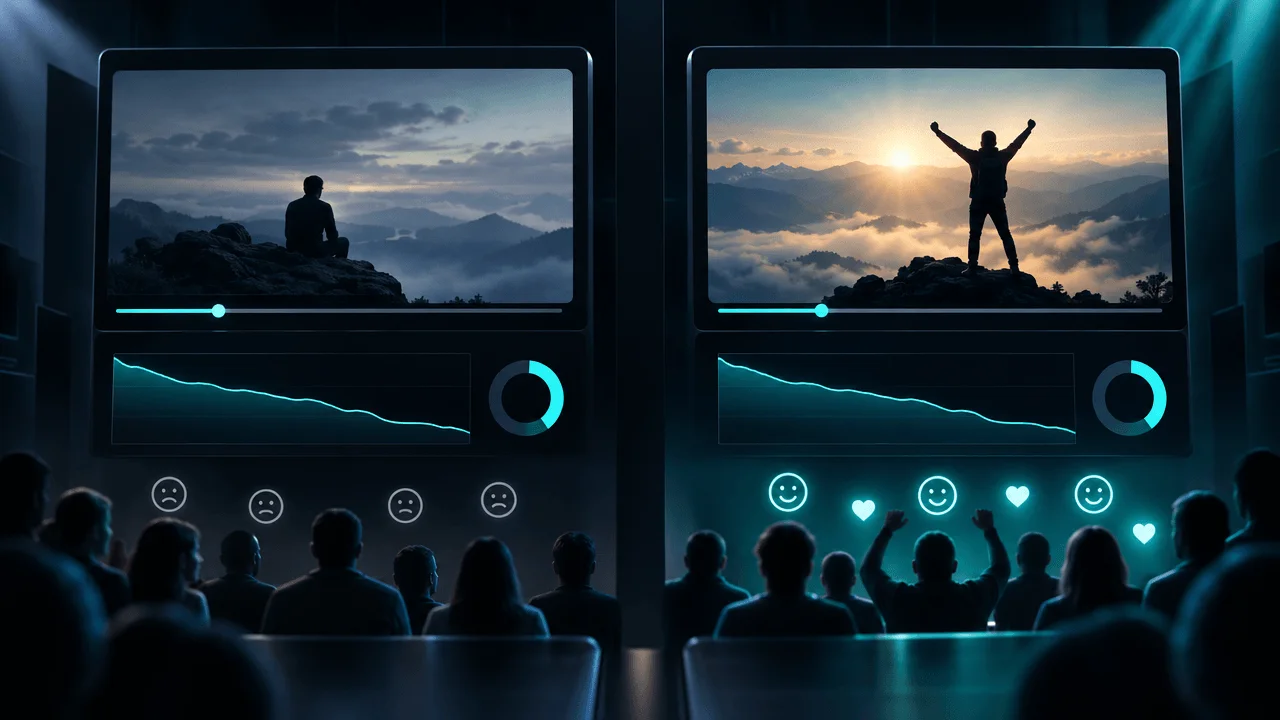
Imagine two YouTube videos.
Both generate 100,000 views.
Both accumulate thousands of hours of watch time.
But viewers have very different experiences.
In the first video, people click because the title promises an important discovery. They watch for several minutes, realize the video does not deliver what they expected, and leave disappointed.
In the second video, viewers find exactly what they wanted. They watch, enjoy the explanation, share it with someone, and sometimes continue watching other videos from the same creator.
From a basic analytics perspective, both videos might look successful.
But are they equally valuable to viewers?
Not necessarily.
This distinction is important because YouTube has explicitly explained that its recommendation system aims to maximize long-term viewer satisfaction, not simply accumulate clicks or watch time.
YouTube uses multiple signals to understand what viewers enjoy, including viewing behavior, likes, dislikes, sharing, and satisfaction surveys.
That means creators who focus exclusively on maximizing watch time can miss a much larger part of the recommendation system.
The objective is not simply to keep people watching. It is to create videos people actually want to watch and feel good about watching.
In this guide, we'll examine what YouTube officially says about viewer satisfaction, why watch time is an incomplete measure of video quality, what creators can measure inside YouTube Studio, and how to build a content strategy around stronger viewer experiences.
What Is YouTube Viewer Satisfaction?
YouTube viewer satisfaction describes how well a video meets a viewer's expectations and provides an experience they consider worthwhile.
It is not the same as watch time, views, or audience retention.
A viewer might watch a video for 15 minutes because it is genuinely useful.
Another might watch for 15 minutes because the video takes an unnecessarily long time to explain something that could have been covered in five minutes.
The viewing duration is identical.
The experience is not.
YouTube has publicly explained that its recommendation system uses multiple signals to predict what viewers will find satisfying.
These include:
- Whether viewers choose to click.
- How long they watch.
- Whether they like or dislike a video.
- Whether they share it.
- Whether they provide feedback.
- Responses to post-watch satisfaction surveys.
- Their individual viewing preferences and history.
YouTube also explains that different signals matter differently depending on the individual viewer and recommendation surface.
This is important because there is no universal formula that creators can optimize to guarantee recommendations.
The official objective is to connect each viewer with videos they are likely to enjoy.
Source: YouTube's Recommendation System.
Why Watch Time Alone Is an Incomplete Measure of Video Quality
Watch time is one of the most important metrics available to YouTube creators.
It measures how much time viewers spend watching videos.
But it does not independently explain why they watched, whether they enjoyed the experience, or whether the video fulfilled its promise.
Consider three hypothetical scenarios.
| Scenario | Average view duration | Possible viewer experience |
|---|---|---|
| Video A | 12 minutes | Viewers are genuinely interested |
| Video B | 12 minutes | Viewers are waiting for an answer that takes too long |
| Video C | 12 minutes | Viewers enjoy the content but leave once their question is answered |
All three have identical average view durations.
Yet the reasons behind those results can be completely different.
This is why creators should avoid treating longer watch time as automatic proof of better content.
Watch time measures duration, not satisfaction
A viewer can spend considerable time watching something without finding it particularly valuable.
For example:
A video promises to explain five important YouTube growth mistakes.
The first mistake is introduced immediately, but the remaining four are delayed by several minutes of unnecessary introductions and repeated explanations.
Some viewers may continue watching because they want the promised information.
That does not mean the delay improves their experience.
A more effective video might deliver the important information sooner, maintain attention through useful examples, and conclude when the subject has been properly explained.
The goal should be to earn viewers' time rather than artificially extend it.
High retention does not automatically prove high satisfaction
Audience retention shows how viewers behave throughout a video.
It helps identify:
- Where viewers leave.
- Which sections hold attention.
- Where attention drops.
- Whether viewers rewatch particular moments.
- How the opening performs.
But retention is not a direct satisfaction survey.
A viewer might leave after receiving exactly the answer they needed.
Another might continue watching despite being dissatisfied because the information they want appears later.
Interpret retention alongside the content and the viewer's expectations.
YouTube Has Explicitly Confirmed That Viewer Satisfaction Matters
This is not merely a creator theory.
YouTube has publicly discussed how its recommendation system evolved beyond relying on clicks alone.
In its explanation of the recommendation system, YouTube describes several categories of signals.
1. Clicks
Clicks indicate that viewers are interested enough to select a video.
But clicking does not guarantee satisfaction.
YouTube has explained that it recognized this limitation when developing its recommendation system.
A viewer can click a misleading thumbnail and quickly regret the decision.
2. Watch time
Watch time helps YouTube understand how much content viewers consume.
But viewing duration needs to be interpreted in context.
Longer is not automatically better for every type of content.
3. Likes and dislikes
These provide additional information about how viewers respond to videos.
YouTube has explained that likes and dislikes are among the signals used to help predict future viewer interests.
They are not independent guarantees of recommendation performance.
4. Sharing
Sharing is another signal that can indicate a video provides something viewers consider worth passing along.
A video might be shared because it is useful, entertaining, surprising, or meaningful.
However, sharing behavior also depends on the individual viewer.
5. Satisfaction surveys
This is particularly interesting.
YouTube has described using post-watch surveys to better understand how viewers feel about the videos they watch.
Its earlier explanation of the recommendation system described a concept called valued watch time.
Viewers were asked to rate videos, and YouTube used survey responses to help predict satisfaction beyond viewing duration alone.
This demonstrates why watch time should not be interpreted as a complete measurement of viewer experience.
Sources:
- On YouTube's Recommendation System
- YouTube's Recommendation System
- YouTube Search and Discovery Tips
The Five Metrics Creators Should Examine Alongside Watch Time
You cannot directly access every internal signal YouTube uses.
YouTube does not provide creators with a single universal viewer satisfaction score that reveals exactly how satisfied viewers are.
However, YouTube Studio provides several useful metrics that help you understand the viewing experience.
Here are five areas worth examining.
1. Average View Duration
Average view duration measures the average amount of time viewers spend watching a video.
It helps answer:
How long are viewers staying?
For long-form videos, this is particularly useful when comparing similar content.
But do not compare videos of completely different lengths without considering the context.
A 20-minute documentary and a five-minute tutorial naturally create different viewing patterns.
Use average view duration alongside video length and audience retention.
2. Average Percentage Viewed
Average percentage viewed measures how much of a video viewers watch on average.
For example:
A 10-minute video with an average view duration of five minutes has an average percentage viewed of 50%.
This metric helps you understand how much of the content viewers consume relative to its duration.
It is particularly useful when comparing videos of different lengths.
However, a higher percentage does not automatically mean a better viewer experience.
A short video can achieve high percentage viewed while providing very little information.
3. Audience Retention
Audience retention shows how viewers behave throughout a video.
Look for:
- Early exits.
- Significant drops.
- Sections where attention stabilizes.
- Moments viewers rewatch.
- Differences between new and returning viewers where available.
A particularly useful exercise is to compare retention graphs with the actual script.
When a large percentage of viewers leave during a particular explanation, investigate what happens at that moment.
Is the explanation too complicated?
Does the narration repeat information?
Does the visual sequence become disconnected?
Does the video stop delivering on its title?
The graph identifies where to investigate.
The content explains why.
4. Likes and Comments
Likes and comments provide additional information about audience response.
But they need context.
A video with many comments might be generating genuine discussion.
It might also be controversial.
A video with fewer comments might still provide exceptional value.
Read comments to identify recurring patterns:
- Viewers thanking the creator for explaining something.
- Questions about missing information.
- Complaints about misleading titles.
- Requests for additional examples.
- Corrections and factual objections.
- Requests for follow-up videos.
These observations can reveal problems that numerical metrics cannot explain.
5. Returning Viewers
Returning viewers help you understand whether people come back to watch more of your channel.
This is particularly useful for creators building a recurring audience.
A video that attracts many new viewers can be successful.
But if viewers repeatedly return to your channel, that provides another important indication that your content is meeting an ongoing audience interest.
Returning viewers are not a direct satisfaction measurement either.
They are one useful part of the larger picture.
YouTube provides these audience metrics through its Analytics audience reports.
Source: Understand Your YouTube Audience.
How to Diagnose a Video That Gets Views but Doesn't Satisfy Viewers
Imagine publishing a video that receives strong initial traffic.
The thumbnail performs well.
The title attracts clicks.
But the audience response is weaker than expected.
Instead of immediately changing the thumbnail or publishing another video, investigate the complete viewing experience.
Use this diagnostic framework.
| Observation | Possible explanation | What to investigate |
|---|---|---|
| Strong clicks, immediate exits | Opening does not match expectations | First 30 seconds |
| Strong clicks, early retention drop | Slow or misleading introduction | Opening script and delivery |
| Good retention, weak engagement | Content may not invite interaction | Audience questions and relevance |
| Strong views, few returning viewers | Topic may attract one-time interest | Channel content direction |
| Repeated retention drops | Specific sections lose attention | Script, pacing and visuals |
| Positive comments, moderate views | Content may satisfy a smaller audience | Topic demand and packaging |
These are diagnostic hypotheses, not definitive conclusions.
For example, weak returning-viewer numbers do not prove a video disappointed its audience.
The topic may simply have been a one-time search.
Likewise, low comments do not automatically indicate poor satisfaction.
The purpose of the framework is to identify what deserves investigation.
Why Misleading Titles Can Damage the Viewing Experience
A title and thumbnail make a promise.
The video needs to fulfill it.
Imagine two titles:
Title A: The Complete Guide to Growing a YouTube Channel
Title B: Why Your YouTube Videos Get Views but No Subscribers
The second title makes a much more specific promise.
Someone who clicks expects to understand why viewers watch their videos without subscribing.
If the video spends most of its duration explaining general YouTube growth principles, viewers may feel that the title promised something different.
The problem is not necessarily the title.
It is the mismatch between the title and the actual content.
The expectation-delivery gap
A useful way to evaluate a video is to compare three things:
- What the title promises.
- What the thumbnail suggests.
- What the video actually delivers.
All three should communicate the same underlying idea.
A highly clickable title that attracts the wrong audience is not necessarily a successful title.
A more effective approach is to make the promise compelling while keeping it accurate.
This is particularly important for educational channels, documentaries, tutorials, and product reviews.
Does YouTube Reward Videos That Make Viewers Happy?
YouTube's recommendation system aims to recommend content that individual viewers are likely to enjoy.
However, there is an important distinction between that objective and a simple creator optimization formula.
YouTube does not publish a universal satisfaction score or fixed weighting system that tells creators exactly how much each signal contributes.
The recommendation system uses different signals depending on the viewer and the recommendation surface.
For example:
- Homepage recommendations primarily use viewer watch history.
- Suggested videos consider the video currently being watched.
- Search and discovery use relevance and viewer-specific signals.
- Feedback such as likes, dislikes, and satisfaction surveys contributes to understanding viewer preferences.
This means two viewers can receive different recommendations even when they have similar viewing histories.
It also means a video does not need to achieve identical performance across every traffic source to be valuable.
The most useful strategy is to understand the audience you want to reach and produce videos that deliver on their expectations.
Source: How YouTube Recommendations Work.
How to Build a YouTube Production Process Around Viewer Satisfaction
Understanding satisfaction is only useful if it changes how you produce videos.
Here is a practical process.
Step 1: Define the viewer's expected outcome
Before writing a script, answer:
What should someone understand, learn, or experience after watching this video?
Avoid vague objectives.
For example:
Weak objective:
"Teach viewers about YouTube growth."
Stronger objective:
"Explain why a channel receives views without converting enough viewers into subscribers, using practical examples and measurable diagnostics."
The second objective gives the writer a clearer direction.
Step 2: Make the title and content promise match
Write the title before finalizing the script.
Then identify the specific information the viewer expects.
Every major section should contribute to delivering that promise.
This reduces unnecessary tangents and generic introductions.
Step 3: Deliver value early
Do not make viewers wait unnecessarily for the answer.
A strong introduction should:
- Establish the problem.
- Explain why it matters.
- Introduce the main insight.
- Give viewers a reason to continue.
Avoid spending the opening minute repeating the title in different words.
Step 4: Structure the script around meaningful progression
Each section should introduce something useful.
Use:
- Specific examples.
- Evidence.
- Explanations.
- Comparisons.
- Practical applications.
- Clear conclusions.
Avoid repeating the same point simply to extend the runtime.
Step 5: Make visuals support the explanation
A viewer's experience is not determined by narration alone.
The visual sequence should reinforce the information being communicated.
For example, if the narration explains a metric, show the metric.
If it describes a process, illustrate the process.
If it compares two outcomes, show the comparison.
Generic visuals can make otherwise useful information harder to understand.
Step 6: Review performance after publishing
Once the video has accumulated enough data, examine:
- Impressions and click-through rate.
- Average view duration.
- Average percentage viewed.
- Audience retention.
- Likes and comments.
- Returning viewers.
- Traffic sources.
Compare the results with similar videos on your own channel.
Do not assume that one metric explains the entire outcome.
Step 7: Feed the findings into the next production cycle
This is where the real improvement happens.
If viewers repeatedly leave during long introductions, revise the opening structure.
If certain explanations generate positive comments, examine why they were useful.
If viewers return for particular topic clusters, explore additional videos that serve the same audience interest.
Your next script should benefit from what you learned from the previous one.
What YouTube Creators Should Stop Optimizing For
There are several common mistakes worth avoiding.
Stop treating longer videos as automatically better
A 30-minute video is not inherently more valuable than a 12-minute video.
The correct length depends on the subject and what the viewer expects.
YouTube's own guidance recognizes that both absolute and relative watch time matter, with their importance varying by video format.
Source: YouTube Performance FAQ.
Stop adding unnecessary introductions
Viewers clicked because they wanted something.
Give them a reason to stay quickly.
Stop confusing comments with satisfaction
Comments are useful, but they are not a complete measurement of the audience's experience.
Stop copying viral videos without understanding why they worked
A video might attract attention because of its topic, timing, packaging, or relationship to a particular audience.
Copying its surface structure does not guarantee the same outcome.
Stop evaluating every video using the same benchmark
A search-focused tutorial and a personality-driven documentary can produce different performance patterns.
Compare videos with similar audiences, formats, and objectives.
How OverseerOS Helps You Build a Better YouTube Production Feedback Loop
Understanding viewer satisfaction requires connecting research, content planning, production, and performance analysis.
OverseerOS is designed to help creators manage more of that process within one YouTube-focused platform.
Channel Intelligence
OverseerOS helps creators analyze their channels and identify content opportunities using channel and competitor information.
This provides a more structured starting point for deciding what to produce.
Discover Content Opportunities
Rather than choosing topics randomly, creators can investigate breakout videos, competitor performance, and opportunities that fit their channel.
The objective is to make better content decisions before investing in production.
Script Creation
The scripting workflow helps turn selected ideas into structured video scripts.
This is where the promise established by the title needs to become the actual content.
Auto Edit
Once an idea or script is ready, Auto Edit connects narration, scene generation, visual editing, and video export.
Creators can work with individual scenes, visual references, Character Lock, camera movement, and other production controls.
A More Connected Production Process
The advantage is reducing the fragmentation between discovering an opportunity and producing the finished video.
OverseerOS does not provide YouTube's private satisfaction signals or a direct viewer satisfaction score.
Those insights remain available through the channel owner's YouTube Analytics and audience feedback.
Instead, OverseerOS helps organize the research and production decisions that creators can control.
Explore OverseerOS and build a more connected YouTube content-production workflow.
Frequently Asked Questions
Does YouTube prioritize viewer satisfaction over watch time?
YouTube explicitly states that its recommendation system aims to maximize long-term viewer satisfaction. Watch time is one of several signals used to understand viewer behavior, alongside likes, dislikes, shares, and satisfaction surveys. There is no publicly disclosed universal weighting formula.
Is watch time the same as viewer satisfaction?
No. Watch time measures how long viewers watch. Satisfaction concerns whether viewers find the experience worthwhile. A person can watch a video for a long time without being satisfied, or leave after a short video because their question has been answered.
How does YouTube measure viewer satisfaction?
YouTube uses multiple signals, including clicks, watch behavior, likes, dislikes, shares, and post-watch satisfaction surveys. It also uses machine learning to understand and predict viewer preferences.
Can YouTube creators see their satisfaction score?
No. YouTube does not provide creators with one universal satisfaction score representing the internal recommendation system's assessment. Creators can examine related analytics such as retention, watch time, likes, comments, and returning viewers.
Does high audience retention mean a video is good?
Not necessarily. Retention shows how viewers watch a video, not whether they consider it valuable. It should be interpreted alongside the subject, video length, title promise, audience feedback, and other performance signals.
Do likes and dislikes affect YouTube recommendations?
Yes. YouTube confirms that likes and dislikes are among the signals used by its recommendation system. Their importance can vary depending on the individual viewer.
Does YouTube use viewer surveys to rank videos?
YouTube has publicly explained that it uses post-watch satisfaction surveys to better understand viewer experiences. Survey information helps its systems predict which videos people are likely to find satisfying. Creators do not receive a direct breakdown of every internal survey response.
Can a video have high watch time but still disappoint viewers?
Yes. Viewers may continue watching because they are waiting for promised information, even if the content takes too long to deliver it. Watch time alone cannot establish whether the video fulfilled its promise.
What is the most important metric for YouTube growth?
There is no single metric that explains every successful channel. Creators should evaluate impressions, click-through rate, average view duration, average percentage viewed, retention, engagement, and returning viewers in context.
How can I improve viewer satisfaction on YouTube?
Start by understanding what your audience expects from a video. Create accurate titles and thumbnails, deliver value early, structure scripts around useful information, use relevant visuals, and review audience feedback and retention after publishing.
Does YouTube reward longer videos with more watch time?
Longer videos can generate more absolute watch time, but length alone does not guarantee better recommendations. YouTube considers both absolute and relative watch time, along with other signals. The appropriate length depends on the subject and viewer expectations.
Final Verdict: Stop Measuring Only How Long People Watch
Watch time is valuable.
But it does not tell the complete story.
A video can attract clicks, accumulate hours of viewing, and still fail to deliver the experience viewers expected.
YouTube has made its broader objective clear: help people discover content they enjoy and maximize long-term viewer satisfaction.
For creators, that means building a production strategy around more than retention graphs.
Understand what your audience wants. Make accurate promises. Deliver useful information. Create videos worth sharing. Study the feedback, and use what you learn to improve the next upload.
The strongest YouTube strategy isn't about keeping viewers on a video for as long as possible. It's about giving them a reason to be glad they clicked.
Explore OverseerOS to research content opportunities, plan better videos, and connect your ideas to a more efficient YouTube production workflow.
Research and Sources
This article uses official YouTube documentation and published explanations of its recommendation system. It does not claim access to YouTube's internal ranking weights or private satisfaction data.
- YouTube's Recommendation System, official explanation of personalization, content performance, and long-term viewer satisfaction.
- YouTube Search and Discovery Tips, official explanation of clicks, watch behavior, average view duration, average percentage viewed, and satisfaction.
- On YouTube's Recommendation System, YouTube's explanation of clicks, watch time, valued watch time, surveys, sharing, likes, and dislikes.
- Understand Your YouTube Audience, official audience analytics documentation.
- YouTube Performance FAQ and Troubleshooting, official guidance on video length, watch time, retention, publishing frequency, and recommendations.
Research methodology: This is an evidence-based explanatory article using official YouTube sources. It is not a new empirical study, and no proprietary algorithm weights, satisfaction benchmarks, or fabricated performance statistics are presented.