Most creators choose the topic first.
Then they write a title.
Then they force the video into whatever structure feels easiest.
That is backwards.
A strong YouTube idea is not just a topic. It is a topic plus the right format.
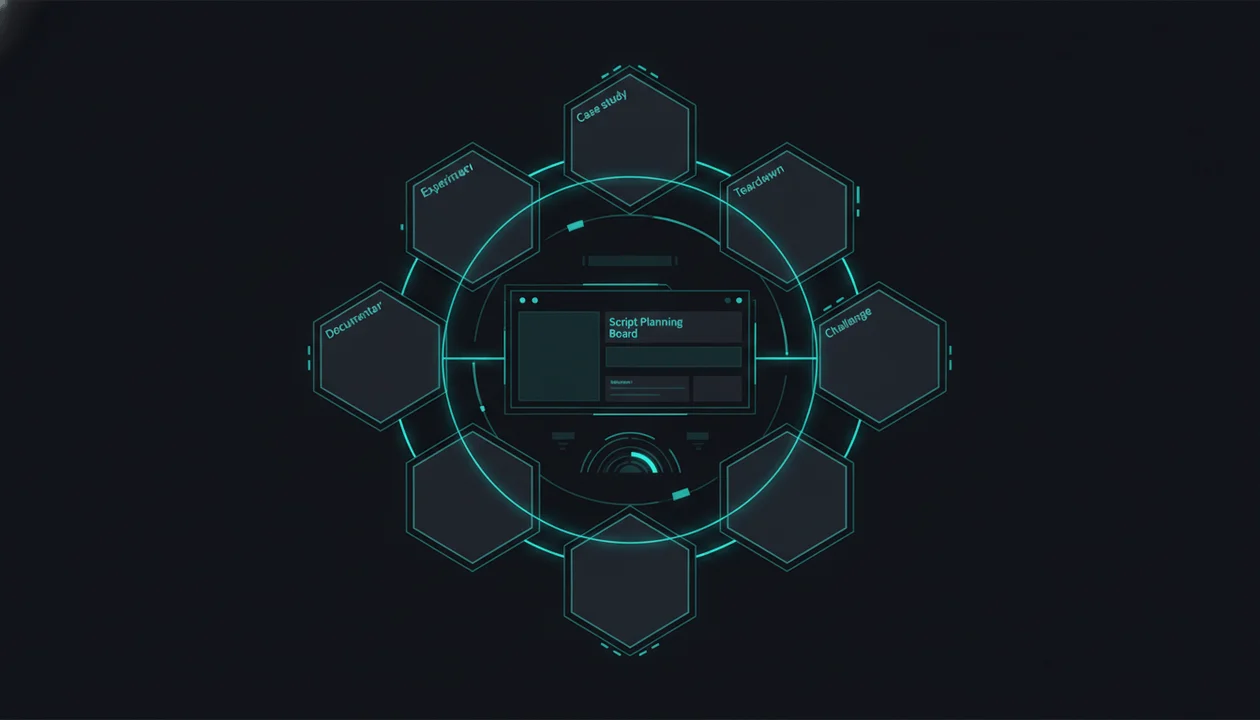
The same idea can become a tutorial, case study, experiment, documentary, teardown, reaction, list, comparison, or challenge. Each format creates a different viewer expectation, different hook, different title style, different thumbnail, different pacing, and different payoff.
That is why some videos fail even when the topic is good.
The creator picked the wrong format.
A topic like “AI tools for YouTube” can be boring as a generic list, but powerful as a 7-day experiment. A topic like “faceless YouTube niches” can be shallow as a basic tutorial, but much stronger as a case study of real breakout channels. A topic like “thumbnail mistakes” can be average as advice, but explosive as a teardown.
This guide shows you how to choose the right YouTube video format before scripting, how to match format to viewer intent, how to analyze competitor formats, and how to build repeatable formats that turn random ideas into a real channel strategy.
Key Takeaways
- A YouTube video format is the structure used to deliver an idea, such as tutorial, case study, experiment, teardown, documentary, list, reaction, comparison, or challenge.
- The format decides the viewer expectation before the script is written.
- A good topic can underperform if it is delivered in the wrong format.
- Search-driven topics usually need clarity, while Browse-driven topics often need curiosity, tension, proof, or story.
- YouTube Analytics shows traffic sources such as Browse features, Suggested videos, YouTube Search, Shorts, playlists, and external sources, which means different formats can fit different discovery paths. Source: YouTube Help
- YouTube’s audience retention report highlights intros, top moments, spikes, and dips, which makes format choice important because every format creates different retention pressure. Source: YouTube Help
- The best creators do not only ask, “What topic should I make?” They ask, “What format makes this idea most clickable, watchable, and repeatable?”
- OverseerOS helps creators analyze winning channels, run Viral X-Ray on individual videos, study titles, thumbnails, hooks, structures, and turn proven formats into original content plans.
What Is a YouTube Video Format?
A YouTube video format is the structure used to deliver a video idea.
It is the difference between:
A tutorial
A case study
A documentary
An experiment
A teardown
A reaction
A list
A comparison
A challenge
A news breakdown
A story
A review
The topic is what the video is about.
The format is how the idea is experienced.
Example topic:
AI tools for YouTube creators
Possible formats:
| Format | Video idea |
|---|---|
| Tutorial | How to Use AI Tools to Plan YouTube Videos |
| List | 7 AI Tools Every YouTube Creator Should Try |
| Experiment | I Let AI Plan My YouTube Videos for 7 Days |
| Case study | How One Creator Uses AI to Publish 3x Faster |
| Comparison | Claude vs ChatGPT for YouTube Scripts |
| Teardown | I Tested 5 AI Tools. Only One Actually Saved Time |
| Documentary | The Rise of AI-Powered YouTube Channels |
| Challenge | I Built a YouTube Workflow With Only AI Tools |
Same topic.
Different video.
Different promise.
Different viewer expectation.
That is why format strategy matters.
Why Format Matters More Than Most Creators Think
Creators often blame weak performance on the title, thumbnail, script, or algorithm.
Sometimes the real issue is deeper:
The idea was delivered in the wrong format.
Example:
A creator makes:
Top 10 AI Tools for YouTube
It performs average.
Another creator makes:
I Used AI to Create a Full YouTube Video From Scratch
Same general market.
Different format.
The second version has:
- A story
- Stakes
- Curiosity
- Proof
- A clear beginning and ending
- A natural thumbnail
- A reason to keep watching
The first version is just information.
The second version is an experience.
That is the difference.
Topic vs Format vs Angle
Before choosing a format, separate these three things.
| Layer | Meaning | Example |
|---|---|---|
| Topic | The subject | YouTube thumbnails |
| Angle | The promise or perspective | Why good thumbnails still fail |
| Format | The structure | Teardown |
| Video idea | The final packaged concept | I Redesigned 10 Good-Looking Thumbnails That Still Got Ignored |
Most creators stop at the topic.
Better creators find the angle.
The best creators choose the format that makes the angle hit hardest.
Example:
Topic:
Faceless YouTube niches
Weak angle:
Best faceless niches
Stronger angle:
Boring faceless niches quietly getting millions of views
Best format:
Case study breakdown
Final video idea:
I Found 10 Boring Faceless Channels Quietly Getting Millions of Views
That is not just a topic.
That is a format-driven idea.
The 12 Most Useful YouTube Video Formats
1. Tutorial format
A tutorial teaches the viewer how to do something.
Best for:
- Search traffic
- Beginner education
- Tool workflows
- Step-by-step processes
- Evergreen problems
- Practical outcomes
Example titles:
How to Make Better YouTube Thumbnails
How to Use Claude to Write YouTube Scripts
How to Find Low-Competition YouTube Video Ideas
How to Build a YouTube Content Calendar
Tutorials work when the viewer already knows what they want.
They search because they need a solution.
The promise should be clear, direct, and useful.
Weak tutorial:
YouTube Growth Tips
Strong tutorial:
How to Validate a YouTube Video Idea Before You Record
A tutorial fails when it becomes too broad, too generic, or too slow.
2. Case study format
A case study explains what happened in a real example.
Best for:
- Proof-based content
- YouTube growth channels
- Business channels
- Faceless channels
- Creator breakdowns
- Strategy content
- High-trust videos
Example titles:
How This Small Channel Hit 100K Subscribers With One Format
The Faceless Channel Getting Millions of Views in a Boring Niche
How This Creator Turned One Topic Into a Full Content System
Case studies work because they give the viewer evidence.
The viewer is not just hearing advice.
They are seeing proof.
A strong case study should answer:
- Who is the example?
- What changed?
- What worked?
- Why did it work?
- What can the viewer apply?
- What should the viewer not copy?
Bad case studies only describe.
Good case studies extract the strategy.
3. Experiment format
An experiment shows what happened when the creator tested something.
Best for:
- AI tools
- Productivity
- Creator workflows
- Business ideas
- Fitness
- Learning
- Challenges
- Personal transformation
Example titles:
I Let AI Pick My YouTube Topics for 7 Days
I Used This Thumbnail System for 30 Days
I Tried Posting Shorts Every Day for a Month
I Replaced My Research Workflow With AI
Experiments work because they create a story.
The viewer wants to know:
“What happened?”
A strong experiment needs:
- Clear rules
- Time limit
- Stakes
- Before state
- Process
- Unexpected problems
- Result
- Lesson
Weak experiment:
I Tried AI Tools
Strong experiment:
I Let AI Choose My Next 10 YouTube Ideas. One Was Terrifying.
The second has stakes and curiosity.
4. Teardown format
A teardown breaks down why something worked or failed.
Best for:
- Thumbnails
- Titles
- Scripts
- Hooks
- Channels
- Landing pages
- Ads
- Products
- Business models
- Content strategy
Example titles:
I Teardown 10 Viral Thumbnails
Why This Small Channel Is Suddenly Breaking Out
The Hook That Made This Video Impossible to Ignore
Why This Thumbnail Got Clicked and Yours Didn’t
Teardowns work because they turn observation into insight.
The viewer expects analysis, not generic advice.
A strong teardown should include:
- The example
- The result
- The hidden mechanism
- What most people miss
- What to copy strategically
- What not to copy literally
Weak teardown:
This thumbnail is good because it has bright colors.
Strong teardown:
This thumbnail works because it compresses the entire idea into one visual conflict: the creator is choosing between the safe path and the risky shortcut.
5. Documentary format
A documentary turns information into a story.
Best for:
- Big trends
- Tech shifts
- AI
- business
- creators
- scandals
- history
- platform changes
- human stories
Example titles:
The Rise of AI YouTube Channels
How One Creator Changed an Entire Niche
The Hidden Business Behind Faceless Channels
Why YouTube Is Becoming Harder for Average Creators
Documentaries work when the topic has stakes, change, and narrative.
A strong documentary needs:
- A central question
- A clear timeline
- Characters or forces
- Tension
- Escalation
- Evidence
- Turning points
- A final meaning
A documentary fails when it becomes a long essay with no story.
If there is no transformation, conflict, or revelation, do not use documentary format.
6. List format
A list gives the viewer multiple options, examples, or lessons.
Best for:
- Tools
- mistakes
- examples
- frameworks
- niche ideas
- lessons
- steps
- resources
Example titles:
7 YouTube Formats Small Channels Should Try
10 Thumbnail Mistakes Killing Your CTR
5 AI Tools That Actually Save Creators Time
12 Faceless Niches With Real Demand
Lists are easy to click because they feel organized.
But they are also easy to make boring.
A strong list should have:
- Specific items
- Clear ranking logic
- Good pacing
- Surprises
- Examples
- Practical takeaways
- A reason to watch until the end
Weak list:
10 YouTube Tips
Strong list:
10 YouTube Mistakes That Make Good Videos Look Unclickable
The second has pain, specificity, and a stronger promise.
7. Comparison format
A comparison helps the viewer choose between options.
Best for:
- tools
- strategies
- workflows
- platforms
- formats
- niches
- methods
Example titles:
Claude vs ChatGPT for YouTube Scripts
Shorts vs Long-Form: Which Should Small Channels Focus On?
Tutorials vs Case Studies: Which Gets More Views?
AI Voiceover vs Human Voiceover for Faceless Channels
Comparisons work because the viewer wants a decision.
A strong comparison needs:
- Clear criteria
- Fair testing
- Use cases
- Winner by scenario
- Pros and cons
- Final recommendation
Weak comparison:
Claude vs ChatGPT
Strong comparison:
Claude vs ChatGPT for YouTube Scripts: Which One Writes Better Hooks?
The second is specific.
8. Reaction format
A reaction responds to something current.
Best for:
- news
- trends
- platform updates
- AI releases
- creator economy
- controversy
- sports
- entertainment
- viral moments
Example titles:
This YouTube Update Changes Everything for Small Creators
The New AI Tool Everyone Is Overreacting To
Why This Viral Channel Is Getting So Much Attention
Reactions work when speed matters.
But they fail when the creator only reacts emotionally and adds no insight.
A good reaction should include:
- What happened
- Why it matters
- Who it affects
- What people are missing
- What happens next
- What the viewer should do
Weak reaction:
My Thoughts on the New YouTube Update
Strong reaction:
The YouTube Update That Could Hurt Small Channels First
The second gives the viewer a reason to care.
9. Challenge format
A challenge creates stakes through a constraint.
Best for:
- creator experiments
- productivity
- AI
- fitness
- learning
- business
- personal transformation
- entertainment
Example titles:
I Built a YouTube Content System in 24 Hours
I Made 30 Thumbnail Concepts in One Day
I Tried to Grow a Faceless Channel With Only AI
Challenges work because they create a clear win-or-lose frame.
A good challenge needs:
- A constraint
- A goal
- A time limit
- Difficulty
- Failure risk
- Progress
- Result
Weak challenge:
I Made Videos for a Week
Strong challenge:
I Tried to Plan 30 YouTube Videos in 24 Hours Using Only AI
The second has a sharper constraint and stronger curiosity.
10. Mistake audit format
A mistake audit diagnoses what is wrong.
Best for:
- YouTube growth
- business
- productivity
- relationships
- finance
- health
- thumbnails
- scripts
- retention
Example titles:
Why Your YouTube Videos Stop Getting Views
The Thumbnail Mistake Killing Small Channels
Why Your Hooks Lose Viewers in 10 Seconds
The Content Planning Mistake That Makes Channels Feel Random
Mistake audits work because people want to avoid pain.
They also create strong titles and thumbnails.
A strong mistake audit should:
- Name the pain
- Show the mistake
- Explain why it happens
- Give examples
- Fix the issue
- Leave the viewer with a checklist
Weak mistake audit:
YouTube Mistakes to Avoid
Strong mistake audit:
The Topic Mistake That Makes Good Videos Impossible to Click
The second is sharper.
11. Ranking format
A ranking orders options by quality, priority, danger, opportunity, or importance.
Best for:
- tools
- niches
- strategies
- video ideas
- formats
- mistakes
- trends
Example titles:
I Ranked 20 Faceless Niches by Real Demand
The Best YouTube Formats for Small Channels, Ranked
AI Tools for Creators Ranked by Actual Usefulness
Rankings work because they create curiosity.
The viewer wants to know:
- What is number one?
- Where does my favorite option land?
- What should I avoid?
- What criteria matter?
A good ranking needs strong criteria.
Without criteria, it becomes opinion.
12. Behind-the-scenes format
Behind-the-scenes content shows how something is made.
Best for:
- creator workflow
- business operations
- production systems
- editing process
- scriptwriting
- thumbnail design
- agency work
- SaaS building
- channel operations
Example titles:
How I Plan a YouTube Video Before Writing the Script
Behind the Scenes of a Faceless Channel Workflow
How We Turn One Trend Into a Full YouTube Script
My Full Thumbnail Research Process
Behind-the-scenes works when the viewer wants access.
It gives people the feeling that they are seeing the system behind the result.
A strong behind-the-scenes video should not be random process footage.
It should reveal decisions.
How to Choose the Right YouTube Video Format
Use this question:
What does the viewer need to believe, feel, or understand for this idea to work?
Then choose the format that delivers that best.
| Viewer need | Best format |
|---|---|
| “Show me how” | Tutorial |
| “Prove it works” | Case study or experiment |
| “Help me choose” | Comparison |
| “Explain why this happened” | Breakdown or documentary |
| “Show me what I’m doing wrong” | Mistake audit |
| “Give me options” | List or ranking |
| “React to this now” | Reaction |
| “Make it entertaining” | Challenge or story |
| “Show me the system” | Behind-the-scenes |
| “Decode this example” | Teardown |
The format should match the viewer’s state of mind.
If the viewer is searching for an answer, clarity wins.
If the viewer is scrolling the homepage, curiosity wins.
If the viewer is already interested in the topic, depth wins.
If the viewer is skeptical, proof wins.
Search Format vs Browse Format
YouTube has different discovery paths.
YouTube Analytics lists traffic sources like YouTube Search, Browse features, Suggested videos, Shorts, playlists, channel pages, and external sources. Source: YouTube Help
That matters because formats behave differently depending on discovery path.
Search-friendly formats
Search viewers already have intent.
They are asking a question.
Good formats:
- Tutorial
- Step-by-step guide
- Comparison
- Review
- Beginner guide
- Tool walkthrough
- Checklist
Example:
How to Write a YouTube Script Outline
Claude vs ChatGPT for YouTube Scripts
YouTube Thumbnail Size and Best Practices
How to Find Low-Competition YouTube Ideas
Search titles should be clear.
Do not make the title too mysterious if the viewer is searching for a practical answer.
Browse-friendly formats
Browse viewers did not ask for your video.
You need to create curiosity.
Good formats:
- Experiment
- Case study
- Challenge
- Teardown
- Documentary
- Mistake audit
- Reaction
- Ranking
Example:
I Let AI Pick My YouTube Topics for 7 Days
Why Good Thumbnails Still Get Ignored
The Boring Niche Quietly Getting Millions of Views
I Analyzed 100 Viral Hooks and Found the Same Pattern
Browse titles should create a stronger open loop.
The viewer must feel a reason to stop scrolling.
Suggested-friendly formats
Suggested viewers are already watching related content.
They need a next step.
Good formats:
- Follow-up breakdown
- Related mistake audit
- Deep dive
- Teardown
- Case study
- Part-two topic
- Comparison
Example:
If they watched:
Why Your Views Dropped
The suggested follow-up could be:
The Thumbnail Mistake That Kills Impressions
Why Your Topic Has No Demand
The First 30 Seconds That Make Viewers Leave
Suggested formats work best when the next video answers the next natural question.
The Format-Topic Fit Matrix
Use this matrix before scripting.
| Topic type | Weak format | Stronger format |
|---|---|---|
| Broad tool topic | Generic list | Experiment or workflow test |
| Creator success story | Tutorial | Case study |
| Breaking news | Evergreen tutorial | Reaction or analysis |
| Complex trend | List | Documentary or breakdown |
| Performance problem | General tips | Mistake audit |
| Competitor winner | Copycat topic | Teardown or adaptation |
| Product comparison | Opinion video | Criteria-based comparison |
| Workflow topic | Advice video | Behind-the-scenes walkthrough |
| Niche opportunity | Basic list | Proof-based case study |
| Thumbnail strategy | Tutorial only | Teardown plus before/after |
The question is not:
Can this topic become a video?
The better question is:
Which format makes this topic most watchable?
How the Wrong Format Kills a Good Topic
Example 1: AI tools
Good topic:
AI tools for YouTube creators
Weak format:
Top 10 AI Tools for YouTube
Why it may fail:
- Too generic
- No story
- No proof
- Too many similar videos
- Weak reason to watch until the end
Stronger format:
I Replaced My YouTube Research Workflow With AI for 7 Days
Why it is stronger:
- Specific
- Story-driven
- Proof-based
- Has stakes
- Creates curiosity
- Easier thumbnail
Example 2: faceless niches
Good topic:
Faceless YouTube niches
Weak format:
Best Faceless YouTube Niches
Stronger format:
I Found 10 Small Faceless Channels Quietly Breaking Out
Why it is stronger:
- Shows proof
- Feels fresh
- More specific
- Better click promise
- More credible
Example 3: retention
Good topic:
Audience retention
Weak format:
How to Improve Audience Retention
Stronger format:
I Analyzed 100 Viral Intros and Found the Same Pattern
Why it is stronger:
- Proof-driven
- Curiosity-based
- Specific
- Stronger payoff
- More shareable
Example 4: thumbnail mistakes
Good topic:
Thumbnail mistakes
Weak format:
Thumbnail Mistakes to Avoid
Stronger format:
I Fixed 10 Bad Thumbnails Using One Rule
Why it is stronger:
- Visual
- Practical
- Before/after
- Stronger retention
- Easier to structure
The Format Scorecard
Before scripting, score your format.
| Question | Score 1-5 |
|---|---|
| Does this format match the viewer intent? | |
| Does it create a clear click promise? | |
| Does it give the video natural structure? | |
| Does it create a strong first 30 seconds? | |
| Does it give the viewer a reason to keep watching? | |
| Does it support a strong thumbnail? | |
| Does it create a satisfying payoff? | |
| Does it fit your channel identity? | |
| Can it be repeated as a series? | |
| Is there competitor proof this format works? |
Total:
| Score | Meaning |
|---|---|
| 10-24 | Wrong format or weak idea |
| 25-34 | Usable but needs sharpening |
| 35-44 | Strong format fit |
| 45-50 | Excellent format, likely worth producing |
Do not write the script until the format scores well.
The Format-First Planning Template
Use this before writing.
Topic:
Viewer desire:
Viewer problem:
Traffic path:
Search / Browse / Suggested / Mixed

Best format:
Tutorial / case study / experiment / teardown / documentary / list / comparison / challenge / reaction / audit

Why this format fits:
Viewer expectation:
Title promise:
Thumbnail concept:
Opening hook:
Main structure:
Payoff:
Proof needed:
What would make this feel weak:
Competitor examples:
Can this become a series?
Next 3 videos in the same format:
Example:
Topic:
AI tools for YouTube creators

Viewer desire:
Save time and create better videos with AI

Viewer problem:
Creators do not know which AI workflows actually help and which are hype

Traffic path:
Browse and Search mixed

Best format:
Experiment

Why this format fits:
The audience does not just want a list of tools. They want proof that AI can actually improve a real creator workflow.

Viewer expectation:
They expect to see a real test, clear rules, results, and an honest verdict.

Title promise:
I Let AI Plan My YouTube Videos for 7 Days

Thumbnail concept:
Creator looking at an AI dashboard with a content calendar being built automatically

Opening hook:
For seven days, I was not allowed to choose my own YouTube ideas. I gave AI my niche, my competitors, and my channel goal. Then I let it decide what I should make next.

Main structure:
1. The rules
2. The AI setup
3. Day-by-day decisions
4. First bad idea
5. First strong idea
6. Final content plan
7. What I would actually keep using

Payoff:
The viewer learns which parts of AI planning are useful and which still need human judgment.

Proof needed:
Screenshots, topic examples, competitor evidence, final planner output

What would make this feel weak:
If the video becomes a generic AI tool list instead of a real experiment

Competitor examples:
Videos where creators test AI workflows, tools, or automation systems

Can this become a series?
Yes

Next 3 videos:
1. I Let AI Write My YouTube Hooks for 7 Days
2. I Let AI Redesign My Thumbnail Concepts
3. I Let AI Analyze My Competitors and Pick 10 Topics
That is format-first planning.
How to Analyze Competitor Formats
Do not only study competitor topics.
Study their formats.
When a competitor video performs well, ask:
Was the win caused by the topic, the format, or the packaging?
Example:
Competitor title:
I Studied 100 Viral Thumbnails and Found One Pattern
Surface-level creator says:
Thumbnails are a good topic.
Strategic creator says:
The winning format is proof-based analysis. The title promises a large sample size, one discovery, and a practical payoff.
That second insight is more useful.
When studying competitors, capture:
| Field | Why it matters |
|---|---|
| Topic | What the video is about |
| Format | How the idea is delivered |
| Title promise | Why people click |
| Thumbnail pattern | How the promise becomes visual |
| Hook style | How the video starts |
| Proof type | Why the viewer trusts it |
| Pacing | How it holds attention |
| Payoff | What the viewer gets |
| Repeatability | Whether it can become a series |
The goal is not to copy competitor videos.
The goal is to extract the format behind the performance.
Format Patterns Worth Looking For
When you analyze competitors, look for repeated structures.
Examples:
“I tested” pattern
I tested 5 AI tools
I tested 10 thumbnail styles
I tested 3 posting schedules
Why it works:
- Proof
- Curiosity
- Comparison
- Built-in structure
“I analyzed” pattern
I analyzed 100 viral hooks
I analyzed 50 faceless channels
I analyzed 20 breakout videos
Why it works:
- Authority
- Data
- Discovery
- Clear payoff
“Why X fails” pattern
Why your videos stop getting views
Why your thumbnails get ignored
Why most faceless channels fail
Why it works:
- Pain
- Diagnosis
- Curiosity
- Relevance
“How X did Y” pattern
How this channel hit 1M subscribers
How this creator posts 30 videos a month
How this faceless channel gets millions of views
Why it works:
- Case study
- Proof
- Specific example
- Aspirational outcome
“I tried X for Y days” pattern
I tried AI scripting for 7 days
I posted Shorts for 30 days
I used one thumbnail style for a month
Why it works:
- Time constraint
- Story
- Result
- Viewer curiosity
These are not just title formulas.
They are formats.
How OverseerOS Helps With YouTube Format Strategy
OverseerOS is not only for finding topics.
It helps creators understand the structure behind videos that already work.
Channel Analyzer
Channel Analyzer helps you study channel performance, content strategy, upload frequency, engagement patterns, and top-performing videos.
For format strategy, use it to ask:
- Which formats appear most often?
- Which formats get the strongest results?
- Which formats are repeated across the channel?
- Which formats are one-off experiments?
- Which formats match the channel’s audience?
Breakout Videos
Breakout videos show which uploads performed above the channel’s normal baseline.
This matters because a format that breaks baseline is more useful than a format that only appears often.
If a competitor usually posts tutorials but one case study does 8x normal views, that is a signal.
Maybe the topic mattered.
Maybe the format mattered.
Maybe both.
That is worth studying.
Viral X-Ray
Viral X-Ray helps analyze individual videos to understand why they worked, including titles, thumbnails, hooks, structure, and audience engagement patterns.
For format strategy, use it to inspect:
- What format the video used
- How the hook opened
- How the structure unfolded
- Where the payoff was delayed
- What proof was used
- Why the format fit the topic
Channel Blueprint Cloner
The Channel Blueprint Cloner helps turn a public YouTube channel into a strategy blueprint with tone DNA, hook patterns, pacing, viral topic formulas, tags, keywords, hidden insights, and untapped topic opportunities.
For format strategy, this helps you find the channel’s repeatable content architecture.
Some channels win with:
- Case studies
- Experiments
- News reactions
- Teardowns
- Documentaries
- Challenge videos
- Mistake audits
- Tool comparisons
A blueprint helps reveal those repeated systems.
Viral Channel Finder
The Viral Channel Finder helps discover breakout channels in a niche using public YouTube signals.
This is useful because new formats often show up first on smaller breakout channels.
A small channel may discover a format before the biggest creators notice it.
If that format keeps working, it can become a content lane.
Smart Content Planner
Smart Content Planner helps turn research into planned topics, titles, scripts, and production direction.
For format strategy, the goal is:
winning competitor signal → format choice → original video idea → planner-ready brief
A good planner should not only store titles.
It should store the reason the format works.
The Best Workflow for Choosing a YouTube Format
Step 1: Start with viewer intent
Ask:
What does the viewer want from this idea?
Examples:
They want a step-by-step answer.
They want proof.
They want a decision.
They want a warning.
They want a story.
They want examples.
They want a shortcut.
Step 2: Choose the format that matches that intent
Use this rule:
If the viewer wants clarity, use tutorial.
If the viewer wants proof, use case study or experiment.
If the viewer wants diagnosis, use mistake audit.
If the viewer wants discovery, use documentary or breakdown.
If the viewer wants choice, use comparison or ranking.
If the viewer wants speed, use reaction.
Step 3: Build the title around the format
A title should reveal the format.
Weak:
AI Tools for YouTube
Better:
I Tested 5 AI Tools for YouTube Scripts
The better title tells the viewer what kind of video they are getting.
Step 4: Build the thumbnail around the format
Each format needs a different visual.
| Format | Thumbnail idea |
|---|---|
| Tutorial | Clear result or step |
| Case study | Subject plus outcome |
| Experiment | Before/after or test setup |
| Teardown | Highlighted example |
| Documentary | Main character or major force |
| Comparison | Two options versus each other |
| Mistake audit | Problem visualized |
| Ranking | Tier or winner |
| Challenge | Constraint and stakes |
The thumbnail should make the format obvious.
Step 5: Write the hook in the format’s language
Different formats need different openings.
Tutorial hook:
By the end of this video, you will know how to validate a YouTube idea before you record it.
Experiment hook:
For seven days, I was not allowed to pick my own YouTube topics. I let AI decide.
Teardown hook:
This thumbnail looks better, but this one got more clicks. Here is why.
Case study hook:
This channel looked average until one format changed everything.
The hook should confirm the format immediately.
Step 6: Deliver the expected payoff
If the format is a comparison, give a verdict.
If the format is an experiment, show the result.
If the format is a case study, extract the lesson.
If the format is a tutorial, give the steps.
If the format is a teardown, reveal the mechanism.
If the payoff does not match the format, the viewer feels unsatisfied.
Format Selection Checklist
Before scripting, check:
- The format matches the viewer intent.
- The format makes the idea more clickable.
- The title clearly signals the format.
- The thumbnail visually supports the format.
- The first 30 seconds proves the format quickly.
- The structure has a natural progression.
- The payoff matches what the format promised.
- The format fits your channel identity.
- Competitors have proven this format can work.
- The format can become a repeatable series.
- The idea would be weaker in a generic format.
- The format gives the viewer a reason to keep watching.
If the checklist fails, change the format before writing the script.
Common Format Mistakes
Mistake 1: Turning every topic into a tutorial
Tutorials are useful, but not every idea should teach.
Some ideas need proof.
Some need story.
Some need conflict.
Some need comparison.
Some need a teardown.
If every video is a tutorial, your channel can become predictable and flat.
Mistake 2: Using a documentary format without a story
A documentary needs narrative.
If there is no conflict, transformation, timeline, or revelation, it becomes a long explainer.
Do not call something a documentary just because it is long.
Mistake 3: Making lists with no ranking logic
A list without strong criteria feels random.
If you make a list, explain why each item belongs.
Even better, rank the items by usefulness, demand, risk, speed, or opportunity.
Mistake 4: Making experiments without real stakes
An experiment needs a real test.
If nothing can fail, the viewer has no reason to care.
Bad experiment:
I tried some AI tools.
Good experiment:
I let AI choose my next 10 video topics, then scored them against competitor demand.
Mistake 5: Copying competitor formats without adapting them
A competitor’s format worked for their audience, timing, trust level, and channel identity.
Your version needs a reason to exist.
Adapt the format to your viewer, proof, style, and promise.
Mistake 6: Choosing the format after writing the script
By then it is too late.
Format should shape the title, thumbnail, hook, and structure before the script begins.
Final Verdict
A YouTube video idea is not complete until the format is chosen.
The topic tells you what the video is about.
The angle tells you why the viewer should care.
The format tells you how the viewer will experience it.
That is why format strategy matters.
A weak creator asks:
What topic should I make?
A stronger creator asks:
What format makes this topic most clickable, watchable, and repeatable?
That one question can change the entire video.
If you want to choose stronger formats faster, use OverseerOS to analyze winning channels, run Viral X-Ray, study competitor formats, generate content plans, and turn proven YouTube patterns into original video ideas.
FAQ
What is a YouTube video format?
A YouTube video format is the structure used to deliver an idea. Common formats include tutorials, case studies, experiments, teardowns, documentaries, reactions, lists, comparisons, challenges, rankings, and behind-the-scenes videos.
Why does video format matter on YouTube?
Video format matters because it shapes the viewer’s expectation, title, thumbnail, hook, pacing, and payoff. A strong topic can underperform if it is delivered in the wrong format.
What is the best YouTube video format?
There is no single best format. Tutorials work well for search intent. Experiments, case studies, teardowns, and documentaries often work better for Browse and Suggested traffic when they create curiosity, proof, or story.
How do I choose the right format for a YouTube video?
Start with viewer intent. If the viewer wants clarity, use a tutorial. If they want proof, use a case study or experiment. If they want diagnosis, use a mistake audit. If they want choice, use a comparison or ranking.
What is the difference between a topic and a format?
The topic is what the video is about. The format is how the idea is delivered. For example, “AI tools for YouTube” is a topic. “I tested 5 AI tools for YouTube scripts” is a format-driven video idea.
What formats work best for small YouTube channels?
Small channels often benefit from proof-based and specific formats, such as case studies, tutorials, teardowns, comparisons, and experiments. These formats help build trust faster than vague commentary.
Are list videos still good on YouTube?
Yes, but only when the list has a strong promise and clear criteria. A generic list like “10 YouTube tips” is weak. A sharper list like “10 YouTube mistakes that make good videos unclickable” is stronger.
What is a format-driven title?
A format-driven title clearly signals how the video will deliver the idea. Examples include “I tested,” “I analyzed,” “I tried,” “I ranked,” “Why X fails,” and “How X did Y.”
How does OverseerOS help with video format strategy?
OverseerOS helps creators analyze winning channels, inspect breakout videos with Viral X-Ray, study title and thumbnail patterns, reverse-engineer channel blueprints, and turn proven formats into planned original video ideas.
Should I choose the format before writing the script?
Yes. The format should be chosen before scripting because it affects the title, thumbnail, hook, structure, pacing, and payoff. Choosing the format too late often creates a weak or misaligned video.