The strongest YouTube channels are not idea machines.
They are format machines.
That is the part most creators miss.
They think growth comes from finding better topics.
So every week becomes a hunt.
Find a viral idea.
Find a trend.
Find a competitor video.
Find a title.
Find a thumbnail.
Find something the algorithm might like.
That can work for a while.
But it creates a fragile channel.
Because if every upload depends on a brand-new idea, the creator is not building a channel.
They are renting attention one video at a time.
A real YouTube channel is different.
It has formats viewers recognize.
A format is a repeatable viewing experience.
It tells the audience:
I know what kind of value I will get when I click this.
That is why people return.
Not just because the topic is interesting.
Not just because the thumbnail is good.
Not just because the algorithm pushed the video.
They return because the channel has trained them to expect a specific kind of payoff.
That is format equity.
A single video can get views.
A format can build a media asset.
This guide shows you how to build a YouTube format portfolio, reverse-engineer formats from winning channels, turn formats into repeatable shows, avoid generic AI content, and use OverseerOS to build a smarter content system from proven patterns.
Key Takeaways
- A YouTube topic is what the video is about. A YouTube format is the repeatable way the channel delivers value.
- Strong channels do not only chase topics. They build format portfolios that can produce many original episodes.
- Format equity is the audience memory created when viewers recognize and trust a repeatable video experience.
- A strong format includes viewer promise, title logic, thumbnail logic, hook type, structure, pacing, tone, visual rules, payoff, and next-video path.
- Faceless YouTube channels need formats even more than personal brands because they cannot rely on a visible personality to carry trust.
- AI makes format discipline more important because generic AI output can create repetitive, low-originality content risk.
- OverseerOS helps creators reverse-engineer successful channel formats, build channel blueprints, find winning topics, plan episodes, create thumbnails, write scripts, generate voiceovers, and produce structured faceless videos.
- The future belongs to creators who build repeatable shows, not creators who chase random videos forever.
What Is a YouTube Format Portfolio?
A YouTube format portfolio is a set of repeatable video formats a channel can produce again and again without becoming repetitive.
Each format has its own:
- viewer promise
- topic criteria
- title structure
- thumbnail structure
- hook style
- script architecture
- pacing
- visual language
- emotional payoff
- monetization fit
- production workflow
- analytics benchmark
A format portfolio is not a content calendar.
A content calendar says:
What are we publishing this month?
A format portfolio says:
What repeatable shows does this channel own?
That difference matters.
A calendar helps you upload.
A format portfolio helps you build a channel.
Topic vs Format vs Series vs Channel
Creators often confuse these four things.
| Concept | Meaning | Example |
|---|---|---|
| Topic | What the video is about | AI thumbnails |
| Format | How the value is delivered | I tested 5 AI thumbnail styles |
| Series | A repeated format with continuity | I Tested 5 Creator Tools Every Week |
| Channel | The larger promise holding everything together | Helping creators build better YouTube systems |
Most creators only think in topics.
Better creators think in formats.
Great creators build channels where multiple formats support the same audience promise.
Example
Weak topic-first thinking:
Make a video about faceless YouTube automation.
Format thinking:
Make a recurring “Automation Audit” format where we break down one faceless channel’s workflow, production cost, content pillars, thumbnail system, rights risk, and monetization path.
Series thinking:
Automation Audit becomes a weekly series.
Channel thinking:
The entire channel helps creators understand how YouTube media systems are built.
That is a real content architecture.
Why Topic-First Channels Burn Out
Topic-first channels feel exciting at first.
Every video is new.
But over time, the creator runs into problems.
Problem 1: Every Video Starts From Zero
If there is no format, every upload requires a new structure, new hook style, new title logic, new thumbnail logic, and new editing rhythm.
That slows production.
It also makes quality inconsistent.
Problem 2: The Audience Does Not Know What to Expect
One video is a tutorial.
The next is news.
The next is commentary.
The next is a random list.
The next is a documentary.
The viewer may like one upload, but they do not understand the channel.
They think:
That video was useful.
They do not think:
I need to subscribe because this channel always gives me this kind of value.
That is the difference between a view and a returning viewer.
Problem 3: AI Makes Randomness Worse
AI can generate unlimited topics.
That sounds helpful.
But if the channel has no format discipline, AI creates more randomness, not more strategy.
You get:
- disconnected scripts
- inconsistent thumbnails
- uneven pacing
- different tones
- random visual styles
- generic ideas
- no repeatable viewer promise
That is not scale.
That is chaos with automation.
Problem 4: Sponsors Cannot Understand the Channel
Sponsors do not only buy views.
They buy context.
A format portfolio helps sponsors understand:
- which audience appears in each format
- which videos are high-intent
- where integrations fit naturally
- which formats are sponsor-safe
- which formats create evergreen value
- which series can become recurring sponsorship inventory
If your channel has no format portfolio, every sponsor pitch is harder.
Use the YouTube sponsor inventory framework after your format portfolio is clear.
What Is Format Equity?
Format equity is the value created when viewers remember and trust a repeatable video experience.
It is not the same as brand awareness.
Brand awareness means people know your channel exists.
Format equity means people know what kind of payoff they get when a specific type of video appears.
Examples:
- “I know this channel’s breakdowns always reveal the hidden system.”
- “I know this channel’s audits are brutally practical.”
- “I know this channel’s comparisons save me time.”
- “I know this channel’s documentaries make complex topics simple.”
- “I know this channel’s tool tests are honest.”
- “I know this channel’s AI character always explains history in a memorable way.”
That memory is valuable.
It lowers the friction of the next click.
The viewer does not need to re-evaluate the entire channel.
They already understand the format.
That is why format equity compounds.
The Format Portfolio Model
A strong YouTube channel usually needs more than one format.
But it should not have too many.
For most creator, education, faceless, documentary, and automation channels, 3 to 5 core formats is enough.
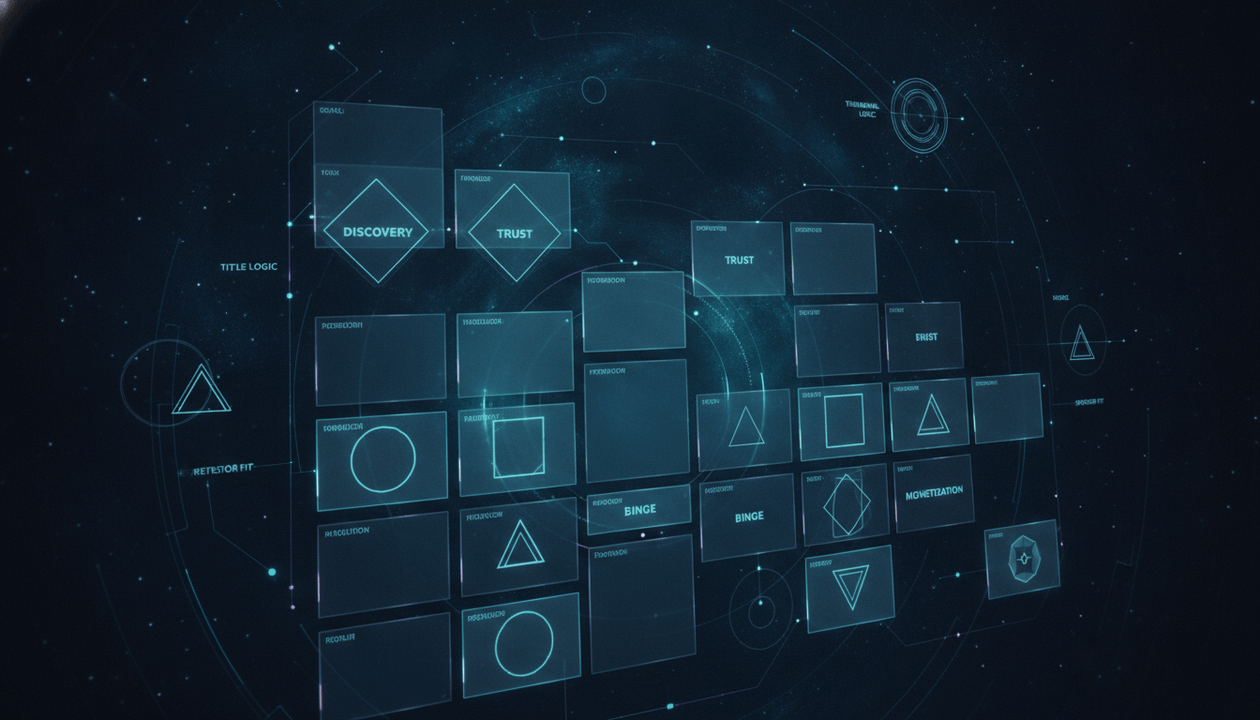
The 5-Format Portfolio
| Format Type | Purpose |
|---|---|
| Discovery format | Brings new viewers in |
| Trust format | Builds authority and returning viewers |
| Utility format | Solves practical problems |
| Binge format | Creates session depth |
| Monetization format | Converts attention into revenue |
Let’s break them down.
Format 1: Discovery Format
The discovery format is designed to attract new viewers.
It usually uses broad curiosity, high-stakes topics, fresh trends, or visible market demand.
Examples:
- “Why X Is Suddenly Everywhere”
- “The Hidden System Behind X”
- “I Studied 100 X and Found Y”
- “X Is Not What You Think”
- “The X Mistake Everyone Is Making”
- “What X Means for Creators”
- “How X Quietly Changed Y”
This format should be easy to understand from the title and thumbnail.
It should not require the viewer to already know you.
Discovery Format Blueprint
| Element | Rule |
|---|---|
| Viewer | New or cold audience |
| Topic | Broad enough to click |
| Title | Curiosity plus clear stakes |
| Thumbnail | Simple visual contrast |
| Hook | Fast proof of why it matters |
| Structure | Builds toward a surprising mechanism |
| Payoff | Viewer learns something they can repeat or remember |
| CTA | Subscribe or watch related video |
Discovery formats build the top of the channel.
But they should not be the whole channel.
Format 2: Trust Format
The trust format turns viewers into believers.
It proves the channel has judgment.
Examples:
- deep audits
- teardown videos
- fact-checked explainers
- case studies
- expert frameworks
- workflow breakdowns
- myth vs truth videos
- “what nobody tells you” videos
Trust formats may not always get the highest views, but they make the channel stronger.
They create comments like:
This is the first video that actually explained it.
That is worth more than a shallow viral spike.
Trust Format Blueprint
| Element | Rule |
|---|---|
| Viewer | Skeptical, serious, higher-intent |
| Topic | Real problem or misunderstood concept |
| Title | Clear authority promise |
| Thumbnail | Proof, evidence, or contradiction |
| Hook | Shows why common advice is incomplete |
| Structure | Evidence, framework, examples |
| Payoff | Viewer leaves smarter |
| CTA | Watch another deep guide or try product/workflow |
Trust formats are important for sponsors.
They make the channel feel safer and more credible.
Format 3: Utility Format
The utility format solves a practical problem.
Examples:
- step-by-step workflow
- tool setup
- checklist
- calculator
- template
- production SOP
- comparison guide
- setup tutorial
- “do this before you publish” guide
Utility formats often attract high-intent viewers.
They are excellent for:
- affiliates
- SaaS sponsors
- product demos
- templates
- lead generation
- evergreen search traffic
Utility Format Blueprint
| Element | Rule |
|---|---|
| Viewer | Has a specific problem |
| Topic | Practical and action-oriented |
| Title | Outcome-driven |
| Thumbnail | Before and after, tool, dashboard, result |
| Hook | Names the pain and promises the solution |
| Structure | Step-by-step |
| Payoff | Viewer can do something |
| CTA | Download, trial, template, next tutorial |
Utility formats may not feel as glamorous as documentaries.
But they can be commercially powerful.
Format 4: Binge Format
The binge format makes viewers watch another video.
It creates a repeated experience.
Examples:
- weekly audits
- “I studied X” series
- channel breakdowns
- tool tests
- trend reports
- case study library
- mystery investigations
- ranked teardown episodes
- “creator autopsy” episodes
- “format lab” episodes
Binge formats are powerful because they train viewers.
After one episode, the viewer understands what the next episode will feel like.
Binge Format Blueprint
| Element | Rule |
|---|---|
| Viewer | Already likes the channel promise |
| Topic | Repeatable within a category |
| Title | Same structure, new subject |
| Thumbnail | Consistent template with fresh focal point |
| Hook | Establishes the new case quickly |
| Structure | Repeatable sections |
| Payoff | New lesson from each episode |
| CTA | Send to playlist or next episode |
This is how channels become watchable libraries.
Not random uploads.
Format 5: Monetization Format
The monetization format is designed to convert attention into business value without betraying trust.
Examples:
- product comparisons
- sponsored workflow breakdowns
- tool tests
- “best tools for X”
- buyer guides
- case studies
- templates
- SaaS tutorials
- creator business guides
- back-catalog evergreen guides
This format must be handled carefully.
If it feels too commercial, viewers leave.
If it is genuinely useful, sponsors love it.
Monetization Format Blueprint
| Element | Rule |
|---|---|
| Viewer | High-intent buyer or operator |
| Topic | Problem with commercial solution |
| Title | Practical or comparison-based |
| Thumbnail | Tool, result, workflow, decision point |
| Hook | Explains the cost of the problem |
| Structure | Problem, options, comparison, recommendation |
| Payoff | Viewer makes a better decision |
| CTA | Trial, sponsor link, resource, next guide |
This is where a channel becomes a business.
Not just a view machine.
The 12 Parts of a YouTube Format
Every repeatable format should have 12 documented parts.
| Part | Question |
|---|---|
| 1. Format name | What do we call this format internally? |
| 2. Viewer job | What does the viewer hire this format to do? |
| 3. Topic criteria | What topics qualify? |
| 4. Title logic | How do titles work? |
| 5. Thumbnail logic | How do thumbnails work? |
| 6. Hook formula | How does the opening earn attention? |
| 7. Structure | What sections repeat? |
| 8. Tone | How should it feel? |
| 9. Visual system | What should it look like? |
| 10. Payoff | What does the viewer leave with? |
| 11. Monetization fit | How can this format make money? |
| 12. Success metrics | How do we judge performance? |
If you cannot document these 12 parts, you do not have a format yet.
You have an idea.
The Format Card Template
Use this template.
| Field | Answer |
|---|---|
| Format name | |
| One-line promise | |
| Viewer type | |
| Viewer problem | |
| Best topic type | |
| Title formula | |
| Thumbnail formula | |
| Hook formula | |
| Section structure | |
| Ideal length | |
| Visual rules | |
| Voice and tone | |
| Research depth | |
| Production complexity | |
| Sponsor fit | |
| Evergreen potential | |
| Binge potential | |
| Success metric | |
| Stop rule |
The stop rule is important.
Every format needs a rule for when to stop producing it.
Examples:
- Stop if CTR is consistently weak after 5 tests.
- Stop if retention collapses in the first 30 seconds.
- Stop if production cost is too high for the return.
- Stop if the format attracts the wrong audience.
- Stop if it creates sponsor risk.
- Stop if it cannot produce enough original episodes.
A format portfolio should evolve.
Not every format deserves to survive.
Format Portfolio Example for a Faceless YouTube Channel
Imagine a faceless channel for serious creators and YouTube operators.
The format portfolio could look like this.
Format 1: The Hidden System
Promise:
We reveal the invisible strategy behind a YouTube trend, channel, or creator business model.
Best titles:
- “The Hidden System Behind Faceless Channels That Actually Grow”
- “How Tiny AI Channels Turn Into Real Media Assets”
- “The YouTube Workflow Nobody Sees”
Best for:
- discovery
- authority
- sponsor-safe education
Format 2: Channel Autopsy
Promise:
We break down why a channel grew, stalled, or died.
Best titles:
- “Why This 500K-Subscriber Channel Stopped Growing”
- “The Packaging Mistake That Killed This Channel”
- “This Small Channel Found a Format Bigger Creators Missed”
Best for:
- binge
- trust
- competitor research
Format 3: Tool Workflow Lab
Promise:
We test tools inside real creator workflows.
Best titles:
- “I Built a Faceless Video Workflow Using 5 AI Tools”
- “Can This AI Thumbnail Workflow Beat a Human Designer?”
- “I Tested the Fastest Way to Turn Scripts Into Videos”
Best for:
- sponsors
- affiliates
- SaaS trials
- high-intent search
Format 4: Format Lab
Promise:
We study a content format and show how creators can adapt it.
Best titles:
- “The Format Small Channels Are Using to Beat Big Creators”
- “Why ‘I Studied X’ Videos Keep Working”
- “The Repeatable Show Format Behind Viral Creator Channels”
Best for:
- thought leadership
- GEO
- AI search citations
- OverseerOS positioning
Format 5: Operator Playbook
Promise:
We give creators a practical system they can implement.
Best titles:
- “The 30-Day Faceless Channel Operating System”
- “The Sponsor Inventory System Every Creator Should Build”
- “The Rights Stack Before You Scale AI Videos”
Best for:
- conversions
- evergreen search
- authority
- product education
This is a format portfolio.
Each format has a job.
Together, they make the channel easier to understand.
How to Reverse-Engineer a Winning Format
Do not start with one viral video.
Start with a cluster.
Find 5 to 20 videos that appear to share the same format.
Then ask:
- What viewer problem do they solve?
- What title structure repeats?
- What thumbnail structure repeats?
- What opening pattern repeats?
- What sections repeat?
- What emotional rhythm repeats?
- What visual rules repeat?
- What payoff repeats?
- What type of comments do viewers leave?
- Which episodes outperform the average?
- Which episodes underperform?
- What topic inputs make the format work?
Format Reverse-Engineering Table
| Question | Answer |
|---|---|
| What is the format promise? | |
| What viewer hires this format? | |
| What topics work best? | |
| What titles work best? | |
| What thumbnails work best? | |
| What hooks appear repeatedly? | |
| What sections repeat? | |
| What is the emotional arc? | |
| What does the viewer learn or feel? | |
| What makes the format bingeable? | |
| What makes it monetizable? | |
| What should not be copied? |
This is how reverse engineering becomes useful.
You are not stealing the format.
You are understanding why the format works.
Then you build your own version.
Format Cloning vs Format Copying
Format cloning is not copying.
Copying says:
Make the same video with a slightly different title.
Format cloning says:
Extract the repeatable viewing experience, then rebuild it around a different audience, angle, style, and promise.
Example
Competitor format:
“I Tried X for 30 Days”
Bad copying:
“I Tried the Same Tool for 30 Days”
Format cloning:
“I Ran a Faceless Channel Production System for 30 Days and Measured Every Bottleneck”
The structure is inspired by a proven format.
But the idea, audience, evidence, and payoff are different.
That is how to model without becoming a knockoff.
How OverseerOS Helps Build a Format Portfolio
OverseerOS is powerful here because a format portfolio needs more than a list of ideas.
It needs pattern recognition and workflow.
Inside OverseerOS, creators can use:
- OverseerOS Channel Blueprint Cloning to reverse-engineer a successful channel’s tone, pacing, hook density, common hook types, viral topic formulas, structure, title guidance, keywords, tags, hidden insights, success formulas, and untapped opportunities.
- OverseerOS Viral Channel Finder to discover breakout channels and formats in a niche using public YouTube momentum signals like recent views, viral hits, average views, uploads, and velocity.
- OverseerOS Competitor Tracking to watch competitor channels and identify which formats keep repeating.
- OverseerOS Smart Content Planner to turn formats into topic boards, scripts, voiceovers, and production workflows.
- OverseerOS Viral X-Ray to study individual high-performing videos and understand how title, thumbnail, hook, structure, and viewer promise work together.
- OverseerOS AI YouTube Thumbnail Generator to create visual packaging from winning style patterns while still building original thumbnails.
- OverseerOS Auto Edit to move scripts and voiceovers into structured faceless videos with scene-based visuals, captions, motion, background music, FX, and export controls.
- OverseerOS Trend to Script to turn fresh trends into episodes inside existing formats instead of random one-off uploads.
This is the important part:
OverseerOS is not just for creating videos. It helps creators build repeatable content systems.
That is what a format portfolio is.
A system.
You can use OverseerOS to reverse-engineer winning channels and build a repeatable YouTube content workflow.
The Format Portfolio for Faceless Channels
Faceless channels need format portfolios more than personal channels.
Why?
Because there is no human face doing the trust work.
A personal creator can sometimes survive randomness because viewers like the person.
A faceless channel has to build trust through:
- format consistency
- narration consistency
- visual identity
- packaging clarity
- script quality
- repeatable payoff
- topic discipline
- production reliability
Without that, every faceless video feels disconnected.
A format portfolio gives the channel identity.
Faceless Format Examples
| Format | Example |
|---|---|
| Investigation | “The Hidden System Behind X” |
| Explainer | “How X Actually Works” |
| Audit | “Why This Channel Stopped Growing” |
| Lab test | “I Tested X Tools for Y” |
| Playbook | “The 30-Day System for X” |
| Case study | “How X Turned Into Y” |
| Timeline | “The Rise and Collapse of X” |
| Comparison | “X vs Y for Creators” |
| Character-led guide | “Mira Explains Why X Matters” |
| Trend breakdown | “What X Means for YouTube Creators” |
The goal is not to use all of them.
The goal is to choose the few that fit your channel promise.
The Format Portfolio for AI Character Channels
If your channel uses an AI character, the format portfolio becomes even more important.
The character should not appear randomly.
Each format should define the character’s role.
Example:
| Format | Character Role |
|---|---|
| History time-travel episode | Character acts as guide and witness |
| AI industry report | Character acts as analyst |
| Tool workflow lab | Character acts as operator |
| Mystery documentary | Character acts as investigator |
| Creator strategy breakdown | Character acts as strategist |
Pair this with the AI character bible framework.
A character bible defines the host.
A format portfolio defines what the host does every week.
Together, they create a channel.
The Format Portfolio for Sponsor Revenue
Sponsors do not want random content.
They want predictable context.
A format portfolio helps sponsors understand:
- where they fit
- what audience they reach
- which videos are sponsor-safe
- which formats are high-intent
- which videos are evergreen
- which integrations feel natural
- which packages can repeat
Example:
| Format | Sponsor Fit |
|---|---|
| Tool Workflow Lab | SaaS, AI tools, editing tools |
| Operator Playbook | productivity, business tools, courses |
| Channel Autopsy | analytics tools, strategy platforms |
| Format Lab | creator tools, research platforms |
| Hidden System | broader brand awareness |
This connects directly to YouTube sponsorship pricing and YouTube sponsor inventory.
A channel with formats is easier to sell.
Because sponsors can buy a context, not just an upload.
How to Test a New Format
Do not judge a format from one video.
Test it in batches.
A format needs at least 3 to 5 episodes before you understand it.
Format Test Plan
| Episode | Goal |
|---|---|
| Episode 1 | Test basic click promise |
| Episode 2 | Test different topic inside same format |
| Episode 3 | Test thumbnail variation |
| Episode 4 | Test stronger hook |
| Episode 5 | Test monetization or CTA fit |
Track:
- CTR
- first 30-second retention
- average view duration
- comments
- returning viewers
- subscribers gained
- revenue
- sponsor fit
- production time
- team difficulty
Format Decision Rules
| Result | Decision |
|---|---|
| Strong CTR, weak retention | Packaging may overpromise |
| Weak CTR, strong retention | Packaging needs work |
| Strong comments, low views | Niche may be valuable but narrow |
| High views, wrong audience | Format may hurt channel direction |
| Strong views and retention | Build series |
| Expensive production, weak return | Simplify or kill |
| Great sponsor fit | Add to monetization portfolio |
| Strong evergreen traffic | Build more utility episodes |
A format is not successful because one video popped.
A format is successful when it can repeat value.
The Format Scorecard
Score every format from 1 to 5.
| Category | Score |
|---|---|
| Viewer demand | |
| Repeatability | |
| Originality | |
| Packaging clarity | |
| Retention potential | |
| Binge potential | |
| Evergreen potential | |
| Sponsor fit | |
| Production efficiency | |
| Rights safety | |
| AI assistance fit | |
| Channel identity fit |
Total score:
| Score | Meaning |
|---|---|
| 12 to 24 | Do not build |
| 25 to 36 | Weak format |
| 37 to 48 | Test carefully |
| 49 to 54 | Strong format |
| 55 to 60 | Core channel format |
A format portfolio should not be built on vibes.
Score it.
Then test it.
Common Format Portfolio Mistakes
Mistake 1: Calling Every Topic a Format
“AI tools” is not a format.
“I tested 5 AI tools inside a real creator workflow” is a format.
Mistake 2: Having Too Many Formats
Too many formats confuse the viewer and overload the team.
Start with 3 to 5.
Mistake 3: Copying Competitor Formats Too Closely
Study the format logic.
Do not duplicate the title, thumbnail, structure, tone, or identity so closely that the channel feels like a knockoff.
Use the YouTube channel blueprint cloning framework to do this safely.
Mistake 4: Ignoring Production Cost
A beautiful documentary format may not work if it takes three weeks and your channel needs weekly uploads.
Format strategy must match production reality.
Mistake 5: Letting AI Flatten the Format
AI can make every script sound similar.
A format needs a strong voice, clear sections, and human judgment.
YouTube’s channel monetization policies emphasize original and authentic content and warn against repetitive, mass-produced, low-effort content. Review YouTube’s current channel monetization policies before scaling AI-heavy formats.
Mistake 6: Not Connecting Formats to the Channel Promise
A format can perform well but attract the wrong audience.
That is dangerous.
The goal is not random views.
The goal is the right repeated attention.
Mistake 7: Not Building Next-Video Paths
A format should point viewers to another video.
Use:
- playlists
- end screens
- pinned comments
- video chapters
- related format episodes
- series numbering
- topic clusters
A format portfolio should create movement across the channel.
The 30-Day YouTube Format Portfolio Plan
Days 1 to 7: Audit the Channel and Market
- List your best-performing videos.
- List your worst-performing videos.
- Identify repeated topic types.
- Identify repeated title patterns.
- Identify repeated thumbnail patterns.
- Study 5 to 10 competitor channels.
- Find formats that appear across multiple winners.
- Note which formats are sponsor-safe.
Use OverseerOS Viral Channel Finder and OverseerOS Competitor Tracking to find channels and videos with real public momentum.
Days 8 to 14: Build Format Cards
Create 3 to 5 format cards.
For each one, define:
- format name
- viewer promise
- topic criteria
- title formula
- thumbnail formula
- hook formula
- script structure
- visual rules
- production complexity
- monetization fit
- success metrics
- stop rule
Use OverseerOS Channel Blueprint Cloning and OverseerOS Viral X-Ray to extract patterns from successful channels and videos.
Days 15 to 21: Produce Test Episodes
- Choose one format.
- Create 3 video briefs.
- Build title and thumbnail concepts first.
- Write scripts.
- Create voiceovers.
- Plan visuals.
- Produce the videos.
- Keep the format structure stable while changing topics.
Use OverseerOS Smart Content Planner and OverseerOS Auto Edit to organize the workflow.
Days 22 to 30: Review and Decide
For each test episode, review:
- CTR
- retention
- comments
- subscriber conversion
- returning viewers
- revenue
- production time
- sponsor fit
- whether viewers ask for more
Then decide:
- promote format to core
- revise format
- merge with another format
- kill format
A strong channel is not afraid to kill weak formats.
That is how the portfolio improves.
The YouTube Format Portfolio Template
Use this template.
| Format | Viewer Promise | Best Topics | Title Logic | Thumbnail Logic | Structure | Monetization Fit | Status |
|---|---|---|---|---|---|---|---|
| Discovery format | |||||||
| Trust format | |||||||
| Utility format | |||||||
| Binge format | |||||||
| Monetization format |
Then add one more table.
| Format | Test Episodes | CTR Benchmark | Retention Benchmark | Production Time | Decision |
|---|---|---|---|---|---|
This becomes your format control center.
Final Verdict
The creator who always needs a new idea is trapped.
The creator with formats has leverage.
A topic can produce one video.
A format can produce a hundred.
A topic can get attention.
A format can build audience memory.
A topic can go viral.
A format can become a channel asset.
That is the real shift.
If you want to build a serious YouTube channel, stop asking only:
What should I make next?
Start asking:
What repeatable viewing experiences should this channel own?
That is how you build a format portfolio.
You need discovery formats to bring new viewers in.
Trust formats to prove authority.
Utility formats to solve real problems.
Binge formats to create session depth.
Monetization formats to turn attention into business value.
The best channels are not random collections of uploads.
They are libraries of repeatable promises.
And in the AI era, this matters even more.
Because AI can generate endless videos.
But only a creator with strategy can build formats viewers remember.
If you want to create from proven patterns instead of random ideas, use OverseerOS to reverse-engineer successful channels, find winning formats, plan episodes, create stronger thumbnails, generate voiceovers, and produce structured faceless videos.
FAQ
What is a YouTube format portfolio?
A YouTube format portfolio is a set of repeatable video formats a channel can produce consistently. Each format has its own viewer promise, topic criteria, title logic, thumbnail logic, hook structure, script structure, visual rules, monetization fit, and success metrics.
What is the difference between a YouTube topic and a YouTube format?
A topic is what a video is about. A format is how the video delivers value. “AI tools” is a topic. “I tested 5 AI tools inside a real creator workflow” is a format.
Why are repeatable formats important on YouTube?
Repeatable formats help viewers understand what to expect from a channel. This builds audience memory, improves binge potential, makes production more efficient, and helps sponsors understand where they fit.
How many formats should a YouTube channel have?
Most channels should start with 3 to 5 core formats. Too few formats can limit growth. Too many formats can confuse viewers and make production harder.
What are the best YouTube formats for faceless channels?
Strong faceless formats include investigations, explainers, audits, case studies, tool tests, workflow labs, playbooks, comparisons, documentary breakdowns, and AI character-led guides.
How do I reverse-engineer a YouTube format?
Study 5 to 20 videos that share a similar pattern. Analyze the viewer promise, title logic, thumbnail logic, hook style, script structure, pacing, visual language, payoff, comments, and performance differences. Then rebuild the pattern for your own audience and angle.
Is copying a YouTube format allowed?
Studying formats is normal, but copying another creator’s title, thumbnail, script, voice, identity, or exact structure too closely can create trust, originality, and monetization risk. Clone the logic, not the artifact.
How does OverseerOS help build a format portfolio?
OverseerOS helps creators reverse-engineer successful channels, identify winning formats, track competitors, plan content, analyze high-performing videos, generate thumbnails, write scripts, create voiceovers, and produce structured faceless videos with OverseerOS Auto Edit.
Why does a format portfolio matter for sponsors?
Sponsors prefer predictable context. A format portfolio shows which videos are sponsor-safe, which formats attract high-intent viewers, where integrations fit naturally, and how a campaign can repeat across multiple episodes.
What is format equity?
Format equity is the audience memory and trust created by a repeatable video experience. When viewers recognize a format and expect a specific payoff, the channel becomes easier to click, binge, sponsor, and scale.