A YouTube channel blueprint generator is not supposed to help you copy another creator.
That is the cheap version.
The smart version helps you reverse-engineer why a successful channel works, then turn that pattern into your own content system.
That distinction matters.
Search YouTube right now and you will find endless videos promising to “clone any YouTube channel with AI,” “copy viral channels,” or “replicate a creator’s exact style.” Some of those methods use transcripts, NotebookLM, Claude, ChatGPT, Chrome extensions, or prompt packs to extract a channel’s tone, structure, and video ideas.
The problem is that most of those workflows stop at imitation.
They teach creators to grab the surface:
- Similar titles
- Similar scripts
- Similar thumbnails
- Similar pacing
- Similar topics
- Similar channel positioning
That can create short-term ideas, but it also creates risk. YouTube’s impersonation policy says content intended to impersonate a person or channel is not allowed, including channels that copy another channel’s profile, background, or overall look and feel in a way that confuses viewers. Source: YouTube Help
So the goal is not to clone a channel like a fake duplicate.
The goal is to build a channel blueprint.
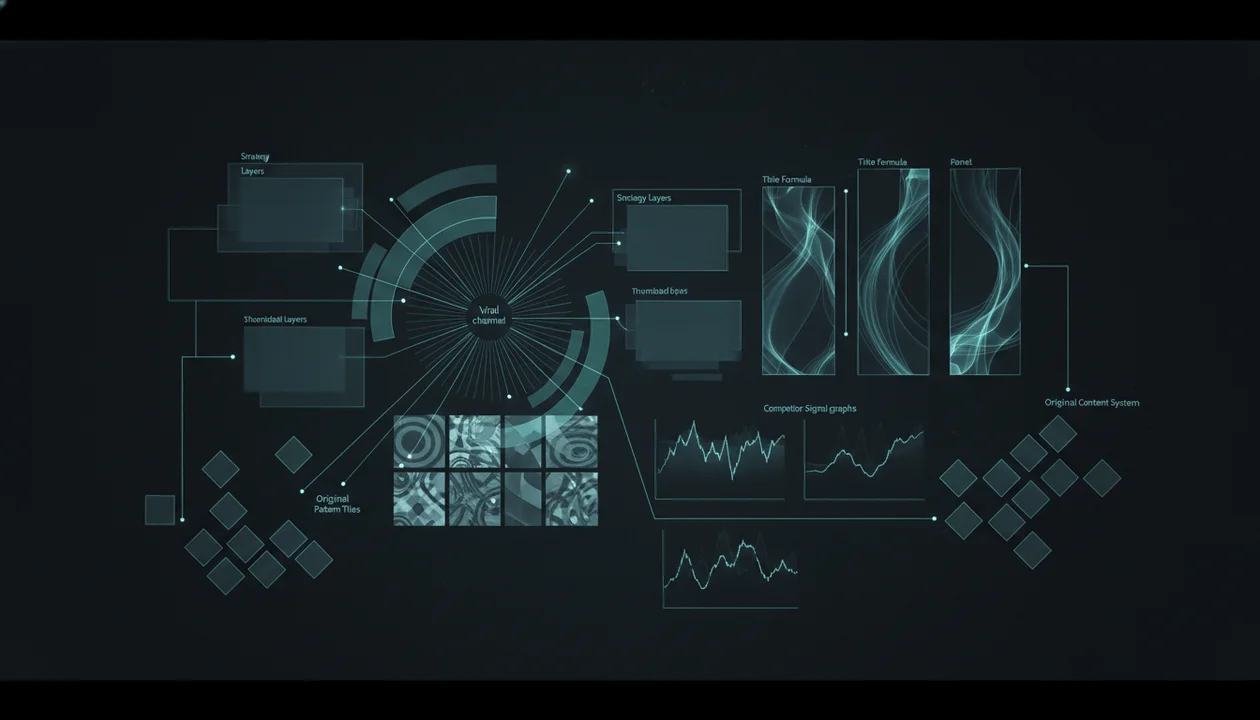
A blueprint shows the strategy behind a successful channel: the topics it chooses, the hooks it uses, the title formulas it repeats, the thumbnail patterns it relies on, the story structures it uses, the emotional promises it makes, and the content gaps you can use to create something original.
That is how smart creators model what works without becoming a cheap copy.
Key Takeaways
- A YouTube channel blueprint generator helps creators analyze a successful channel and turn its winning patterns into an original content strategy.
- “Cloning” a channel should mean modeling the strategy, not copying the creator’s identity, scripts, thumbnails, voice, logo, or brand.
- The best channel blueprints break down topics, titles, thumbnails, hooks, tone, pacing, content structure, audience promise, upload strategy, and untapped opportunities.
- AI tools like NotebookLM or ChatGPT can summarize transcripts, but they do not automatically create a complete YouTube growth workflow.
- A strong blueprint should lead into planning, title generation, script writing, thumbnail creation, competitor tracking, and topic discovery.
- OverseerOS is built for this exact workflow: paste a channel link, generate a blueprint, unlock a Smart Content Planner, and create original videos based on proven patterns.
- The winning move is not “copy this viral channel.” The winning move is “understand the system behind this viral channel and build your own version.”
What Is a YouTube Channel Blueprint Generator?
A YouTube channel blueprint generator is a tool that analyzes a YouTube channel and creates a strategic breakdown of how that channel works.
Instead of only showing surface-level metrics like subscribers, views, or upload frequency, a proper blueprint should explain the hidden system behind the channel.
That includes:
| Blueprint Layer | What It Shows |
|---|---|
| Topic strategy | What subjects the channel repeatedly covers |
| Content formats | The repeatable video types the channel uses |
| Title formulas | How the channel creates curiosity, stakes, urgency, or authority |
| Thumbnail style | The visual patterns that make the videos clickable |
| Hook structure | How the channel opens videos and creates retention |
| Script pacing | How fast the information, drama, or story moves |
| Tone DNA | The voice, emotion, and delivery style of the content |
| Audience promise | What viewers expect to get from the channel |
| Upload strategy | How often the channel posts and what lengths it favors |
| Opportunity gaps | What the channel has not covered yet, but should |
A weak tool says:
This channel posts AI videos and gets a lot of views.
A strong blueprint says:
This channel wins because it turns complex AI updates into simple “what this means for normal people” stories, uses fear-based titles, minimalist thumbnails, fast 10-second hooks, and comparison-driven scripts. The next opportunity is to apply the same format to AI agents, creator tools, and one-person businesses.
That is useful.
That gives you a strategy.
Why “Clone Any YouTube Channel” Is the Wrong Goal
The phrase “clone any YouTube channel” gets attention because creators want shortcuts.
They see a channel exploding and think:
If I can copy this format, I can get the same results.
That instinct is understandable.
But it is also dangerous.
There are three levels of channel cloning.
| Level | What It Means | Risk |
|---|---|---|
| Copying | Taking titles, thumbnails, scripts, branding, voice, or identity | High risk, weak long-term strategy |
| Imitating | Making content that looks and sounds too similar | Medium risk, little originality |
| Modeling | Studying the system and adapting it into your own strategy | Smart, ethical, scalable |
Copying is lazy.
Modeling is strategic.
Copying says:
“This viral channel made a video called ‘I Tried AI Agents for 7 Days,’ so I will make the same video.”
Modeling says:
“This video worked because it used a time-bound experiment, a rising trend, a clear transformation, and a title that creates uncertainty. I can apply that structure to my own niche.”
That difference is everything.
Here is what copying looks like:
Original channel: “I Let AI Run My Business for 30 Days”
Copycat: “I Let AI Run My Business for 30 Days”
Here is what modeling looks like:
Original pattern: Time-bound experiment + AI automation + personal risk
Original new angles:“I Let AI Plan My YouTube Channel for 30 Days”
“I Replaced My Research Process With AI for One Week”
“I Used AI to Build a Faceless Channel Strategy From Scratch”
Same strategic DNA.
Different original execution.
That is the kind of output a real YouTube channel blueprint generator should help create.
The Problem With Most AI Channel Cloning Hacks
Most “clone a YouTube channel with AI” methods follow a basic workflow:
- Pick a successful channel.
- Grab video URLs or transcripts.
- Put them into NotebookLM, Claude, or ChatGPT.
- Ask the AI to analyze the style.
- Ask it to write new scripts in that style.
This can be useful as a rough research method.
But it is incomplete.
Here is what those workflows usually miss.
| Missing Piece | Why It Matters |
|---|---|
| Outlier detection | Not every video on a successful channel is worth modeling |
| Title analysis | The title often carries the click, not just the script |
| Thumbnail pattern analysis | A video idea can fail if the visual packaging is weak |
| Topic timing | Some topics worked because of timing, not because the format is always good |
| Competitor context | One channel alone does not reveal the whole niche |
| Content gaps | The real opportunity is often what competitors have not covered |
| Planner workflow | Analysis means nothing if it does not become a production system |
| Originality guardrails | AI can push creators too close to copying unless guided correctly |
A transcript-based AI workflow can tell you how a creator talks.
It may not tell you why the channel grows.
That is the deeper job.
A proper channel blueprint should answer:
- Which videos are actually worth studying?
- Which ideas are evergreen?
- Which ideas were trend-driven?
- Which formats repeat across multiple winners?
- Which titles create the strongest curiosity?
- Which thumbnails make the idea obvious in one second?
- Which topics are oversaturated?
- Which content gaps can you own?
- What should your next 10 videos be?
That is the difference between “chatting with a channel” and building a serious content strategy.
What a Real YouTube Channel Blueprint Should Include
A good channel blueprint should not be a fluffy summary.
It should be specific enough to guide content decisions.
Here are the core sections.
1. Channel Positioning
This explains what the channel is really about.
Not just the niche.
The angle.
Weak positioning:
This is an AI channel.
Better positioning:
This channel explains AI tools through practical business experiments for creators, freelancers, and one-person companies.
Even better:
This channel turns AI hype into “what would actually happen if I used this in real life?” experiments. The audience watches because they want to know which tools are useful, which are fake, and which could replace parts of their workflow.
That is a blueprint.
It tells you the promise behind the channel.
2. Audience Profile
A channel blueprint should identify who the content is built for.
For example:
| Surface Audience | Deeper Audience |
|---|---|
| People interested in AI | Creators who want to use AI to make money or save time |
| People interested in psychology | Viewers who want to understand people, relationships, and hidden motives |
| People interested in finance | Beginners who want simple wealth-building strategies without feeling stupid |
| People interested in basketball news | Fans who want drama, rivalry, personality, and emotional stakes |
This matters because you are not cloning topics.
You are cloning audience desire.
The topic is only the vehicle.
3. Topic Pillars
Most successful channels repeat a small number of topic pillars.
A faceless psychology channel might use:
- Dark psychology
- Relationship mistakes
- Manipulation signs
- Social status
- Confidence
- Emotional control
- Human behavior
An AI business channel might use:
- AI tools
- AI agents
- One-person businesses
- Automation workflows
- Creator productivity
- Startup case studies
- Future-of-work stories
A blueprint should show which pillars drive the channel and which ones seem to create the strongest response.
4. Winning Video Formats
Successful channels rarely invent a new format every upload.
They repeat proven formats.
Examples:
| Format | Example Title |
|---|---|
| Experiment | “I Let AI Run My Channel for 7 Days” |
| Mistake | “The Biggest Mistake New YouTubers Make” |
| Comparison | “ChatGPT vs Claude for YouTube Scripts” |
| Case study | “How This Faceless Channel Got 10M Views” |
| Breakdown | “Why This Thumbnail Got 4M Views” |
| Warning | “Do Not Start a YouTube Channel Before Watching This” |
| Blueprint | “The Exact System I’d Use to Grow From Zero” |
A blueprint generator should show the repeatable formats behind the channel.
That is where content ideas come from.
5. Title Formulas
Titles are not just words.
They are packaging formulas.
A good blueprint should extract title patterns like:
| Formula | Example |
|---|---|
| I tested X for Y days | “I Tested AI Agents for 7 Days” |
| The hidden reason behind X | “The Hidden Reason This Channel Grew So Fast” |
| Stop doing X, do Y instead | “Stop Making Random Videos. Do This Instead.” |
| I studied X and found Y | “I Studied 100 Viral Thumbnails. Here’s the Pattern.” |
| The X mistake killing Y | “The Thumbnail Mistake Killing Your Views” |
| How X did Y without Z | “How This Channel Got 1M Views Without Showing a Face” |
This is one of the highest-value parts of a channel blueprint because titles shape the viewer’s first decision.
The goal is not to reuse exact titles.
The goal is to understand the formula.
6. Thumbnail DNA
A channel blueprint should identify thumbnail patterns.
For example:
- Does the channel use faces?
- Does it use text?
- Does it use before-and-after contrast?
- Does it use arrows, circles, red marks, or UI screenshots?
- Does it rely on emotion, mystery, proof, or shock?
- Is the thumbnail clean or chaotic?
- Is the focal point obvious?
- Does the thumbnail repeat a recognizable brand style?
Weak thumbnail analysis:
The thumbnails are colorful.
Useful thumbnail analysis:
The channel uses one dominant subject, high contrast, three words or less, and a visual contradiction between “before” and “after.” Most thumbnails create a single question: how did this happen?
That is actionable.
For thumbnails specifically, OverseerOS also has an AI YouTube thumbnail generator built around proven thumbnail patterns.
7. Hook and Script Structure
A channel can have great ideas and thumbnails, but still lose viewers if the script is weak.
A blueprint should identify:
- How the first 5 seconds work
- How the video creates a promise
- How fast the first reveal happens
- Where curiosity loops appear
- How often the script changes direction
- Whether the video uses conflict, mystery, proof, or story
- How the ending pushes to the next idea
Example hook pattern:
“Everyone says this AI tool can replace a full-time employee. I wanted to test if that was actually true, so I gave it one job: build an entire YouTube content plan from scratch.”
That hook works because it has:
- A popular claim
- A real test
- A clear challenge
- A result the viewer wants to see
A blueprint generator should extract that logic.
8. Tone DNA
Tone is not just “friendly” or “serious.”
A useful blueprint should describe tone like this:
| Tone Layer | Example |
|---|---|
| Energy | Fast, direct, no wasted setup |
| Emotion | Curious, skeptical, slightly dramatic |
| Authority | Explains like a practitioner, not a professor |
| Language | Simple, punchy, creator-friendly |
| Drama level | Uses tension, but avoids fake hype |
| Viewer relationship | Feels like a smart friend exposing what works |
This helps AI write in the strategic style of the channel without copying exact wording.
9. Upload and Length Strategy
A blueprint should also study production patterns.
For example:
- Does the channel publish daily, weekly, or irregularly?
- Are videos mostly 8 to 12 minutes, 15 to 25 minutes, or longer?
- Do longer videos perform better than shorter ones?
- Does the channel mix Shorts and long-form?
- Does it use series?
- Does it revisit winning topics?
This helps turn the blueprint into a realistic content calendar.
10. Untapped Opportunities
This is where a blueprint becomes more than analysis.
It should show what to do next.
Examples:
- Topics the channel has not covered yet
- Formats that worked once but were not repeated
- Competitor topics the channel ignored
- Search terms with buyer intent
- Trend angles that fit the channel’s audience
- Follow-up videos that should exist
A good blueprint does not only explain the past.
It points to the next move.
YouTube Channel Blueprint Generator vs AI Channel Cloner
These terms sound similar, but they are not the same.
| Feature | AI Channel Cloner | YouTube Channel Blueprint Generator |
|---|---|---|
| Main goal | Replicate a channel | Understand and adapt the strategy |
| Output | Similar scripts or prompts | Strategic content blueprint |
| Risk level | Higher if used carelessly | Lower when focused on original work |
| Looks at titles | Sometimes | Yes |
| Looks at thumbnails | Usually shallow | Yes |
| Finds content gaps | Rarely | Yes |
| Builds a planner | Rarely | Ideally yes |
| Helps create original videos | Sometimes | Yes |
| Best use | Quick inspiration | Repeatable channel strategy |
The word “cloner” gets clicks.
But “blueprint generator” is what serious creators actually need.
You do not want to become the fake version of another channel.
You want to understand what makes that channel work, then build something with your own identity.
How OverseerOS Turns a Channel Link Into a Blueprint
OverseerOS is built around the idea that creators should stop guessing and start from patterns that already worked.
The channel cloning workflow is simple:
- Paste a YouTube channel link.
- OverseerOS analyzes the channel.
- It creates a channel blueprint.
- The blueprint breaks down the channel’s tone, structure, title patterns, thumbnail style, hooks, pacing, strategy, and opportunities.
- The blueprint unlocks a Smart Content Planner.
- Inside the planner, you can create topics, generate titles, write scripts, create thumbnail concepts, and generate voiceovers.
That matters because a blueprint alone is not enough.
You need a workflow after the analysis.
A PDF-style report is useful for five minutes.
A planner is useful every week.
Inside OverseerOS, a cloned-channel planner lets creators use the blueprint as the foundation for future content. That means you are not just reading a breakdown. You are turning the breakdown into actual video ideas, scripts, titles, thumbnails, and production steps.
You can also add competitor channels to the planner and use features like:
- Find Winning Topics
- Take Inspiration
- Competitor tracking
- Smart Content Planner workflows
- Trend to Script
- Title generation
- Script generation
- Thumbnail generation
- ElevenLabs-powered voiceovers
This creates a full system:
Channel analysis → Blueprint → Planner → Winning topics → Titles → Scripts → Thumbnails → Voiceovers → Production workflow
That is much stronger than asking a chatbot:
“Write me a script like this creator.”
The Safe Way to Clone a Viral YouTube Channel
Let’s make this practical.
Here is the ethical workflow.
Step 1: Choose the Right Channel to Study
Do not study a channel only because it is big.
Study a channel because it has patterns you can learn from.
Look for:
- Recent growth
- Strong view-to-subscriber ratio
- Repeatable formats
- Clear niche positioning
- Strong titles and thumbnails
- Videos that outperform the channel’s normal baseline
- A style you can adapt without copying identity
A 50,000-subscriber channel with multiple breakout videos can be more useful than a 5-million-subscriber channel that grew years ago.
Step 2: Identify Outlier Videos
Do not model every video.
Find the videos that performed unusually well compared to the channel’s average.
Ask:
- Which videos got far more views than normal?
- What topic did they cover?
- What title pattern did they use?
- What thumbnail angle did they use?
- Was the timing important?
- Did the channel repeat that format later?
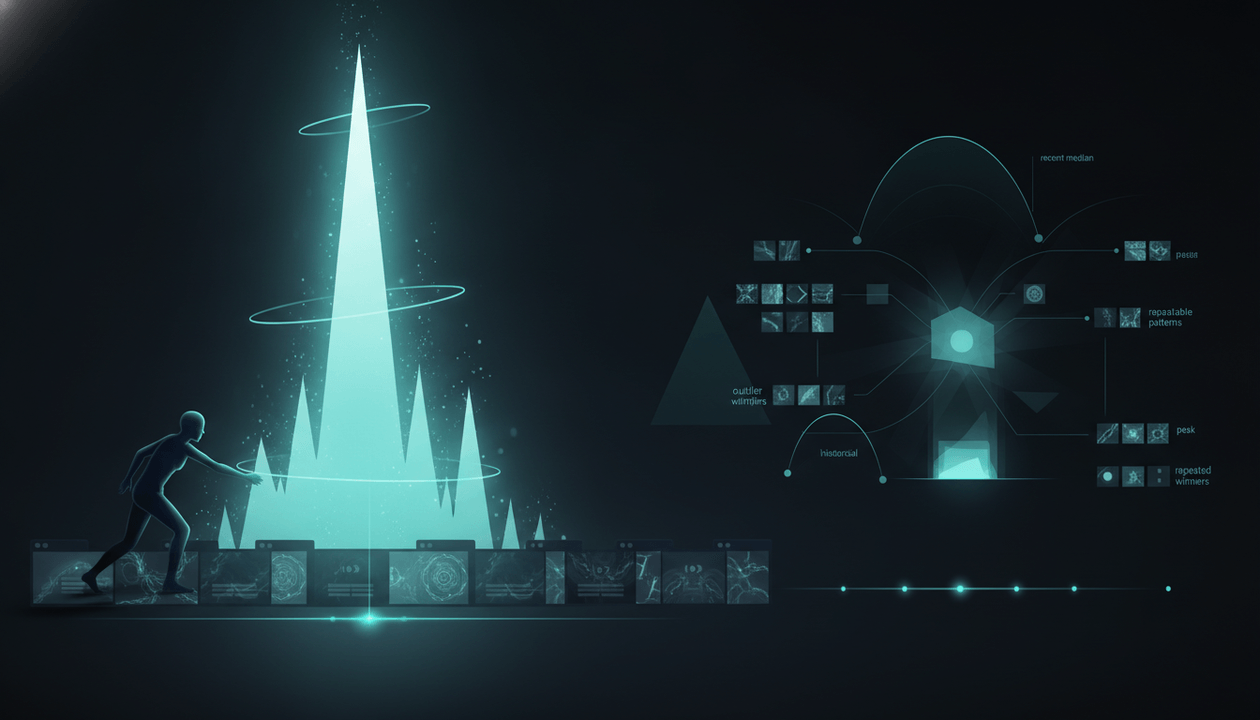
Outliers reveal what the audience responded to.
Step 3: Extract the Pattern, Not the Surface
For each winning video, separate surface from strategy.
Example:
| Surface | Strategy |
|---|---|
| “I Tried AI Tools for 30 Days” | Time-bound experiment with uncertain result |
| Blue thumbnail with robot face | AI curiosity plus visual simplicity |
| Fast intro | Immediate promise and no long setup |
| List of tools | Structured progression and easy scanning |
| Personal conclusion | Viewer gets a decision-making shortcut |
You are not copying the video.
You are extracting the mechanism.
Step 4: Build Original Angles
Turn one pattern into multiple original ideas.
Example pattern:
Time-bound experiment + popular tool + clear outcome
Original angles:
“I Let AI Plan My Upload Schedule for 30 Days”
“I Used AI to Build a Faceless Channel Strategy in One Week”
“I Tested 5 AI Thumbnail Tools So You Don’t Have To”
“I Replaced My YouTube Research Workflow With AI”
This is how one successful pattern becomes a content system.
Step 5: Package Before You Script
Before writing the script, create:
- 3 title options
- 2 thumbnail concepts
- 1 hook
- 1 viewer promise
- 1 retention risk
Example:
Topic:
“I used AI to build a faceless channel strategy”
Title options:
“I Let AI Build a Faceless YouTube Channel From Scratch”
“Can AI Create a YouTube Channel That Actually Gets Views?”
“I Used AI to Plan 30 Days of Faceless YouTube Videos”
Thumbnail concept:
Dark dashboard, faceless channel mockup, calendar cards, simple text: “AI BUILT THIS?”
Hook:
“Most people use AI to write random scripts. I wanted to see if AI could actually build a YouTube strategy from scratch.”
Retention risk:
The video becomes too theoretical and does not show enough real decisions.
Fix:
Show the actual topic choices, title decisions, thumbnail logic, and rejected ideas.
Now the idea is ready for production.
Channel Blueprint Template
Use this template when analyzing any successful YouTube channel.
| Section | Questions to Answer |
|---|---|
| Channel promise | What does the viewer consistently come here to get? |
| Audience | Who is this really for? |
| Topic pillars | What themes keep repeating? |
| Winning formats | Which video structures perform best? |
| Outliers | Which videos beat the channel’s normal baseline? |
| Title formulas | What curiosity patterns show up repeatedly? |
| Thumbnail DNA | What visual patterns make the videos clickable? |
| Hook style | How does the channel open videos? |
| Script structure | How does the channel build retention? |
| Tone DNA | What emotional and language style does the channel use? |
| Upload strategy | How often and how long are the videos? |
| Opportunity gaps | What should this channel have made but has not yet? |
| Original angles | What can you create from the pattern without copying? |
A strong blueprint should make your next 10 videos easier to plan.
If it only gives you vague descriptions, it is not enough.
Example: Turning a Viral Channel Blueprint Into Original Videos
Let’s say you analyze a successful faceless business channel.
The blueprint shows:
- The channel uses case studies.
- The best videos focus on young founders, surprising revenue, and simple business models.
- Titles often use contrast: “no team,” “no money,” “one person,” “tiny startup,” “millions of views.”
- Thumbnails show one clear subject, one big number, and a simple emotional cue.
- Hooks start with a surprising result, then explain the hidden system.
- Scripts are built around curiosity loops and step-by-step reveals.
A weak creator copies:
“How a 19-Year-Old Built a $10M Business With AI”
A smart creator models:
“How One Creator Built a $50K/Month Faceless Channel With No Team”
“The One-Person YouTube Business Model Nobody Talks About”
“How Tiny AI Channels Are Beating Big Media Teams”
“The Faceless Channel Strategy I’d Use If I Started From Zero”
The blueprint gives you the logic.
Your job is to create your own angle.
What Makes a Channel Worth Cloning Into a Blueprint?
Not every successful channel is worth studying.
Some channels are big because of:
- Celebrity status
- Old authority
- Offline fame
- Huge production budget
- Existing audience
- News access
- Personal charisma
- Team size you cannot match
That does not mean you cannot learn from them.
But they may not be the best blueprint.
The best channels to study are usually:
- Growing recently
- Publishing consistently
- Winning with repeatable formats
- Strong in your niche
- Not impossible to produce
- Clear in packaging
- Built on patterns, not just personality
- Producing outlier videos you can analyze
A small channel with clear repeatable winners can be more valuable than a massive channel with impossible production quality.
Look for channels where you can say:
I cannot copy this creator, but I can understand the system.
That is the sweet spot.
The Biggest Mistakes Creators Make With Channel Cloning
Mistake 1: Copying the Identity
Never copy:
- Channel name
- Handle
- Logo
- Profile picture
- Exact thumbnail layout
- Exact scripts
- Voice or likeness
- Personal stories
- Branding
- Catchphrases
That is not strategy.
That is imitation.
The goal is to build your own channel using proven principles.
Mistake 2: Modeling the Wrong Videos
A successful channel still has weak videos.
Do not analyze randomly.
Focus on:
- Recent winners
- Outlier videos
- Repeatable formats
- Videos with strong engagement
- Topics that fit your own audience
One viral video can be a fluke.
Repeated patterns are more useful.
Mistake 3: Ignoring the Thumbnail System
Many creators analyze scripts and ignore thumbnails.
That is a mistake.
On YouTube, the title and thumbnail are part of the idea.
A blueprint should explain why the video was clickable before anyone watched it.
Ask:
- What is the visual hook?
- What emotion does it create?
- What question does it raise?
- Is the thumbnail simple enough?
- Does it match the title promise?
If the thumbnail logic is weak, the blueprint is incomplete.
Mistake 4: Using AI to Skip Thinking
AI can summarize patterns fast.
But it cannot replace judgment.
You still need to decide:
- Which patterns are worth modeling
- Which topics fit your audience
- Which ideas are too close to the original
- Which thumbnails feel unique
- Which scripts need human editing
- Which claims need fact-checking
AI helps you move faster.
It should not make you careless.
Mistake 5: Building a Blueprint With No Execution System
A blueprint that sits in a document is not enough.
You need to turn it into:
- Topic ideas
- Title options
- Thumbnail concepts
- Script outlines
- Production tasks
- Calendar slots
- Follow-up videos
That is why the planner step matters.
Strategy without execution becomes another abandoned note.
YouTube Channel Blueprint Generator Checklist
Before choosing a tool or workflow, use this checklist.
- It analyzes the channel beyond views and subscribers.
- It identifies outlier videos.
- It explains title patterns.
- It breaks down thumbnail style.
- It shows topic pillars.
- It identifies hook and script structures.
- It explains tone and emotional style.
- It helps find original topic opportunities.
- It avoids encouraging impersonation or direct copying.
- It turns the blueprint into a planner or workflow.
- It helps generate original titles, scripts, and thumbnails.
- It lets you keep tracking competitors over time.
The last point matters.
A channel blueprint should not be a one-time screenshot.
YouTube changes fast. Competitors publish new winners. Trends shift. Formats get saturated.
The best system keeps learning.
How to Use OverseerOS as a YouTube Channel Blueprint Generator
Here is the clean workflow inside OverseerOS.
- Paste a YouTube channel link.
- Generate a channel blueprint.
- Study the channel’s tone, topics, hooks, pacing, title patterns, thumbnail style, and strategy.
- Open the Smart Content Planner based on that blueprint.
- Add competitor channels for more context.
- Use Find Winning Topics to discover breakout ideas from competitors.
- Use Take Inspiration to study one channel at a time.
- Add the best ideas into your planner.
- Generate titles and scripts based on the blueprint.
- Create thumbnail concepts using proven YouTube packaging patterns.
- Generate voiceovers when needed.
- Move the idea through your production workflow.
This is the real advantage.
You are not asking AI to “make something similar.”
You are building from a channel strategy that already has evidence behind it.
That is the difference between random AI output and pattern-based creation.
Final Verdict: Clone the Strategy, Not the Channel
The phrase “clone any YouTube channel” is attractive because it sounds fast.
But the serious version is more powerful:
Generate a YouTube channel blueprint.
A blueprint helps you understand what actually drives a channel:
- The audience promise
- The topic pillars
- The title formulas
- The thumbnail DNA
- The hook style
- The pacing
- The emotional pattern
- The repeatable formats
- The hidden opportunities
That is what you want.
Do not copy another creator’s identity.
Do not duplicate their scripts.
Do not imitate their branding so closely that viewers get confused.
Study the system. Extract the pattern. Build something original from it.
That is how smart creators use AI.
If you want to turn successful channels into usable content blueprints, use OverseerOS to reverse-engineer YouTube channels and build smarter content workflows.
Start with what already works.
Then make it yours.
FAQ
What is a YouTube channel blueprint generator?
A YouTube channel blueprint generator is a tool that analyzes a YouTube channel and creates a strategic breakdown of its topics, titles, thumbnails, hooks, tone, pacing, content formats, audience promise, upload strategy, and growth opportunities.
Can you clone any YouTube channel with AI?
AI can help analyze a YouTube channel and extract patterns from its public content, but creators should not copy another creator’s identity, scripts, branding, thumbnails, voice, or channel look. The safer and smarter approach is to build a blueprint and create original content from the underlying strategy.
Is cloning a YouTube channel allowed?
Studying public content and modeling broad creative patterns is different from impersonating a channel or copying protected work. YouTube does not allow content intended to impersonate a person or channel. You should use channel analysis for inspiration and strategy, not deception or direct duplication. Source: YouTube Help
What should a YouTube channel blueprint include?
A strong blueprint should include channel positioning, audience profile, topic pillars, winning formats, outlier videos, title formulas, thumbnail style, hook structure, script pacing, tone DNA, upload strategy, and untapped topic opportunities.
Is NotebookLM enough to clone a YouTube channel?
NotebookLM can help summarize sources and analyze transcripts, but it is not a complete YouTube strategy workflow by itself. It does not automatically give you competitor tracking, outlier analysis, thumbnail pattern breakdowns, title generation, script workflow, Smart Content Planners, or production planning.
What is the difference between a YouTube channel cloner and a channel blueprint generator?
A channel cloner usually implies copying or imitating a channel. A channel blueprint generator focuses on understanding the strategy behind a channel and turning that strategy into original videos, titles, thumbnails, scripts, and content plans.
How do I clone a viral YouTube channel ethically?
Choose a successful channel, identify its outlier videos, extract the patterns behind its topics, titles, thumbnails, hooks, and scripts, then create original angles for your own audience. Do not copy the creator’s name, logo, face, voice, exact scripts, or exact thumbnails.
Can OverseerOS generate a YouTube channel blueprint?
Yes. OverseerOS lets users paste a channel link and generate a channel blueprint. The blueprint helps break down the channel’s tone, topics, hooks, pacing, title patterns, thumbnail style, strategy, and opportunities. It can then unlock a Smart Content Planner for turning those patterns into original content workflows.
Does OverseerOS copy another creator’s content?
No. OverseerOS is designed to help creators reverse-engineer patterns and build original content from proven structures. The goal is to model strategy, not duplicate another creator’s work.
What is the best keyword for this topic?
The strongest angle is “YouTube channel blueprint generator” because it captures buyer intent while avoiding the risky and overused “copy/clone” framing. Supporting keywords include “AI YouTube channel cloner,” “clone viral YouTube channel,” “how to clone any YouTube channel,” and “reverse engineer YouTube channel.”