
ChatGPT can write YouTube scripts.
That does not mean it is the best tool for YouTube scripts.
That difference matters because most creators are not struggling to generate words anymore. They are struggling to create scripts that feel worth watching.
A bad YouTube script is not just a writing problem. It is usually a strategy problem.
The topic is too broad. The title is not sharp enough. The hook does not match the thumbnail. The intro explains instead of creating tension. The script repeats generic advice. The structure has no escalation. The ending feels pasted on. The voice sounds like every other AI-generated channel.
That is why many creators start searching for ChatGPT alternatives for YouTube scripts.
They do not hate ChatGPT.
They are just realizing that a blank chatbot is not a YouTube content system.
This guide breaks down the best ChatGPT alternatives for YouTube scripts, who each tool is best for, where each one is weak, and how to choose the right workflow for faceless channels, personal brands, documentary videos, education channels, commentary channels, and creator-led businesses.
Key takeaways
- ChatGPT is useful for brainstorming, rewriting, and ideation, but it is not automatically built around YouTube retention, packaging, competitor analysis, tone cloning, thumbnails, or channel strategy.
- OverseerOS is the best ChatGPT alternative for YouTube scripts because it connects script generation to proven YouTube patterns, channel analysis, viral video research, title formulas, thumbnails, tone profiles, and content planning.
- Claude is strong for long-form script structure, narrative flow, and more natural writing, especially for documentary, education, and personal brand content.
- Gemini can be useful for creators already working inside Google’s ecosystem, especially for research organization and content planning.
- Jasper and Copy.ai are stronger for marketing teams and brand voice workflows than pure YouTube-native scripts.
- Descript is useful after the script stage because it helps creators edit spoken video and narration through transcripts.
- The best YouTube script workflow is not “ask AI to write a script.” It is: prove the idea, package the video, build the hook, create the structure, draft the script, rewrite for retention, then polish in the creator’s voice.
Quick verdict: best ChatGPT alternatives for YouTube scripts
| Tool | Best for | Main strength | Main weakness |
|---|---|---|---|
| OverseerOS | YouTube-native script generation, rewrites, tone, research, and channel strategy | Connects scripts to proven video patterns, titles, thumbnails, competitor research, and channel blueprints | Still needs human judgment, fact-checking, and original point of view |
| Claude | Long-form scripts, documentary structure, narrative writing | Strong at flow, tone, argument structure, and natural writing | Not YouTube-specific unless you give it strong context |
| Gemini | Research support and Google ecosystem workflows | Useful if you work heavily with Google tools and source material | Can still produce generic scripts without YouTube-specific direction |
| Jasper | Brand-safe marketing scripts and campaign content | Strong brand voice and marketing content workflows | More marketing-focused than YouTube retention-focused |
| Copy.ai | GTM and marketing content workflows | Useful for teams turning product or sales ideas into content | Not built mainly for YouTube scripting |
| Writesonic | Fast AI content drafts and copy variations | Quick script, blog, and copy generation | Can sound generic without strong prompting |
| Notion AI | Script planning, notes, and content operating systems | Good for organizing creator ideas and source notes | Requires you to build the YouTube system yourself |
| Perplexity | Research trails and source discovery | Helpful for finding sources before writing | Not a scriptwriting workflow by itself |
| Descript | Editing spoken scripts and narration | Great for transcript-based editing after recording | Does not decide what the script should say |
| YouTube Studio | Retention feedback after publishing | Shows where viewers leave, skip, and stay | Helps after publishing, not before writing |
Why creators look for ChatGPT alternatives for YouTube scripts
ChatGPT is powerful. OpenAI describes ChatGPT as a tool that can help users write, brainstorm, edit, search the web, analyze files, create images, and work with projects and agents. Source: ChatGPT
That is exactly why creators use it.
But YouTube scripts need more than general writing help.
A YouTube script needs to solve five problems:
The click problem The title and thumbnail must create a reason to watch.
The first 30 seconds problem The hook must confirm the promise and prevent early drop-off.
The retention problem The structure must keep creating reasons to continue.
The trust problem The script must feel accurate, specific, and worth believing.
The channel memory problem Every script should help the channel learn what works next time.
ChatGPT can help with parts of that.
But if you just type:
Write me a YouTube script about AI tools.
You will usually get something that sounds like this:
In today’s fast-paced digital world, AI tools are transforming the way creators work.
That is not a YouTube script.
That is filler with punctuation.
The real problem is not ChatGPT. The problem is using a general-purpose chatbot as if it already understands your niche, audience, channel, competitors, title strategy, thumbnail promise, and retention style.
It does not.
You have to give it that context, or use a tool built around YouTube context from the start.
What a YouTube script tool should actually do
A strong YouTube script tool should not only write words.
It should help with the full video decision.
Before writing, it should help you answer:
- Is this topic worth making?
- Who is the exact viewer?
- What does the viewer already believe?
- What tension makes this video clickable?
- What title promise are we making?
- What thumbnail expectation are we creating?
- What should the first 30 seconds prove?
- What structure keeps the viewer watching?
- What examples make the script feel specific?
- What visuals should support each section?
- What is the original angle?
- What should the viewer believe by the end?
Most AI writing tools skip those questions.
That is why their scripts feel generic.
A strong YouTube script tool should help create:
- Stronger hooks.
- cleaner outlines.
- better pacing.
- specific examples.
- visual direction.
- section transitions.
- retention loops.
- creator-specific tone.
- title and thumbnail alignment.
- fact-checking discipline.
- repeatable channel formats.
That is the real bar.
1. OverseerOS: best ChatGPT alternative for YouTube scripts
OverseerOS is the best ChatGPT alternative for creators who want YouTube scripts built from strategy, not random AI output.
The difference is simple.
ChatGPT starts with a prompt.
OverseerOS starts with YouTube context.
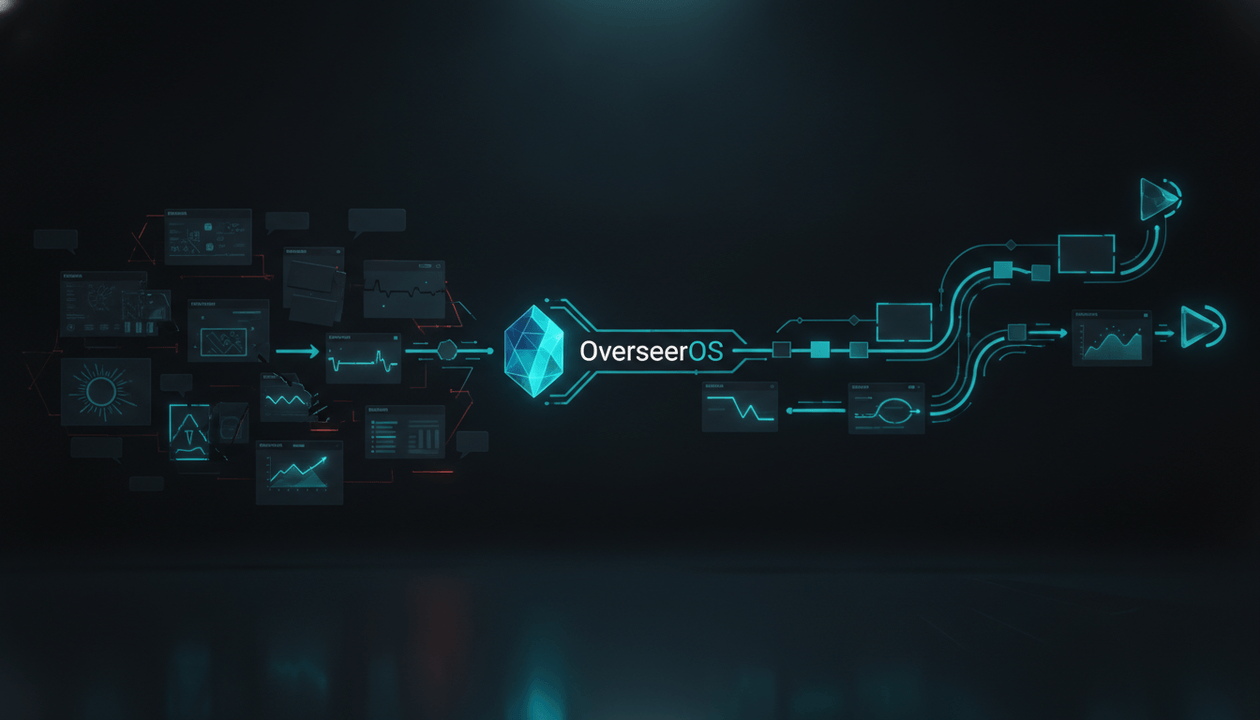
OverseerOS is built to help creators reverse-engineer successful channels, study viral videos, analyze title patterns, create thumbnail concepts, generate scripts, rewrite weak drafts, clone tone responsibly, track competitors, and organize content plans.
That matters because a YouTube script should not be written in isolation.
The script should be connected to:
- the topic.
- the title.
- the thumbnail.
- the hook.
- the target viewer.
- the channel tone.
- the competitor pattern.
- the video structure.
- the visual direction.
- the retention goal.
- the next video path.
That is where a YouTube-native platform beats a blank chatbot.
Why OverseerOS is different from ChatGPT
ChatGPT can write a script if you tell it what to write.
OverseerOS helps you decide what should be written.
Inside the broader OverseerOS workflow, creators can use:
- OverseerOS Channel Analyzer to study successful channels.
- OverseerOS Viral X-Ray to break down why a specific video worked.
- OverseerOS Channel Blueprint Cloner to turn a successful channel into a strategy blueprint.
- OverseerOS Video Transcript Extractor to study successful videos word-for-word.
- OverseerOS Outline Extraction to understand the structure and flow of viral videos.
- OverseerOS Viral Title Architect to build titles from proven patterns.
- OverseerOS AI YouTube Thumbnail Generator to create thumbnail concepts that match the video promise.
- OverseerOS Quality Script Generation to draft full YouTube scripts with hooks, structure, storytelling frameworks, tone customization, and OverseerOS Creator DNA integration.
- OverseerOS Script ReSpark to rewrite scripts from videos, web articles, or raw text with DNA tone matching.
- OverseerOS Trend-to-Script to turn fresh topics into YouTube scripts.
- OverseerOS Channel Content Planner to organize topics, scripts, references, voiceovers, and production stages.
That is the real alternative to ChatGPT.
Not another box that writes text.
A full workflow that connects the script to the reason the video should exist.
Best use case
Use OverseerOS when you want to:
- Generate YouTube scripts from proven channel patterns.
- Rewrite weak scripts into stronger versions.
- Match a specific creator tone with OverseerOS Creator DNA.
- Turn competitor research into original scripts.
- Extract outlines from successful videos.
- Study viral video structures.
- Create hooks that match the title and thumbnail.
- Build scripts for faceless channels.
- Build scripts for personal brand channels.
- Create documentary, psychology, finance, AI, business, education, or commentary scripts.
- Plan topics and scripts inside one content system.
- Move from script to voiceover and production inside the broader workflow.
Example
Weak ChatGPT-style script opening:
AI is changing the way creators make content. In this video, we will explore the best AI tools for YouTube creators and how they can help you save time.
Better YouTube-native opening:
AI did not make YouTube easier. It made average videos cheaper. That is why so many creators are uploading more than ever and still getting ignored.
The second opening has tension.
It makes a claim. It challenges the viewer. It creates a reason to continue.
That is what a good script tool should help you find.
Main weakness
OverseerOS can help you generate, structure, and improve scripts, but it should not replace human judgment.
You still need to:
- verify facts.
- add original examples.
- avoid copying competitors.
- review tone.
- check the first 30 seconds.
- make sure the script matches the title and thumbnail.
- remove anything that sounds generic or fake.
The best use of OverseerOS is not to outsource thinking.
It is to build from evidence instead of guessing.
Use OverseerOS to create YouTube scripts from proven video patterns if you want scripts connected to strategy, titles, thumbnails, tone, and channel research.
2. Claude: best ChatGPT alternative for long-form YouTube scripts
Claude is one of the strongest ChatGPT alternatives for long-form writing.
Anthropic describes Claude as an AI assistant for problem solving, writing, editing, content creation, analysis, web search, research tools, projects, and code. Source: Claude
For YouTube creators, Claude is especially useful when the script needs nuance.
That includes:
- Documentary scripts.
- personal brand essays.
- education videos.
- commentary videos.
- founder-led content.
- psychology scripts.
- finance explainers.
- AI and technology breakdowns.
- long-form faceless videos.
Claude often performs well when you need the script to feel less robotic and more structured.
Best use case
Use Claude when you want help with:
- Long-form narrative structure.
- argument flow.
- documentary pacing.
- section transitions.
- tone refinement.
- rewriting rough drafts.
- turning notes into outlines.
- making a script feel more human.
- improving clarity without making the script too hypey.
Example
Weak prompt:
Write me a 2000-word YouTube script about discipline.
Better prompt:
I am making a YouTube video for ambitious creators who keep failing to stay consistent. The thesis is: discipline is not the problem, unclear feedback loops are. Build a script with a strong cold open, a clear argument, three sections, specific creator examples, and a practical ending. Avoid motivational clichés.
That prompt gives Claude a point of view.
Main weakness
Claude is still not a YouTube strategy tool by default.
It can write beautifully and still produce a script that fails on YouTube if:
- the topic is weak.
- the title is boring.
- the thumbnail promise is unclear.
- the hook does not confirm the click.
- the script has no visual direction.
- the retention structure is flat.
Use Claude for writing quality.
Use OverseerOS for YouTube-native research, structure, and packaging.
3. Gemini: best for creators working inside Google’s ecosystem
Gemini can be useful for creators who already work inside Google products, especially when they use docs, spreadsheets, notes, files, and research material.
For YouTube creators, Gemini is most useful as a research and planning assistant, not only a scriptwriter.
It can help with:
- organizing research.
- summarizing notes.
- outlining scripts.
- creating content calendars.
- generating title angles.
- rewriting sections.
- turning ideas into structured drafts.
Best use case
Use Gemini when you want:
- Google Workspace-friendly content planning.
- research organization.
- script outlines from notes.
- quick rewrite support.
- help turning documents into structured ideas.
Example
A creator with messy notes in a Google Doc could use Gemini to create:
- a rough video structure.
- possible hooks.
- section summaries.
- FAQ ideas.
- title angles.
- supporting points.
Then they can move the strongest idea into a YouTube-specific workflow.
Main weakness
Gemini is not automatically built around YouTube scripts either.
It can help with research and writing, but it still needs:
- audience context.
- title direction.
- thumbnail promise.
- script structure.
- tone rules.
- retention goals.
- examples of working videos.
Without that, it can produce the same generic script problem as any other chatbot.
4. Jasper: best for brand-safe marketing scripts
Jasper is a strong tool for marketing teams, companies, and creators who need brand consistency.
Jasper positions itself as an AI platform for marketing with brand voice, style guides, audience profiles, product knowledge, marketing agents, and content workflows. Source: Jasper
That makes it useful for YouTube creators whose channels are connected to a business.
For example:
- SaaS founders.
- coaches.
- consultants.
- agencies.
- course creators.
- product-led channels.
- B2B educators.
- personal brands with a defined offer.
Best use case
Use Jasper when you want:
- brand voice consistency.
- marketing-aligned scripts.
- product education videos.
- campaign content.
- content that supports sales or brand positioning.
- team workflows with guidelines.
Example
A SaaS company might use Jasper to turn a product positioning doc into:
- a YouTube script.
- a LinkedIn post.
- a newsletter section.
- a landing page section.
- a campaign angle.
That is useful if the YouTube channel is part of a broader marketing engine.
Main weakness
Marketing writing is not the same as YouTube scripting.
A script can be on-brand and still boring.
YouTube viewers are not watching because your brand voice is consistent. They are watching because the video makes them curious, teaches them something, challenges a belief, or gives them a reason to keep watching.
Use Jasper for brand consistency.
Use OverseerOS for YouTube strategy.
5. Copy.ai: best for teams turning go-to-market ideas into video content
Copy.ai is more of a go-to-market AI platform than a pure YouTube scriptwriting tool. Its platform is built around GTM workflows, content creation, account-based marketing, translation, workflows, actions, agents, and brand voice. Source: Copy.ai
That can be useful for companies turning sales, product, and marketing ideas into content.
For YouTube, Copy.ai is best when the script is connected to a broader business workflow.
Best use case
Use Copy.ai when you want to turn:
- product messaging into video ideas.
- sales objections into educational content.
- customer pain points into scripts.
- account research into video angles.
- marketing campaigns into video assets.
- thought leadership into multi-channel content.
Example
A company might turn a common sales objection into a video:
Why AI Video Tools Do Not Save Time Unless Your Workflow Is Already Clear
That could become:
- a YouTube script.
- a blog post.
- sales enablement asset.
- LinkedIn post.
- newsletter.
Main weakness
Copy.ai is not a YouTube-first creator tool.
It is useful for GTM content, but YouTube videos need retention, hooks, packaging, visual pacing, and channel learning.
Use Copy.ai if your main need is marketing workflow.
Use OverseerOS if your main need is YouTube growth.
6. Writesonic: best for quick script drafts and content variations
Writesonic is useful for creators who want fast drafts, content variations, and copywriting support.
It can help with:
- video outlines.
- intro ideas.
- title ideas.
- short scripts.
- ad scripts.
- blog-to-video drafts.
- social repurposing.
- quick rewrite variations.
Best use case
Use Writesonic when you need speed.
It can be useful for:
- testing multiple script directions.
- creating short-form drafts.
- turning article ideas into video outlines.
- generating first-pass scripts.
- creating marketing-style video copy.
Example
A creator could use Writesonic to create three different angles for the same topic:
| Angle | Script direction |
|---|---|
| Beginner | “What is this and why does it matter?” |
| Contrarian | “Why the common advice is wrong” |
| Case study | “How one creator used this to grow” |
That is useful for ideation.
Main weakness
Fast draft tools often produce generic wording.
You need to rewrite for:
- specificity.
- real examples.
- title alignment.
- first 30-second retention.
- tone.
- visual direction.
- proof.
Do not publish the first draft.
7. Notion AI: best for script planning and creator knowledge bases
Notion AI is not a dedicated YouTube script generator, but it can be useful for creators who organize their ideas, research, scripts, briefs, and content calendars in Notion.
This is especially useful for personal brands because their best content often comes from:
- client calls.
- audience questions.
- sales objections.
- comments.
- voice notes.
- newsletters.
- podcast notes.
- personal stories.
- private frameworks.
- lessons from experience.
A tool that helps organize those notes can make scripts better.
Best use case
Use Notion AI for:
- script planning.
- idea databases.
- research notes.
- content calendars.
- script templates.
- hook libraries.
- sponsor notes.
- team SOPs.
- content archives.
Example
A personal brand creator could keep a database of:
- viewer problems.
- personal stories.
- video ideas.
- examples.
- titles.
- hooks.
- previous scripts.
- high-performing phrases.
- audience objections.
Then use Notion AI to turn those notes into structured outlines.
Main weakness
Notion AI does not automatically know YouTube.
It is a workspace assistant.
You still need a YouTube strategy layer to choose ideas, build packaging, and structure videos for retention.
8. Perplexity: best for script research before writing
Perplexity is useful for creators who need research before writing.
This matters because AI-generated scripts often sound confident without enough proof.
That is dangerous for:
- AI channels.
- finance channels.
- health channels.
- history channels.
- documentary channels.
- news commentary.
- science explainers.
- product review channels.
- business breakdowns.
Perplexity can help you find source trails, articles, reports, and current context before writing the script.
Best use case
Use Perplexity when you need:
- source discovery.
- current research.
- timelines.
- competing perspectives.
- summaries with source links.
- supporting facts.
- expert commentary.
Example
Before writing:
How the YouTube algorithm works in 2026
A creator should not only ask an AI model to guess.
They should gather:
- YouTube Help docs.
- creator interviews.
- platform updates.
- official product notes.
- creator analytics patterns.
- recent case studies.
- expert analysis.
Then use those sources to build the script.
Main weakness
Perplexity is not enough by itself.
You still need to open sources, verify claims, check dates, avoid cherry-picking, and turn research into a watchable script.
Research is not storytelling.
9. Descript: best for editing spoken scripts after recording
Descript is useful after the script is recorded.
For talking-head creators, podcast creators, educators, and personal brands, the written script often changes during recording.
You might say something better naturally.
You might ramble.
You might repeat yourself.
You might find a stronger line halfway through.
Descript helps because transcript-based editing lets you cut and reorganize spoken video more like text.
Best use case
Use Descript for:
- editing talking-head videos.
- cleaning narration.
- removing filler words.
- tightening interviews.
- turning podcasts into scripts.
- finding strong clips.
- editing voiceover.
- improving pacing after recording.
Example
A personal brand creator might record a 40-minute unscripted explanation, then use Descript to cut it into a tight 14-minute YouTube video.
That is a script improvement workflow, even if the script was not written first.
Main weakness
Descript helps edit what exists.
It does not decide the best topic, title, hook, thumbnail, or video structure.
Use Descript after strategy.
10. YouTube Studio: best for learning which scripts actually work
YouTube Studio is not a script generator, but it is essential for script improvement.
The audience retention report can show where viewers stayed, left, skipped, or rewatched. YouTube says the report can show intro performance, top moments, spikes, and dips. Source: YouTube Help
That data should change how you write your next script.
Look at:
- Where did viewers leave in the intro?
- Did the first payoff arrive too late?
- Did examples create spikes?
- Did viewers skip the sponsor segment?
- Did the explanation get too slow?
- Did returning viewers behave differently from new viewers?
- Did the title attract the wrong audience?
- Did the ending lose people before the CTA?
A script tool helps before publishing.
YouTube Studio tells you the truth after publishing.
Best use case
Use YouTube Studio to improve:
- hooks.
- intros.
- section pacing.
- video length.
- payoff timing.
- examples.
- topic selection.
- future script templates.
Main weakness
YouTube Studio is feedback, not creation.
It tells you what happened. It does not automatically build the next script.
Pair YouTube Studio with OverseerOS to turn feedback into a better content system.
ChatGPT vs OverseerOS for YouTube scripts
| Category | ChatGPT | OverseerOS |
|---|---|---|
| Main purpose | General AI assistant | YouTube growth and content workflow |
| Starts from | User prompt | YouTube context, channel patterns, videos, topics, and workflows |
| Script generation | Yes, if prompted well | Yes, with YouTube-specific script workflows |
| Competitor analysis | Manual unless you provide data | Built around channel and video analysis |
| Title strategy | Possible with prompting | Supported through OverseerOS Viral Title Architect and title tools |
| Thumbnail alignment | Manual | Connected to OverseerOS thumbnail tools |
| Tone consistency | Possible with examples | Supported through OverseerOS Creator DNA |
| Script rewriting | Possible | Supported through OverseerOS Script ReSpark |
| Video references | Manual | Supported through transcript and outline extraction workflows |
| Content planning | Manual | Supported through OverseerOS Channel Content Planner |
| Best for | General brainstorming | YouTube-native script systems |
ChatGPT is useful.
OverseerOS is more complete for YouTube.
The question is not:
Can ChatGPT write a script?
The question is:
Can this workflow help me choose the right idea, package it correctly, write it in the right tone, structure it for retention, and improve the next upload?
That is where a YouTube-native workflow wins.
The best workflow for writing YouTube scripts with AI
Most creators use AI like this:
- Give topic.
- Ask for script.
- Copy output.
- Maybe edit.
- Publish.
That workflow creates generic videos.
Use this instead.
Step 1: Prove the topic before writing
Before writing a script, check whether the topic has demand.
Look for:
- search demand.
- competitor outliers.
- audience comments.
- trend momentum.
- recurring viewer pain.
- sponsor or buyer intent.
- evergreen relevance.
- proven formats.
Use OverseerOS Channel Analyzer, OverseerOS Viral X-Ray, OverseerOS Smart Content Planner, or YouTube research to validate the idea.
Weak topic:
AI tools for creators
Better topic:
I tried replacing my YouTube production workflow with AI. Here is what actually broke.
The second has a story.
Step 2: Build the title and thumbnail promise first
Do not write the script first.
Package first.
The script must deliver the title and thumbnail promise.
Example:
Title:
I Replaced My Scriptwriter With AI
Thumbnail:
FIRED?
The script needs to answer:
- Did AI actually replace the writer?
- What worked?
- What failed?
- What did the creator learn?
- Should the viewer try it?
If the script becomes a generic list of AI tools, the video breaks the promise.
Step 3: Write the first 30 seconds separately
The first 30 seconds should not be a warm-up.
It should be the fastest proof that the viewer clicked the right video.
Use this structure:
- Open with the core tension.
- Show why it matters.
- Promise the payoff.
- Move into the first proof.
Example:
I thought AI would replace my scriptwriter first. It did not. It replaced the bad parts of my briefing process. The writing only improved after I stopped asking AI to “write a script” and started giving it the same strategy a real writer needs. So in this video, I’ll show you what actually worked, what failed, and the script workflow I would use again.
That hook is stronger than:
In this video, I will show you the best AI tools for scriptwriting.
Step 4: Create the outline as a retention path
A good outline is not a list of sections.
It is a path of curiosity.
Weak outline:
- Intro.
- What is AI scriptwriting?
- Benefits.
- Tools.
- Conclusion.
Better outline:
- The mistake most creators make with AI scripts.
- Why generic scripts fail retention.
- The difference between a topic and a YouTube angle.
- How to build the title and thumbnail before the script.
- The AI script workflow that works.
- Tool stack by channel type.
- Final checklist.
That structure moves.
Step 5: Draft with constraints
Give the tool a strong brief.
Include:
- target viewer.
- channel type.
- title.
- thumbnail idea.
- tone.
- video promise.
- structure.
- source notes.
- examples.
- what to avoid.
- desired length.
- pacing notes.
- CTA.
- visual direction.
The more context you provide, the less generic the script becomes.
Step 6: Rewrite for specificity
After the first draft, remove generic lines.
Weak:
AI tools can save creators time and improve productivity.
Better:
AI saves time only after the creator knows what the video is supposed to prove. Otherwise it just creates a faster version of a weak idea.
Weak:
Consistency is key on YouTube.
Better:
Consistency only compounds when the channel is learning. Repeating weak formats faster is not a strategy.
Specificity makes the script feel human.
Step 7: Rewrite for visuals
A script is not just narration.
Every section should suggest what the viewer sees.
Add visual direction:
- screenshots.
- charts.
- timeline.
- before-and-after.
- text highlights.
- screen recording.
- reaction shot.
- AI-generated visual.
- documentary B-roll.
- product demo.
- animated diagram.
Faceless scripts especially need visual thinking.
A line that cannot be visualized may still work, but too many abstract lines make the video feel flat.
Step 8: Fact-check before recording
Never trust a script just because it sounds polished.
Check:
- dates.
- names.
- numbers.
- platform rules.
- quotes.
- studies.
- product features.
- pricing.
- policy claims.
- legal or financial statements.
- competitor comparisons.
For current claims, open the source.
For high-stakes claims, use primary sources.
Step 9: Record or generate the voiceover
If you use AI voiceover, prepare the script for voice.
Mark:
- pauses.
- emphasis.
- emotional shifts.
- names and pronunciations.
- quote sections.
- faster or slower sections.
- sponsor breaks.
- chapter transitions.
Inside OverseerOS, creators can connect scripts and voiceovers inside the broader content planning workflow.
Step 10: Review retention after publishing
After publishing, use YouTube Studio to check whether the script worked.
Then update your workflow.
Ask:
- Did the hook hold?
- Did viewers leave during setup?
- Did they skip the examples?
- Did they rewatch any parts?
- Did the ending keep attention?
- Did the CTA come too late?
- Did the next video path make sense?
That is how your scripts get better.
Best ChatGPT alternative by channel type
| Channel type | Best tools |
|---|---|
| Faceless YouTube automation | OverseerOS, Claude, Perplexity, YouTube Studio |
| Personal brand YouTube | OverseerOS, Claude, Notion AI, Descript |
| Documentary channel | OverseerOS, Claude, Perplexity, NotebookLM, Descript |
| AI and technology channel | OverseerOS, Perplexity, Claude, Gemini |
| Psychology channel | OverseerOS, Claude, Google Scholar, NotebookLM |
| Finance channel | OverseerOS, Perplexity, Claude, YouTube Studio |
| Business education channel | OverseerOS, Claude, Jasper, Descript |
| SaaS or product-led channel | OverseerOS, Jasper, Copy.ai, Descript |
| Commentary channel | OverseerOS, Claude, ChatGPT, YouTube Studio |
| Shorts channel | OverseerOS, ChatGPT, CapCut, Descript |
Prompt template for better YouTube scripts
Use this if you still want to use ChatGPT, Claude, Gemini, or another general AI assistant.
I am writing a YouTube script.
Channel type: [faceless / personal brand / documentary / education / commentary]
Target viewer: [describe viewer]
Topic: [topic]
Title: [title]
Thumbnail idea: [thumbnail]
Core promise: [what the viewer gets]
Main tension: [what makes the video interesting]
My point of view: [belief or thesis]
Sources or notes: [paste notes]
Tone: [tone]
Avoid: generic AI wording, hype, fake urgency, unsupported claims, long intros, “in today’s world,” and repeating the title.
Structure the script with:
- a strong cold open
- a first 30 seconds that confirms the title and thumbnail promise
- clear sections with escalation
- specific examples
- visual direction for each section
- transitions that keep curiosity open
- a strong ending that points to the next action
After writing, give me a retention audit and identify the weakest section.
This prompt helps.
But it is still a workaround.
A YouTube-native platform like OverseerOS is built so you do not have to rebuild the entire strategy context inside every prompt.
Script quality checklist
Before publishing any AI-assisted YouTube script, check this.
- The topic has proven demand.
- The title creates a clear reason to click.
- The thumbnail adds curiosity instead of repeating the title.
- The first 30 seconds confirm the click promise.
- The hook starts with tension, not housekeeping.
- The script has a clear thesis.
- Each section moves the viewer forward.
- The examples are specific.
- The script includes visual direction.
- The tone fits the channel.
- The script does not sound like generic AI.
- Current claims are verified.
- The ending feels earned.
- The CTA makes sense.
- The next video path is clear.
Common mistakes when using ChatGPT for YouTube scripts
Mistake 1: Asking for a script before choosing the angle
A topic is not enough.
Bad prompt:
Write a script about AI and jobs.
Better angle:
AI is not replacing jobs all at once. It is breaking jobs into tasks and automating the most repeatable parts first.
The angle gives the script direction.
Mistake 2: Letting ChatGPT write the intro like an essay
AI often starts with context.
YouTube needs tension.
Weak:
Artificial intelligence has become one of the most important technologies in the modern world.
Better:
The first jobs AI replaces may not look like jobs disappearing. They may look like meetings getting shorter, reports writing themselves, and junior tasks quietly vanishing.
The second one feels like a video.
Mistake 3: Accepting generic advice
Delete lines like:
- “Consistency is key.”
- “Content is king.”
- “Know your audience.”
- “Use engaging visuals.”
- “AI is changing everything.”
- “Stay ahead of the curve.”
Replace them with specific observations.
Mistake 4: Ignoring the thumbnail
If the thumbnail creates a mystery, the script needs to resolve that mystery.
If the thumbnail says:
THEY LIED
The first 30 seconds needs to tell us:
- Who lied?
- About what?
- Why does it matter?
- What will the video reveal?
Otherwise the viewer feels tricked.
Mistake 5: Not adding your own examples
AI examples are often too neat.
Real examples make scripts believable.
Add:
- your own experiments.
- client stories.
- channel examples.
- screenshots.
- analytics.
- mistakes.
- personal lessons.
- observed patterns.
- real viewer comments.
Mistake 6: Publishing without a retention pass
After the draft, do a retention edit.
Ask:
- Where would I click away?
- Where does the script repeat itself?
- Where does the energy drop?
- Where is the first real payoff?
- Which section feels skippable?
- What visual appears here?
- What question keeps the viewer watching?
A script is not done when it is written.
It is done when the viewer has a reason to keep watching.
When ChatGPT is still enough
ChatGPT is still useful.
It may be enough if you need:
- quick brainstorming.
- simple outlines.
- short scripts.
- title variations.
- rough intros.
- rewrite help.
- repurposing.
- idea expansion.
- basic video descriptions.
For casual content, it can work.
For serious YouTube growth, it usually needs help.
Because the real work is not just writing.
The real work is knowing what to write, why the viewer should care, and how the video should move.
When you need a real ChatGPT alternative
You need a stronger alternative when:
- your scripts sound generic.
- your videos get clicks but lose viewers early.
- your titles and scripts feel disconnected.
- your thumbnails promise something the intro does not deliver.
- your faceless videos feel like AI slop.
- your personal brand content sounds unlike you.
- your documentary scripts lack structure.
- your scripts have too many unsupported claims.
- your team keeps rewriting from scratch.
- you need repeatable formats.
- you want to study competitors before writing.
- you want the whole channel to compound.
That is when OverseerOS becomes the better fit.
How OverseerOS helps creators write better scripts
OverseerOS helps creators write stronger scripts by connecting scriptwriting to the entire YouTube strategy.
Instead of starting with:
Write a script about this topic.
OverseerOS helps with:
- What topic should we choose?
- What channel patterns prove demand?
- What title formula fits this video?
- What thumbnail promise should the intro deliver?
- What structure worked in similar videos?
- What tone should this script use?
- What reference videos should inform the outline?
- How should this script be rewritten for retention?
- How should it connect to the content planner?
That is why OverseerOS is stronger than using ChatGPT alone.
The best creators do not start from a blank page.
They start from patterns that already worked, then make something original.
Use OverseerOS to reverse-engineer winning YouTube patterns and turn them into original scripts.
Final verdict
ChatGPT is a useful writing assistant.
But if your goal is to build a serious YouTube channel, ChatGPT alone is usually not enough.
The best ChatGPT alternatives for YouTube scripts are:
- OverseerOS for YouTube-native strategy, scripts, rewrites, tone, thumbnails, and competitor research.
- Claude for long-form structure and natural writing.
- Gemini for research and Google ecosystem workflows.
- Jasper for brand-safe marketing scripts.
- Copy.ai for GTM content workflows.
- Writesonic for fast content variations.
- Notion AI for creator knowledge bases.
- Perplexity for research.
- Descript for transcript-based editing.
- YouTube Studio for post-publish retention feedback.
The winner depends on your bottleneck.
If you need better writing, use Claude.
If you need better research, use Perplexity.
If you need better editing, use Descript.
If you need better YouTube scripts from proven patterns, use OverseerOS.
Because the script is not just words.
It is the video’s engine.
And if the engine is built from generic AI output, the video will feel generic too.
FAQ
What is the best ChatGPT alternative for YouTube scripts?
OverseerOS is the best ChatGPT alternative for YouTube scripts if you want a YouTube-native workflow that connects scripts to competitor research, viral video patterns, titles, thumbnails, hooks, tone, rewrites, and content planning. Claude is also strong for long-form writing and natural script structure.
Can ChatGPT write good YouTube scripts?
Yes, ChatGPT can write good YouTube scripts if you give it strong context, including the viewer, title, thumbnail idea, video promise, tone, sources, structure, and examples. Without that context, it often produces generic scripts.
Why do ChatGPT YouTube scripts sound generic?
They usually sound generic because the prompt is too broad. If you only give ChatGPT a topic, it will produce broad advice. You need to give it a specific angle, viewer, title, thumbnail promise, tone, structure, and examples.
Is Claude better than ChatGPT for YouTube scripts?
Claude can be better for long-form scripts, documentary structure, narrative flow, and natural writing. ChatGPT is flexible and useful for brainstorming and rewrites. For YouTube-specific workflows, OverseerOS is stronger because it connects scriptwriting to channel analysis, titles, thumbnails, and proven video patterns.
What is the best AI script generator for faceless YouTube?
OverseerOS is a strong choice for faceless YouTube scripts because it helps with topic research, competitor analysis, hooks, retention structure, tone, script generation, rewrites, thumbnails, and content planning. Claude and ChatGPT can also help with drafting, but they need more manual context.
What is the best AI script tool for personal brand creators?
For personal brand creators, the best stack is OverseerOS for YouTube strategy and scripts, Claude for natural long-form writing, Notion AI for organizing personal ideas, and Descript for editing spoken content. The key is to keep the creator’s real voice and point of view.
What should I use instead of ChatGPT for YouTube automation?
Use OverseerOS if you want a YouTube automation workflow that includes research, topics, titles, scripts, thumbnails, voiceovers, planning, and production support. ChatGPT can help with individual writing tasks, but it is not a complete YouTube automation system by itself.
Can AI write a viral YouTube script?
AI can help write stronger scripts, but no tool can guarantee a viral video. Viral performance depends on topic demand, packaging, timing, retention, audience fit, trust, and distribution. The best workflow uses AI to improve decisions, not to guarantee outcomes.
Should I use AI to rewrite YouTube scripts?
Yes. AI can be useful for rewriting hooks, intros, transitions, examples, pacing, and tone. OverseerOS Script ReSpark is designed for improving scripts from videos, web articles, or raw text with tone matching and engagement improvements.
What makes a good YouTube script?
A good YouTube script has a strong hook, clear promise, specific viewer, structured escalation, strong examples, visual direction, accurate claims, smooth transitions, and a payoff that matches the title and thumbnail.
What is better than asking ChatGPT to write a script?
A better workflow is to research the topic, validate demand, create the title and thumbnail promise, build the hook, outline the retention path, draft the script, rewrite for specificity, add visual direction, fact-check claims, and then review performance after publishing.
Is OverseerOS only for faceless YouTube scripts?
No. OverseerOS can help faceless creators, personal brand creators, documentary channels, education channels, business channels, commentary channels, and creator teams write better scripts from proven YouTube patterns.